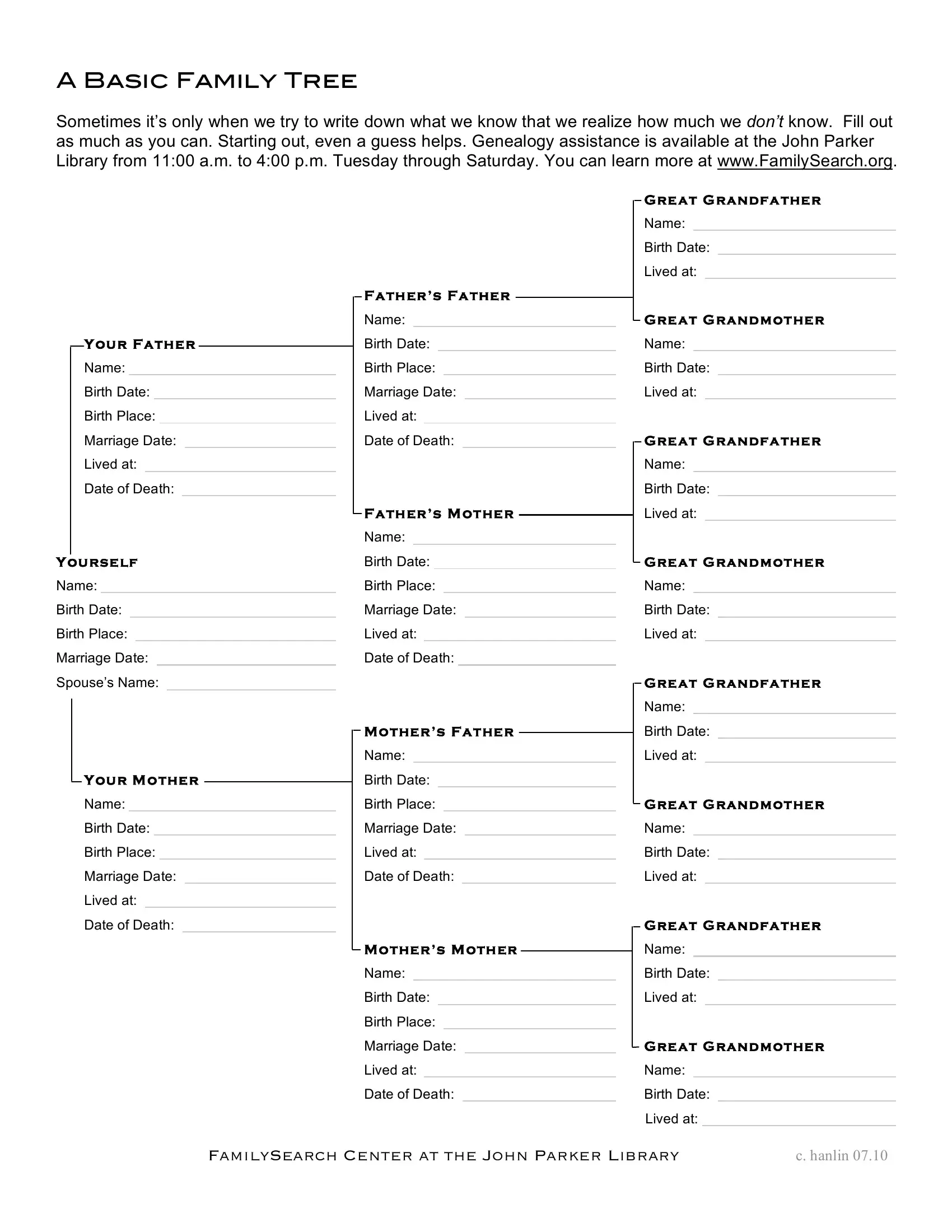
A professional family ancestry example for researchers serves as a structured blueprint, demonstrating how to transform raw data—such as census records, birth certificates, and DNA matches—into a verified historical narrative. It prioritizes the Genealogy Proof Standard (GPS), ensuring that every link in a lineage is supported by thorough research, citations, and logical analysis to eliminate "pedigree collapse" or incorrect identification.
Family history research is no longer a mere collection of names and dates; it is a rigorous academic discipline that blends archival science, sociology, and genetics. For researchers in 2026, the standard for a "completed" family ancestry has evolved. It now requires not only paper trails but also the integration of digital footprints and biological verification. This article provides a high-level example of how a professional-grade ancestry report is constructed, the components it must contain, and the technical standards required to satisfy peer review or formal publication.
The Essential Components of a Professional Ancestry Example
When a researcher examines a high-quality ancestry example, they should expect to see four distinct but interconnected layers of documentation. Without these, the research remains a "hypothesis" rather than a proven lineage.
1. The Pedigree Chart and Family Group Sheets
The pedigree chart is the skeleton of the ancestry. A professional example starts with a "Propositus" (the starting individual) and moves backward through time. However, unlike consumer-level trees found on popular websites, a researcher’s pedigree chart includes unique identifiers for every person to avoid confusion between individuals with similar names.
Family Group Sheets expand on this by documenting the nuclear family: the father, mother, and all known children. A researcher’s example meticulously lists birth, marriage, and death (BMD) dates for every sibling, even those who did not live to adulthood. This "FAN principle" (Friends, Associates, and Neighbors) is crucial because siblings often appear in records that provide clues about the direct ancestors.
2. The Research Log: The "Evidence Trail"
One of the most common mistakes in amateur genealogy is failing to document where information was not found. A researcher’s example includes a comprehensive research log. This is a chronological record of every repository visited, every database searched, and every microfilm reel viewed.
A professional research log includes:
- Search Date: The date the inquiry was made (essential for digital databases that update frequently).
- Source Description: Full bibliographic details (e.g., "Ohio County, Marriage Vol 4, page 212").
- Purpose: What specific question was the researcher trying to answer? (e.g., "To find the maiden name of Mary Smith").
- Results: A summary of findings or a notation of a "negative search" (finding nothing), which is just as important for proving a thorough search was conducted.
3. The Narrative Report and Genealogical Summary
The narrative report is where the "dry" data becomes a biography. This section follows a specific format, such as the Register System or the NGS Quarterly System. In a researcher’s example, the narrative does not just say "John moved to New York." It says, "John moved to New York in 1884, likely following the completion of the West Shore Railroad, as evidenced by his employment record found in the Syracuse City Directory of 1885."
4. The Evidence Analysis (Conflict Resolution)
In real-world research, records often conflict. A death certificate might list a different birth year than a census record. A professional example includes a "Conflict Resolution" section where the researcher weighs the evidence. They explain why one source is more credible than another based on the informant's proximity to the event and the time elapsed between the event and the record's creation.
Case Study Example: The Miller-Kaufman Lineage (1850–1920)
To understand how these components work in practice, let us look at a hypothetical yet technically accurate example of a family ancestry report for a "Johann Miller," an immigrant from Bavaria to Ohio.
Background and Objective
The objective of this research example is to prove the parentage of Johann Miller (1842–1912) and confirm his place of origin in Germany.
Evidence Correlation Table
Researchers often use tables to correlate different pieces of evidence to see where the weight of proof lies.
| Source Document | Information Provided | Informant | Reliability Score |
|---|---|---|---|
| 1880 US Census | Born 1842, Bavaria | Johann Miller | High (Self-reported) |
| 1912 Death Certificate | Born May 12, 1840 | Son (William Miller) | Medium (Secondary info) |
| Ship Manifest (1865) | Age 23 (Birth ~1842) | Ship Captain | Medium (Administrative) |
| Parish Record (Bavaria) | Born May 12, 1842 | Priest/Father | Highest (Contemporary record) |
Analysis of the Table: In this example, the death certificate is off by two years. The researcher notes that the son, William, may not have known his father’s exact birth year, whereas the German parish record was created at the time of the event. Therefore, 1842 is the proven birth year.
The Genealogy Proof Standard (GPS) in Action
For a family ancestry example to be useful to researchers, it must adhere to the Genealogy Proof Standard. This framework, maintained by the Board for Certification of Genealogists, consists of five steps that ensure the research is credible.
- Reasonably Exhaustive Research: The example must show that the researcher didn't just check one website. They looked at local land records, probate files, military pensions, and newspaper archives.
- Complete and Accurate Source Citations: Every claim must have a footnote. For example, using the Evidence Explained standard by Elizabeth Shown Mills, a citation for a census record should include the NARA publication number, roll number, and specific line number.
- Analysis and Correlation of Evidence: The researcher must interpret what the record means in the context of the time. If a man is missing from the 1890 census (which was largely destroyed by fire), the example should show how tax records or city directories were used as a "census substitute."
- Resolution of Conflicting Evidence: If the 1870 census says a child was born in Ohio and the 1880 census says they were born in Indiana, the researcher must find a third source (like a birth record or a parent's pension file) to resolve the discrepancy.
- A Soundly Reasoned, Written Conclusion: The final proof is a written argument that leads the reader to the same conclusion as the researcher.
Integrating Genetic Genealogy (DNA) into the Example
By 2026, a family ancestry example for researchers is incomplete without DNA evidence. Genetic genealogy provides the biological "second witness" to the paper trail.
How to Present DNA Evidence
In a professional report, DNA evidence should be presented through Triangulation. This involves finding three or more people who:
- All share a specific segment of DNA (measured in Centimorgans or cM).
- All share a common ancestor confirmed via the paper trail.
- Do not all share the same immediate parents (proving the DNA came from a more distant ancestor).
Example DNA Entry: "The descent of Johann Miller from his father, Friedrich Miller, is supported by autosomal DNA matching. The subject (Test Kit #A1234) shares 45 cM across three segments with 'Match B' (Test Kit #B5678). Genealogical research identifies 'Match B' as a second cousin once removed, both descending from Friedrich Miller (1810–1880). The shared DNA falls within the expected range for this relationship according to the Shared cM Project 4.0 tool."
Technical Documentation and Citation Standards
Researchers must move beyond simple URLs. In 2026, digital permanence is a concern. A professional example uses permanent identifiers (like DOIs or ARK handles) where available.
The "Evidence Explained" Framework
Most professional researchers use the citation style established in "Evidence Explained." This system is designed specifically for the unique challenges of historical records, which often lack the clear "Author/Title/Date" structure of modern books.
Example of a properly formatted citation for an online database: "Ohio, County Marriage Records, 1774–1993," database with images, Ancestry (https://www.ancestry.com : accessed 14 May 2026), marriage of Johann Miller and Maria Kaufman, 12 June 1868; citing Stark County Court of Common Pleas, Probate Division, Marriage Vol 6, p. 45.
Digital Archiving and Metadata
A researcher-level example often includes a section on Digital Provenance. This explains how digital images were captured, their resolution, and where the original physical document is housed. In 2026, many researchers also include checksums or hash values for digital files to ensure they haven't been tampered with or corrupted over time.
Common Pitfalls Demonstrated in Examples
A great teaching example often includes "Negative Examples" or common pitfalls that researchers should avoid:
- The Name Match Trap: Assuming two people with the same name in the same county are the same person. A professional example shows how to use land descriptions (Section, Township, Range) to differentiate between "John Miller of Canton" and "John Miller of Massillon."
- Chronological Impossibilities: An example might show a "cautionary tale" where a mother's birth date is only 10 years before her child's. Professional research flags these errors immediately.
- Ignoring the "Social History": A researcher’s example doesn't just list a death date of 1918; it notes if the ancestor died during the Spanish Flu pandemic, which explains why multiple family members might have died in the same week.
Frequently Asked Questions
What is the most important document in a family ancestry example?
While all documents are vital, the Research Log is arguably the most important for a researcher. It proves the "Reasonably Exhaustive Research" requirement of the Genealogy Proof Standard. Without a log, other researchers cannot verify which sources were checked and which were missed, leading to duplicated efforts or missed connections.
How do I cite a source that I found on a social media group or unverified website?
In professional research, you generally do not use unverified websites as primary proof. Instead, you treat them as "leads." In your report, you would cite the lead (e.g., "Information suggested by a post on the 'Bavarian Roots' Facebook group"), but you must then find the original source (the birth record, the ship manifest, etc.) and cite that as your actual evidence.
Why is the FAN principle so important in these examples?
The FAN principle (Friends, Associates, Neighbors) is used because ancestors did not live in a vacuum. Often, the clue to a person's origins isn't found in their own records, but in the records of their neighbors or the witnesses at their wedding. A professional ancestry example will often include a "Neighborhood Analysis" to track migration patterns of entire groups.
How much DNA evidence is required to "prove" a relationship?
DNA alone rarely proves a specific ancestor; it proves a biological relationship. To prove a specific lineage, you need both the DNA match and a paper trail that matches the genetic distance. Generally, matches over 15–20 cM are considered significant for genealogical purposes, but they must be part of a larger triangulation to be used as proof in a formal report.
Should I include "unproven" family legends in a researcher's example?
Yes, but they must be clearly labeled as "Tradition" or "Lore." A professional example often begins with the family legend and then systematically uses records to either support or debunk it. Disproving a long-held family myth is a hallmark of high-quality, objective research.
Practical Recommendation for Researchers
If you are building your own family ancestry example or preparing one for publication in 2026, start by creating a Research Plan. Define a specific, narrow question (e.g., "Who were the parents of Sarah Clark, born circa 1810 in Vermont?"). Document every search you perform in a digital log. Once you have gathered your evidence, write a Proof Summary that addresses any contradictions. Finally, use a standard citation software or manual to ensure your footnotes meet the "Evidence Explained" criteria. This structured approach transforms a simple family tree into a piece of historical scholarship that will stand the test of time and peer scrutiny.