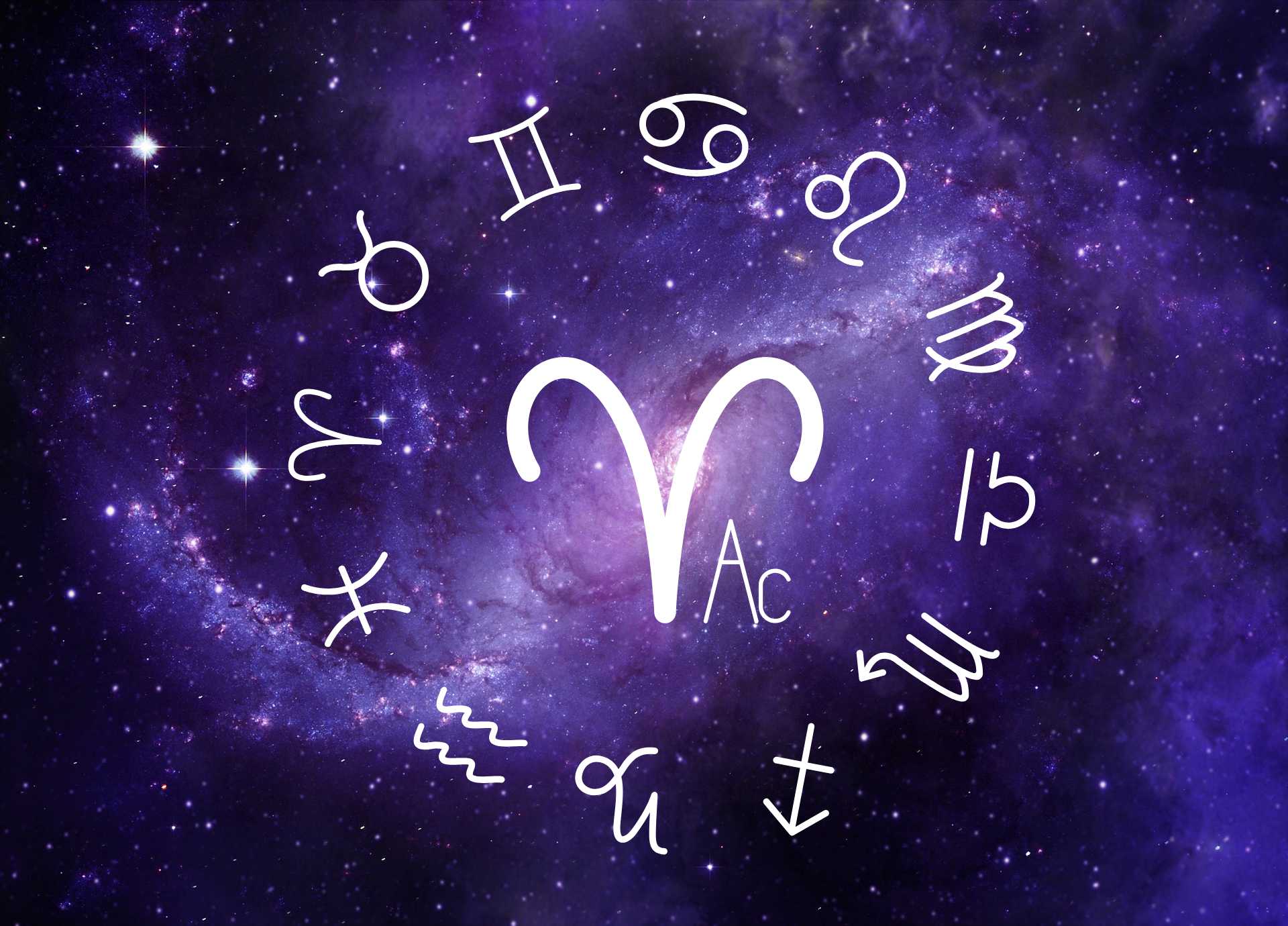
In the Northern Hemisphere, Aries is the rarest rising sign because of the Earth's axial tilt, which causes certain zodiac signs to rise over the eastern horizon faster than others. Known as a "Sign of Short Ascension," Aries remains on the horizon for roughly half the time of signs like Virgo or Libra.
The concept of the Rising Sign, or Ascendant, is a cornerstone of Hellenistic and modern astrology. It represents the degree of the zodiac that was "ascending" over the eastern horizon at the specific moment and location of an individual's birth. While many enthusiasts focus primarily on their Sun sign (the "zodiac sign" determined by the month of birth), the Ascendant is arguably more critical for personalizing a birth chart. It sets the structure for the twelve houses, determines the "Chart Ruler," and dictates the individual’s outward persona and physical vitality.
As we navigate the astrological landscape in 2026, the demand for precision in birth charts has never been higher. With high-accuracy GPS and digital ephemerides, we can now confirm with mathematical certainty why an Aries rising is a statistical rarity in most of the Western world. To understand why Aries is so elusive, we must look beyond mysticism and into the mechanics of celestial geometry.
The Astronomy of Ascension: Why Timing Is Not Equal
The zodiac is a 360-degree circle divided into twelve 30-degree segments. If the Earth were a perfect sphere rotating on an axis perfectly perpendicular to its orbit, every zodiac sign would take exactly two hours to rise (24 hours divided by 12 signs). However, the Earth is tilted at an angle of approximately 23.5 degrees relative to the plane of its orbit—a phenomenon known as the obliquity of the ecliptic.
Because of this tilt, the ecliptic (the sun's apparent path across the sky) does not cross the horizon at a consistent angle. In the Northern Hemisphere, some signs cross the horizon at a "steep" angle, while others cross at a "shallow" or "oblique" angle.
Signs of Short vs. Long Ascension
The speed at which a sign rises depends on your latitude and the time of year. In the Northern Hemisphere (where the majority of the world's population resides), the signs from Capricorn through Gemini are considered Signs of Short Ascension. These signs "rush" over the horizon, often taking significantly less than two hours to fully emerge.
Conversely, the signs from Cancer through Sagittarius are Signs of Long Ascension. These signs take their time, sometimes lingering on the horizon for nearly three hours.
- Aries (Short Ascension): In mid-to-high northern latitudes, Aries can rise in as little as 50 to 60 minutes.
- Virgo (Long Ascension): In the same locations, Virgo can take upwards of 2 hours and 45 minutes to rise.
Mathematically, this means the window of time for a person to be born with an Aries Ascendant is much smaller than the window for a Virgo or Libra Ascendant. Statistically, you are nearly three times more likely to meet a Virgo rising than an Aries rising if you are looking at individuals born in the Northern Hemisphere.
The Geographic Paradox: Northern vs. Southern Hemispheres
It is essential to clarify that "rarity" is a matter of geography. The phenomenon of short and long ascension is mirrored across the equator. What is rare in the North is common in the South.
In the Southern Hemisphere (e.g., Australia, South Africa, Argentina), the tilt of the Earth works in the opposite direction. There, the signs of Short Ascension are Virgo, Libra, and Leo. In these regions, Aries is actually one of the most common rising signs, while Virgo and Libra are the rarities.
However, because the vast majority of historical astrological records and the largest populations of astrology practitioners are located in the Northern Hemisphere, the narrative that "Aries is the rarest rising sign" has become the standard pedagogical fact in the field. When an astrologer says Aries rising is rare, they are almost always speaking from a Northern Hemisphere perspective.
The Significance of the Aries Ascendant
Because Aries is the first sign of the zodiac, its presence on the Ascendant creates a "natural" or "thematic" birth chart. When Aries rises, it typically places the other signs in their corresponding houses: Taurus in the second, Gemini in the third, and so on. This alignment is often associated with a life path that feels very direct and aligned with the "Aries" energy of initiation and selfhood.
The Chart Ruler: Mars
The Rising Sign determines the "Lord" or "Ruler" of the entire chart. For an Aries rising, the chart ruler is Mars. This planet of action, desire, and drive becomes the most influential planet in the individual's life.
Unlike a Sun-in-Aries individual, who may feel their drive internally, an Aries rising projects this energy outwardly. They often move through the world with a sense of urgency. In 2026, as we observe the rapid pace of technological and social change, the Aries rising individual is often the one leading the charge, fueled by the Martian need to be first and to be seen.
Physicality and Persona
The Ascendant is traditionally associated with the physical body and the "mask" we wear when meeting others. Aries rising individuals often possess:
- A brisk, purposeful walk.
- A direct, piercing gaze.
- Features that may be prone to redness or scarring (Mars rules the head and face).
- An aura of independence and self-reliance.
Because the sign rises so quickly, there is a literal "compressed" energy to their entry into the world. They are often described as people who do not hesitate; they act first and process later.
Comparative Ascension Times (Northern Hemisphere)
The following table illustrates the approximate duration each sign stays on the horizon at a mid-northern latitude (roughly 40°N, which covers cities like New York, Madrid, and Beijing). Note how Aries compares to the signs of long ascension.
| Zodiac Sign | Ascension Category | Approx. Duration on Horizon | Relative Rarity (N. Hemisphere) |
|---|---|---|---|
| Aries | Short Ascension | ~1 hour 02 mins | Very High |
| Pisces | Short Ascension | ~1 hour 05 mins | High |
| Aquarius | Short Ascension | ~1 hour 10 mins | High |
| Capricorn | Short Ascension | ~1 hour 25 mins | Moderate |
| Taurus | Short Ascension | ~1 hour 30 mins | Moderate |
| Gemini | Short Ascension | ~1 hour 50 mins | Low |
| Cancer | Long Ascension | ~2 hours 15 mins | Low |
| Leo | Long Ascension | ~2 hours 35 mins | Very Low |
| Virgo | Long Ascension | ~2 hours 45 mins | Lowest (Most Common) |
| Libra | Long Ascension | ~2 hours 40 mins | Lowest (Most Common) |
| Scorpio | Long Ascension | ~2 hours 25 mins | Low |
| Sagittarius | Long Ascension | ~2 hours 05 mins | Moderate |
Data based on standard astronomical models for 40° North Latitude.
The Impact on House Systems
The rarity of the Aries rising sign also has profound implications for how the rest of the birth chart is constructed, particularly when using "quadrant" house systems like Placidus or Porphyry.
In high northern latitudes (near the Arctic Circle), the discrepancy in ascension speed becomes so extreme that certain signs may not rise at all on some days, or signs of long ascension may take up huge swaths of the sky. This creates "intercepted houses," where a zodiac sign is completely contained within a house and does not appear on any house cusp.
Because Aries rises so quickly, people born in the Northern Hemisphere with an Aries rising are less likely to have large, sprawling houses in the early parts of their chart, but they may face complexities in the houses governed by the signs of long ascension (like the 6th, 7th, or 8th houses). This structural imbalance is one reason many modern astrologers in 2026 are shifting toward the Whole Sign House system, which assigns each sign to exactly one house, regardless of how fast it rose.
Is Aries Rising "Better" Because It Is Rare?
In astrology, rarity does not equate to superiority. Every rising sign has a specific "dharma" or life purpose. However, the rarity of Aries rising does contribute to a specific collective perception. Because there are fewer Aries risings, their high-energy, pioneering, and sometimes abrasive "first-responder" energy stands out more distinctly in social groups.
In a world dominated by the commonality of Virgo and Libra risings—who often prioritize order, analysis, and social harmony—the Aries rising individual acts as a necessary "disruptor." They are the ones who break the status quo because their chart is literally built for speed.
How to Verify Your Rising Sign
To determine if you are one of the few with an Aries Ascendant, you must have an accurate birth time. Because Aries rises so quickly, being off by even 15 or 20 minutes on your birth certificate can mean the difference between being a Pisces rising or an Aries rising.
- Obtain your long-form birth certificate: This usually includes the exact minute of birth.
- Use high-precision software: In 2026, tools like Astrodienst or Astro-Seek use the latest Swiss Ephemeris data to calculate the exact degree of your Ascendant.
- Consult a professional: If your birth time is rounded (e.g., exactly 2:00 PM), an astrologer can perform "rectification"—a process of looking at major life events to work backward and find the exact moment the sign crossed the horizon.
Frequently Asked Questions
Does being an Aries rising make me more "special"?
In astrological terms, "rare" means "statistically less frequent," not "more gifted." However, because your chart ruler is Mars, you may find you have a more visible or active drive than peers with more common rising signs. Your rarity simply means there are fewer people who share your specific "template" for interacting with the external world.
I am an Aries rising but born in Australia. Am I still rare?
No. As discussed, in the Southern Hemisphere, Aries is a sign of long ascension. If you were born in the Southern Hemisphere, your rising sign is actually one of the most common. The rarity of Aries rising is a phenomenon specific to the Northern Hemisphere.
Can my Sun sign and Rising sign be the same?
Yes. If you were born shortly before or at sunrise, your Sun sign and your Rising sign will be the same. If you are an Aries Sun born at dawn in the Northern Hemisphere, you are an "Aries squared," embodying the archetype very intensely. Given the short ascension of Aries, the window for this combination is even smaller than for other signs.
Why do some sites say Scorpio is the rarest sign?
There is often confusion between the rarest Sun sign and the rarest Rising sign. Scorpio is sometimes cited as a rare Sun sign because of birth rate fluctuations in certain months (though this varies by year). However, when discussing the mechanics of the Earth's rotation and the horizon, Aries is the undisputed rarest Rising sign in the Northern Hemisphere.
Does the "Short Ascension" affect my personality?
While the speed of ascension itself isn't a personality trait, the result of it is. Because Aries rises quickly, it often results in a chart where the houses are "cleaner" or more aligned with the natural zodiac. This can manifest as a personality that is very straightforward, "what you see is what you get," and lacking in the hidden complexities or "masks" found in signs that take longer to emerge.
Recommendation for 2026
If you have confirmed that you are an Aries rising, your primary task for 2026 is to master the energy of your Chart Ruler, Mars. In a year characterized by rapid transitions, your natural ability to initiate and lead is a valuable asset. However, the "rarity" of your sign also means you may often feel like you are moving at a different speed than the rest of the world.
Practice patience with the "Long Ascension" signs (Virgo and Libra) who may take longer to make decisions. Your role is to be the spark; allow others to be the steady flame. Ensure you are looking at your Mars placement (by sign and house) to understand exactly how your unique Aries energy should be directed for maximum impact.