No, The Mighty Ducks is not based on a true story. The 1992 Disney film is a fictional sports comedy written by screenwriter Steven Brill. While the movie drew thematic inspiration from youth hockey culture and classic underdog sports narratives, characters like Gordon Bombay, the District 5 team, and their championship journey were created entirely for the screen.
The Origins of The Mighty Ducks: Fiction vs. Reality
When The Mighty Ducks debuted in theaters in October 1992, it quickly became a cultural touchstone for a generation of moviegoers and sports fans. Directed by Stephen Herek and released by Walt Disney Pictures, the film tells the story of Gordon Bombay (played by Emilio Estevez), a hotshot Minneapolis defense attorney sentenced to community service coaching an underprivileged youth hockey team.
Despite its convincing portrayal of Midwest youth sports culture, the story is entirely fictional. Screenwriter Steven Brill developed the original spec script—initially titled Bombay—out of a desire to craft a classic underdog sports narrative tailored to hockey. Brill, who played youth hockey while growing up, drew upon his general knowledge of the sport and the comedic dynamics of 1970s sports films rather than adapting a specific historical event or biographical profile.
Fictional Elements of the 1992 Film
- Gordon Bombay: The arrogant attorney who was once a childhood hockey prodigy is a fabricated character created specifically for the screenplay.
- District 5: The fictional Minneapolis inner-city team featured in the film does not represent an actual historical youth organization.
- The Hawks and Coach Jack Reilly: The film's primary antagonists—the wealthy, overly intense suburban rival team and their ruthless coach—were designed as narrative foils to highlight the underdog theme.
- Hans and the Skate Shop: The wise mentor figure Hans (played by Josef Sommer) and his traditional hockey shop serve as fictional narrative devices to reconnect Bombay with the spirit of the game.
The Reverse Origin: How a Movie Created a Real NHL Franchise
One of the primary reasons viewers assume The Mighty Ducks is based on real events is the existence of the real-world National Hockey League (NHL) team once known as the Mighty Ducks of Anaheim. However, the timeline of events is actually reversed: the movie inspired the professional sports team, not the other way around.
- 1992: Disney releases "The Mighty Ducks" in theaters
- 1992 (Dec): NHL awards expansion franchise to Disney / Michael Eisner
- 1993: "Mighty Ducks of Anaheim" debut in the NHL
- 2005: Disney sells the franchise to Henry & Susan Samueli
- 2006: Team rebrands as the "Anaheim Ducks" (win Stanley Cup in 2007)
In December 1992, just two months after the movie proved to be a massive box office success (grossing over $50 million domestically on a modest budget), The Walt Disney Company applied for an NHL expansion franchise. Led by Disney CEO Michael Eisner, the company paid a $50 million entry fee to place a team in Anaheim, California.
The expansion team officially took the ice for the 1993–1994 NHL season named the Mighty Ducks of Anaheim. The franchise adopted the film’s iconic duck-shaped goalie mask logo and original eggplant-and-teal color scheme. Disney owned and operated the NHL team for over a decade, using cross-promotional strategies between their films, theme parks, and professional hockey operations.
In 2005, Disney sold the franchise to broadcom co-founder Henry Samueli and his wife Susan. Prior to the 2006–2007 season, the new owners rebranded the team as the Anaheim Ducks and changed the team colors to black, gold, and orange—the same season the team captured its first Stanley Cup championship.
Debunking Common Misconceptions Surrounding the Film
Because The Mighty Ducks treats its Minnesota hockey setting with cinematic sincerity, several urban legends and misconceptions have persisted over the decades.
1. "Gordon Bombay Was Based on a Real Lawyer"
A recurring rumor suggests that Steven Brill based Gordon Bombay on a real Minnesota attorney who was forced into youth coaching as part of a court sentence. This is incorrect. Brill conceived the premise as a comedic high-concept hook: taking a ruthless legal professional who hates losing and forcing him to mentor children who do not know how to win.
2. "The 'Flying V' Is a Real Hockey Strategy"
In the film, the Ducks execute a signature play called the "Flying V," where all five skaters align in a V-formation to push down the ice together. In real-world hockey, this formation is practically useless and violates basic tactical rules:
- Offside Violations: Under official International Ice Hockey Federation (IIHF) and NHL rules, an offensive player cannot precede the puck across the opponent's defensive blue line. If trailing members of the V carry the puck while the lead point skater crosses the line first, the play is immediately blown dead for offside.
- Defensive Vulnerability: Lining up five players in a tight geometric wedge leaves the entire back check exposed and allows opposing defenders to easily poke the puck away or execute a quick counterattack.
3. "District 5 Was an Actual League Division"
While Minneapolis and St. Paul have robust youth hockey structures administered by Minnesota Hockey (the governing body for youth and amateur hockey in the state), the "District 5" setup shown in the movie is dramatized. Minneapolis youth leagues historically utilized neighborhood-based park board structures, but the specific legal and geographic conflicts depicted between the underprivileged District 5 squad and the elite Edina-style Hawks were heightened for dramatic effect.
Comparing The Mighty Ducks Movie Lore to Real-World NHL History
To clarify the distinctions between the fictional cinematic universe and real-world hockey history, the following table breaks down key elements of the movie alongside real-world facts:
| Feature / Element | Cinematic Franchise (The Mighty Ducks) | Real-World Entity / Event |
|---|---|---|
| Origin Year | 1992 (Film Release) | 1993 (First NHL Game Played) |
| Primary Creator / Founder | Screenwriter Steven Brill & Disney Pictures | Michael Eisner & The Walt Disney Company |
| Core Entity | Fictional Minnesota Youth Team (District 5) | NHL Professional Franchise (Anaheim, CA) |
| Original Team Name | The Ducks / District 5 Ducks | Mighty Ducks of Anaheim |
| Current Name Status | The Mighty Ducks (Cinematic Universe) | Anaheim Ducks (Rebranded in 2006) |
| Primary Arena / Location | Peavey Park / Local Minnesota Rinks | Honda Center (formerly Arrowhead Pond) |
| In-Universe Championships | Minnesota State Youth Title (D1), Junior Goodwill Games (D2) | 2007 Stanley Cup Championship |
| Famous Signature Play | The "Flying V" (Fictional play) | Standard Power Play / Penalty Kill Systems |
Filming Locations and Production Realism
Although the story is fictitious, director Stephen Herek and the production team strove to give the film authentic Midwestern visuals by shooting extensively on location in Minnesota during the winter of 1991–1992.
Key Filming Locations in Minnesota
- Peavey Park (Minneapolis): Used for the early outdoor ice rink scenes where Bombay first meets the unorganized District 5 team.
- The Met Center (Bloomington): The former home arena of the NHL’s Minnesota North Stars served as the backdrop for high-stakes playoff games in the movie.
- Pillsbury A-Mill (Minneapolis): The iconic industrial backdrop seen during outdoor practice sequences along the Mississippi River.
- Plaza Garden (Minneapolis Convention Center): Used for interior scenes and legal office sequences involving Bombay’s law firm.
To achieve believable hockey action on screen, the production hired local Minnesota youth players as body doubles and skaters for the cast. Actors like Elden Henson (Fulton Reed), Matt Doherty (Les Averman), and Danny Tamberelli (Tommy Duncan) underwent intensive hockey camps before and during shooting to ensure their movements looked natural on the ice.
The Cultural Impact and Legacy of the Franchise
Even though The Mighty Ducks is entirely fictional, its impact on real-world sports and popular culture was tangible and far-reaching throughout the 1990s and beyond.
1. Growth of Youth Hockey
Following the release of The Mighty Ducks and its sequels (D2: The Mighty Ducks in 1994 and D3: The Mighty Ducks in 1996), youth hockey registration across the United States experienced a significant boom. According to USA Hockey registration data from the mid-1990s, participation among young players—particularly in non-traditional Sunbelt hockey markets—grew rapidly, driven in part by Disney's aggressive marketing of the sport.
2. Standardizing the Underdog Sports Formula
Alongside 1990s classics such as The Sandlot (1993), Rookie of the Year (1993), and Little Giants (1994), The Mighty Ducks solidified the template for family sports films: a reluctant adult mentor, a mismatched group of kids with specialized skills, an overbearing rival coach, and a dramatic final-second championship victory.
3. Continuation via The Mighty Ducks: Game Changers
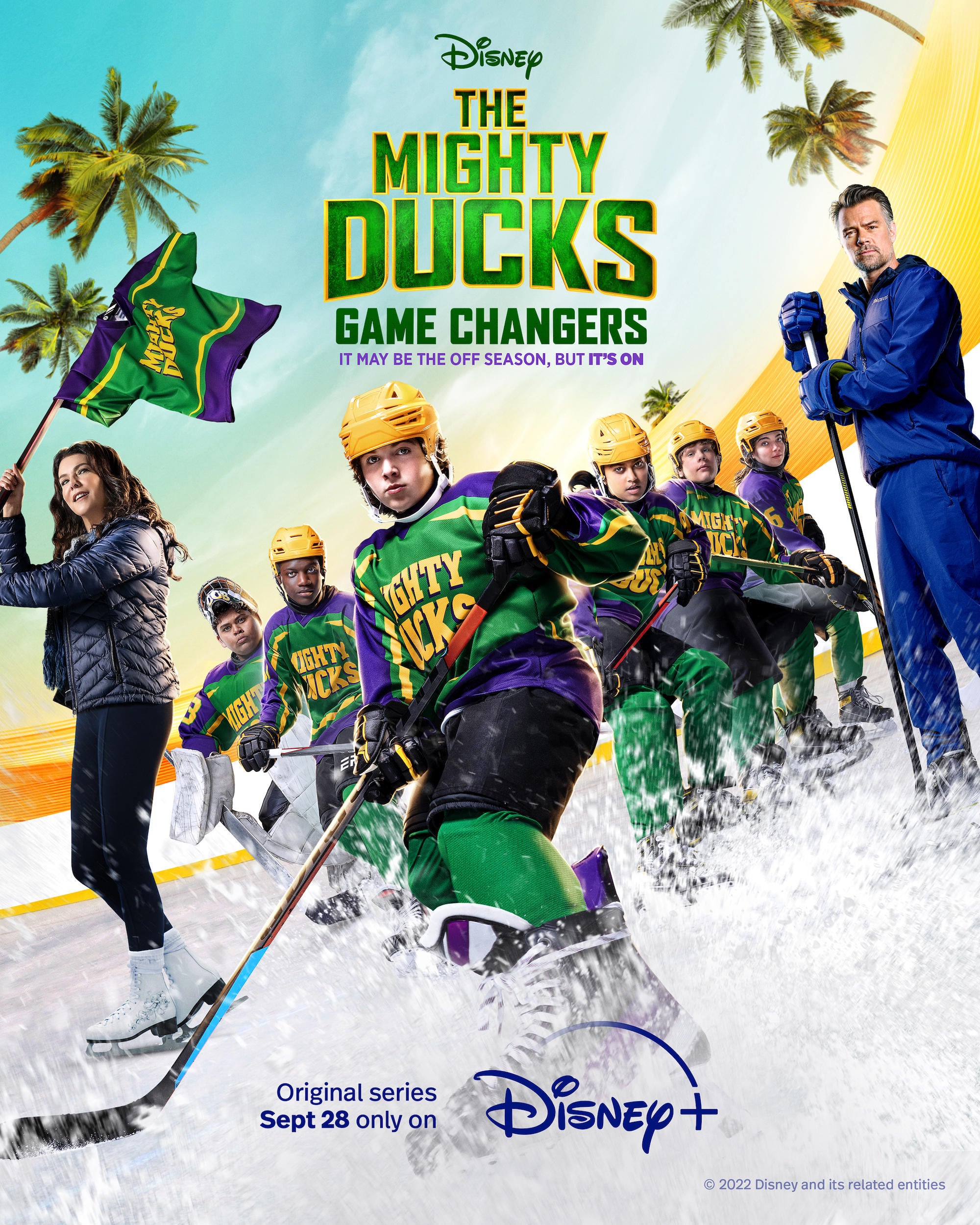
The fictional universe was revisited in 2021 when Disney released the television series The Mighty Ducks: Game Changers. The series inverted the original premise: the Mighty Ducks had grown from an underdog squad into an elite, ultra-competitive youth hockey powerhouse, prompting a new group of mismatched kids to form their own team. Like the original film, the series is a scripted work of fiction designed for entertainment rather than a historical adaptation.
Real Sports Stories vs. Fictional Cinema: How to Spot the Difference
When evaluating whether a sports movie is grounded in real events, viewers can look for specific structural and legal cues:
- Title Card Disclaimers: Movies based on real events typically feature prominent opening or closing title cards explicitly naming the real-life individuals, such as Miracle (2004), Remember the Titans (2000), or Rudy (1997). The Mighty Ducks contains standard standard fictional publication disclaimers.
- Biographical Rights and Life-Rights Credits: True-story films require legal clearances for real people portrayed on screen. Credits for films based on real events will credit real-life coaches, players, or historical consultants.
- Overly Stylized Action Plays: Moves like the "Flying V" or supernatural knucklepucks (D2) are hallmark indicators of Hollywood creative license designed for dramatic effect rather than realistic athletic play.
Frequently Asked Questions
Is Gordon Bombay a real hockey coach?
No, Gordon Bombay is a fictional character created by screenwriter Steven Brill and portrayed by actor Emilio Estevez. There is no historical record of a Minneapolis attorney forced to coach youth hockey as community service under those circumstances.
Did the Anaheim Ducks exist before The Mighty Ducks movie?
No. The movie was released in October 1992, while the NHL franchise was founded by The Walt Disney Company in December 1992 and began playing in 1993. The professional team was directly named after the successful film.
Is the "Flying V" play legal in official hockey rules?
No, the "Flying V" as depicted in the movie would almost always result in an offside penalty. Offside rules state that offensive players without the puck cannot cross the opponent's defensive blue line ahead of the puck.
Was District 5 a real youth team in Minnesota?
No, District 5 was a fictional team created for the film's narrative to contrast underprivileged neighborhood kids with wealthy suburban teams like the Edina Hawks.
Was The Mighty Ducks: Game Changers based on a real team?
No, the Disney+ series The Mighty Ducks: Game Changers is a continuation of the fictional story established in the 1992 movie and features fabricated storylines and characters.
Summary and Next Steps
The Mighty Ducks remains one of the most memorable sports comedies of the 1990s, but it is entirely a work of fiction. Screenwriter Steven Brill invented the story of Gordon Bombay and District 5 out of a love for youth hockey and underdog storytelling. The film's overwhelming success subsequently inspired Walt Disney Pictures CEO Michael Eisner to found the real-life NHL expansion team, the Mighty Ducks of Anaheim, in 1993.
If you are interested in exploring sports movies that are based on true hockey history, consider watching:
- Miracle (2004): The documented story of the 1980 U.S. Men's Olympic Hockey Team.
- The Rocket (2005): A biographical drama covering the life of NHL legend Maurice "Rocket" Richard.
- Red Army (2014): An acclaimed documentary detailing the Soviet Union's dominant national hockey team.