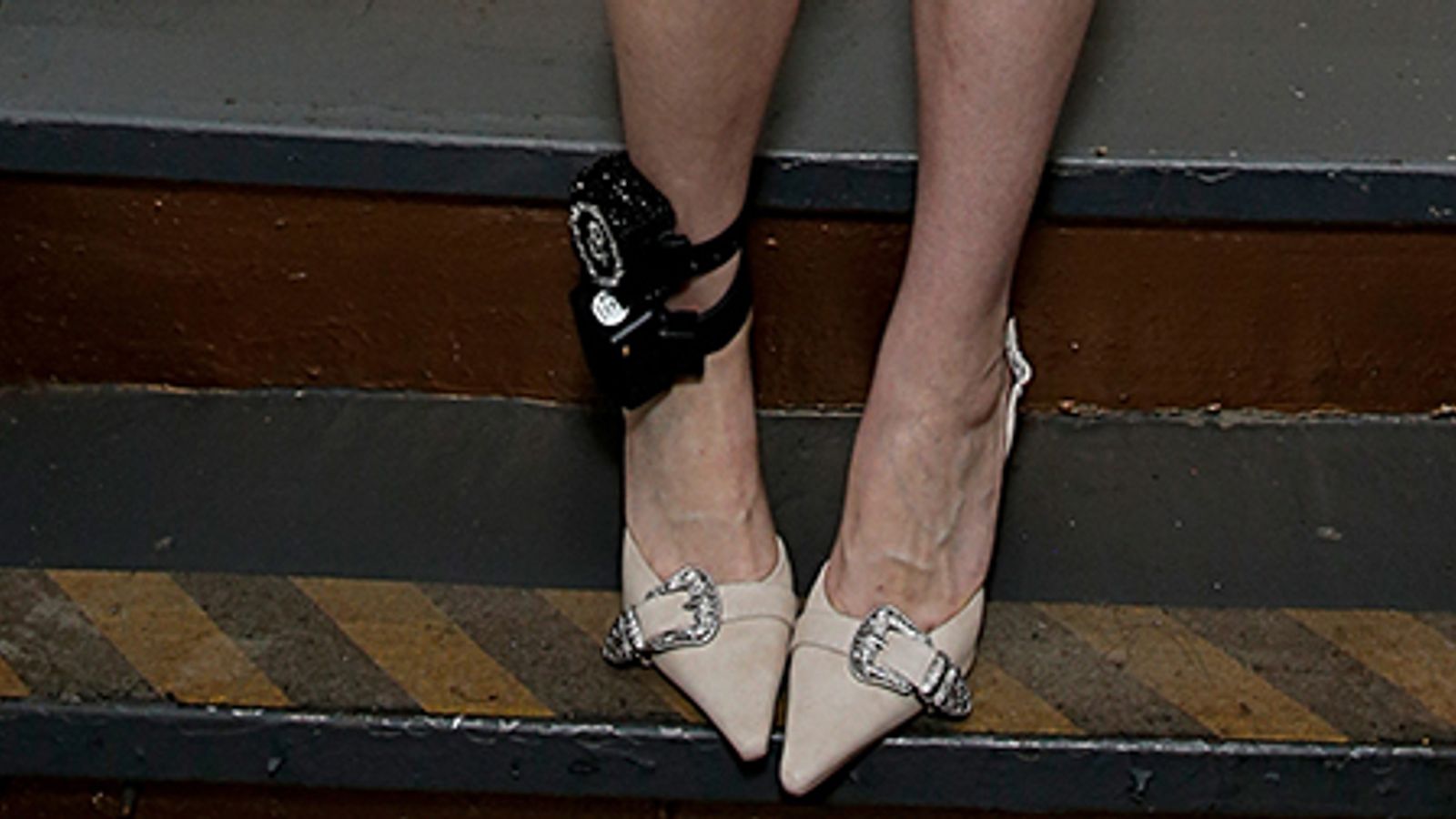
As of 2026, Anna Sorokin—the convicted fraudster who gained international notoriety under the alias Anna Delvey—remains in New York City, continuing to serve a term of home confinement while monitored by a court-mandated ankle bracelet. Her status is the result of prolonged immigration proceedings and specific bail conditions that require her to maintain a fixed residence within the state of New York while she contests her potential deportation to Germany.
The Mechanics of Electronic Monitoring in Immigration Detention
The transition from traditional incarceration to home confinement for individuals facing immigration proceedings represents a shift in how the U.S. government manages non-citizens who have completed their criminal sentences but remain under the jurisdiction of Immigration and Customs Enforcement (ICE). In Sorokin's case, the ankle monitor serves as a critical technological bridge between full custody and unrestricted movement.
Electronic monitoring (EM) devices, often referred to as ankle monitors, are part of the Intensive Supervision Appearance Program (ISAP). These devices utilize GPS technology to track the location of the individual in real-time. For a high-profile case like Sorokin’s, the conditions of this supervision are exceptionally stringent. She is prohibited from leaving her designated residence except for specific, court-approved appointments, which typically include legal consultations or pre-authorized medical visits.
From a technical standpoint, these devices are tamper-resistant. Any attempt to remove the device or a failure to maintain the battery charge triggers an immediate alert to the monitoring agency. In New York City, the logistical challenge of maintaining this signal in a dense urban environment with significant vertical construction is managed by specialized cellular triangulation and GPS-assisted protocols.
Legal Background and the Path to Home Confinement
To understand why Anna Sorokin remains in New York on an ankle monitor, one must look at the intersection of her criminal conviction and her ongoing immigration status. After serving time in New York state prison for grand larceny and related charges, Sorokin was transferred to federal immigration custody.
The core of her current situation involves the "stay of removal" process. While the government holds the authority to deport non-citizens who have committed "aggravated felonies," legal counsel may successfully argue for a stay based on pending litigation or the pursuit of asylum claims. During these periods, the individual is often released from physical detention facilities on bond, provided they adhere to strict conditions that ensure their presence at future court hearings.
The ankle monitor is the physical manifestation of this bond agreement. It serves as a guarantee to the court that the subject will not flee the jurisdiction. The use of this technology has become increasingly common for high-profile detainees where the "flight risk" argument is weighed against the high cost of holding an individual in a traditional detention center.
Geographic and Logistical Constraints
Living under the constraints of an ankle monitor in New York City involves a complex interplay of physical restrictions and administrative oversight. The primary requirement for Sorokin is maintaining a stable, verified residence. Unlike standard house arrest, which may allow for broader movement, the terms of her monitoring are frequently tied to specific geographic boundaries (a "geo-fence").
If she moves outside of this programmed radius, the system generates an immediate violation alert. This creates a unique lifestyle challenge:
- Residential Stability: She must remain at the address on file, which must be approved by the Department of Homeland Security.
- Digital Communication: She is often subject to strict limitations on social media usage and public broadcasting, as her bail terms often prohibit her from using certain platforms to discuss or monetize the very crimes for which she was convicted.
- Reporting Requirements: Even with the electronic monitoring active, she is usually required to check in periodically with an ICE officer, either virtually or in person.
Comparison of Custodial Arrangements
The table below outlines the primary differences between the various stages of legal detention that have applied to Sorokin’s case over the years.
| Feature | State Prison | Federal Detention (ICE) | Home Confinement |
|---|---|---|---|
| Primary Goal | Punitive / Rehabilitative | Pre-deportation holding | Monitoring / Attendance |
| Freedom of Movement | None | None | Restricted (Geo-fenced) |
| Technology Used | Physical barriers | Institutional surveillance | GPS Ankle Monitor |
| Legal Basis | Criminal conviction | Immigration status | Bond / Supervised release |
| Social Access | Controlled visitation | Highly restricted | Limited by judge/agency |
The Societal and Cultural Impact of the "Delvey" Case
The continued monitoring of Anna Sorokin is as much a cultural focal point as it is a legal one. Because she garnered significant media attention—culminating in documentary series and public discourse regarding her identity as a "fake heiress"—the public and legal community often track her status with more scrutiny than a standard immigration detainee.
The "Anna Delvey" narrative has forced a discussion on how the judicial system handles white-collar offenders who leverage their notoriety to influence public opinion. The ankle monitor serves as a reminder to the public that despite the influencer status and the media narrative, she remains a subject of the United States legal system. For the authorities, maintaining this monitoring is a method of ensuring that the law is applied consistently, regardless of the individual's media presence.
Technical and Operational Limitations
The technology of the ankle monitor is not infallible, though it is highly effective at ensuring the subject remains within a known radius. Challenges often arise in urban environments where "GPS drift" or signal loss can occur in large, dense buildings.
- Signal Dead Zones: In parts of New York, particularly in basements or within reinforced steel structures, GPS signals can weaken. This requires the inclusion of secondary cellular locating methods (Cell ID) to ensure the wearer's location remains verifiable.
- Battery Management: The hardware requires consistent charging. A dead battery is technically a violation of the bond, which can lead to immediate revocation of release status.
- Third-Party Oversight: The monitoring is often outsourced to private firms that contract with the federal government. This creates a layer of reporting where the data from the monitor is processed and sent to the presiding immigration judge.
Frequently Asked Questions
Why is Anna Sorokin allowed to live in New York instead of a detention center? Her release into the community under home confinement is a result of a bond hearing where an immigration judge determined that she could be safely monitored without being physically held in a detention facility. This is common when legal proceedings are expected to be lengthy.
Can she travel outside of New York City while wearing the monitor? Generally, no. The terms of her supervised release include a strict geographic boundary. Any travel outside of the approved area requires prior, explicit permission from the immigration authorities and, in some cases, the court.
Does the ankle monitor track her phone calls or internet activity? The ankle monitor itself is a GPS device; it does not record audio or monitor internet traffic. However, separate conditions of her bail often dictate that she must limit her social media usage, and she may be subject to monitoring of her digital devices by probation or immigration officers to ensure compliance with court orders.
What happens if the ankle monitor is removed or malfunctions? If the device is tampered with or malfunctions, it signals an immediate breach of the terms of release. This would typically result in a mandatory court appearance and could lead to her immediate return to federal detention.
Will she be on the monitor until she is deported? The ankle monitor is a condition of her current bond. It will remain in place as long as the conditions of her release require it, or until the legal proceedings—either her removal or an adjustment of her status—are fully resolved.
Next Actions and Legal Considerations
For those observing the case of Anna Sorokin, it is essential to distinguish between the media persona and the legal reality. Her situation is a textbook example of the "limbo" phase of U.S. immigration law, where a non-citizen is neither fully integrated into society nor currently imprisoned.
The legal reality remains that the ankle monitor is not a permanent state but a procedural placeholder. Her legal team continues to challenge the underlying deportation orders, while the government remains focused on ensuring she is available for every hearing. Should her legal arguments prove successful, the monitor would be removed as a matter of course. Should she lose her appeals, the monitor is the precursor to the final stage: the actual removal proceedings.
For followers of this case, the most reliable source for changes to her status remains the publicly available dockets of the immigration courts, which document any shifts in her supervision status or upcoming hearing dates.