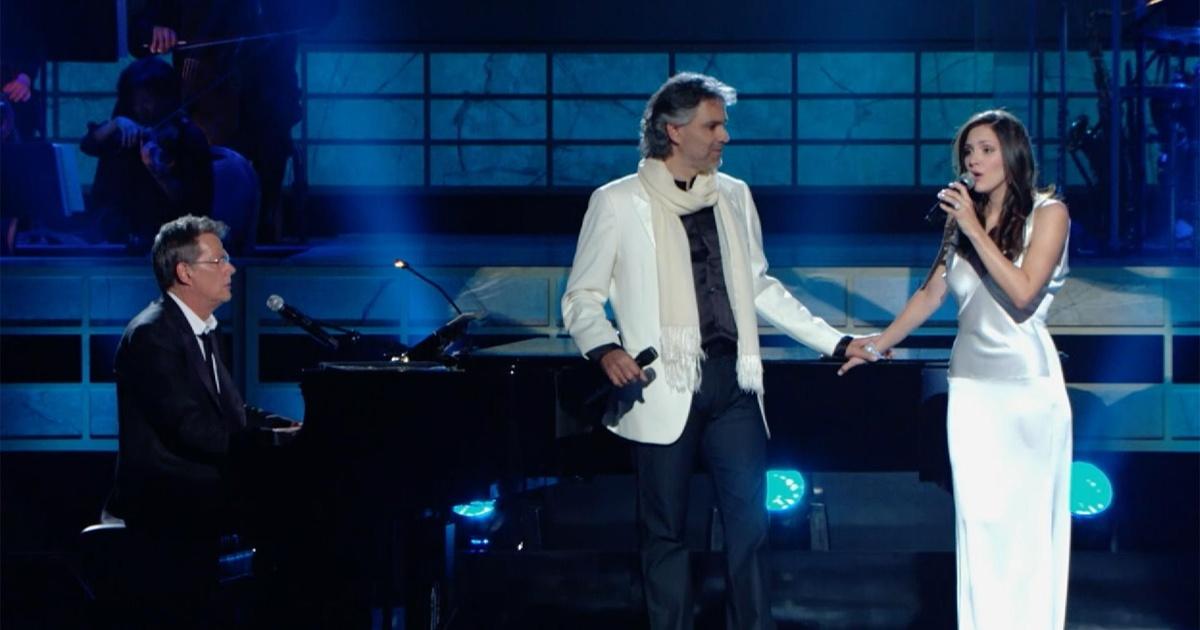
The collaborative performances of classical crossover tenor Andrea Bocelli and pop vocalist and actress Katharine McPhee showcase a distinctive fusion of operatic tradition and contemporary American pop. Their live duets—most notably on television specials and concert stages—highlight the vocal contrast between Bocelli's robust, operatic delivery and McPhee's smooth, contemporary phrasing, bridging two entirely different musical worlds for mainstream and classical crossover audiences alike.
Introduction to the Artistic Pairing
The pairing of Andrea Bocelli and Katharine McPhee represents an intriguing intersection within the modern crossover landscape. Andrea Bocelli, globally renowned for bringing classical tenor arias and sacred sacred songs to pop charts, frequently collaborates with contemporary pop and jazz vocalists during his television specials and concert tours. Katharine McPhee, who rose to prominence as a runner-up on the fifth season of American Idol and subsequently built a diverse career in pop music and Broadway theatre, brings a distinct American vocal styling to the stage.
When these two artists share a platform, the resulting performances offer more than a simple duet; they serve as a study in vocal contrast. Bocelli's Italian phrasing, heavy vibrato, and operatic projection require his performance partners to adapt dynamically. McPhee’s background in contemporary belt-singing, pitch accuracy, and musical theatre versatility allows her to navigate these arrangements without losing her signature pop identity. Understanding their collaborative history involves examining how their distinct backgrounds shape their stage dynamic, the specific repertoire they explore, and the technical demands of pairing a classical tenor with a contemporary pop artist.
Background and Musical Context
To understand the dynamic of their performances, it is helpful to look at the individual trajectories of both artists prior to their major shared appearances. Andrea Bocelli's career took off in the mid-1990s, establishing him as the world's most commercially successful classical crossover artist. His albums, such as Romanza and Sogno, popularized the blending of pop structures with operatic vocals. Bocelli's collaborative strategy has consistently involved inviting prominent female artists—ranging from Céline Dion and Sarah Brightman to Laura Pausini and Ariana Grande—to join him on stage and in the studio.
Katharine McPhee entered the public eye in 2006 on American Idol, where her powerful renditions of standards like "Somewhere Over the Rainbow" and pop tracks showcased a wide vocal range and a polished stage presence. Following her time on the show, McPhee released several studio albums spanning pop and R&B before transitioning into television and theatre, notably starring in the NBC musical drama Smash and later making her Broadway debut in Waitress. This theatrical training equipped her with the stamina, breath control, and storytelling ability necessary to perform alongside world-class vocalists in live television environments.
When producers and musical directors orchestrate collaborations between artists from such disparate backgrounds, the goal is typically to create a bridge for audiences who might otherwise only listen to one genre. For Bocelli's fans, a contemporary vocalist brings a fresh, accessible energy to traditional material. For McPhee's supporters, sharing the stage with an international icon validates her vocal capability on a global, classical-leaning platform.
Key Collaborative Performances and Repertoire
The collaboration between Andrea Bocelli and Katharine McPhee is anchored primarily by high-profile television specials and holiday concert appearances. These events demand meticulous preparation, as live television requires absolute precision under pressure.
Television Specials and Live Concerts
One of the most notable platforms for their collaboration has been Bocelli's PBS television specials, which regularly feature guest artists. These programs are recorded live or in controlled concert environments, often later released on home video or broadcast nationwide. McPhee's appearances on these specials allowed her to perform classic standards and crossover tracks that require a blend of classical restraint and emotional pop delivery.
The selection of repertoire for these performances is crucial. Because Bocelli performs primarily in Italian, Spanish, and English, his duet partners must navigate multiple languages, varying tempos, and complex orchestration. Standard arrangements often require the pop vocalist to handle verses or middle eights in English before uniting with Bocelli for soaring, bilingual choruses or harmonies.
Comparative Analysis of Vocal Styles
| Vocal Attribute | Andrea Bocelli | Katharine McPhee | Collaborative Result |
|---|---|---|---|
| Primary Genre | Opera, Classical Crossover, Sacred | Pop, Musical Theatre, Jazz Standards | Bridging traditional operatic power with modern vocal styling. |
| Vocal Classification | Loric Tenor / Crossover Tenor | Soprano / Belt-Voice | Distinct ranges that complement each other when properly orchestrated. |
| Language & Diction | Italian, Spanish, English, Neapolitan | Primarily English, with studied foreign diction | Creates a bilingual, culturally diverse listening experience. |
| Stage Presence | Measured, focused, traditional concert posture | Expressive, theatrical, dynamic movement | Balances the classic recital feel with modern stage performance. |
Technical and Orchestral Demands
Performing live orchestral music alongside Andrea Bocelli presents unique technical hurdles for any guest vocalist, and Katharine McPhee’s background required specific adjustments for these settings.
Sound Engineering and Amplification
In a traditional opera house or large arena hosting a classical crossover concert, the acoustic environment is complex. Bocelli typically uses specific monitoring setups to accommodate his visual impairment, relying heavily on audio cues and the conductor's rhythm. For a duet partner like McPhee, matching volume and projection without the aid of heavy studio compression requires careful microphone technique. Pop vocalists are accustomed to singing very close to dynamic or condenser handheld microphones, whereas crossover settings sometimes require more open space to blend with a massive live orchestra and choir.
Arrangement and Key Selection
Arrangers working with Bocelli often have to transpose standard pop or classical crossover tracks to fit his specific tenor range while ensuring the guest artist is not forced out of her comfortable tessitura (the most acceptable and comfortable vocal range for a given singer). In McPhee's case, her ability to mix chest voice and head voice allows arrangers to write expansive harmonies that soar above or weave beneath Bocelli's powerful vocal line.
Audience Reception and Cultural Impact
The reception of Bocelli and McPhee's joint performances highlights the evolving nature of classical crossover music in the twenty-first century. Purists sometimes approach pop-opera collaborations with skepticism, questioning whether pop vocalists possess the breath support required for classical arrangements. However, McPhee’s performances consistently earned praise for her pitch stability, tone clarity, and willingness to respect the classical structure of the music rather than attempting to over-sing the tenor.
For pop and musical theatre fans, seeing an artist like McPhee hold her own on stage with an international icon validates the crossover genre's commercial viability. These performances demonstrate that contemporary vocal technique, when paired with rigorous preparation and theatrical experience, can successfully intersect with centuries-old European vocal traditions.
Frequently Asked Questions
What songs have Andrea Bocelli and Katharine McPhee performed together?
They have collaborated primarily on television specials and concert events, performing classic crossover standards, holiday music, and popular ballads that allow both artists to showcase their respective vocal strengths.
Does Katharine McPhee have classical vocal training?
While McPhee is primarily known as a pop and musical theatre artist with natural belt capabilities, her extensive training for television and Broadway—including her role in Smash and Waitress—has provided her with the breath control and technical precision necessary for crossover performance.
How do pop vocalists adapt to singing with Andrea Bocelli?
Pop vocalists must adjust to working with full live orchestras, uncompressed acoustic environments, and bilingual repertoires. They rely on careful microphone technique, precise pitch matching, and close coordination with the musical director and conductor.
Where can I watch their collaborative performances?
Many of their shared performances have been featured on PBS television broadcasts, official concert video releases, and digital video sharing platforms hosted by fans and official network archives.
Conclusion and Next Actions
The collaborative work between Andrea Bocelli and Katharine McPhee demonstrates the artistic possibilities that arise when contemporary pop and musical theatre vocalists step into the classical crossover arena. By examining their vocal mechanics, repertoire choices, and the technical demands of live orchestral performance, listeners gain a deeper appreciation for the skill required to unite two distinct musical worlds. For those looking to explore these performances further, seeking out official PBS concert specials or live broadcast recordings provides the best audio and visual representation of their stage partnership.