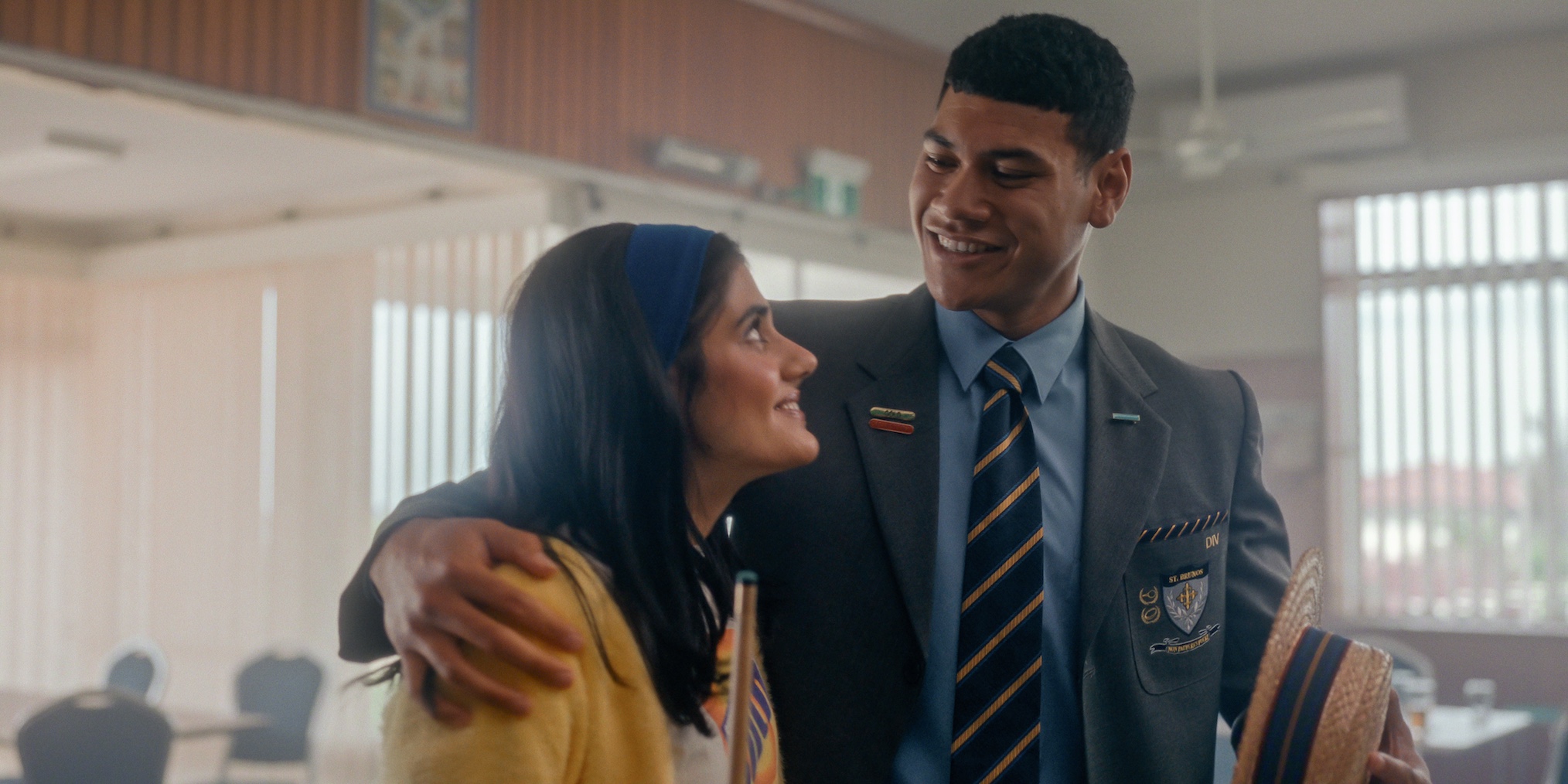
Amerie Wadia is the central protagonist and catalyst of the 2022 reboot of the Australian teen drama Heartbreak High. Portrayed by actress Ayesha Madon, Amerie’s journey throughout the series serves as a mirror for the complexities of modern adolescence, social hierarchy, and the consequences of digital-age social navigation within the fictional Hartley High School.
The character of Amerie Wadia serves as the narrative anchor for the Heartbreak High reboot, acting as both the architect of her own social downfall and the primary agent of change within the school's ecosystem. Following the discovery of a "map"—a graphic mural depicting the sexual histories of students—Amerie finds herself ostracized by the very peers she helped document. Her arc is defined by her attempts to reconcile her impulsive nature with the need for personal growth, accountability, and the complexities of queer identity and platonic friendship. As the series progresses, her development shifts from reactive social maneuvering to a deeper exploration of self-worth, academic stakes, and the fragile nature of teenage loyalty.
The Catalyst: The Map and Its Aftermath
The defining moment of Amerie Wadia’s introduction is the unveiling of the "incest map." In the initial episodes, Amerie is established as a girl struggling to find her footing in the volatile environment of Hartley High. Her decision to document the sexual relationships of her peers is rooted in a desire for social capital, but it quickly backfires when the map is discovered by school authorities.
This incident functions as the inciting event for the entire series. It forces Amerie into a state of social isolation, as she is viewed as a pariah by her classmates. For the audience, this serves as an introduction to the core themes of the show: the blurred lines between privacy and public spectacle in an era of constant connectivity, and the ways in which adolescent mistakes can be magnified by peer scrutiny. Amerie’s subsequent struggle to clear her name—or at least navigate the fallout—sets the template for her character throughout the series. She is consistently forced to confront the gap between her intentions and the actual impact of her behavior on those around her.
Character Dynamics: Harper, Malakai, and Quinni
Amerie’s growth is inextricably linked to her shifting relationships. Her dynamic with Harper McLean is the emotional core of the series. Their fractured friendship, which was dismantled by the discovery of the map, serves as the primary driver for much of the tension Amerie faces. Throughout the seasons, their reconciliation is not portrayed as a simple resolution, but as a grueling process of negotiation, forgiveness, and the admission of past mistakes.
Parallel to this is her relationship with Malakai Mitchell. Their connection represents a more grounded, albeit complicated, romantic trajectory. Through her interactions with Malakai, Amerie is forced to contend with issues of consent, cultural difference, and the vulnerability required to sustain a healthy relationship. Furthermore, her friendship with Quinni, who is neurodivergent, provides a crucial perspective on Amerie’s capacity for empathy. By observing Amerie navigate these relationships, the viewer gains insight into her evolving maturity; she learns to place the needs of others above her own social ambitions, marking a transition from a self-centered teenager to a more thoughtful, if still flawed, young adult.
Navigating Social Hierarchies at Hartley High
Hartley High is not merely a setting; it is a structural force that dictates how Amerie interacts with the world. The school's social hierarchy is rigid, and Amerie’s position within it is precarious. She often oscillates between being a target of school bullying and a leader of social change, particularly as she becomes a focal point for the school's remedial sexual education programs.
This environment presents a significant challenge to Amerie’s development. She must navigate the pressure to conform to the expectations of the "popular" groups while maintaining her own moral compass. The series illustrates that Amerie’s choices—often made under the influence of panic or social anxiety—are frequently punished by the school’s unforgiving environment. This tension provides a critique of the high-stakes nature of modern schooling, where one’s reputation can be dismantled or built overnight. By 2026, the character has become a case study for viewers on the consequences of social media-adjacent behavior within high school settings.
Comparison of Key Character Milestones
| Milestone | Context | Impact on Amerie |
|---|---|---|
| The Map Incident | Series premiere | Loss of status and social exile |
| Sexual Health Program | Mid-Season 1 | Forced accountability and maturation |
| Friendship with Quinni | Ongoing | Development of empathy and advocacy |
| The Heartbreak High Fire | Season 2 climax | Shift from survival to community leadership |
The Role of Ayesha Madon’s Performance
The depth of Amerie Wadia is heavily reliant on the performance of Ayesha Madon. By blending a sense of frantic, nervous energy with moments of profound vulnerability, Madon ensures that Amerie remains a relatable, if not always likable, protagonist. Her portrayal avoids the typical tropes of the "redeemed" character. Instead, she plays Amerie as a person who constantly struggles to learn, often repeating mistakes before finding the correct path.
Critics and audiences have often pointed to the authenticity of her performance as a pillar of the show’s success. Madon manages to capture the specific cadence of modern teenage life—the anxiety over social media notifications, the fear of missing out, and the crushing weight of peer judgment. For the audience, this performance makes Amerie’s decisions feel consequential rather than mere plot devices. Her ability to pivot between comedic relief and dramatic weight is essential to the show's balance of tone.
Themes of Accountability and Growth
One of the most significant aspects of Amerie’s trajectory is her relationship with accountability. Early in the series, Amerie is defined by her deflection—she avoids taking full responsibility for the map and the harm it caused her classmates. However, as the series progresses, her arc is defined by her slow, painful acceptance of the consequences of her actions.
This theme is essential for a contemporary teen drama. It moves away from the "villain-hero" binary, opting instead to present a more nuanced view of accountability. Amerie learns that an apology is rarely enough and that rebuilding trust requires sustained effort, consistency, and a willingness to accept that the other party may never return to the original status quo. Her journey towards adulthood is marked by this realization: that her actions have ripples she cannot always control, and that true growth involves standing by those consequences.
Potential for Future Development
As we look at the trajectory of Heartbreak High in 2026, the question of Amerie’s future remains central to the narrative. Having survived the various trials of Hartley High, the character is positioned at a crossroads. The transition from high school to the "real world" will test whether the lessons she learned about empathy, digital responsibility, and friendship will persist outside the confines of the school environment.
Her evolution is not complete. If the character continues to be explored, the focus will likely shift from the micro-drama of school politics to the macro-challenges of young adulthood. This allows for a deeper examination of her identity, particularly regarding her cultural heritage and her personal values, which have often been sidelined by the constant crises of school life. Amerie has become a symbol of the "messy" but ultimately resilient adolescent, and her character serves as a touchstone for viewers navigating similar transitions.
Frequently Asked Questions
Why did Amerie Wadia get in trouble at the start of the show? Amerie was caught for creating and maintaining the "incest map," a detailed, graphic document posted on a school wall that cataloged the sexual activity of her classmates. This violated the privacy of her peers and led to significant social backlash and disciplinary action by the school administration.
How does Amerie’s friendship with Quinni affect her? Quinni provides a grounded, honest perspective that Amerie often lacks. Because Quinni is neurodivergent and generally more candid, she forces Amerie to look past her own social concerns and confront the reality of how her actions hurt others, serving as a moral anchor for the protagonist.
Is Amerie Wadia considered an anti-hero? While Amerie possesses traits of an anti-hero—such as her impulsive nature and initial poor decision-making—the show does not position her as a villain. She is better described as a "flawed protagonist." Her arc is specifically centered on learning from her mistakes, which pushes her toward personal growth rather than moral degradation.
What is the significance of the school environment to Amerie’s character? The school functions as an antagonist in its own right. The toxic, high-pressure environment of Hartley High exacerbates Amerie’s worst traits, proving that her environment often dictates her reactive behavior. Her struggle to differentiate her true self from her "school persona" is a defining struggle throughout her arc.
Recommendation for Viewers
To truly understand the evolution of Amerie Wadia, it is recommended to observe the parallel development of the "incest map" incident alongside the introduction of the school’s sexual education curriculum. By tracing how Amerie moves from being the subject of a scandal to the facilitator of health education, you can clearly see the progression of her maturity and her shift from seeking social approval to seeking genuine connection and professional integrity. Start by re-evaluating the Season 1 finale to see how the character's definition of "loyalty" changes compared to her perspective in the premiere.