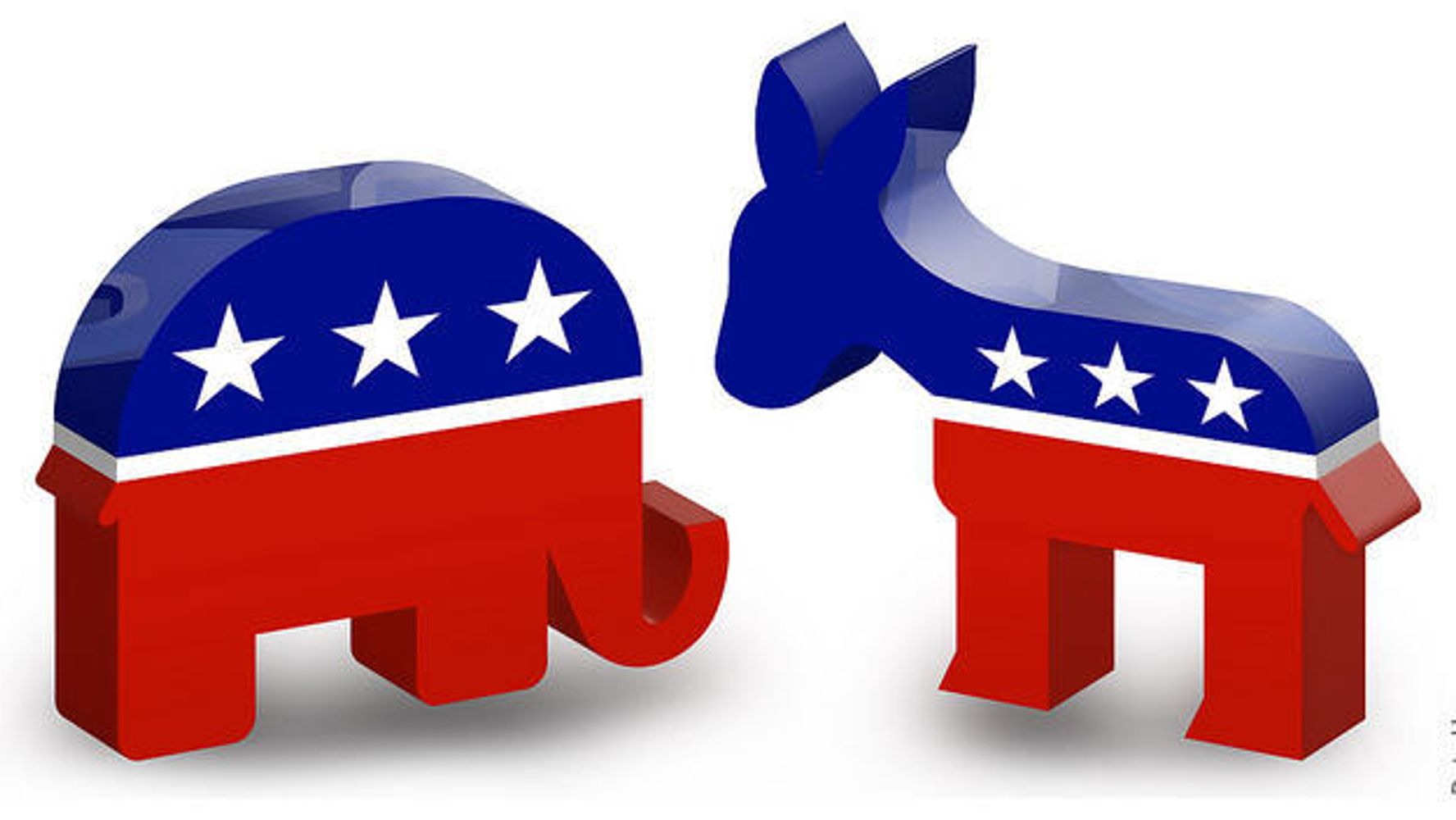
The United States operates as a two-party system primarily because of its "winner-take-all" electoral structure, which incentivizes voters to coalesce into two broad coalitions to avoid "wasting" their votes. This phenomenon, known as Duverger’s Law, is reinforced by state ballot access laws, the Electoral College, and a century of institutionalized primary systems that marginalize third-party candidates.
The Structural Foundation: Duverger’s Law and Plurality Voting
To understand why the American political landscape is dominated by the Democratic and Republican parties, one must first examine the mechanics of how votes are counted. Unlike many European democracies that utilize proportional representation—where a party receiving 10% of the national vote gains 10% of the seats in parliament—the U.S. relies almost exclusively on single-member districts and plurality voting (often called First-Past-The-Post).
In a plurality system, the candidate who receives the most votes wins the entire representation for that district, even if they do not achieve an absolute majority. This creates a powerful mathematical incentive for small, like-minded groups to merge into larger parties before an election occurs. If three parties compete (Party A at 40%, Party B at 35%, and Party C at 25%), Party A wins everything, and the voters for B and C receive no representation. Over time, Party B and Party C voters realize that by merging, they could easily defeat Party A. This cycle of consolidation eventually stabilizes into two dominant parties.
Political scientist Maurice Duverger formalized this observation in the 1950s. Duverger’s Law suggests that plurality-rule elections structured within single-member districts tend to result in a two-party system. In 2026, this law remains the single most important explanation for the continued dominance of the "Big Two." While voters may express dissatisfaction with both major parties, the structural fear of a "spoiler effect"—where voting for a preferred third party inadvertently helps the candidate they dislike the most—keeps the two-party system intact.
The Historical Precedent: From Federalists to the Modern Era
The U.S. Constitution does not mention political parties; in fact, many of the Founding Fathers, including George Washington, viewed "factions" with extreme suspicion. However, the two-party system emerged almost immediately during Washington’s administration. The divide began with the Federalists, led by Alexander Hamilton, who favored a strong central government and an industrial economy, and the Democratic-Republicans, led by Thomas Jefferson, who advocated for states' rights and an agrarian society.
Throughout American history, the specific parties have changed names and platforms, but the dualistic nature of the competition has remained a constant. The current alignment of Democrats and Republicans took its modern shape in the mid-19th century. The Republican Party was founded in 1854 as an anti-slavery party, replacing the collapsing Whig Party. Since the Civil War, these two entities have held a virtual duopoly on American governance.
Realignment and Evolution
While the names of the parties have been stable for over 170 years, their ideologies have not. Major "realignments" occur when the parties shift their core constituencies. For instance:
- The New Deal Realignment (1930s): Franklin D. Roosevelt brought working-class voters, ethnic minorities, and Southern whites into a massive Democratic coalition.
- The Southern Strategy (1960s-70s): Following the Civil Rights movement, many Southern conservatives shifted from the Democratic Party to the Republican Party, a transition that fundamentally altered the electoral map for decades.
In 2026, we observe a continuing realignment focused on educational attainment and geography, with the "urban-rural divide" serving as the primary predictor of partisan affiliation.
Institutional Barriers: Ballot Access and Campaign Finance
The two-party system is not just a result of voter psychology; it is protected by a complex web of state and federal laws written by the two parties themselves. These barriers make it functionally difficult for a third party to even appear on the ballot, let alone win.
Ballot Access Laws
In the United States, there is no national ballot; instead, there are 50 different sets of state laws. Major parties (Democrats and Republicans) are typically granted automatic ballot access based on their performance in previous elections. In contrast, third-party and independent candidates often must collect tens of thousands of signatures within a very narrow timeframe to qualify. In some states, the requirements are so onerous that third parties must spend a majority of their campaign funds just on legal fees and signature gathering rather than on reaching voters.
The Commission on Presidential Debates (CPD)
Visibility is a prerequisite for viability. Since the 1980s, the rules for participating in televised presidential debates have generally required a candidate to poll at 15% in five national polls. This creates a "catch-22": a candidate cannot reach 15% without the exposure of the debates, but they cannot get into the debates without already having 15% support. This threshold has effectively excluded every third-party candidate since Ross Perot in 1992.
Campaign Finance and PACs
The American campaign finance system is heavily skewed toward the established parties. Donors, particularly large corporations and political action committees (PACs), are hesitant to "invest" in third-party candidates who have no realistic path to power. Consequently, the Democratic and Republican National Committees (DNC and RNC) act as massive fundraising engines that third parties cannot hope to match. You can review the current federal contribution limits at the Federal Election Commission (FEC).
The Role and Reality of Third Parties in 2026
Despite the structural hurdles, third parties (such as the Libertarian, Green, and Constitution parties) play a significant role in American politics. While they rarely win high-office seats, they serve two critical functions: as policy laboratories and as spoilers.
- Policy Adoption: When a third party gains traction with a specific issue (e.g., environmentalism or fiscal conservatism), one of the two major parties often "absorbs" that issue into their own platform to win back those voters. This happened historically with the Populist Party’s ideas in the 1890s and the Reform Party’s focus on the deficit in the 1990s.
- The Spoiler Effect: In a close election, a third-party candidate can siphon off enough votes from a major-party candidate to flip the result. Notable examples include Ralph Nader in 2000 and Jill Stein/Gary Johnson in 2016.
| Feature | Major Parties (D/R) | Minor/Third Parties |
|---|---|---|
| Funding Source | Large PACs, National Committees | Small donors, grassroots |
| Ballot Access | Automatic in most states | Requires signature petitions |
| Ideology | "Big Tent" (Broad coalitions) | Issue-specific or ideological purity |
| Legislative Power | Control all committees/leadership | Zero to negligible representation |
| Primary Focus | Winning elections & governing | Shifting the national conversation |
The Electoral College: A Pillar of the Two-Party System
The Electoral College is a unique American institution that further entrenches the two-party system at the presidential level. By awarding electoral votes on a winner-take-all basis in 48 out of 50 states (Maine and Nebraska are the exceptions), the system makes it nearly impossible for a third party to gain a foothold.
A candidate could theoretically receive 10 million votes spread evenly across the country and receive zero electoral votes. To win in the Electoral College, a candidate must have concentrated regional support. This is why historically successful third parties, like the Dixiecrats in 1948 or the American Independent Party in 1968, were based on regional grievances rather than national ideologies. For more on how these votes are tallied, refer to the National Archives' Electoral College overview.
Potential for Reform: Ranked Choice Voting and Beyond
As of 2026, there is growing momentum to reform the two-party system through alternative voting methods. The most prominent of these is Ranked Choice Voting (RCV). In an RCV system, voters rank candidates in order of preference (1st, 2nd, 3rd). If no candidate wins a majority of first-place votes, the candidate with the fewest votes is eliminated, and their supporters' second choices are distributed among the remaining candidates.
RCV eliminates the "spoiler effect" because a voter can choose a third-party candidate as their first choice without fear of helping their least favorite candidate. If the third-party candidate loses, the vote simply moves to the voter's second choice. States like Alaska and Maine have already implemented RCV, and several more are considering it in 2026 to reduce political polarization and give voters more options.
Other proposed reforms include:
- Multi-Member Districts: Changing the law to allow districts to be represented by multiple people proportionally.
- National Popular Vote Interstate Compact (NPVIC): An agreement among states to award their electoral votes to the winner of the national popular vote, bypassing the winner-take-all state mechanics.
- Fusion Voting: A system used in New York where minor parties can cross-endorse major-party candidates, allowing third parties to exert influence without being "spoilers."
Common Pitfalls and Misconceptions
When discussing the two-party system, it is common to encounter several myths:
- Myth: The Constitution requires two parties. In reality, the Constitution is silent on parties. The system is a result of state laws and the mathematical consequences of plurality voting.
- Myth: Third parties are useless. While they don't win often, they are the primary drivers of new political ideas and can force major parties to address neglected issues.
- Myth: Both parties are the same. While they share a commitment to the two-party structure, their policy platforms, judicial appointments, and legislative priorities in 2026 remain starkly different on issues ranging from climate change to tax policy.
Frequently Asked Questions
Why can't we just add a third party to the debates? The Commission on Presidential Debates is a private non-profit corporation (historically controlled by the two major parties). They set the 15% threshold to ensure that only "viable" candidates are on stage to avoid cluttering the debate with fringe candidates. Critics argue this creates a circular logic that prevents any new party from ever becoming viable.
Is the U.S. the only country with a two-party system? No, but it is one of the few that is consistently and exclusively two-party. The United Kingdom and Canada also use plurality voting, but they often have "two-and-a-half" or multi-party systems because they have strong regional parties (like the Scottish National Party or the Bloc Québécois) that can win specific districts.
Can an Independent win the Presidency? Technically, yes. However, an Independent would face the same ballot access and fundraising challenges as a third-party candidate. George Washington was the only president not affiliated with a party, and since the mid-1800s, no independent has come close to winning the White House.
Does the two-party system cause polarization? Many political scientists argue that it does. Because there are only two "teams," politics becomes a zero-sum game. In a multi-party system, parties often have to form coalitions to govern, which encourages compromise. In a two-party system, the primary incentive is often to obstruct the other side to win the next election.
What is a "Big Tent" party? Because there are only two parties, each must be a "big tent" that includes many different factions. For example, the Democratic Party includes both democratic socialists and centrist liberals, while the Republican Party includes both populists and traditional fiscal conservatives.
Next Actions for Voters
If you are concerned about the limitations of the two-party system in 2026, there are concrete steps you can take:
- Research Local Election Laws: Check your state’s requirements for ballot access and see if your state is considering Ranked Choice Voting or open primaries.
- Support Non-Partisan Redistricting: Many states are moving toward independent commissions to draw district lines, which can reduce gerrymandering and make more districts competitive for non-incumbents.
- Engage in Primaries: Since the two-party system is likely to persist for the foreseeable future, the most effective way to change a party's direction is often from the inside by voting in primary elections.
- Verify Registration: Ensure your voter registration is current via Vote.gov to participate in both primary and general elections.