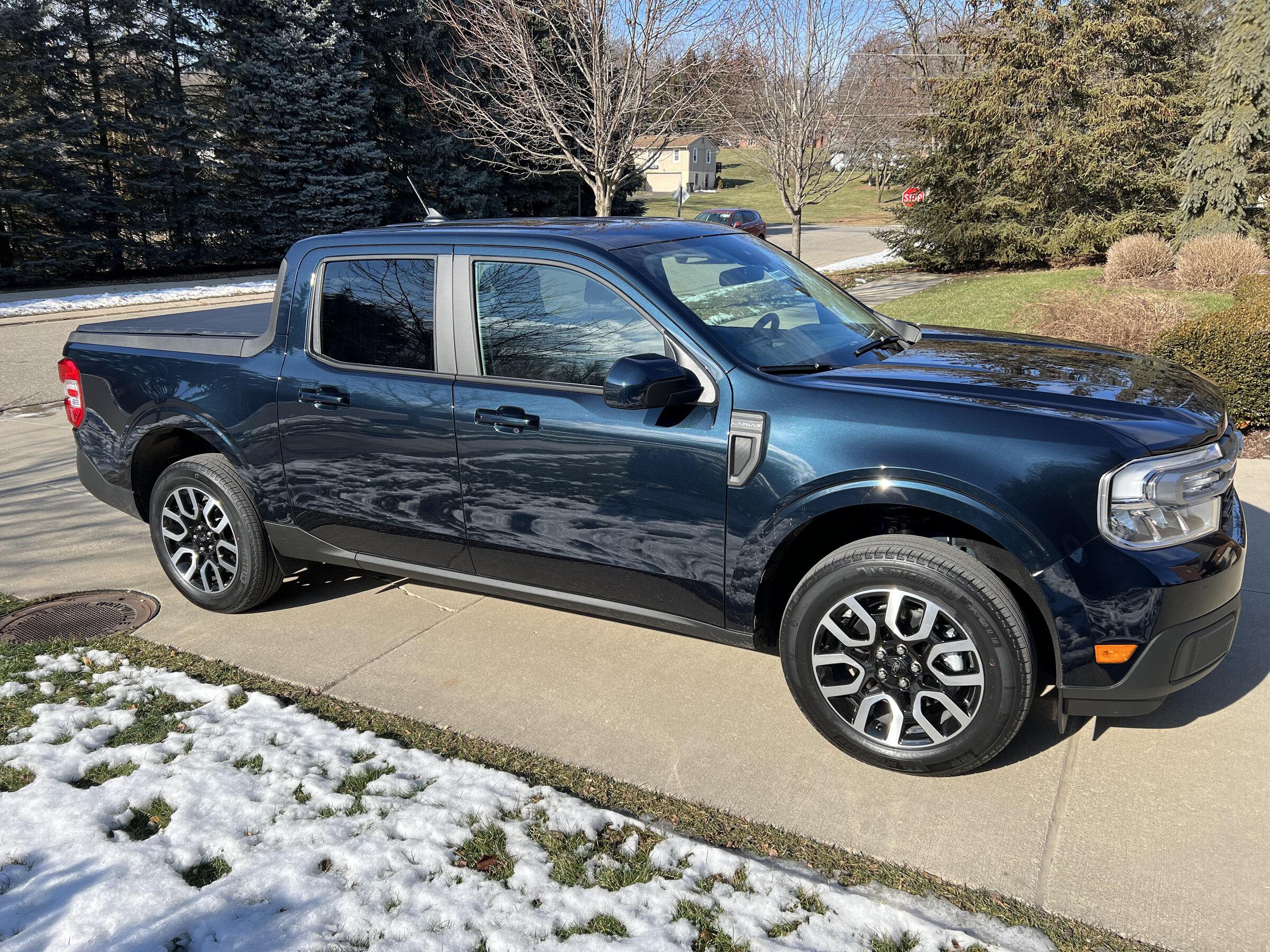
Alto Blue Metallic (Ford Paint Code L7/M7445) is a premium automotive finish characterized by its deep, dark teal-blue hue and high-intensity metallic flake. It is a sophisticated multi-stage color that exhibits significant metamerism, appearing nearly black in low light while revealing vibrant blue and green undertones under direct sunlight or high-intensity discharge (HID) lighting.
Understanding the Aesthetic and Technical Identity of Alto Blue
As we move through 2026, Alto Blue Metallic remains one of the most discussed colors in the automotive world, particularly within the Ford Motor Company enthusiast communities. This color is not merely a "dark blue"; it is a complex formulation designed to provide a "chameleon" effect. This optical depth is achieved through the careful layering of pigments and metallic particles that react dynamically to the angle of light hitting the surface.
In the automotive industry, color is often the first point of emotional contact for a consumer. Alto Blue Metallic sits at the intersection of luxury and ruggedness. It was originally popularized on the Ford Bronco Sport and the Maverick, but its popularity saw it expand across the F-150 and Explorer lines. The appeal lies in its versatility—it offers the stealthy, aggressive look of a dark vehicle at night, but transforms into a high-end, custom-look finish during the day.
Technically, the color is classified as a "tinted clearcoat" or a sophisticated metallic basecoat system depending on the specific production year and model. For repair and specification purposes, the industry standard identifier is Paint Code L7. When ordering touch-up kits or professional-grade refinishing supplies, this code is the only way to ensure a chemical match, as "Alto Blue" may have slight variations in shade across different manufacturing batches if not tracked by the alphanumeric code.
Technical Specifications and Chemical Composition
To understand how Alto Blue Metallic functions, one must look at the chemistry of modern automotive coatings. As of 2026, these coatings are primarily waterborne systems for the basecoat, followed by high-solid solvent-based clearcoats for protection.
Colorimetric Data
While exact proprietary formulas are held by paint manufacturers like PPG, Axalta, and BASF, the color can be approximated for digital and design use. It is important to note that digital approximations (RGB/HEX) cannot capture the "flop" of the metallic flake, which is the change in color observed when viewing the paint from different angles.
- Ford Paint Code: L7 (Secondary code: M7445)
- Hex Code (Approximate): #1B2E3C
- RGB (Approximate): R: 27, G: 46, B: 60
- Finish Type: Metallic / Tinted Clearcoat
- Primary Pigments: Phthalocyanine Blue, Carbon Black, and specialized Aluminum Flake.
The Role of Metallic Flake
The "Metallic" in Alto Blue comes from suspended aluminum or mica particles. In this specific formulation, the flakes are finely milled to ensure a smooth, shimmering transition rather than a coarse "glitter" look. The size and distribution of these flakes are critical; if they are too large, the color loses its deep, "inky" quality. If they are too small, the color looks flat or muddy in the shade.
Metamerism and Light Interference
Alto Blue is a textbook example of metamerism in industrial design. Under a 5000K light source (bright daylight), the blue pigments are highly reflective. Under a 3000K light source (warm streetlights or sunset), the red and yellow spectra are absorbed, leaving the dark base to dominate, making the vehicle look charcoal or black. This dual-identity is a primary selling point for the color.
Vehicle Applications and Historical Context
Alto Blue Metallic was introduced as a premium color option, often requiring an additional upcharge (typically ranging from $295 to $495 depending on the model and year). Its rollout was strategically aimed at "lifestyle" vehicles that bridge the gap between urban commuting and outdoor adventure.
The Ford Maverick and Bronco Sport
These two vehicles were the "poster children" for Alto Blue. In the Maverick, the color provided a sophisticated contrast to the plastic cladding of the Lariat trim. For the Bronco Sport, it served as a more subdued alternative to the high-visibility colors like Cyber Orange or Area 51.
Expansion to Heavy-Duty Lines
Following its success in the compact segment, Ford moved the color into the F-150 and Super Duty lineups. On a larger canvas like an F-150, the metallic shift is even more pronounced because of the large, flat body panels (doors and beds) that can catch the light across a greater surface area. In 2026, it remains a sought-after color on the secondary market for these models, often holding a slight resale premium over standard white or silver.
Comprehensive Comparison of Ford Blue Shades
Choosing a blue metallic paint can be difficult because of how many variations exist within a single manufacturer's palette. The following table compares Alto Blue with its closest relatives to help owners and buyers distinguish the nuances.
| Color Name | Paint Code | Visual Character | Lighting Effect |
|---|---|---|---|
| Alto Blue Metallic | L7 | Dark Teal / Inky Blue | High shift (Black to Teal) |
| Antimatter Blue | HX | Near-Black Navy | Subtle shift (Black to Dark Blue) |
| Atlas Blue | B3 | Bright Royal Blue | Low shift (consistent Blue) |
| Velocity Blue | E7 | Electric / Cyan Blue | Vivid and bright in all light |
| Blue Lightning | PN | Medium Sport Blue | Metallic with silver undertones |
As shown in the table, Alto Blue is the "greenest" of the blues. If you place a sample of Alto Blue next to Antimatter Blue, the Antimatter Blue will look purple-toned by comparison, while Alto Blue reveals its distinct forest-green or teal "dark water" undertone.
Refinishing and Professional Use Guidelines
For professional painters and DIY enthusiasts looking to repair scratches or perform a full respray, Alto Blue Metallic presents several challenges common to high-depth metallic finishes.
Surface Preparation
Because the color is so dark, every imperfection in the bodywork will be magnified. Darker colors absorb light, which means any ripples, "orange peel" textures, or sanding marks will cast shadows that are visible to the naked eye.
- Sanding: Start with a high-quality primer-sealer. Ensure the surface is sanded down to at least P600 or P800 grit before basecoat application.
- Ground Coat: Some versions of this color benefit from a dark gray or black sealer. Using a light gray sealer can result in "transparency" issues, where the blue looks too thin or requires too many coats to achieve full opacity.
Application Techniques: The "Flop" Factor
The most difficult aspect of applying Alto Blue Metallic is "flake orientation." If the paint is sprayed too "wet," the metallic flakes will sink and lie flat, resulting in a dark, muddy appearance. If sprayed too "dry," the flakes will stand up, creating a rough texture and a lighter, grayer look.
- The Drop Coat: Professionals often use a "drop coat" or "mist coat" after the main coverage coats. This involves backing the spray gun away from the panel and applying a light, even dusting of paint to orient the flakes uniformly.
- Blending: You cannot "butt-match" a door painted in Alto Blue to a fender. The metallic flakes will never align perfectly at the seam. Instead, the painter must blend the color into the adjacent panels to fool the eye into seeing a seamless transition.
Maintenance and Long-Term Care for Metallic Finishes
By 2026, ceramic coatings have become the gold standard for protecting finishes like Alto Blue. Because this color shows "swirl marks" (fine circular scratches from improper washing) almost as easily as black paint, specialized care is required.
Washing Protocol
To preserve the depth of the metallic flake, avoid automated car washes that use spinning brushes. These brushes create micro-scratches that diffuse light, making the paint look dull and "milky" over time.
- Two-Bucket Method: Use one bucket for soapy water and one for rinsing your wash mitt. This prevents dirt from being rubbed back onto the paint.
- Microfiber Only: Use high-GSM (grams per square meter) microfiber towels for drying. Avoid chamois or old cotton t-shirts.
Chemical Protection
- Ceramic Coatings: A professional-grade 9H ceramic coating is highly recommended for Alto Blue. The coating adds a "sacrificial" layer of clear protection that is harder than the factory clearcoat. More importantly, it increases the refractive index of the surface, making the metallic flakes "pop" even more than they do from the factory.
- Paint Protection Film (PPF): For the front bumper and hood, PPF is the only way to prevent rock chips. On a dark blue metallic car, a rock chip reveals the light gray primer underneath, which is extremely noticeable.
The Future of Alto Blue: 2026 and Beyond
In the current 2026 automotive landscape, we are seeing a shift toward more "earth-toned" metallics. Alto Blue fits this trend perfectly because it mimics the colors found in deep ocean water or pine forests at dusk. It occupies a space that is neither boringly neutral nor distractingly bright.
From a resale perspective, Alto Blue remains a "safe" premium color. Unlike bright yellows or greens which may appeal only to a niche audience, dark metallic blues have broad appeal. Data from 2024–2026 auction and trade-in cycles suggest that vehicles in Alto Blue Metallic tend to sell faster than those in standard "Oxford White" or "Iconic Silver," provided the paint has been well-maintained.
Frequently Asked Questions
Is Alto Blue Metallic hard to keep clean?
Yes, it is moderately difficult to maintain. While it is not quite as challenging as a flat tuxedo black, its dark value means that dust, pollen, and dried rain spots are clearly visible. However, the metallic flake helps to hide very light road salt or dust better than a non-metallic dark blue would.
Can I use a generic blue touch-up pen for Alto Blue?
No. You must use a pen specifically calibrated to Ford Code L7. Generic blues will either be too "bright" or lack the specific teal undertone, making the repair look like a smudge on the vehicle. Most modern touch-up kits for L7 are two-step processes: the color coat and a separate clearcoat.
Does Alto Blue Metallic look green?
Under certain lighting conditions, yes. The paint contains green-leaning blue pigments. In direct, bright sunlight, many observers describe the color as a "deep teal" or "dark forest blue." In the shade, the green disappears, and it looks like a standard dark navy or black.
Is Alto Blue a "tri-coat" paint?
Technically, most factory applications of Alto Blue are a sophisticated two-stage process (basecoat + clearcoat). However, some high-end repair versions use a tri-coat system to achieve the necessary depth. Always check with your paint supplier if you are matching a specific vehicle year, as some formulations may vary slightly.
What interior colors best complement Alto Blue Metallic?
In the 2026 market, the most popular pairings are "Roast" (a deep tan/brown leather) and "Navy Pier" (a two-tone blue and gray). The warmth of a tan or brown interior provides a classic "nautical" contrast to the cool tones of the Alto Blue exterior.
Practical Recommendation
If you are considering purchasing a vehicle in Alto Blue Metallic or are currently maintaining one, the best course of action is to invest in high-quality paint protection early. The complexity of the L7 paint code means that while the color is stunning, it is also more expensive and difficult to repair than standard colors. For owners, a yearly "paint decontamination" (using a clay bar and iron remover) followed by a high-quality sealant will ensure that the metallic flakes continue to react to the light as intended, preserving both the aesthetic beauty and the resale value of the vehicle.