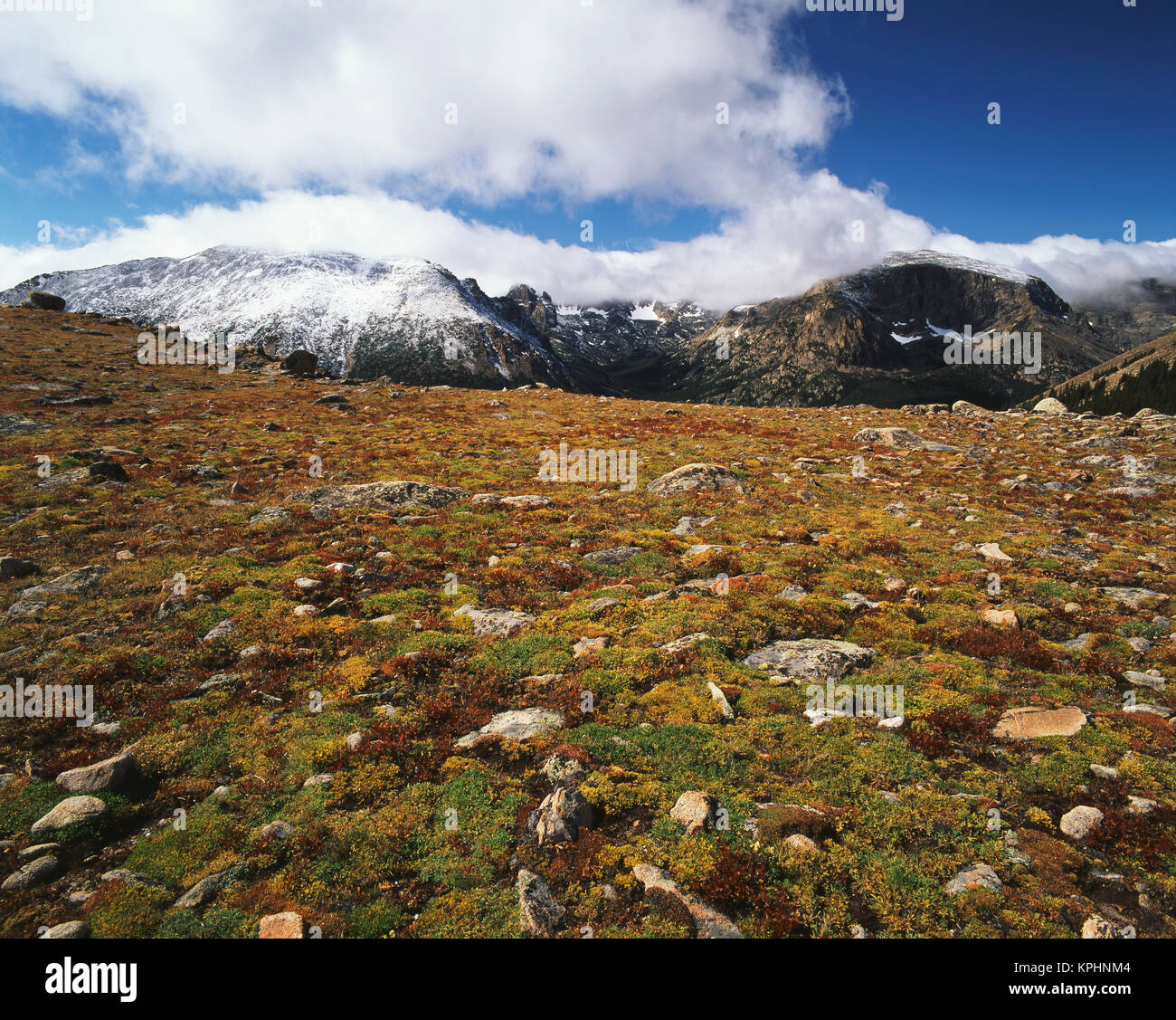
The alpine tundra is a cold, treeless biome found at high elevations on mountains worldwide, characterized by extreme solar radiation, low atmospheric pressure, and a short growing season. Unlike the Arctic tundra, alpine regions benefit from better soil drainage and distinct diurnal light cycles while hosting specialized flora and fauna adapted to thin air.
Defining the Alpine Tundra: Location and Boundaries
The alpine tundra represents a unique biological frontier, existing as "islands" of high-altitude habitat separated by lower-elevation forests and valleys. It is defined not by a specific latitude, but by elevation. As one ascends a mountain, the environmental conditions shift—a phenomenon known as altitudinal zonation. The transition from the subalpine forest to the alpine tundra is marked by the tree line (or timberline), the point beyond which environmental conditions are too harsh for tree growth.
In many mountain ranges, this transition is not an abrupt line but a zone known as the Krummholz (German for "twisted wood"). Here, trees like subalpine fir or Engelmann spruce become stunted, multi-stemmed, and deformed by wind and ice. Beyond the Krummholz lies the true alpine tundra. As of 2026, research into mountain ecology continues to monitor how these boundaries shift in response to global thermal trends, with many tree lines gradually migrating upslope.
The elevation at which alpine tundra begins varies significantly by latitude. In the tropical Andes, the alpine zone (often called the puna or paramo) might begin at 3,500 to 4,000 meters. In the Canadian Rockies or the Alps, it may start as low as 2,000 meters. Regardless of location, the primary characteristic remains the same: a landscape dominated by low-growing vegetation and physical forces that dictate the survival of all living organisms.
The Harsh Climatic Profile of Alpine Environments
The climate of the alpine tundra is the primary architect of its biological characteristics. Several physical factors converge to create an environment that is often compared to the polar regions, yet it remains distinct in several key ways.
Temperature and the Adiabatic Lapse Rate
The defining climatic feature is the cold. On average, temperature decreases with altitude at a rate of approximately 6.5°C per 1,000 meters of ascent (the environmental lapse rate). This means that even in the height of summer, nighttime temperatures in the alpine tundra often drop below freezing. The growing season is remarkably short, typically lasting only 45 to 90 days. During this window, plants must complete their entire reproductive cycle before the return of persistent snowpack.
Atmospheric Pressure and Solar Radiation
Because the atmosphere is thinner at high altitudes, there are fewer molecules to filter incoming solar energy. Consequently, the alpine tundra experiences intense ultraviolet (UV) radiation. This radiation can damage DNA and inhibit photosynthesis if organisms lack specific protective adaptations. Furthermore, the low atmospheric pressure affects the "partial pressure" of oxygen, meaning there is less oxygen available for animal respiration compared to sea level.
Wind and Precipitation
Wind is a constant presence in the alpine zone. Without trees to act as windbreaks, gusts can exceed 100 miles per hour, especially during winter storms. Wind creates a "desiccating" effect, stripping moisture from plant tissues and blowing away insulating snow. In terms of precipitation, alpine regions vary. Some are "alpine deserts" with very little moisture, while others receive significant snowfall. However, much of this moisture is locked away as ice or snow for the majority of the year, making it inaccessible to plants until the spring melt.
Soil Composition and Geological Features
Alpine soils, technically referred to as lithosols or cryosols, are generally thin, young, and nutrient-poor. They are formed through the physical weathering of the underlying bedrock rather than the deep organic decomposition seen in temperate forests.
Drainage and Permafrost
A major distinction between alpine and Arctic tundra is drainage. Because alpine tundra is located on mountain slopes, gravity ensures that water generally drains away more efficiently. While some high-altitude plateaus may harbor permafrost (permanently frozen ground), it is less ubiquitous than in the Arctic. In most alpine regions, the soil undergoes a constant cycle of freezing and thawing, leading to a process called cryoturbation or "frost churning." This process can push rocks to the surface, creating "patterned ground" such as stone polygons or stripes.
Nutrient Cycling
The rate of decomposition is extremely slow due to the low temperatures. Bacteria and fungi, which are responsible for breaking down organic matter, are less active in the cold. As a result, nitrogen and phosphorus—essential nutrients for plant growth—are often in short supply. Plants in this biome have developed highly efficient ways to recycle nutrients within their own tissues to compensate for the poverty of the soil.
Flora: Survival Strategies of High-Altitude Plants
Plants in the alpine tundra are masters of microclimate management. Because the air a few meters above the ground is freezing and wind-whipped, the "boundary layer"—the air right at the soil surface—is significantly warmer and calmer. Alpine plants take advantage of this by remaining small.
Dwarfism and Growth Forms
Most alpine plants are perennials that grow in low-lying forms to avoid the wind.
- Cushion Plants: Species like the Moss Campion (Silene acaulis) grow in tight, rounded mounds. This shape traps heat, reduces wind speed within the plant, and conserves moisture.
- Rosettes: Plants like the Alpine Primrose have leaves arranged in a circular pattern at the base, which helps protect the delicate growing center.
- Prostrate Shrubs: Even woody plants, such as the Arctic-Alpine Willow, grow horizontally along the ground rather than vertically.
Physiological Adaptations
To combat the intense UV radiation, many alpine plants have developed a thick "fuzz" or hair (pubescence) on their leaves. These hairs reflect light and create a still layer of air to prevent water loss. Others produce high levels of anthocyanins, pigments that act as a biological "sunscreen," often giving the leaves a reddish or purple hue.
The reproductive strategy of alpine plants is also unique. Many are "pre-formed," meaning they develop their flower buds a year or more in advance. As soon as the snow melts, they are ready to bloom immediately, maximizing the few weeks of warmth available for pollination by hardy insects like bumblebees and flies.
Fauna: Animal Adaptations to the Thin Air
Animals living in the alpine tundra must solve three main problems: extreme cold, lack of oxygen (hypoxia), and seasonal food scarcity.
Endotherms: Mammals and Birds
Large mammals like the Mountain Goat (Oreamnos americanus) and Bighorn Sheep have thick, double-layered coats and specialized hooves with "traction pads" for navigating steep, icy terrain. Smaller mammals, such as the Pika (Ochotona princeps), do not hibernate. Instead, they spend the summer "haying"—collecting and drying grasses to store in rock crevices (talus) for winter consumption.
The Yellow-bellied Marmot takes a different approach: hibernation. These large ground squirrels spend up to eight months of the year in deep torpor, significantly reducing their metabolic rate to survive on stored body fat. In the air, birds like the White-tailed Ptarmigan change their plumage from mottled brown in summer to pure white in winter, providing year-round camouflage against predators like the Golden Eagle.
Physiological Breakthroughs
Animals in the alpine zone often have higher concentrations of hemoglobin or more efficient mitochondria to deal with low oxygen levels. For instance, the bar-headed goose, which migrates over the Himalayas, has a specific hemoglobin mutation that allows it to bind oxygen more effectively in the thin upper atmosphere.
Comparative Analysis: Alpine vs. Arctic Tundra
While both share the name "tundra," their ecological characteristics differ based on geography and light.
| Feature | Alpine Tundra | Arctic Tundra |
|---|---|---|
| Primary Location | High altitude (mountains) | High latitude (near North Pole) |
| Drainage | Generally good (sloped terrain) | Poor (flat, high permafrost) |
| Photoperiod | Diurnal (day/night cycles) | Seasonal (Midnight Sun/Polar Night) |
| UV Exposure | Very High | Moderate to Low |
| Soil Depth | Very thin/Rocky | Shallow over permafrost |
| Oxygen Levels | Low (Hypoxia) | Normal (Sea level) |
| Vegetation Height | Extremely low/Cushion-like | Low, but includes more sedges/grasses |
Conservation and the 2026 Outlook
The alpine tundra is one of the most sensitive indicators of environmental change. In 2026, scientists are closely monitoring "mountain islands" for signs of thermal squeezing. As lower elevations warm, subalpine species move higher, encroaching on the alpine zone. Because there is only so much "up" on a mountain, alpine species may eventually have nowhere left to go.
Human impact also plays a role. Alpine soils are incredibly fragile; a single footprint on a lichen crust can take decades to recover due to the slow growth rates. Sustainable tourism and strict "stay on trail" policies are essential for preserving these high-altitude ecosystems. Organizations like the Global Monitoring Division of NOAA continue to provide critical data on atmospheric changes at high-altitude stations, helping researchers understand the long-term viability of these habitats.
For those interested in the formal classification of these regions, the U.S. Geological Survey (USGS) offers detailed topographical and ecological mapping that illustrates the specific boundaries of alpine biomes across North America.
Frequently Asked Questions
Why are there no trees in the alpine tundra?
Trees cannot survive in the alpine tundra because the growing season is too short to allow them to produce enough carbon to maintain their structures and survive the winter. Additionally, the combination of high winds and "ice blasting" (wind-blown ice crystals) physically damages tree buds and prevents vertical growth.
How do alpine plants survive being frozen?
Many alpine plants are "cold-hardy" and can tolerate the formation of ice crystals between their cell walls. They often accumulate sugars and "anti-freeze" proteins in their sap, which lowers the freezing point of their cellular fluids and prevents the cells from bursting.
Do people live in the alpine tundra?
While few people live year-round in the true alpine tundra due to the lack of oxygen and extreme cold, certain indigenous groups, such as the Tibetans in the Himalayas and the Quechua in the Andes, have lived at the edge of these zones for millennia. These populations have developed genetic adaptations, such as larger lung capacities and more efficient circulatory systems, to thrive in thin air.
Is the alpine tundra a desert?
Technically, some alpine zones qualify as "semi-arid" or "alpine deserts." While they may have plenty of snow, the water is often unavailable to plants because it is frozen. Low humidity and high evaporation rates caused by wind and sun further contribute to the "desert-like" physiological conditions for plants.
What is the difference between alpine tundra and the nival zone?
The alpine tundra is the zone characterized by vegetation. Above the alpine tundra lies the nival zone, which is the region of permanent snow and ice where almost no vascular plants can survive. The nival zone is the highest ecological zone on a mountain.
Practical Recommendations for Visitors
If you are planning to visit an alpine tundra region in 2026, such as those in Rocky Mountain National Park or the Swiss Alps, follow these guidelines to ensure both your safety and the preservation of the ecosystem:
- Stay on Hard Surfaces: Always walk on designated trails or rocks. Stepping on alpine vegetation can kill plants that have taken decades to grow.
- Acclimatize Slowly: To avoid altitude sickness, spend a night at a mid-elevation point before heading into the high alpine.
- Ultraviolet Protection: Use high-SPF sunscreen and UV-rated sunglasses, as the thinner atmosphere increases the risk of severe burns even on cloudy days.
- Pack for Four Seasons: Weather in the alpine tundra can change from sunny and 60°F (15°C) to snowing in a matter of minutes.