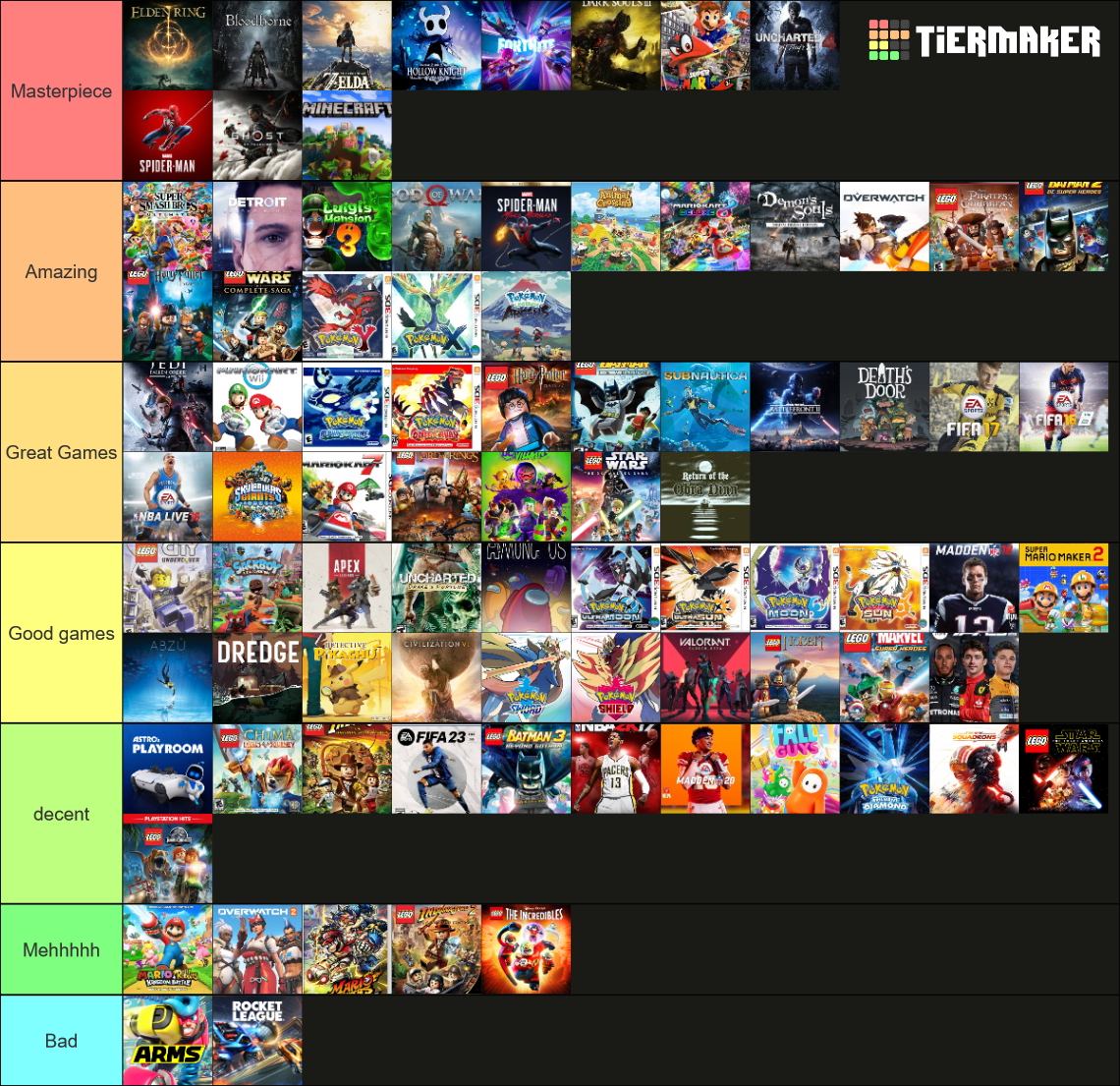
Comprehensive game lists and databases serve as the definitive records of our digital and physical play history. In 2026, these compilations rely on sophisticated metadata and decentralized archiving to track millions of titles. These efforts are central to ongoing debates regarding digital ownership rights, the ethics of AI-generated content, and the legalities of game preservation.
The Evolution of Global Game Databases
The quest to compile an "all games list" has moved beyond simple spreadsheets into the realm of high-fidelity data science. As of 2026, the sheer volume of interactive media—spanning AAA blockbusters, indie darlings, mobile micro-experiences, and tabletop epics—requires a multi-tiered approach to cataloging.
For decades, the primary challenge for archivists was the lack of a standardized format for game data. Early attempts at compilation often missed regional variations or failed to document the extensive "credits" of the developers involved. Today, major databases have matured into robust ecosystems that serve as the backbone for storefronts, research institutions, and player communities alike.
The Power Players in Digital Cataloging
Several organizations and community-led projects have become the "de facto" authorities on game listings. Each serves a slightly different niche within the gaming ecosystem:
- MobyGames: Acquired by Atari in 2022 and revitalized over the following years, MobyGames remains the gold standard for historical accuracy and developer credits. By 2026, its verification process for user-submitted data has become more streamlined, utilizing AI to cross-reference box art and digital signatures.
- IGDB (Internet Game Database): Owned by Twitch (Amazon), IGDB provides the technical infrastructure for many gaming apps and websites. Its API is the most widely used in the industry, offering real-time updates on release dates and platform availability.
- BoardGameGeek (BGG): In the realm of non-digital gaming, BGG remains the undisputed champion. Its compilation includes not just a list of games but a complex web of "linked" mechanics, expansions, and designer lineages.
- The Video Game History Foundation (VGHF): While not a public database in the same way as MobyGames, the VGHF focuses on the preservation of the materials that make up these lists, including source code, promotional materials, and internal design documents.
Critical Debates in Game Cataloging and Preservation
The act of compiling a list of all games is inherently political and legal. In 2026, the industry is embroiled in several high-stakes debates that dictate how games are recorded and who has the right to access them after they are no longer "commercially viable."
The "Stop Killing Games" Movement and Ownership
One of the most heated debates in 2026 stems from the "Stop Killing Games" initiative, which gained massive momentum following the shutdown of major "Live Service" titles in the mid-2020s. When a game is removed from a server, it often disappears from digital storefronts, leaving the "list" as the only evidence of its existence.
The debate centers on whether a consumer purchases a product or a license. If it is a product, archivists argue that developers should be legally required to provide "end-of-life" patches that allow for private server hosting or offline play. Without these patches, a "compilation of all games" becomes a list of ghosts—titles that exist in name only but cannot be experienced by future generations.
AI-Generated Content and the "Asset Flip" Flood
The explosion of generative AI tools between 2023 and 2025 led to a crisis for database maintainers. Steam and other storefronts were flooded with thousands of low-effort, AI-generated titles. This raised a fundamental question: Should every AI-generated "game" be included in a definitive compilation?
Many curators have argued for a "merit-based" or "effort-based" inclusion criteria. However, defining "effort" is subjective. If a database excludes AI-heavy games, it risks becoming an incomplete historical record. If it includes them, the signal-to-noise ratio becomes so poor that the database loses its utility for researchers and players.
The Preservation Paradox: Emulation vs. Copyright
The legal battle over emulation remains a cornerstone of gaming debates. Companies like Nintendo have historically taken a hard line against the hosting of ROMs (Read-Only Memory files). However, in 2026, the Video Game History Foundation and other bodies continue to lobby for DMCA exemptions. They argue that if a game is no longer for sale and the hardware is obsolete, libraries and archives must have the legal right to bypass DRM (Digital Rights Management) to preserve the game.
The "list" is the first step in this process. You cannot preserve what you have not cataloged. Thus, the compilation of these lists is often seen by corporations as a roadmap for "piracy," while archivists see it as a cultural necessity.
Methodology of a Comprehensive List Compilation
Creating a list of all games is a technical feat that involves gathering data from disparate sources and normalizing it into a readable format. This process generally follows a specific lifecycle.
1. Data Sourcing and Scraping
Archivists use "scrapers"—automated scripts—to pull data from official storefronts like Steam, the PlayStation Store, and the Nintendo eShop. However, this only covers modern, digital releases. For older games, sources include:
- Physical magazine archives (EGM, Famitsu, PC Gamer).
- Copyright office records.
- Auction site listings for rare physical media.
2. Verification and De-duplication
A major issue in list compilation is "regional duplicates." For example, a game released as Starwing in Europe and Star Fox in North America must be identified as the same core software to avoid inflating the list count. In 2026, "hash verification" (comparing the unique digital signature of the game files) is the preferred method for ensuring two entries are identical.
3. Metadata Enrichment
A list is more than just a title. To be useful, it must include:
- Platform: PC, Console, Mobile, Arcade, or Tabletop.
- Release Date: Often difficult to pin down for early 1970s titles.
- Genre/Tags: Modern databases use "tag clouds" rather than rigid genres.
- Developer/Publisher: Tracking the lineage of companies that have been bought or liquidated.
Comparing the World's Leading Game Compilations
The following table compares the primary resources used by researchers and gamers in 2026 to track the global history of games.
| Database Name | Primary Focus | Estimated Entries (2026) | Key Advantage |
|---|---|---|---|
| MobyGames | Historical Accuracy | 350,000+ | Industry-standard developer credits and documentation. |
| IGDB | Modern Metadata | 500,000+ | Best-in-class API for developers and real-time updates. |
| BoardGameGeek | Tabletop & Board Games | 160,000+ | Deep mechanical analysis and community ratings. |
| The Open Games Archive | Open Source / Preservation | 100,000+ | Focuses on titles with available source code or "abandonware." |
| SteamDB | PC Gaming (Valve) | 120,000+ | Precise tracking of player counts, price history, and updates. |
Navigating the Technical Hurdles of Game Archiving
As we move deeper into 2026, the technical barriers to maintaining an accurate list have shifted from storage capacity to format obsolescence and bit rot.
Hardware Decay and Bit Rot
Physical media—CDs, cartridges, and even magnetic tapes—degrade over time. "Bit rot" refers to the gradual decay of data on storage media. Archivists must not only list these games but also ensure that a digital "dump" of the data exists. If the data is lost, the entry on the list becomes a "dark entry"—a record of something that no longer exists in any functional form.
The Challenge of "Server-Side" Dependencies
In the 2020s, many games moved toward a hybrid model where part of the game lives on the user's device and part lives on a company's server. For list-makers, this creates a classification nightmare. If the server is turned off, is the game "dead," or does it still count as a game? In 2026, many databases have added a "Playability Status" field to help users identify which games are currently functional.
Standardization: The Common Media Format
To combat the fragmentation of data, several international bodies have proposed the Common Media Format (CMF) for game metadata. This standard allows different databases to "talk" to each other, ensuring that an update on MobyGames can be automatically reflected on other platforms. This interoperability is crucial for maintaining a truly comprehensive global list.
Frequently Asked Questions
Why can't one single list contain every game ever made?
The definition of a "game" is constantly shifting. Does a simple "Hello World" program count? Does a piece of interactive corporate training software count? Because there is no universal agreement on where "utility software" ends and "games" begin, different lists use different criteria, making a single, all-encompassing list nearly impossible to verify.
How can I contribute to these game list compilations?
Most major databases like MobyGames and IGDB are community-driven. You can contribute by uploading high-resolution scans of box art, verifying developer credits from game manuals, or adding missing titles from obscure regional markets. Most platforms require a "reputation" or "vetting" period to ensure data quality.
What is the legal status of preserving "dead" games in 2026?
The legal status remains complex. While the Video Game History Foundation has made strides in securing exemptions for libraries, it is still technically a violation of the DMCA to circumvent DRM for individual use. However, "Abandonware" (software no longer supported or sold) exists in a legal grey area where copyright holders rarely pursue action unless the game is being re-released.
Are fan-made "ROM sets" considered legitimate lists?
From a technical standpoint, ROM sets (like those maintained by the No-Intro or TOSEC projects) are some of the most accurate lists in existence. They focus on the exact digital data (the "hash") of the game. While the distribution of the files is often illegal, the data lists (DAT files) they produce are invaluable for historical research.
How has AI changed game listing in 2026?
AI is primarily used for automated metadata tagging and image upscaling. AI can look at a screenshot and automatically suggest tags like "First-Person," "Fantasy," or "Procedural Generation." It also helps in detecting duplicate entries across different languages by analyzing visual assets rather than just text.
Future Outlook: The Living Archive
The compilation of all games is not a task that will ever be "finished." As long as humans continue to create interactive experiences, the list will grow. The debates currently raging in 2026—over AI, ownership, and the right to repair—will determine whether our digital history is preserved for centuries or lost to the whims of corporate server budgets.
For researchers, the next step is to move beyond the "list" and toward the Global Game Registry, a proposed decentralized ledger that would track the ownership, version history, and preservation status of every piece of software ever labeled as a game. Until then, the community-led efforts of MobyGames, BGG, and others remain our best defense against digital amnesia.
Recommendation: If you are a researcher or developer, prioritize contributing to MobyGames for historical accuracy or IGDB for technical integration. For those concerned with the longevity of their digital library, support the Video Game History Foundation and advocate for "Right to Repair" laws that include provisions for software preservation and end-of-life server patches.