To maintain the performance and longevity of an Alfa Romeo, you must use a full synthetic oil that meets specific Fiat Chrysler Automobiles (FCA) Material Standards. For most modern 2.0L turbocharged engines (Giulia and Stelvio), the required oil is 0W-30 meeting the MS-13340 specification. High-performance Quadrifoglio models require 5W-40 meeting the MS-12991 standard, while the Tonale PHEV typically utilizes 0W-20 formulated to the GSX or MS-6395 criteria.
As of 2026, the automotive landscape has shifted further toward electrification, yet the internal combustion engines (ICE) and plug-in hybrid electric vehicles (PHEV) in the Alfa Romeo lineup remain highly sensitive to lubrication. Alfa Romeo engines, particularly those utilizing the MultiAir valve-actuation technology, do not treat engine oil merely as a lubricant; they use it as a functional hydraulic fluid. Using the incorrect oil type is not just a matter of "suboptimal performance"—it can lead to catastrophic failure of the MultiAir assembly, a repair costing several thousand dollars.
The Critical Role of Oil in MultiAir Technology
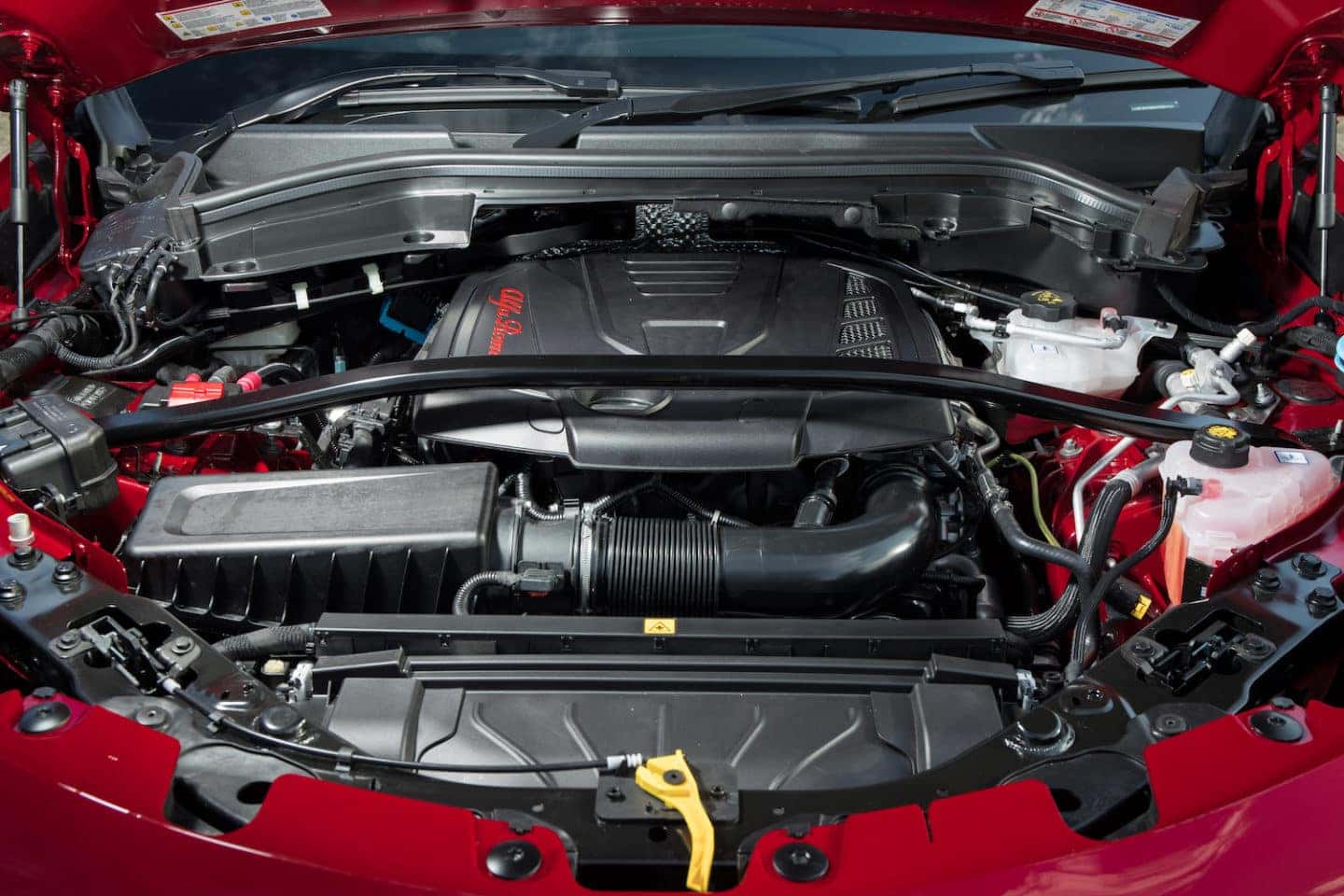
To understand why "any synthetic oil" is insufficient for an Alfa Romeo, one must understand the MultiAir system. Unlike traditional engines where the camshaft directly presses on the valve stems, MultiAir engines (like the 2.0L GME and the 1.3L in the Tonale) use a high-pressure hydraulic chamber between the cam and the valve.
This chamber is filled with engine oil. An electronic solenoid controls the release of that oil to infinitely vary the timing and lift of the intake valves. If the oil's viscosity, aeration properties, or detergent levels deviate even slightly from the manufacturer's specification, the following issues occur:
- Misfires and Rough Idle: Incorrect oil viscosity prevents the hydraulic brick from filling or emptying at the precise millisecond required, leading to erratic valve behavior.
- MultiAir "Brick" Failure: The system contains tiny micro-filters and oil passages. Oils that are prone to shearing or carbon deposits can clog these passages, requiring a full replacement of the cylinder head's upper assembly.
- Turbocharger Starvation: Modern Alfa Romeos utilize high-boost turbochargers that spin at over 200,000 RPM. The oil must be thin enough to reach the turbo bearings instantly upon cold start but stable enough not to vaporize under the extreme heat of the 2.9L V6 or 2.0L I4.
Understanding FCA Material Standards (MS-13340 and MS-12991)
When shopping for oil, the SAE viscosity grade (e.g., 0W-30) is only half the story. The more important factor is the FCA Material Standard. These standards ensure the oil has specific additive packages to protect the unique metallurgy and rubber seals used in Italian engines.
MS-13340 (The 2.0L Standard)
This is the primary standard for the 2.0L Global Medium Engine (GME) found in the Giulia and Stelvio. It is a "mid-SAPS" (Sulphated Ash, Phosphorus, and Sulphur) oil designed to protect the catalytic converter while maintaining high film strength. In the United States, Pennzoil Platinum Euro LX 0W-30 is the most commonly available oil that officially carries this certification.
MS-12991 (The High-Performance Standard)
The 2.9L 90-degree V6 found in the Quadrifoglio models and the 1.75L engine in the 4C require 5W-40 oil meeting MS-12991. This oil is designed for higher thermal stability. Because the Quadrifoglio engine is essentially two-thirds of a Ferrari V8, it operates with tighter tolerances and higher internal pressures, necessitating a shear-stable 40-weight oil.
Model-Specific Oil Requirements and Capacities
As we look at the 2026 fleet, including older models still under active maintenance, the specifications remain rigid. Always verify your specific VIN at an authorized dealer, but the following guidelines represent the standard factory fill requirements.
| Alfa Romeo Model | Engine Displacement | Recommended Viscosity | FCA/OEM Specification | Oil Capacity (Liters/Quarts) |
|---|---|---|---|---|
| Giulia / Stelvio | 2.0L Turbo I4 | 0W-30 | MS-13340 | 5.2 L / 5.5 qts |
| Giulia / Stelvio Quadrifoglio | 2.9L Twin-Turbo V6 | 5W-40 | MS-12991 | 7.0 L / 7.4 qts |
| Tonale PHEV | 1.3L Turbo I4 + Motor | 0W-20 | MS-6395 / GSX | 4.3 L / 4.5 qts |
| 4C Spider / Coupe | 1.75L Turbo I4 | 5W-40 | MS-12991 | 5.8 L / 6.1 qts |
| Tonale (Non-Hybrid) | 2.0L Turbo I4 | 0W-30 | MS-13340 | 5.2 L / 5.5 qts |
| Stelvio Diesel (Global) | 2.2L JTDM | 0W-20 / 0W-30 | 9.55535-DS1 | 4.5 L / 4.8 qts |
Oil Change Intervals: Factory vs. Enthusiast Schedules
Alfa Romeo's official maintenance schedule often suggests an oil change every 10,000 miles (16,000 km) or once a year, whichever comes first. However, in 2026, many long-term owners and technicians recommend a more frequent "Enthusiast Schedule."
The 5,000-Mile Rule
For the 2.0L and 2.9L engines, oil dilution can occur, especially in vehicles driven primarily in urban environments or cold climates where the engine may not reach full operating temperature for extended periods. Changing the oil every 5,000 to 7,500 miles is widely considered the best practice for preventing carbon buildup on the intake valves—a common issue in direct-injection engines.
The "Oil Life" Monitor
Modern Alfa Romeos use an algorithm-based Oil Life Monitor. This does not physically "sample" the oil but calculates degradation based on cold starts, idle time, and RPM ranges. If the dashboard warns you that an oil change is due before your mileage interval, you must prioritize the car’s computer. In the Quadrifoglio, the monitor is particularly aggressive if the car is driven in "Race" mode frequently.
Recommended Brands and Product Verification
While Selenia is the factory-fill brand used in Europe, North American Alfa Romeo dealerships transitioned to Pennzoil (a Shell brand) due to regional logistics and partnerships.
- Pennzoil Platinum Euro LX 0W-30: The gold standard for the 2.0L Giulia and Stelvio. It is one of the few oils that explicitly lists MS-13340 on the bottle.
- Motul 8100 X-clean Gen2 5W-40: A favorite for 4C and Quadrifoglio owners. It meets MS-12991 and offers excellent protection against high-temperature oxidation.
- Liqui Moly Top Tec 4200: A high-quality German alternative that often meets the broader ACEA C2/C3 requirements suitable for Alfa engines, though you must check the specific bottle for the FCA MS-standard.
- Castrol Edge Euro: Widely available, but ensure you are purchasing the "European Formula," as the standard Castrol Edge does not meet the specific Italian additive requirements.
Warning: Avoid using "High Mileage" or "Racing" oils unless they specifically state compliance with MS-13340 or MS-12991. These oils often contain zinc (ZDDP) levels or seal-swelling agents that can interfere with the MultiAir solenoids or damage the sensitive O2 sensors and catalytic converters.
The Electronic Oil Level Sensor: A Common Point of Confusion
Most modern Alfa Romeos (Giulia and Stelvio) lack a traditional physical dipstick. To check your oil level, you must use the infotainment system:
- Park the vehicle on a level surface.
- Ensure the engine is at full operating temperature (usually after 10-15 minutes of driving).
- Turn the engine off, then turn the ignition to the "ON" position without starting the engine.
- Navigate to the "Vehicle Information" menu and select "Oil Level."
Troubleshooting: If the sensor shows "Oil Level Unavailable," it is usually because the engine is too cold or the car is on an incline. If you have just added oil, the system may take up to 30 miles of driving to recalibrate and show the new, accurate level. Do not immediately add more oil if the reading doesn't change instantly; overfilling an Alfa Romeo engine can lead to oil foaming and crankshaft damage.
Frequently Asked Questions
Can I use 5W-30 if I cannot find 0W-30 for my Giulia?
In an emergency, a high-quality synthetic 5W-30 meeting ACEA C2/C3 standards will not destroy the engine. However, the 0W-30 viscosity is critical for the hydraulic operation of the MultiAir system during cold starts. Long-term use of 5W-30 may result in sluggish valve response and reduced fuel economy. You should return to 0W-30 MS-13340 as soon as possible.
Why does the Quadrifoglio require a different oil than the standard Stelvio?
The Quadrifoglio's 2.9L V6 is a high-performance, twin-turbocharged engine with a different valvetrain architecture than the 2.0L I4. It generates significantly more heat and internal stress. The 5W-40 (MS-12991) provides a thicker lubricating film at high temperatures to protect the bearings and turbochargers under heavy load.
Is the Tonale's oil requirement different because it is a hybrid?
Yes. The Tonale PHEV often experiences "cold restarts" where the gasoline engine is forced to high RPMs instantly after being off. This requires a very thin 0W-20 oil (GSX spec) that can circulate instantly to prevent wear. Using a thicker oil in the Tonale can lead to increased drag and lower hybrid system efficiency.
What happens if I overfill the oil in my Alfa Romeo?
Overfilling is a serious concern for Alfa Romeo engines. Excess oil can be whipped into foam by the crankshaft, which introduces air into the lubrication system. Since air is compressible and oil is not, the MultiAir system will fail to actuate the valves correctly, often throwing the car into "Limp Mode" with a check engine light for "Valvetrain Position Unattainable."
Does using non-OEM oil void my warranty?
Under the Magnuson-Moss Warranty Act (in the US), a manufacturer cannot void your warranty simply for using a non-OEM oil, provided the oil you used meets the technical specifications (the MS-standards) required by the manual. Always keep your receipts and a record of the specific oil type used to protect your warranty status.
Practical Recommendations for 2026
If you are performing your own oil changes or bringing your Alfa Romeo to an independent shop, verify the bottle personally. Many generic shops will see "0W-30" on their computer and use a bulk oil that lacks the FCA MS-13340 certification.
- For 2.0L Owners: Stick to Pennzoil Platinum Euro LX 0W-30. It is the most reliable way to ensure your MultiAir unit remains healthy.
- For Quadrifoglio Owners: Use the factory-recommended Selenia Quadrifoglio 5W-40 or Motul 8100 X-clean. These engines are expensive to repair; the extra $30 per oil change is cheap insurance.
- Filter Choice: Always use a high-quality filter such as Mopar (OEM), Mann, or Mahle. Low-quality filters can collapse under the high oil pressures common in these engines.
By adhering to these specific oil types and material standards, you ensure that your Alfa Romeo continues to deliver the visceral driving experience the brand is known for while avoiding the most common (and expensive) mechanical pitfalls associated with modern Italian engineering.