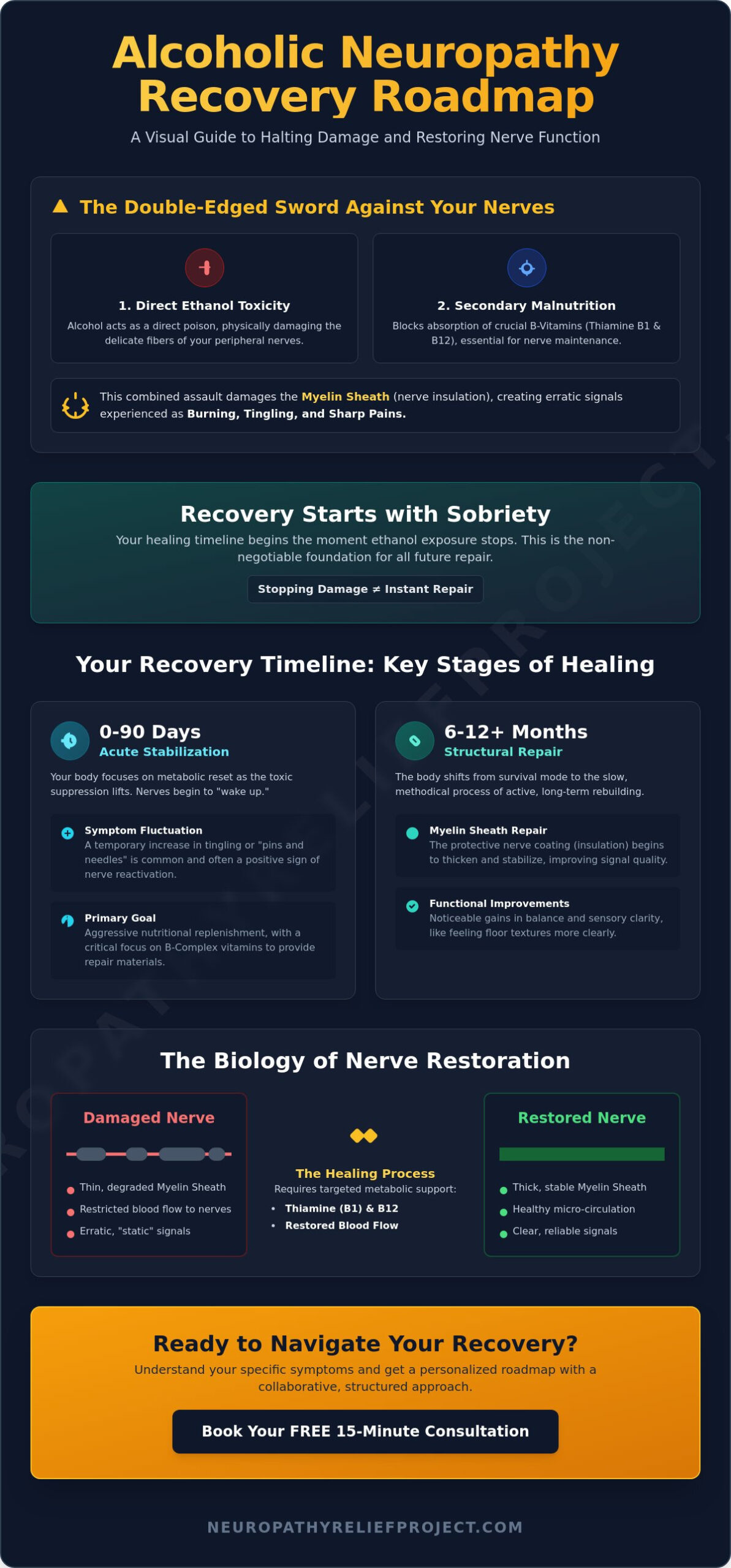
Recovery from alcoholic neuropathy is a gradual, highly variable process that depends significantly on the duration of alcohol misuse, nutritional status, and the extent of nerve damage present at the time of intervention. While some patients experience noticeable symptom improvement within weeks of abstinence and nutritional supplementation, complete recovery—or even significant symptom reduction—can take several months to years, and in cases of severe, long-standing nerve damage, some neurological impairment may remain permanent.
Defining Alcoholic Neuropathy
Alcoholic neuropathy is a form of peripheral neuropathy—a condition characterized by damage to the nerves that carry signals between the central nervous system (the brain and spinal cord) and the rest of the body. In the context of alcohol misuse, this damage is generally attributed to two primary mechanisms: the direct toxic effect of ethanol on nerve tissue and, more frequently, the secondary nutritional deficiencies that accompany chronic heavy drinking.
Chronic alcohol consumption often leads to poor dietary intake and impaired absorption of essential nutrients, particularly B vitamins such as thiamine (B1), pyridoxine (B6), folate (B9), and cobalamin (B12). These vitamins are critical for the maintenance of the myelin sheath, the fatty protective layer that insulates nerve fibers and ensures the efficient transmission of electrical impulses. When these nutrients are depleted, the myelin sheath begins to degenerate, leading to symptoms such as tingling, numbness, "pins and needles" sensations (paresthesia), muscle weakness, and pain, primarily in the extremities.
The Role of Abstinence in Recovery
The most critical factor in determining recovery time is the immediate and sustained cessation of alcohol intake. Alcohol acts as a neurotoxin; as long as it is present in the system, it continues to disrupt metabolic processes and inhibit the body’s ability to repair damaged nerve tissue.
When a patient stops drinking, the body enters a phase of neurological stabilization. For many, the first stage of recovery involves the cessation of progressive symptoms. The "burning" or sharp pain associated with active neuropathy may begin to subside within the first few weeks or months of sobriety as the direct toxic load is removed. However, nerve tissue is notoriously slow to heal. Because peripheral nerves regenerate at a rate of approximately one millimeter per day under ideal conditions, patients should anticipate a long-term recovery timeline rather than an immediate resolution.
Nutritional Rehabilitation and Medical Intervention
Since nutritional deficiency is a major driver of alcoholic neuropathy, recovery is rarely possible through abstinence alone. Medical providers typically implement a robust supplementation protocol to address underlying deficits.
- Thiamine (Vitamin B1): Often the first priority, especially to prevent Wernicke-Korsakoff syndrome, a more severe neurological complication.
- Vitamin B12: Essential for myelin synthesis. Deficiency leads to significant sensory impairment.
- Magnesium and Zinc: These minerals are often depleted by chronic alcohol use and play a role in nerve signal transduction.
- Alpha-Lipoic Acid: Some clinical studies suggest this antioxidant may help reduce oxidative stress in damaged nerves, potentially alleviating pain symptoms.
Medical management also involves addressing the pain associated with nerve damage. Physicians may prescribe medications such as gabapentin, pregabalin, or certain tricyclic antidepressants. While these medications do not "cure" the neuropathy, they modulate the signals reaching the brain, allowing the patient to remain functional while the physiological healing process continues in the background.
Factors Influencing Recovery Timelines
Recovery is highly individualized. Several variables dictate whether a patient will see a full resolution of symptoms or simply a stabilization of their condition:
- Duration of Alcohol Use: Individuals with a shorter history of alcohol use typically have a higher capacity for nerve regeneration. Conversely, long-term chronic alcohol misuse can lead to irreversible structural damage to the nerves.
- Age: Younger patients generally exhibit better regenerative capacity compared to older individuals, as metabolic efficiency and cellular repair mechanisms decline with age.
- Severity of Initial Damage: If the neuropathy has progressed to include severe muscle atrophy or significant motor impairment, the recovery period is extended and may require concurrent physical therapy.
- Co-morbidities: Conditions such as diabetes mellitus, which also causes peripheral neuropathy, can severely complicate the recovery process, creating a "double hit" to the nervous system.
Comparative Expectations for Recovery
The following table outlines the general stages of recovery that many patients experience once abstinence and nutritional therapy are established.
| Recovery Stage | Approximate Timeframe | Typical Clinical Observations |
|---|---|---|
| Initial Stabilization | 2–6 Weeks | Cessation of progressive nerve damage; acute pain may begin to stabilize. |
| Early Remission | 3–6 Months | Improvement in sensory perception; reduction in numbness and burning. |
| Long-term Repair | 6–18 Months | Gradual regeneration of nerve endings; strengthening of affected muscles. |
| Chronic/Permanent | 18+ Months | Residual deficits may persist if nerve axons were irreparably damaged. |
Physical Therapy and Occupational Support
Because alcoholic neuropathy often leads to muscle weakness and a loss of proprioception (the body's ability to sense its position in space), physical therapy is an essential component of the recovery timeline. Patients who engage in structured physical therapy often report faster improvements in mobility and balance than those who remain sedentary.
Physical therapy serves two functions: it prevents the secondary complications of inactivity, such as muscle contractures, and it encourages neuroplasticity—the brain’s ability to adapt and reorganize its neural pathways to compensate for damaged input from the periphery. Occupational therapy can assist patients in modifying their daily activities to minimize the risk of falls or injury while their sensory perception is still impaired.
Addressing Common Mistakes in Recovery
A frequent error in the recovery process is the assumption that symptom resolution is linear. Patients often feel discouraged if they experience "flare-ups" of pain after a few months of improvement. It is important to note that as nerves begin to regenerate and "re-innervate" tissue, the patient may actually experience a temporary increase in sensitivity or tingling. This is often a sign of healing, not regression.
Another common mistake is neglecting follow-up care. Because alcoholic neuropathy is often tied to systemic health issues, consistent monitoring of vitamin levels, blood sugar, and liver function is necessary to ensure the body remains in an optimal state for healing. Relying on over-the-counter supplements without medical oversight is discouraged, as improper dosing can occasionally mask symptoms or interfere with other necessary medications.
Frequently Asked Questions
Does alcoholic neuropathy go away completely? For many, symptoms improve significantly with sobriety and nutrition, but complete reversal is not guaranteed. Recovery depends on the extent of axonal loss; if the nerve cell bodies themselves have died, the damage may be permanent.
Will vitamins alone cure my neuropathy? No. While supplements are vital for correcting the metabolic imbalances that contribute to the condition, they cannot repair nerve damage if the toxic insult of alcohol continues. Abstinence is the primary requirement for recovery.
Why does my pain get worse when I stop drinking? This is often related to the normalization of the nervous system. As the body stops being chronically suppressed by alcohol, it may regain higher sensitivity to nerve signals, which can cause temporary increases in perceived pain.
How do I know if my nerves are regenerating? Clinical indicators include a gradual reduction in the area of numbness, improvement in muscle strength, and a transition from sharp or burning pain to a duller sensation, eventually followed by a decrease in pain frequency.
Is there a specific diet that accelerates recovery? A nutrient-dense diet emphasizing B-complex vitamins (leafy greens, lean meats, eggs, and fortified grains) is recommended. Reducing processed sugars is also beneficial, as high blood sugar can further impair nerve function even in those who are not diabetic.
A Note on Professional Guidance
If you are experiencing symptoms of neuropathy, it is imperative to consult a primary care physician or a neurologist. Because peripheral neuropathy can stem from various causes—including diabetes, vitamin deficiencies, autoimmune disorders, and medication side effects—a professional diagnostic workup is necessary to confirm that alcohol is the primary cause and to rule out other treatable conditions.
Your path to recovery should be managed by a clinical team that can oversee your detox, nutritional supplementation, and physical rehabilitation. Recovery requires patience, but with consistent abstinence and dedicated medical support, many patients achieve significant functional restoration.