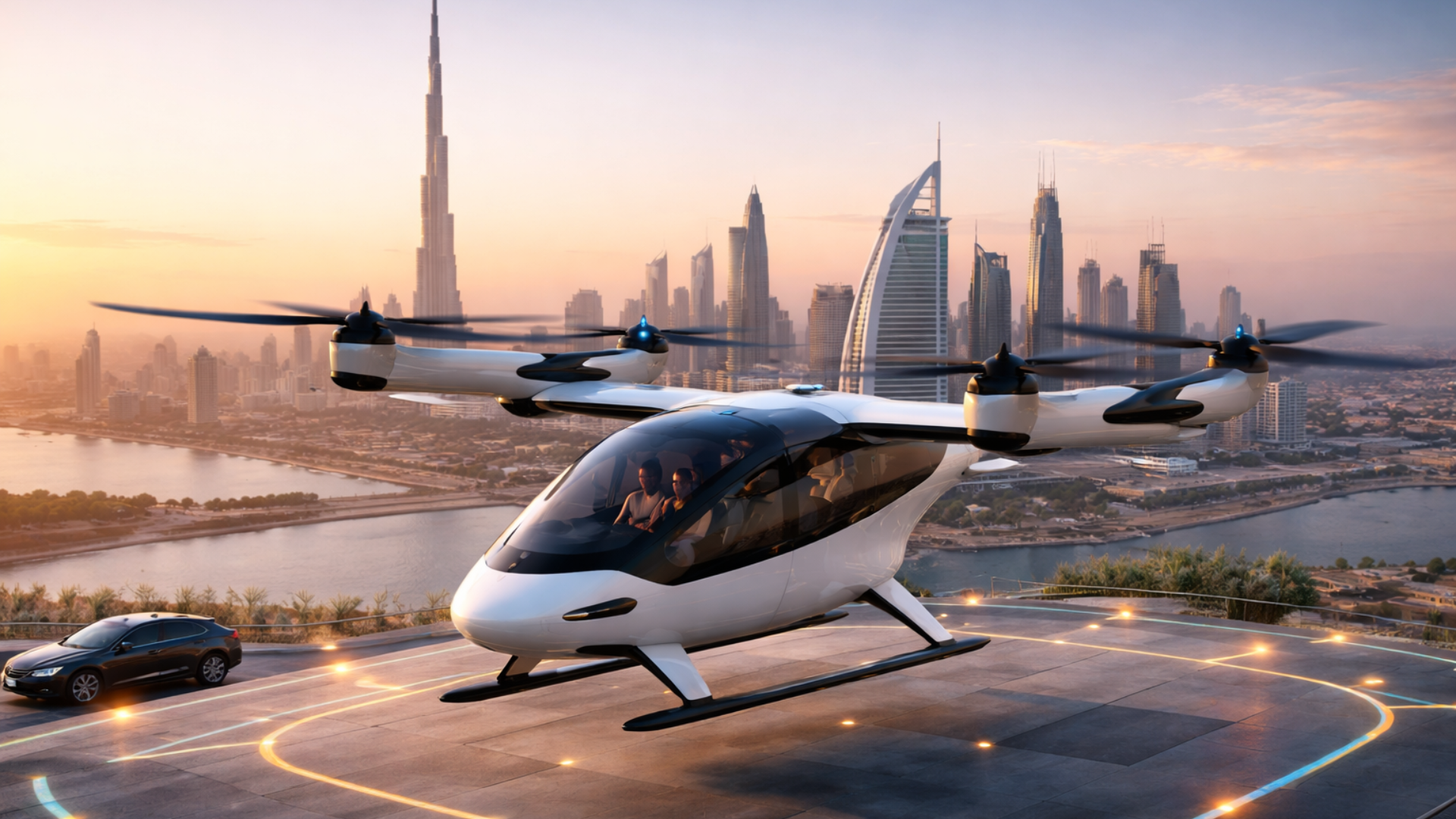
Dubai’s ambitious pursuit of urban air mobility (UAM) has captured global attention, but widespread speculation and futuristic myths often overshadow the reality of how these electric vertical takeoff and landing (eVTOL) networks will actually operate. Far from being a chaotic free-for-all of flying cars or an immediate replacement for the city's entire public transit grid, the upcoming air taxi ecosystem is a highly regulated, phased aviation venture rooted in rigorous safety protocols and strategic infrastructure planning.
The rapid evolution of urban transportation initiatives in the United Arab Emirates has frequently been misunderstood by the public and misrepresented in media reports. While regulatory bodies like the General Civil Aviation Authority (GCAA) and the Dubai Roads and Transport Authority (RTA) lay the groundwork for commercial operations, several persistent myths continue to circulate. Clarifying these misconceptions is essential for understanding how residents and visitors will interact with aerial transit networks, what financial and logistical investments are required, and how safety will be managed in densely populated airspace.
The Myth of the Door-to-Door Flying Car
One of the most common misconceptions regarding Dubai’s air taxi initiative is the idea that private individuals will soon pilot or charter flying cars from their personal driveways or suburban rooftops directly to any destination in the city. This vision, reminiscent of classic science fiction, misrepresents both the regulatory framework and the intended operational model of commercial eVTOL services.
Air taxis in Dubai are not personal automobiles; they are commercial aircraft governed by strict aviation laws. Similar to commercial airlines or specialized helicopter charter services, eVTOLs will operate exclusively between designated vertiports. Passengers cannot simply summon an air taxi to land on a standard street corner or a residential balcony.
The initial rollout focuses on high-density corridors and strategic hubs. According to planning frameworks established by the RTA and international aviation partners such as Joby Aviation and Archer Aviation, initial launch sites include key commercial and leisure nodes:
- Dubai International Airport (DXB)
- Downtown Dubai
- Dubai Marina
- Palm Jumeirah
Rather than replacing ground-level cars for every short trip, air taxis function as an elite multimodal transit layer designed to bypass highway congestion between major economic centers. Passengers will still rely on traditional ground transport, autonomous vehicles, or metro systems to reach and depart from designated vertiport terminals.
Autonomous vs. Piloted Operations in Initial Phases
Another frequent point of confusion involves vehicle autonomy. Many tech enthusiasts assume that Dubai’s air taxis will launch as fully autonomous, drone-like passenger pods operating without human intervention. While autonomous urban air mobility remains a long-term industry goal, the reality of the initial commercial rollout is more measured.
Initial operations will feature piloted aircraft. Companies partnering with Dubai authorities are deploying piloted eVTOL models to ensure maximum passenger comfort, regulatory compliance, and public trust during the formative stages of the service. For example, Joby Aviation's 5-seat aircraft features a dedicated pilot, mirroring the operational safety standards of commercial helicopter fleets while introducing quiet, zero-emission electric propulsion.
Transitioning to fully autonomous flights requires exhaustive safety validation, updated air traffic management protocols, and regulatory approvals from the GCAA. Autonomous systems are undergoing continuous testing, but regulatory agencies prioritize human oversight for early commercial passenger flights. This ensures that unexpected weather phenomena, air traffic anomalies, or onboard system alerts receive immediate, qualified human responses.
Airspace Integration and Skyway Congestion
A prevalent worry among urban planners and residents is that introducing dozens of air taxis will transform Dubai’s skies into a congested, noisy hazard zone resembling a futuristic traffic jam. Concerns regarding mid-air collisions, excessive noise pollution, and visual blight are frequently cited by skeptics.
In practice, the integration of eVTOLs into Dubai's airspace is managed through advanced Unmanned Traffic Management (UTM) systems and tightly controlled corridors. Aircraft will not fly random, haphazard paths across the city. Instead, they will operate within predefined, high-altitude virtual highway lanes monitored continuously by air traffic controllers and automated tracking systems.
Furthermore, modern eVTOL aircraft are engineered specifically to minimize acoustic disruption. Unlike traditional combustion-engine helicopters, which rely on large rotors and generate loud, low-frequency thumping noises, electric aircraft utilize distributed propulsion systems with multiple smaller rotors. This design significantly reduces decibel levels during takeoff, cruise, and landing phases, making them far quieter than conventional helicopters and suitable for urban environments near residential towers.
Cost Structure: Mass Transit vs. Premium Service
Perhaps the most significant economic misunderstanding is the assumption that air taxis will immediately serve as an affordable, everyday mass-transit alternative for commuting workers, priced similarly to the Dubai Metro or municipal buses.
During the initial commercial launch phase, air taxis will operate as a premium, time-saving service. The manufacturing costs of advanced eVTOL aircraft, combined with intensive infrastructure development for vertiports, specialized maintenance, and insurance, mean that initial per-seat pricing will target business travelers, luxury tourists, and high-net-worth individuals willing to pay a premium for speed.
Over time, as manufacturing scales, battery technology improves, and fleet sizes expand, operators anticipate that per-seat costs will decrease, potentially broadening market accessibility. However, public transit networks like the Dubai Metro and RTA bus fleets will remain the backbone of mass urban mobility. Air taxis complement this infrastructure by addressing high-value, time-critical transit needs rather than replacing mass-transit ridership.
| Feature | Air Taxi (Initial Phase) | Dubai Metro | Traditional Helicopters |
|---|---|---|---|
| Primary Propulsion | Electric Vertical Takeoff and Landing (eVTOL) | Electric Multiple Unit (Rail) | Combustion Turbine |
| Acoustic Profile | Low noise (optimized electric rotors) | Moderate (ground-level rail sound) | High (loud, low-frequency rotor wash) |
| Pilot Status | Human pilot onboard (initial fleets) | Automated / Driverless | Human pilot onboard |
| Access Points | Designated vertiports | Fixed rail stations | Helipads and charter bases |
| Target Service | Premium point-to-point transit | High-capacity mass transit | Charter, medical, and luxury transit |
Safety, Weather Resilience, and Redundancy
Skeptics often question the viability of operating electric aircraft in extreme environmental conditions, particularly Dubai's intense summer heat, high humidity, and occasional dust storms. Misconceptions regarding battery degradation and aerodynamic stability in high temperatures can create unwarranted safety concerns.
Aviation authorities and aerospace manufacturers subject eVTOL aircraft to extreme environmental testing before granting airworthiness certificates. Battery thermal management systems are integrated directly into aircraft architecture to regulate operating temperatures under harsh desert conditions.
Additionally, safety redundancy is a foundational requirement of commercial aviation certification. eVTOL aircraft utilize distributed electric propulsion (DEP). If a single motor or propeller fails mid-flight, the remaining independent power units maintain safe flight and landing capabilities. Furthermore, comprehensive parachute recovery systems and backup flight-control computers provide multiple layers of mechanical redundancy, ensuring that safety standards match or exceed those of commercial fixed-wing aviation.
Frequently Asked Questions
When will commercial air taxi services officially launch in Dubai?
Commercial operations are slated to begin following the completion of vertiport infrastructure and final regulatory approvals from the GCAA. Strategic partnerships between the RTA and leading eVTOL manufacturers target phased deployment milestones within the current decade, backed by rigorous safety testing and trial flights.
Will I need a special ticket or membership to ride an air taxi?
Booking an air taxi will closely mirror high-end ridesharing or premium aviation charter services. Passengers will likely use a dedicated mobile application integrated with RTA mobility platforms or operator-specific booking portals to reserve a seat between verified vertiports.
How safe are electric vertical takeoff and landing aircraft compared to helicopters?
eVTOL aircraft feature distributed electric propulsion, meaning they have multiple independent rotors and power sources. This design offers higher mechanical redundancy than traditional single-engine or twin-engine helicopters, significantly reducing risk in the event of a component failure.
Can air taxis fly during severe weather or sandstorms?
Air taxis are subject to strict meteorological limits established by aviation regulators. While modern avionics can handle standard wind and thermal conditions, flights will be grounded or rerouted during severe dust storms, heavy fog, or high-velocity wind events to ensure absolute passenger safety.
Conclusion and Next Actions
Understanding the realistic timeline, operational constraints, and regulatory backing of Dubai's air taxi initiative helps separate futuristic hype from practical engineering achievements. As vertiport construction progresses and test flights continue under the oversight of the GCAA and RTA, travelers and urban planners should monitor official government announcements regarding route maps, pricing structures, and public access guidelines. To prepare for the advent of urban air mobility, stakeholders should consult official RTA transportation updates and review verified technical specifications published directly by certified aerospace partners.