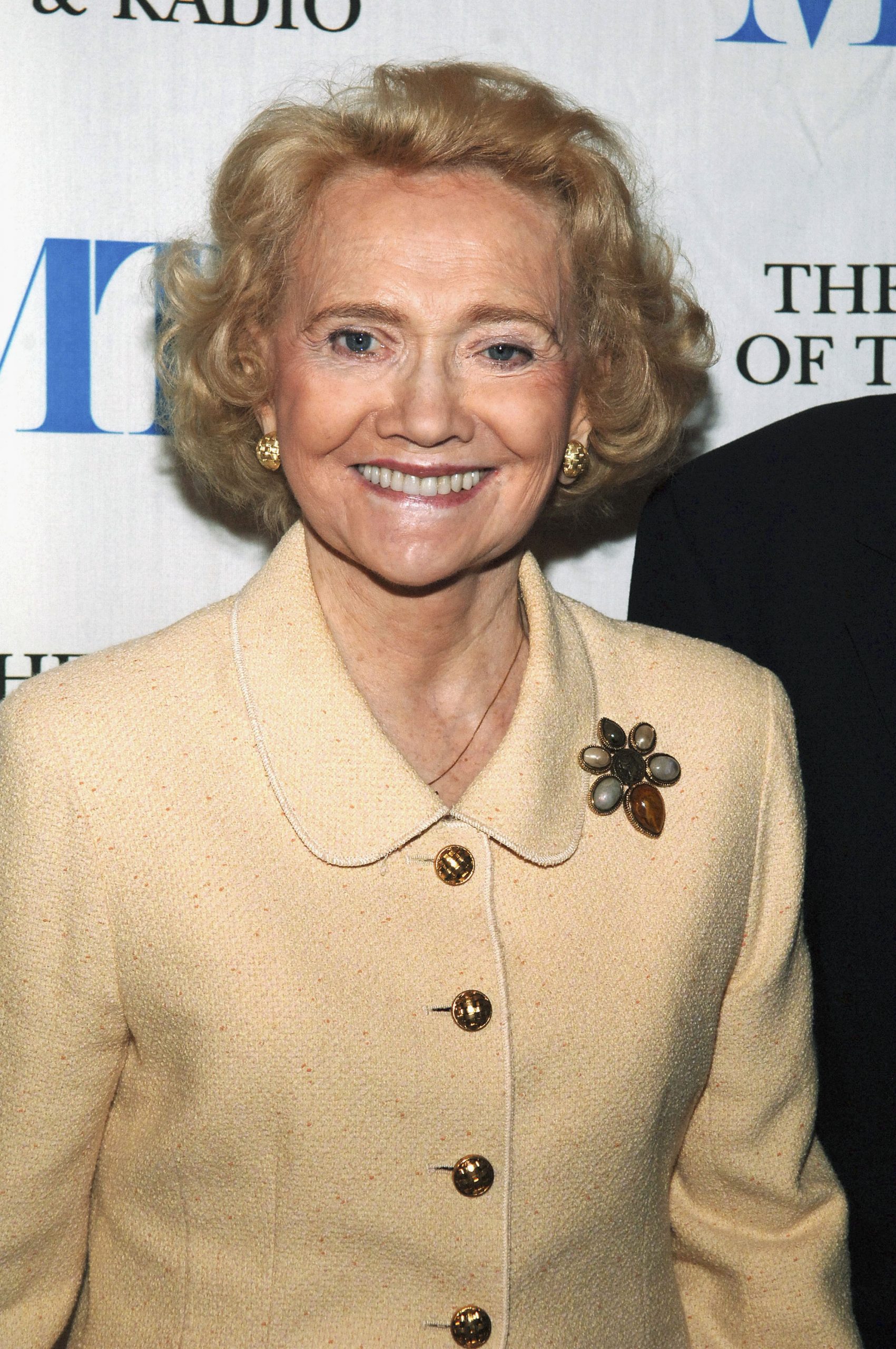
Agnes Gund is a preeminent American philanthropist and art collector whose net worth is estimated in the high hundreds of millions of dollars, rooted in the Gund family’s banking and real estate fortune. Her financial influence is defined by her "art-to-action" model, most notably the 2017 sale of a $165 million Roy Lichtenstein painting to establish the Art for Justice Fund.
As of 2026, Agnes Gund’s position in the global financial and cultural landscape remains a study in the strategic use of inherited wealth and high-value assets for systemic social change. While many billionaires focus on the preservation of capital or the growth of private foundations through traditional endowments, Gund has gained international recognition for her willingness to liquidate blue-chip assets to address immediate societal crises, specifically mass incarceration in the United States. Her financial footprint extends beyond her personal bank account into the institutional stability of the Museum of Modern Art (MoMA) and the broader art market.
The Origins of the Gund Family Wealth
To understand Agnes Gund’s financial influence, one must first examine the source of her capital. The Gund fortune was primarily built by her father, George Gund II, a visionary businessman who served as the president of the Cleveland Trust Company. Under his leadership, the bank became one of the most powerful financial institutions in the Midwest.
The family’s wealth was further diversified through strategic investments in real estate and industry. George Gund II was an early investor in companies like Kellogg’s and played a significant role in the economic development of Cleveland, Ohio. Upon his death in 1966, he left a substantial estate to his children, which they managed through the Gund Foundation and individual investment portfolios.
Agnes Gund’s brothers, including the late Gordon Gund—who was a part-owner of the Cleveland Cavaliers—and Graham Gund, an architect and collector, also maintained significant financial profiles. This multi-generational wealth provided Agnes with the liquidity and asset base required to become one of the world's most influential art patrons. However, unlike many heirs who focused solely on the growth of their portfolios, Agnes pivoted toward "venture philanthropy," treating social causes with the same urgency as a financial investment.
The Art Collection as a Strategic Asset Class
Agnes Gund’s financial influence is inextricably linked to her role as a collector. Over several decades, she amassed a collection that includes works by masters such as Jasper Johns, Ellsworth Kelly, Mark Rothko, and Roy Lichtenstein. In the world of high finance, these are not merely cultural artifacts; they are high-performing, non-correlated assets.
The appreciation of Gund’s collection reflects the explosive growth of the contemporary art market. Works purchased in the 1970s and 80s for six-figure sums reached valuations in the tens or even hundreds of millions by the 2020s. Gund’s ability to recognize value early allowed her to build a "war chest" of cultural capital that she would later use to disrupt traditional philanthropic models.
Valuation and Market Impact
Gund’s influence on the art market is two-fold. First, her "provenance"—the history of ownership—adds a significant premium to any work she sells or donates. When a work is known to be from the "Agnes Gund Collection," it signals to other high-net-worth individuals and institutions that the piece is of the highest aesthetic and historical caliber. This social signaling has a direct impact on auction prices and gallery valuations.
Second, her decision to sell major works publicly or privately affects market supply. In 2017, when she sold Lichtenstein’s Masterpiece (1962), it was one of the highest prices ever paid for a single work of art. This transaction didn't just increase her liquidity; it set a new benchmark for the Pop Art market, influencing the valuation of similar works held by other collectors and museums.
The $165 Million Pivot: The Art for Justice Fund
The most significant event in Agnes Gund’s financial history occurred in 2017. Shifting away from the traditional model of donating art to museums for tax write-offs, Gund sold Masterpiece for $165 million to Steven A. Cohen. After taxes, she used $100 million of the proceeds to launch the Art for Justice Fund.
This was a radical financial move for several reasons:
- Liquidation of a "Trophy" Asset: Collectors rarely sell their most prized possessions unless facing financial distress. Gund sold hers at the height of its value to fund a social cause.
- A "Spend-Down" Model: Unlike traditional foundations that aim to exist in perpetuity by spending only 5% of their endowment annually, the Art for Justice Fund was designed as a six-year "sprint." It was intended to exhaust its funds quickly to create immediate impact in the fight against mass incarceration.
- Leveraging Peer Wealth: Gund used her initial $100 million as a "challenge grant," encouraging other wealthy collectors to sell works and donate a portion of the proceeds. By 2023, the fund had distributed over $125 million to more than 200 grantees, effectively magnifying Gund’s original financial contribution through the collective capital of her peers.
By 2026, the legacy of this fund is seen in the sustained funding of criminal justice reform organizations like the Equal Justice Initiative and the Brennan Center for Justice. Gund’s influence transformed the way high-net-worth individuals view their art collections—not just as static wealth, but as active capital for social justice.
Institutional Influence: MoMA and Beyond
Gund’s financial influence is perhaps most visible in her leadership at the Museum of Modern Art (MoMA). Serving as President from 1991 to 2002 and currently as President Emerita, she has been a central figure in the museum’s multi-billion dollar fundraising campaigns.
The Economics of MoMA Leadership
The role of a museum president is as much about financial stewardship as it is about artistic vision. Gund was instrumental in the museum’s massive $858 million expansion completed in 2004 and the subsequent $450 million expansion completed in 2019. Her personal donations to the museum are estimated to exceed $100 million in combined cash and artwork value.
Her financial influence within MoMA helped shift the institution's acquisition strategy toward more diverse artists. By funding the purchase of works by women and artists of color, she used her capital to correct historical imbalances in the museum’s "permanent collection asset pool," thereby increasing the market value and institutional recognition of those artists.
| Philanthropic Entity / Project | Primary Funding Source | Impact Area | Estimated Financial Commitment |
|---|---|---|---|
| Art for Justice Fund | Sale of Masterpiece | Criminal Justice Reform | $100M+ (Seed) |
| MoMA Endowment | Personal Cash/Assets | Institutional Stability | $100M+ (Lifetime) |
| Studio in a School | Personal Donations | Arts Education | $50M+ (Total) |
| Gund Foundation | Family Inheritance | Regional Dev (Ohio) | $500M+ (Total Assets Managed) |
The "Gund Effect" on Philanthropic Strategy
Agnes Gund’s financial influence has popularized several key strategies that are now standard among the "giving pledge" generation of billionaires.
- Strategic Asset Liquidation: Instead of waiting for an estate sale, Gund demonstrated the power of selling highly appreciated assets during one's lifetime to fund urgent causes.
- Collaborative Funding: Through her work with the Ford Foundation (which managed the Art for Justice Fund), she showed how private wealth can be more effective when paired with professional philanthropic infrastructure.
- The Power of Provenance: By attaching her name to a cause, she increased the "social currency" of criminal justice reform, making it a viable and prestigious area for other wealthy donors who had previously focused on more "traditional" areas like healthcare or higher education.
FAQ: Understanding Agnes Gund’s Financial Legacy
How did Agnes Gund acquire her wealth?
Agnes Gund’s wealth is primarily inherited from her father, George Gund II, who was a successful banker and investor in Cleveland, Ohio. She has significantly grown this wealth through long-term investments in the contemporary art market, where the value of her collection has appreciated substantially over five decades.
What is the estimated net worth of Agnes Gund in 2026?
While her exact private net worth is not public, financial analysts and art market experts estimate her wealth to be in the range of $500 million to $1 billion, accounting for her remaining art collection, real estate holdings, and diversified family investments. However, a significant portion of her potential net worth has already been redistributed through her philanthropic initiatives.
Why was the sale of the Lichtenstein painting so significant?
The sale of Masterpiece for $165 million in 2017 was a landmark event because it was one of the first times a major collector liquidated a top-tier asset specifically to fund a social justice initiative rather than to reinvest in more art or personal lifestyle. It signaled a shift in how the "ultra-high-net-worth" (UHNW) community uses art as a liquid tool for social change.
What is the Art for Justice Fund?
The Art for Justice Fund is a philanthropic project launched by Agnes Gund in partnership with the Ford Foundation. Its goal is to reduce mass incarceration in the United States and its disproportionate impact on communities of color. The fund operates on a "spend-down" model, meaning it was designed to distribute all its capital within a set timeframe to address the problem with maximum intensity.
Does Agnes Gund still influence the art market?
Yes. As President Emerita of MoMA and a major donor to various museums, her endorsement of an artist can significantly increase their market value. Furthermore, her philanthropic model has encouraged other collectors to sell works, which increases market liquidity and influences auction house trends.
Financial Recommendation: The Legacy of Active Capital
For high-net-worth individuals and financial advisors looking to emulate Agnes Gund’s influence, the primary lesson is the transition from passive asset holding to active capital deployment. Gund’s success was not merely in possessing wealth, but in recognizing when an asset (like a painting) had reached a valuation where its social utility outweighed its private aesthetic value.
Next Actions for Philanthropists:
- Audit Non-Liquid Assets: Evaluate art, real estate, or collectibles for potential liquidation to fund immediate philanthropic goals.
- Explore Spend-Down Models: Consider the impact of large, immediate grants versus the slow distribution of a perpetual endowment.
- Leverage Institutional Partnerships: Like Gund’s partnership with the Ford Foundation, use established organizations to ensure the professional management and maximum impact of large-scale gifts.
Agnes Gund’s financial influence in 2026 remains a testament to the idea that true wealth is measured not by what is kept, but by the systemic changes one’s capital can catalyze.