Securing affordable whole life insurance requires balancing the necessity of permanent death benefit protection and cash value accumulation against fixed premium obligations. By prioritizing high-rated mutual companies, leveraging dividend projections, and optimizing underwriting classes, you can mitigate costs while maintaining long-term financial security through structured, guaranteed coverage.
Whole life insurance is a form of permanent life insurance that remains in effect for the insured’s entire life, provided that the premiums are paid and the policy remains in force. Unlike term life insurance, which covers a specific period, whole life features a "cash value" component that grows over time on a tax-deferred basis. Because this product offers a death benefit along with an asset-building mechanism, premiums are significantly higher than those for term coverage. Finding "affordable" rates in this context means identifying strategies to manage these fixed costs without compromising the integrity of the contract.
Understanding the Components of Premium Calculation
To find affordable rates, you must first understand what insurance carriers use to calculate your premium. Life insurance premiums are not arbitrary; they are based on rigorous actuarial science.
- Mortality Risk: The primary driver of cost. Underwriters evaluate your life expectancy based on age, medical history, lifestyle habits (such as tobacco use), and family health history. Younger applicants generally pay lower premiums because they are statistically less likely to trigger a death benefit claim in the near future.
- The Interest Rate Environment: In 2026, insurance companies continue to manage the interest rate environment. Since whole life policies are long-term contracts, insurers invest your premiums in conservative assets, such as high-grade corporate bonds and government securities. When interest rates are stable or rising, the insurer can generate more revenue, which may lead to lower net premiums or higher potential dividends.
- Administrative and Distribution Costs: A portion of your premium covers the company’s operating expenses, including commissions for agents and the cost of underwriting. Direct-to-consumer policies or low-commission structures can sometimes offer a leaner premium profile.
Strategies to Lower Your Whole Life Premiums
Finding affordable rates often involves adjusting the structure of the policy rather than seeking "cheap" insurance. Because whole life is a long-term commitment, affordability is defined by sustainability.
1. Prioritize Mutual Insurance Companies
Mutual insurance companies are owned by their policyholders rather than outside shareholders. These companies often pay dividends to their policyholders if the company performs well. While the "gross" premium for a mutual policy might seem higher, the "net" cost—the premium minus the annual dividend—often makes these policies more affordable over the life of the contract.
2. Selecting the Optimal Underwriting Class
Insurance carriers categorize applicants into "risk classes" (e.g., Preferred Plus, Preferred, Standard, Table Ratings). Even a minor health issue can move you from a "Preferred" class to a "Standard" class, significantly increasing your annual premium. Before applying, ensure your medical records are accurate and that you are prepared for the medical exam. If you have managed conditions like high blood pressure or cholesterol, documented compliance with treatment can help you secure a better rate class.
3. Adjusting the Death Benefit
The cost of whole life insurance is directly proportional to the size of the death benefit. If the goal is to cover specific liabilities, such as funeral expenses, estate taxes, or providing a baseline legacy, calculating the precise amount needed prevents over-insuring and over-paying. You can always increase the coverage later, provided you are still insurable, or use "Paid-Up Additions" (PUAs) to grow your death benefit over time.
4. Opting for a Limited Premium Payment Period
While most people pay whole life premiums until age 100 or death, some policies offer a "10-pay" or "20-pay" structure. While the annual premiums are higher, you stop paying entirely after the selected term, and the policy remains fully paid up. For individuals with stable current income who want to avoid premiums during retirement, this is a highly effective way to guarantee affordability in later years.
Comparative Cost Considerations
When comparing quotes, it is essential to look beyond the initial premium quote. Use the following table to understand the trade-offs between different structural choices.
| Feature | Impact on Initial Premium | Long-Term Financial Impact |
|---|---|---|
| Standard Level Premium | Base cost | Predictable but ongoing for life |
| Limited Pay (e.g., 20-Pay) | Higher immediate cost | Eliminates premiums in later years |
| Mutual Company Dividend | Offset by dividends | Lowers the long-term net cost |
| Increased Death Benefit | Higher cost | Increases cash value and protection |
| Riders (e.g., Waiver of Premium) | Slight increase | Protects the policy if you become disabled |
The Role of Dividends in Net Cost
In 2026, dividends remain a vital component of whole life affordability. Dividends are not guaranteed, but mutual companies with long track records of payment provide a historical basis for expectations. These dividends can be used to pay your premiums, effectively reducing your out-of-pocket costs. If a policy earns enough in dividends, you may reach a point where the dividend covers the entire annual premium, creating a "self-sustaining" policy.
Common Mistakes That Increase Costs
Avoiding common errors is as critical as choosing the right company.
- Ignoring the Medical Exam: Many individuals seek "no-exam" policies for convenience. However, insurers price these policies with higher risk assumptions to account for the lack of medical data. For most healthy individuals, undergoing a full medical exam is the most effective way to secure the lowest possible rates.
- Focusing on Monthly Rather Than Annual Premiums: Paying annually is almost always cheaper than paying monthly. Many insurers add a "modal factor" to premiums paid more frequently than once a year to cover the administrative cost of processing those payments.
- Purchasing Without Professional Guidance: Whole life insurance contracts are complex. Working with an independent broker who has access to multiple carriers allows you to compare different companies’ historical dividend performance and underwriting guidelines, ensuring you find the best value for your specific health profile.
Regulatory Protections and Financial Stability
When you purchase whole life insurance, you are entering into a contract that may last decades. Therefore, the "affordability" of the rate is meaningless if the insurer fails. Ensure that any company you consider is highly rated by independent agencies such as AM Best, Moody’s, or Standard & Poor’s. Furthermore, your state’s guaranty association provides a safety net if an insurance company becomes insolvent, though this should be considered a backstop rather than a primary reason for choosing a carrier.
Frequently Asked Questions
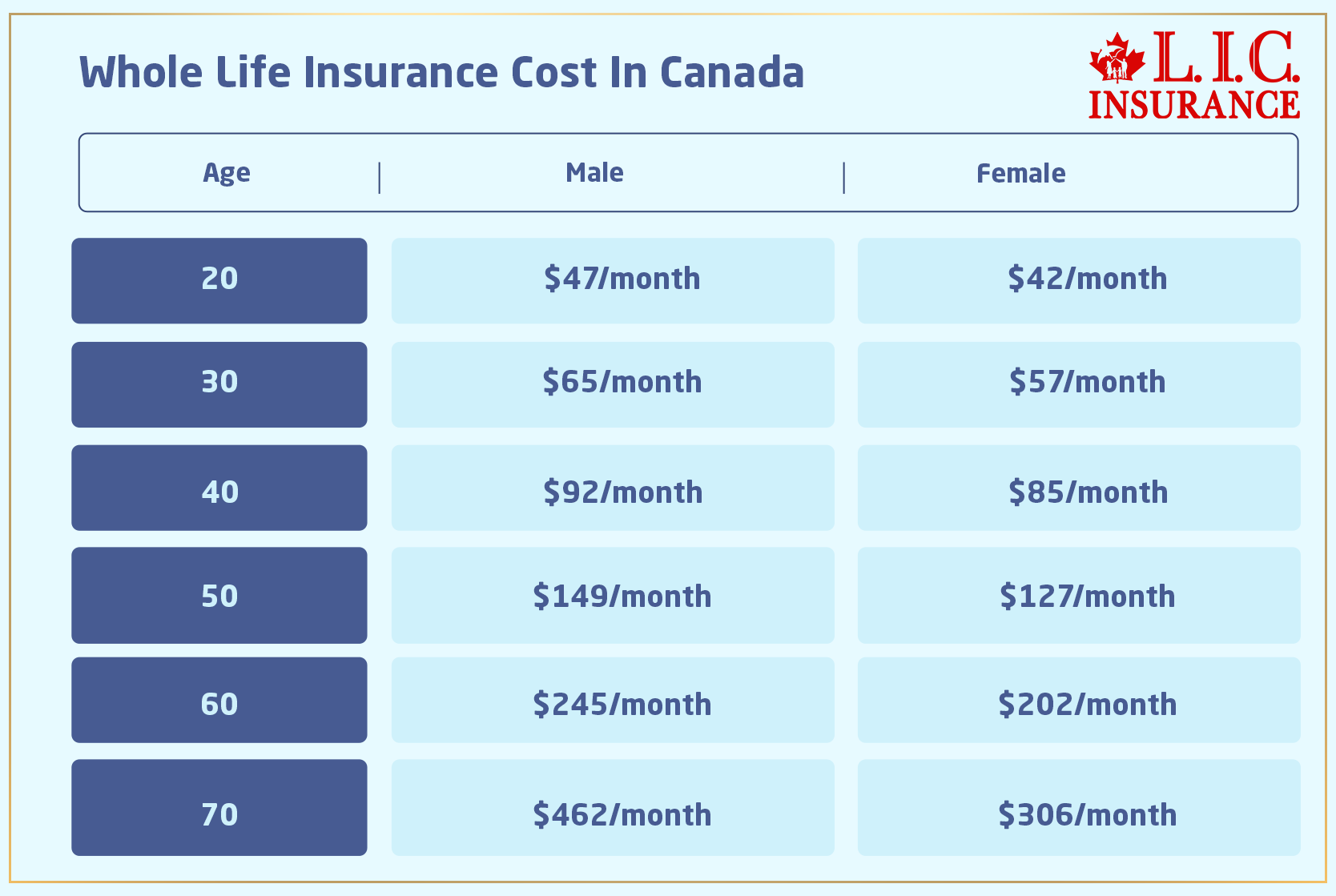
Does the age of application significantly affect whole life premiums? Yes. Age is the most significant factor in premium calculation. Because the likelihood of death increases with age, the insurer adjusts the premium to cover the risk over a shorter expected timeframe. Applying earlier in life guarantees a lower permanent premium rate.
Is it possible to reduce my premiums if my health improves? Generally, no. Your premium is locked in at the time of issue based on your health status at that moment. However, some policies allow for the conversion of term insurance or the adjustment of certain riders that may lower the cost, though a full restart of a whole life policy usually requires a new underwriting process.
Why are no-medical-exam policies more expensive? Insurers take on more risk when they do not have complete medical information. To compensate for this "unknown" risk, they build a higher cost into the premium. While convenient, these policies are rarely the most cost-effective solution for healthy applicants.
What are "Paid-Up Additions," and do they make the policy cheaper? Paid-Up Additions are optional purchases of additional death benefit using cash value. They do not lower your base premium, but they increase the total value of your policy and the dividend potential, which can improve the overall efficiency and net cost of the contract.
Can I switch to a cheaper policy if I find a better rate later? You can, but it is rarely advisable. Because you are older, a new policy will likely have a higher base rate. Additionally, you would lose the cash value and the interest-earning history of your original policy, effectively starting over at a disadvantage.
Final Recommendation
The most effective way to achieve affordable whole life insurance is to obtain a policy while you are young and healthy, choose a high-quality mutual company, and opt for an annual payment structure. Before committing, request an "illustration" from your agent that shows how dividends are projected to offset premiums over 20 to 30 years. Review this document carefully to ensure the assumptions are reasonable. If your budget is tight, consider a blend of term insurance for immediate needs and a smaller, foundational whole life policy that you can expand over time as your income grows.