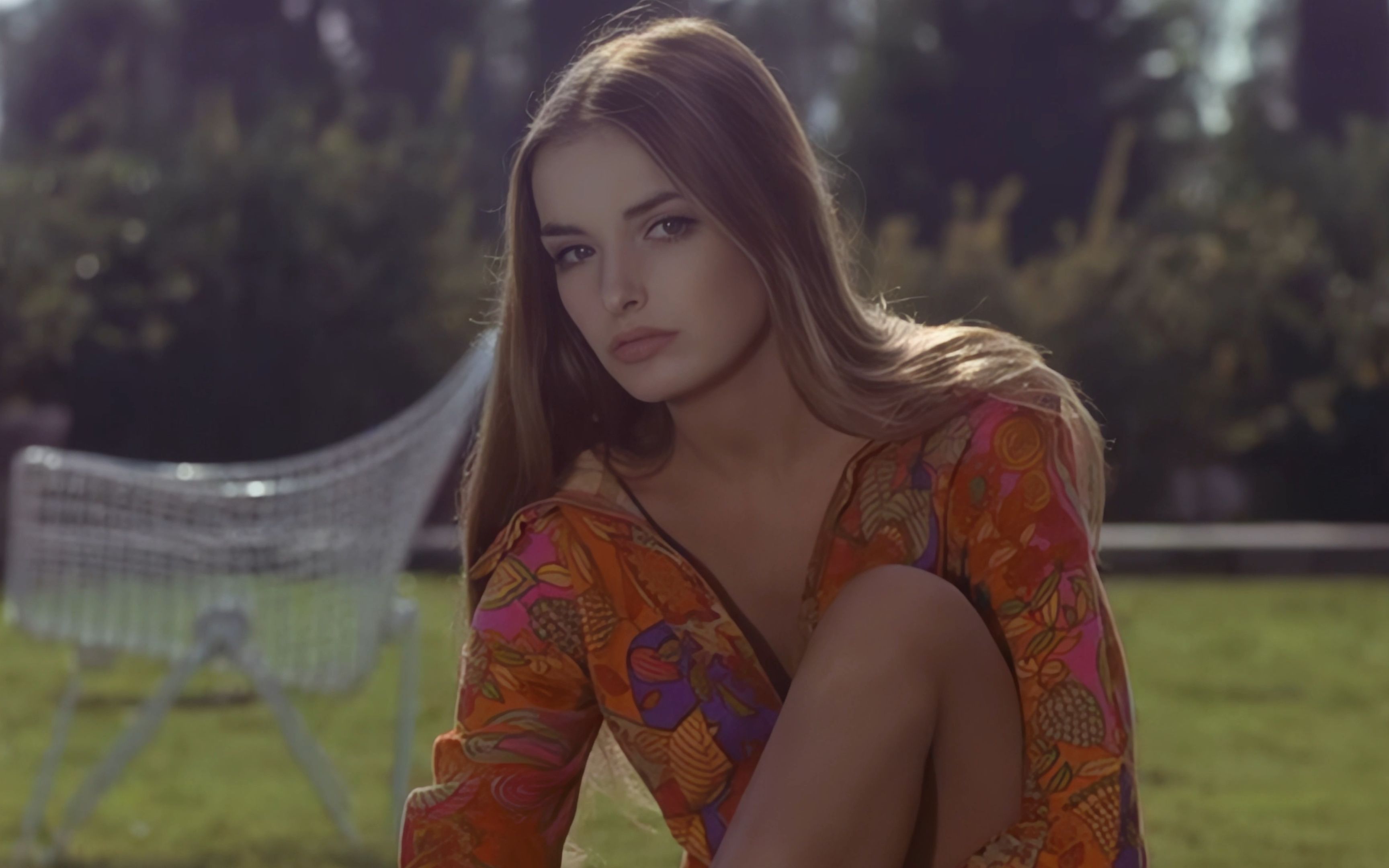
Adrienne La Russa is retired from professional screen acting and lives a quiet, private life outside the Hollywood spotlight alongside her husband, Robert Frank Sears. While no longer active in film or television productions, her enduring legacy remains preserved through daytime television history and European cult cinema retrospectives.
Current Status: What Happened to Adrienne La Russa?
For decades, fans of daytime serials and classic cinema have wondered about the whereabouts of Adrienne La Russa. Having stepped away from the entertainment industry in the early 1990s, La Russa deliberately chose a path away from public scrutiny, red carpets, and media interviews. Unlike many contemporary performers who maintain an active presence on social platforms, she has consistently maintained strict personal privacy.
Public records and industry archives confirm that La Russa has been married to Robert Frank Sears since 1987. Following her departure from show business, she turned her attention entirely toward her private personal life, family, and non-entertainment pursuits. She does not participate in fan conventions, nostalgia tours, or digital streaming reunions, which has only amplified interest among cult film enthusiasts and long-time soap opera followers seeking updates on her well-being.
Her absence from modern media is not a matter of sudden disappearance, but rather a deliberate and graceful retirement. Many performers from the 1970s and 1980s faced dramatic industry shifts as casting practices and the studio system evolved in the 1990s. Rather than pursuing diminishing roles or navigating the rising tabloid culture, La Russa chose to conclude her on-screen career on her own terms, leaving behind a compact yet memorable body of work across European arthouse cinema, American prime-time dramas, and daytime serials.
Early Life and the Path to Acting
Born on May 15, 1948, in New York City, Adrienne La Russa grew up during an era of significant cultural and artistic transformation. Developing an early interest in the performing arts, she possessed a striking screen presence characterized by expressive features and an innate dramatic intensity. Her background in New York provided proximity to theater, independent productions, and international cinema movements that began influencing American actors in the late 1960s.
Rather than taking the conventional route of American commercial television or regional theater apprenticeships, La Russa's early professional trajectory led her across the Atlantic. European cinema in the late 1960s was undergoing a dynamic renaissance, with Italian and British studios actively recruiting striking young American talent for genre films, historical epics, and psychological dramas. This international exposure allowed La Russa to bypass entry-level domestic typecasting, immediately placing her in demanding leading roles overseas.
Her international immersion shaped her early professional reputation. European filmmakers valued her classical look and capacity for portraying psychological vulnerability, traits that stood out during an era when Hollywood was still heavily focused on traditional starlet archetypes. This foundation abroad provided her with artistic credibility before she returned to establish her career within the domestic American television landscape.
Breakthrough in European Cinema: Lucio Fulci and Historical Drama
The most critically significant chapter of La Russa's film career occurred in Italy, most notably through her collaboration with acclaimed Italian director Lucio Fulci. In 1969, Fulci cast La Russa in the title role of Beatrice Cenci (released in English-speaking markets under titles such as The Conspiracy of Torture).
The film, based on the historical tragedy of a 16th-century Roman noblewoman executed for plotting the murder of her abusive father, remains widely regarded by film historians as one of Fulci's finest dramatic achievements. Prior to transitioning heavily into the visceral horror films that earned him international notoriety, Fulci approached Beatrice Cenci with meticulous historical accuracy, bleak realism, and emotional gravity.
La Russa’s performance as Beatrice demanded exceptional emotional range:
- Psychological Depth: Portraying Beatrice's transformation from victimized daughter to desperate conspirator required an authentic depiction of trauma and defiance.
- Physical Demands: The historical setting and graphic depiction of Inquisitorial justice placed rigorous physical demands on the cast, with La Russa anchoring the most harrowing scenes.
- Critical Reception: While the film’s brutal themes challenged mainstream distribution at the time, film scholars have since singled out La Russa's performance as deeply nuanced, tragic, and unvarnished.
During this European phase, La Russa also starred in the 1969 Italian psychological thriller Salware la faccia (released internationally as Psychout for Murder), directed by Rossano Brazzi. In the film, she played Licia, an institutionalized young woman who methodically orchestrates vengeance against her manipulative family. These early Italian roles established her capability to handle dark, complex subject matter well before American television audiences came to know her in daytime drama.
The American Daytime Television Era: Days of Our Lives
Upon returning to the United States in the mid-1970s, La Russa transitioned into the medium that brought her the widest public recognition: American daytime television. Her defining television role came in 1975 when she joined the long-running NBC soap opera Days of Our Lives as Brooke Hamilton.
During this period, American soap operas were reaching historic cultural heights, transitioning from conventional domestic morality tales into sophisticated, character-driven drama dealing with complex personal and social issues. The character of Brooke Hamilton was central to high-stakes storylines involving corporate ambition, romantic betrayal, and shifting family loyalties in the fictional town of Salem.
La Russa portrayed Brooke Hamilton from 1975 to 1977. Her tenure on the show occurred during a golden age of daytime television viewership, where serials drew millions of daily viewers and created passionate fan followings. La Russa’s background in European dramatic cinema brought an elevated level of composure and sophistication to the role, setting her apart from traditional soap opera archetypes. Her time on Days of Our Lives established her as a familiar face in American households, earning her a lasting place in daytime history.
Following her departure from Days of Our Lives, she briefly appeared in daytime television again later in her career, portraying the character of Janet Hobart on ABC's General Hospital in 1987. Although shorter in duration, this guest arc reinforced her natural aptitude for fast-paced, dialogue-intensive serial storytelling.
Prime-Time Television and Film Appearances
Beyond daytime television and European cinema, Adrienne La Russa accumulated a diverse portfolio of guest-starring and recurring appearances across American prime-time television and studio films throughout the 1970s and 1980s.
Her screen credits include:
- The Man Who Fell to Earth (1976): Directed by Nicolas Roeg and starring David Bowie, this surreal science fiction landmark featured La Russa in an uncredited but recognizable role as Helen, further linking her career to seminal avant-garde cinema.
- The Streets of San Francisco (1974): In the episode "For Good or Evil," La Russa delivered a strong guest performance opposite Karl Malden and Michael Douglas in this hallmark police procedural.
- Space: 1999 (1976): La Russa appeared in the second season episode "The Immunity Syndrome" as Mentor's daughter, playing a pivotal alien role in the influential British science fiction series.
- Centennial (1978–1979): She played the role of Clemma Zendt in this monumental 12-episode NBC television miniseries based on James A. Michener's epic novel. The high-budget miniseries was one of the most prominent television events of the late 1970s.
- A Man Called Sloane (1979): She guest-starred in this espionage adventure series, which reflected the era's taste for glamorous, stylized action serials.
Her prime-time roles demonstrated versatility, allowing her to move effortlessly between gritty urban crime procedurals, high-concept speculative fiction, and sprawling historical epics.
High-Profile Personal Life and Relationships
Throughout her career, La Russa maintained a separation between her public acting duties and personal affairs, though certain relationships inevitably attracted public and media attention.
Marriage to Steven Seagal
In 1984, La Russa married martial artist and future action film star Steven Seagal. At the time of their marriage, Seagal had not yet transitioned into mainstream Hollywood stardom, functioning primarily as a martial arts instructor running an aikido dojo in Southern California.
The marriage proved turbulent and short-lived. During their union, Seagal became romantically involved with model and actress Kelly LeBrock, who became pregnant with his child. Consequently, the marriage between La Russa and Seagal was legally annulled and dissolved in the mid-1980s, largely on grounds that Seagal had not properly finalized his prior divorce before entering the marriage. The relationship remains an often-cited footnote in 1980s Hollywood biographical retrospectives, although La Russa chose to remain dignified and silent regarding the matter, never using the situation to seek publicity.
Long-Term Marriage to Robert Frank Sears
Following the conclusion of her relationship with Seagal, La Russa married Robert Frank Sears on December 31, 1987. This marriage marked a stabilization in her personal life and coincided with her phased withdrawal from the entertainment industry. The couple has remained together for nearly four decades, residing far away from the typical entertainment epicenters and living a life characterized by quiet domestic stability.
Departure from Hollywood and Transition to Private Life
The transition from working actor to private citizen is often challenging, yet La Russa navigated the shift decisively. By 1991, following guest appearances in projects like the television series Monsters, she concluded her professional acting career.
Several industry dynamics contributed to departures like La Russa's during this era:
- Industry Realignment: The early 1990s witnessed profound changes in television production, casting formats, and the transition of mid-budget genre cinema to home video markets, reducing opportunities for experienced character actors outside major studio contracts.
- Tabloid Expansion: The emergence of modern celebrity journalism, syndicated tabloid television, and invasive press coverage made maintaining personal privacy increasingly difficult for performers.
- Reprioritization: Having worked steadily across multiple continents and mediums for over two decades, La Russa prioritized private family life, artistic interests, and personal pursuits over the relentless audition cycles and logistical pressures of the film industry.
Since her retirement, La Russa has not authored tell-all memoirs, granted retrospective interviews, or pursued appearances on the convention circuit. Her decision to step away represents an intentional, definitive retirement that reflects a focus on quiet, private living.
Career Filmography and Key Milestones
The following table provides an overview of Adrienne La Russa’s primary screen credits, documenting the timeline, genres, and roles that defined her professional career:
| Year | Title | Medium | Role | Notes / Context |
|---|---|---|---|---|
| 1969 | Beatrice Cenci (The Conspiracy of Torture) | Feature Film | Beatrice Cenci | Historical drama directed by Lucio Fulci; widely praised lead role |
| 1969 | Salware la faccia (Psychout for Murder) | Feature Film | Licia Ardenghi | Italian psychological thriller directed by Rossano Brazzi |
| 1972 | Keep Off My Grass! | Feature Film | Sharon | Independent American comedy film |
| 1974 | The Streets of San Francisco | Television | Julie Tremaine | Guest role in episode: "For Good or Evil" |
| 1975–1977 | Days of Our Lives | Television | Brooke Hamilton | Core contract role; national daytime television exposure |
| 1976 | The Man Who Fell to Earth | Feature Film | Helen | Cult sci-fi directed by Nicolas Roeg; uncredited appearance |
| 1976 | Space: 1999 | Television | Mentor's Daughter | Guest star in episode: "The Immunity Syndrome" |
| 1978–1979 | Centennial | TV Miniseries | Clemma Zendt | Prestigious NBC 12-part historical epic adaptation |
| 1979 | A Man Called Sloane | Television | Serena | Guest appearance in episode: "The Venus Microbe" |
| 1987 | General Hospital | Television | Janet Hobart | Guest arc on ABC's flagship daytime drama |
| 1991 | Monsters | Television | Rachel | Guest star in episode: "The Waiting Room" (final credited role) |
The Cult Legacy and Retrospective Appreciation
While Adrienne La Russa lives privately today, her work enjoys a persistent critical afterlife, particularly within specialized film enthusiast circles. Rather than fading entirely into obscurity, her key projects have been re-evaluated and preserved through high-definition physical media releases and scholarly film writing.
Restoration of Italian Genre Cinema
In recent years, boutique physical media labels such as Severin Films, Arrow Video, and Mondo Macabro have performed high-definition digital restorations of late 1960s and 1970s Italian cinema. Through these releases, Beatrice Cenci has been introduced to new generations of film scholars and horror fans.
Critics assessing Lucio Fulci’s full filmography frequently highlight La Russa’s central performance as one of the most emotionally complex portrayals in his body of work. In contrast to the stylized, exploitative tropes often associated with low-budget European thrillers of that era, La Russa brought a grounded, tragic gravitas to the historical production.
Archival Value in Daytime Television History
Daytime television historians maintain comprehensive digital archives documenting the golden eras of long-running serials. Forums, dedicated fan channels, and television history databases frequently feature clips and historical summaries of La Russa’s run as Brooke Hamilton on Days of Our Lives. Her contributions are viewed as foundational to the sophisticated storytelling style that defined daytime television in the mid-1970s, establishing standards for serialized romantic intrigue that modern daytime television continues to reference.
Frequently Asked Questions
Is Adrienne La Russa still alive?
Yes, Adrienne La Russa is alive. She is retired from acting and lives quietly in the United States, maintaining strict privacy outside the entertainment industry.
What is Adrienne La Russa best known for?
She is best known for her portrayal of Brooke Hamilton on the NBC daytime soap opera Days of Our Lives (1975–1977) and her critically acclaimed title role in Lucio Fulci's Italian historical drama Beatrice Cenci (1969).
Was Adrienne La Russa married to Steven Seagal?
Yes. La Russa and Steven Seagal were married in 1984 before his rise to action-movie fame. The marriage was short-lived and subsequently annulled in the mid-1980s.
Why did Adrienne La Russa retire from acting?
La Russa concluded her acting career in the early 1990s to prioritize private life and family stability over the demands of the film industry, choosing to avoid the invasive celebrity and tabloid culture of that decade.
Does Adrienne La Russa have official social media accounts?
No. La Russa does not operate any public, verified social media profiles on platforms like Instagram, X, or Facebook. Any profiles bearing her name are either fan tributes or unofficial archival pages.
Where to Rediscover Adrienne La Russa’s Work Today
For viewers looking to explore Adrienne La Russa’s on-screen contributions, several accessible avenues exist across modern physical media and digital streaming platforms:
- Physical Media Releases: The definitive way to experience her lead role in Beatrice Cenci is through restored Blu-ray editions released by specialty cult-cinema distributors. These releases feature restored negative scans, high-definition audio, and critical essays contextualizing her performance.
- Television Miniseries Streaming: Her performance as Clemma Zendt in Centennial is periodically available through classic television digital streaming platforms and complete DVD collection sets.
- Archival Daytime Television: Dedicated soap opera preservation networks and online archival channels frequently feature classic clips and storyline recaps from her era on Days of Our Lives, allowing historical television enthusiasts to study her daytime work.
- Cult Cinema Screenings: Arthouse revival theaters and genre film festivals routinely screen European psychological dramas and giallos from the late 1960s, where her appearances alongside European legends continue to reach cinephiles worldwide.