Choosing between accidental death insurance and term life insurance comes down to understanding your financial obligations, your risk tolerance, and your budget. Term life insurance provides comprehensive protection for both natural deaths and accidents, making it the superior choice for most families, while accidental death insurance offers a specialized, budget-friendly supplement exclusively for fatal injuries.
Evaluating financial protection products requires a careful look at how different policies handle risk, payout conditions, underwriting requirements, and long-term costs. When planning for the financial security of dependents, understanding the precise differences between an accidental death policy and a standard term life policy ensures that premium dollars are allocated efficiently. This guide examines the structural mechanics of both products, compares their core features, and provides a framework to help you determine which option aligns with your specific life stage and protection goals.
Understanding the Core Definitions
Before comparing these two insurance products, it is necessary to establish what each policy covers and how insurers define the trigger events for a payout. Insurance contracts are legally binding documents, and the definitions embedded within them dictate whether a claim will be approved or denied during a time of crisis.
What Is Term Life Insurance?
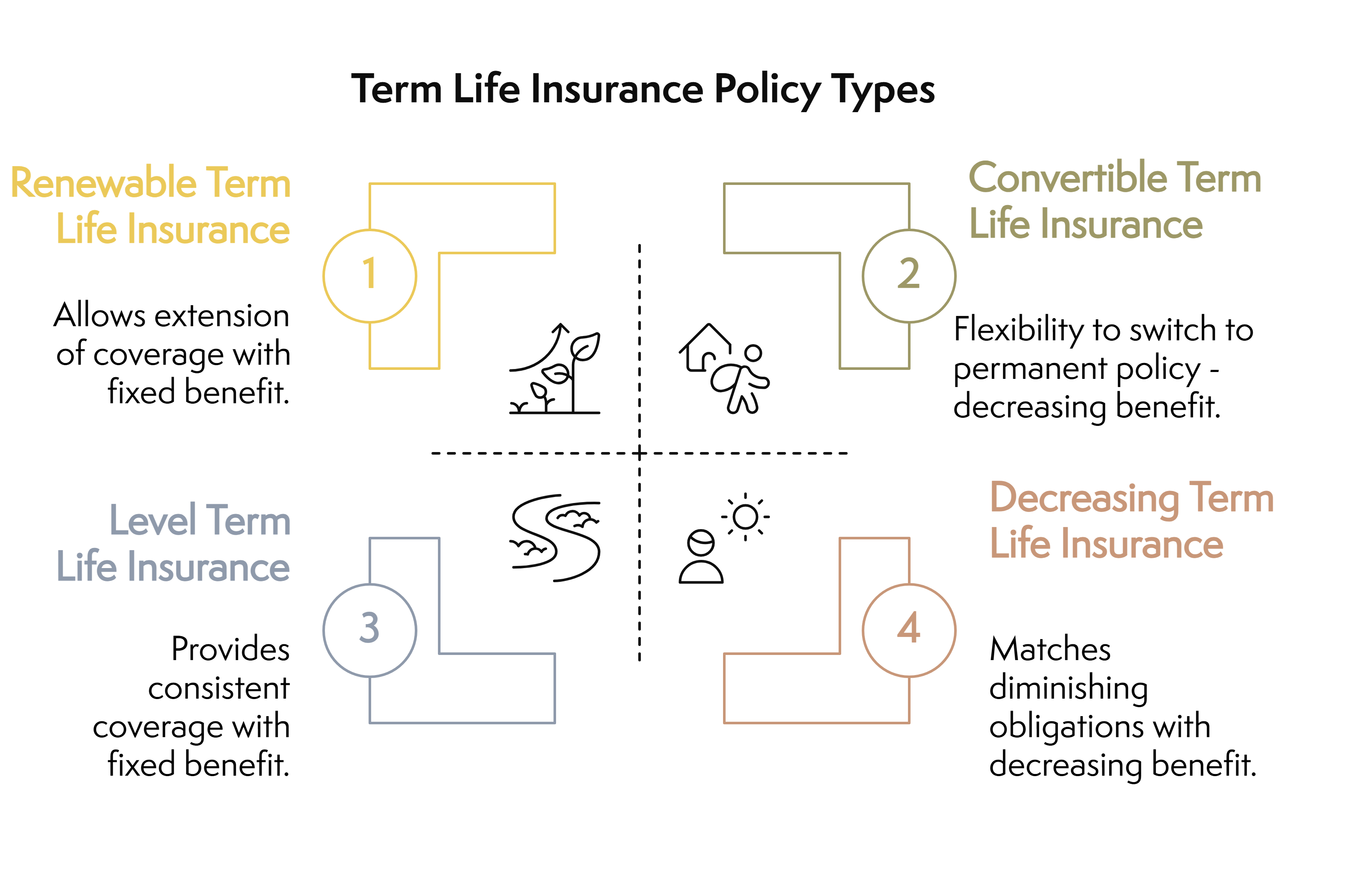
Term life insurance is a form of temporary life insurance designed to provide financial protection for a specific period, such as 10, 20, or 30 years. If the insured person dies while the policy is active, the insurance company pays a designated tax-free death benefit to the beneficiaries.
The defining characteristic of term life insurance is its comprehensive nature. It covers virtually all causes of death, including:
- Chronic illnesses and natural causes (such as heart disease, cancer, and stroke)
- Accidental injuries (such as motor vehicle collisions, falls, or workplace accidents)
- Age-related health declines
Because it covers the broad spectrum of mortality risks, term life insurance requires full medical underwriting in most cases. Insurers evaluate the applicant's age, medical history, family health background, lifestyle choices, and sometimes physical metrics like blood pressure and cholesterol levels before determining the premium rate.
What Is Accidental Death Insurance?
Accidental death insurance—often sold as Accidental Death and Dismemberment (AD&D) insurance—is a much narrower product. It pays out a benefit only if the insured person dies as a direct result of a covered accident.
Under an AD&D policy, deaths resulting from natural causes, illness, suicide, or pre-existing medical conditions are entirely excluded from coverage. An accident is typically defined by insurers as a sudden, unexpected, and violent event independent of all other causes. Examples include:
- Transport accidents (airplane, train, or automobile crashes)
- Fatal falls or slips
- Accidental drowning
- Exposure to the elements or poisoning
Because these policies do not assume the mortality risk of illnesses and natural aging, they are significantly easier to qualify for. Most accidental death policies require no medical exam, and acceptance is often guaranteed regardless of health status, provided the applicant falls within the eligible age range.
Key Differences: Coverage Scope and Underwriting
The fundamental divergence between term life and accidental death insurance lies in their underwriting standards and the breadth of risks they absorb. Recognizing these mechanics helps clarify why accidental death coverage is rarely sufficient as a standalone financial safety net.
Mortality Risk Versus Accident Risk
Statistically, the vast majority of deaths in the United States and globally result from illnesses and natural causes rather than accidents. According to mortality data compiled by public health agencies, conditions like malignant neoplasms (cancer) and diseases of the heart account for a massive percentage of annual deaths, whereas unintentional injuries represent a smaller, though tragic, fraction.
An accidental death policy operates on the assumption that the insurer faces a much lower probability of payout because it excludes natural mortality. Consequently, the insurer can charge lower premiums. However, this statistical advantage works against the consumer: the policy leaves beneficiaries unprotected against the most common causes of death.
Term life insurance, by contrast, prices its premiums to absorb the full statistical likelihood of mortality, whether sudden or prolonged. This comprehensive protection guarantees that if a policyholder passes away from a terminal illness after years of paying premiums, the financial safety net remains intact.
Underwriting Strictness and Medical Exams
The application process highlights another stark contrast between the two types of coverage:
- Term Life Insurance Underwriting: Involves detailed health questionnaires, prescription history checks, and frequently a paramedical exam involving blood and urine collections. Smokers, individuals with elevated body mass indexes, or those managing chronic conditions like diabetes will face higher premium tiers or potential denials.
- Accidental Death Insurance Underwriting: Typically features a simplified application with zero medical tests. Questions are usually limited to basic eligibility criteria, such as age and occupation (since high-risk professions like commercial fishing or construction may be excluded or rated differently).
This accessibility makes accidental death coverage attractive to individuals who have been denied traditional life insurance due to severe health issues. However, the ease of acquisition reflects the narrowness of the protection provided.
Cost Analysis and Financial Value
When evaluating insurance options, cost is a primary consideration. While accidental death insurance is almost always less expensive than term life insurance on a per-dollar-of-coverage basis, the value proposition changes when you examine what you actually receive for your investment.
Premium Structures
Term life insurance premiums are generally level for the duration of the chosen term (e.g., a 20-year term policy keeps the same monthly payment for all 240 months). As you age, buying term life becomes more expensive, which is why locking in a policy while young and healthy is standard financial advice.
Accidental death policies often feature flat monthly rates regardless of health, but premiums can increase as the insured crosses certain age brackets, or the coverage amount may automatically reduce once the policyholder reaches retirement age (often around age 65 or 70).
Comparative Breakdown
| Feature | Term Life Insurance | Accidental Death Insurance |
|---|---|---|
| Causes of Death Covered | All causes (natural, illness, accidents) | Accidents only (exclusions apply) |
| Medical Exam Required | Usually required (unless simplified issue) | Never required |
| Approval Odds | Dependent on health and lifestyle | High / Guaranteed acceptance |
| Cost Efficiency | Higher total cost; covers all mortality risks | Lower cost; covers narrow risk subset |
| Policy Duration | Fixed terms (10, 20, 30 years) | Often renewable annually or tied to group plans |
| Payout Certainty | High (if premiums are paid and rules met) | Low (contingent on strict accident definitions) |
Evaluating Your Personal Needs
Deciding between these policies requires an audit of your financial obligations, existing employer benefits, and health profile. Financial professionals generally view term life insurance as a foundational tool and accidental death insurance as an optional supplement.
When Term Life Insurance Is Essential
Term life insurance is indispensable if you have financial dependents who rely on your income to maintain their standard of living. You likely need a term life policy if you fall into any of the following categories:
- You have a mortgage or major shared debts: If your sudden passing would leave a surviving partner unable to service household debt, term life ensures the home can be paid off.
- You have young children: Funding future education, childcare, and daily living expenses until your children reach financial independence requires a robust death benefit.
- You are the primary wage earner: Families dependent on a single income stream need protection that accounts for years of lost future earnings.
When Accidental Death Insurance Makes Sense
While rarely sufficient on its own, accidental death insurance can serve specific, narrow purposes within a comprehensive financial plan:
- As a budget-friendly supplement: If you already maxed out your budget on a term life policy but want extra catastrophic coverage—such as doubling the payout for your family in the event of a tragic accident—an AD&D rider or standalone policy can provide supplemental funds.
- For individuals uninsurable for term life: If severe health conditions prevent you from qualifying for term life insurance, an accidental death policy offers at least some level of financial protection for your beneficiaries rather than none at all.
- Workplace benefits: Many employers offer baseline AD&D coverage as part of an employee benefits package at little to no cost to the worker. Accepting this coverage is generally a sound decision, provided it is viewed as a bonus rather than primary protection.
Common Pitfalls and Limitations of Accidental Death Insurance
Policyholders frequently misunderstand the restrictions built into accidental death contracts. Relying on an AD&D policy as your sole form of family protection exposes you to significant financial vulnerability due to strict legal definitions and exclusions.
Excluded Scenarios in Accidental Death Policies
Insurers scrutinize accident claims rigorously. Payouts are routinely denied if the death involves any of the following circumstances:
- Medical Complications: If an individual trips, breaks a hip, undergoes surgery, and suffers a fatal heart reaction on the operating table, insurers may classify the primary cause as medical rather than purely accidental.
- Intoxication: Deaths occurring while the insured's blood alcohol concentration exceeds legal limits are universally excluded.
- Dangerous Hobbies and Extreme Sports: Participating in activities such as skydiving, scuba diving, rock climbing, or auto racing often voids coverage unless specialized riders are purchased.
- Acts of War and Illegal Acts: Dying during active military combat in a designated war zone or while committing a felony will result in a denied claim.
Step-by-Step Guidance: Choosing the Right Policy
To arrive at the correct decision for your household, follow a structured evaluation process that prioritizes your family's actual exposure to financial hardship.
- Calculate Your Financial Need: Determine the total sum required to replace your income, clear debts, and fund future milestones (like college tuition) using standard insurance calculators.
- Assess Your Health Profile: Review your medical history honestly. If you are generally healthy, prioritize qualifying for a traditional term life policy.
- Shop and Compare Quotes: Obtain quotes for a 20- or 30-year term life policy matching your coverage target. Compare this against the cost of accidental death insurance.
- Audit Existing Coverage: Check your workplace benefits to see what group life and AD&D insurance you already hold, keeping in mind that employer-sponsored plans usually do not transfer if you leave the company.
- Consult a Licensed Professional: Speak with an independent insurance broker or financial advisor who can review multiple carriers to find a policy that balances your health status, budget, and family protection goals.
Frequently Asked Questions
Can I have both term life and accidental death insurance at the same time?
Yes, many people hold both. You can purchase a primary term life insurance policy for comprehensive protection and add an accidental death rider (or a separate AD&D policy) to increase the total payout your beneficiaries would receive specifically in the event of an accidental death.
Why is accidental death insurance so much cheaper than term life?
Accidental death insurance is less expensive because insurance companies face a much lower statistical risk of paying out a claim. Since the policy excludes natural causes, illnesses, and aging-related health failures, the vast majority of policyholders will eventually drop the policy or die from causes that do not trigger the payout, allowing insurers to maintain low pricing.
What happens if I outlive my term life insurance policy?
Once a term life policy expires, your coverage ends, and no payout is made. You can choose to let the policy lapse, convert it to a permanent life insurance policy if your contract permits, or reapply for a new term policy (though premiums will be higher due to your older age).
Does accidental death insurance cover heart attacks or strokes?
No. Heart attacks and strokes are classified as medical events stemming from natural causes or pre-existing health conditions. They are excluded from accidental death policies, which require the fatal event to be an external, unexpected trauma.
Is an accidental death policy a good alternative if I am denied term life insurance?
It can serve as a last resort if you have severe health conditions that make traditional term or whole life insurance completely unaffordable or unavailable. However, because it leaves your family unprotected against illness and natural death, it should be viewed strictly as partial protection rather than a complete life insurance solution.