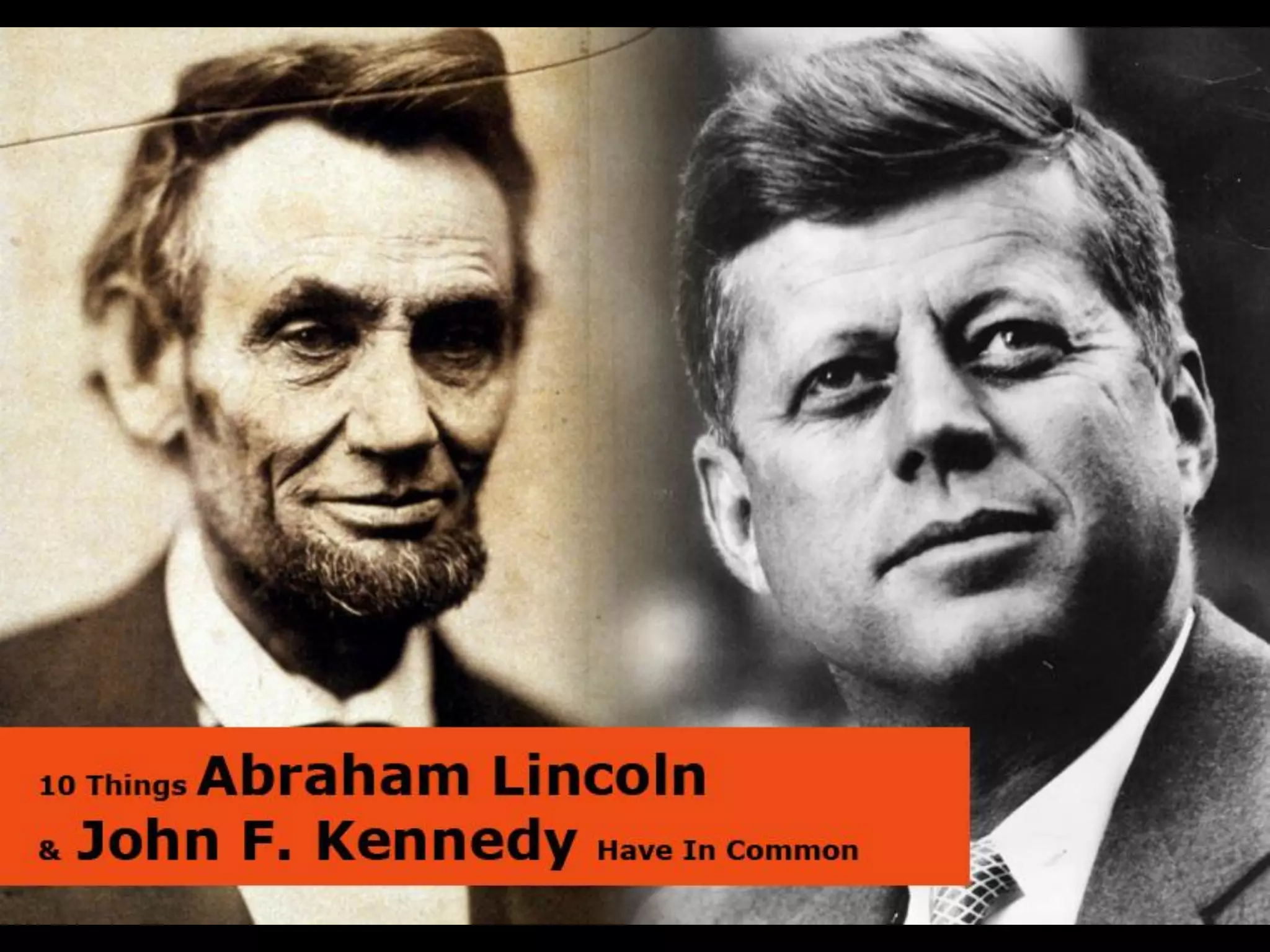
Abraham Lincoln did not have a personal secretary named Kennedy; rather, his two primary and famously devoted private secretaries were John Hay and John George Nicolay. The persistent urban legend linking Lincoln to a secretary named Kennedy stems from a famous piece of historical folklore known as the Lincoln-Kennedy coincidences, which began circulating in American newspapers and pop culture during the mid-20th century to draw eerie, albeit largely fabricated or exaggerated, parallels between the 16th and 35th U.S. presidents.
Dissecting the Lincoln-Kennedy Urban Legend
To understand why people often ask whether Abraham Lincoln had a secretary named Kennedy, one must examine the viral folklore that emerged decades after both leaders were assassinated. The "Lincoln-Kennedy coincidences" list first gained widespread public attention in the early 1960s, appearing in newspapers, magazines, and eventually being taught as trivia in classrooms across the United States.
Among the many uncanny claims found on this legendary list—such as both men being elected to Congress in '46, both being shot on a Friday, and both being succeeded by vice presidents named Johnson born in '08—is the specific assertion that Lincoln had a secretary named Kennedy who warned him not to go to Ford's Theatre.
From a strict historiographical standpoint, this claim is entirely fictional. The historical record, preserved extensively through the papers of the Library of Congress and the personal diaries of Lincoln's actual administration staff, confirms no such individual served in that capacity. The inclusion of a secretary named Kennedy was crafted specifically to mirror John F. Kennedy's actual administrative staff, creating a symmetrical narrative hook for the coincidence list.
The Real White House Staff: Nicolay and Hay
To appreciate how the Lincoln administration actually operated, it is necessary to look at the two men who held the title of private secretary to President Abraham Lincoln. John George Nicolay and John Hay were not merely clerical assistants; they were trusted confidants, political strategists, and historical chroniclers who lived inside the Executive Mansion alongside the Lincoln family.
| Secretary Name | Primary Roles and Historical Significance |
|---|---|
| John George Nicolay | Chief private secretary, gatekeeper, manager of correspondence, and co-author of the 10-volume definitive biography "Abraham Lincoln: A History." |
| John Hay | Assistant private secretary, speechwriter, diplomat, and later U.S. Secretary of State. Kept a vivid diary detailing daily life in the Civil War White House. |
John George Nicolay, an immigrant born in Bavaria, met Lincoln in Springfield, Illinois. Following Lincoln's election in 1860, Nicolay was appointed as the chief private secretary. He managed the overwhelming influx of mail, filtered visitors who sought presidential appointments, and acted as a buffer between the commander-in-chief and a nation torn apart by civil war.
John Hay, a young graduate of Brown University and a talented writer, was brought on as Nicolay's assistant. Hay's diaries offer some of the most intimate and revealing glimpses into Lincoln's temperament, despair, and resilience during the darkest hours of the conflict. Following Lincoln's assassination, both Nicolay and Hay dedicated years of their lives to preserving his legacy, culminating in their monumental ten-volume biography published in 1890. Neither man was named Kennedy, nor did they bear any relation to the Kennedy family political dynasty of the 20th century.
Origins and Propagation of Presidential Folklore
The longevity of the Lincoln-Kennedy myth provides a fascinating case study in how folklore supplants historical facts in the public consciousness. Before the advent of the internet, these viral lists were passed along via chain letters, newspaper columns, and word-of-mouth trivia.
As historians and researchers began debunking the list line-by-line in the late 20th century, they found that many of the supposed "coincidences" fell into one of three categories:
- Outright Fabrications: Claims that could not be verified by primary sources, such as the mythical secretary named Kennedy or assertions about specific seating arrangements in vehicles or theaters.
- Statistical Manipulations: Coincidences engineered by omitting contradictory facts or stretching dates to fit a pattern. For instance, while both men were succeeded by men named Johnson, Andrew Johnson and Lyndon B. Johnson had vastly different political backgrounds, regional origins, and governance styles.
- Historical Inevitabilities: Shared characteristics common to many American presidents, such as being married before the age of thirty or having common surnames.
Despite repeated corrections by historical institutions like the White House Historical Association and the Library of Congress, the secretary myth persists because it satisfies a human psychological desire for narrative symmetry, destiny, and cosmic irony in history.
Verifying Historical Claims Through Primary Sources
When researching the validity of historical trivia, relying on original documentation is paramount. Amateur historians and trivia enthusiasts frequently fall victim to recycled internet lore because secondary and tertiary sources often repeat claims without checking citations.
For those wishing to verify the staffing records of the Lincoln administration, several primary archives remain accessible:
- The Collected Works of Abraham Lincoln: Edited by Roy P. Basler, this multi-volume collection contains virtually every known letter, speech, and official document penned or signed by Lincoln.
- The Nicolay and Hay Papers: Housed in the Manuscript Division of the Library of Congress, these collections contain correspondence detailing the daily operations of the Civil War White House.
- The U.S. National Archives and Records Administration (NARA): Official government employment and payroll records from the 1860s clearly outline who received federal compensation for serving as presidential secretaries.
Through each of these verified channels, the name Kennedy is entirely absent from the rolls of Lincoln's staff. The only individuals holding primary secretarial duties were Nicolay and Hay, occasionally assisted by William Stoddard, who served as an additional secretary and aide during the early years of the administration.
Frequently Asked Questions
Did Abraham Lincoln have any staff members or relatives named Kennedy?
No primary source documentation supports the claim that Abraham Lincoln employed a secretary or had a close associate named Kennedy. The Lincoln family tree and the official executive office rosters contain no prominent figures by that name associated with his administration.
Where did the rumor about Lincoln's secretary named Kennedy come from?
The rumor is a fabricated component of the "Lincoln-Kennedy coincidences" list that circulated widely in the American media during the 1960s. The list was created to draw mystical parallels between the assassinations and lives of Abraham Lincoln and John F. Kennedy.
Who were the actual private secretaries to President Lincoln?
Abraham Lincoln's primary private secretaries were John George Nicolay and John Hay. They managed his correspondence, scheduled appointments, lived in the White House, and later wrote the definitive historical biography of the 16th president.
Are any of the claims on the Lincoln-Kennedy coincidence list true?
Some surface-level coincidences are historically accurate, such as both men being succeeded by vice presidents named Johnson. However, many items on the famous list—including the secretary named Kennedy, specific dates of events, and fabricated warnings—are demonstrably false or heavily exaggerated.
Why do urban legends like the Lincoln-Kennedy list endure?
Human beings are naturally drawn to patterns, symmetry, and dramatic irony. Urban legends simplify complex historical realities into neat, memorable narratives that feel significant, making them popular topics for casual conversation and internet trivia.
Next Actions for Historical Research
To ensure accuracy when studying American history, always cross-reference popular trivia lists with peer-reviewed publications and primary documents housed in institutions such as the Library of Congress. Avoid relying on unverified social media posts or unsourced digital lists. For a deep dive into the true inner workings of Lincoln's presidency, read the published diaries of John Hay or explore the archival collections maintained by the Abraham Lincoln Presidential Library and Museum.