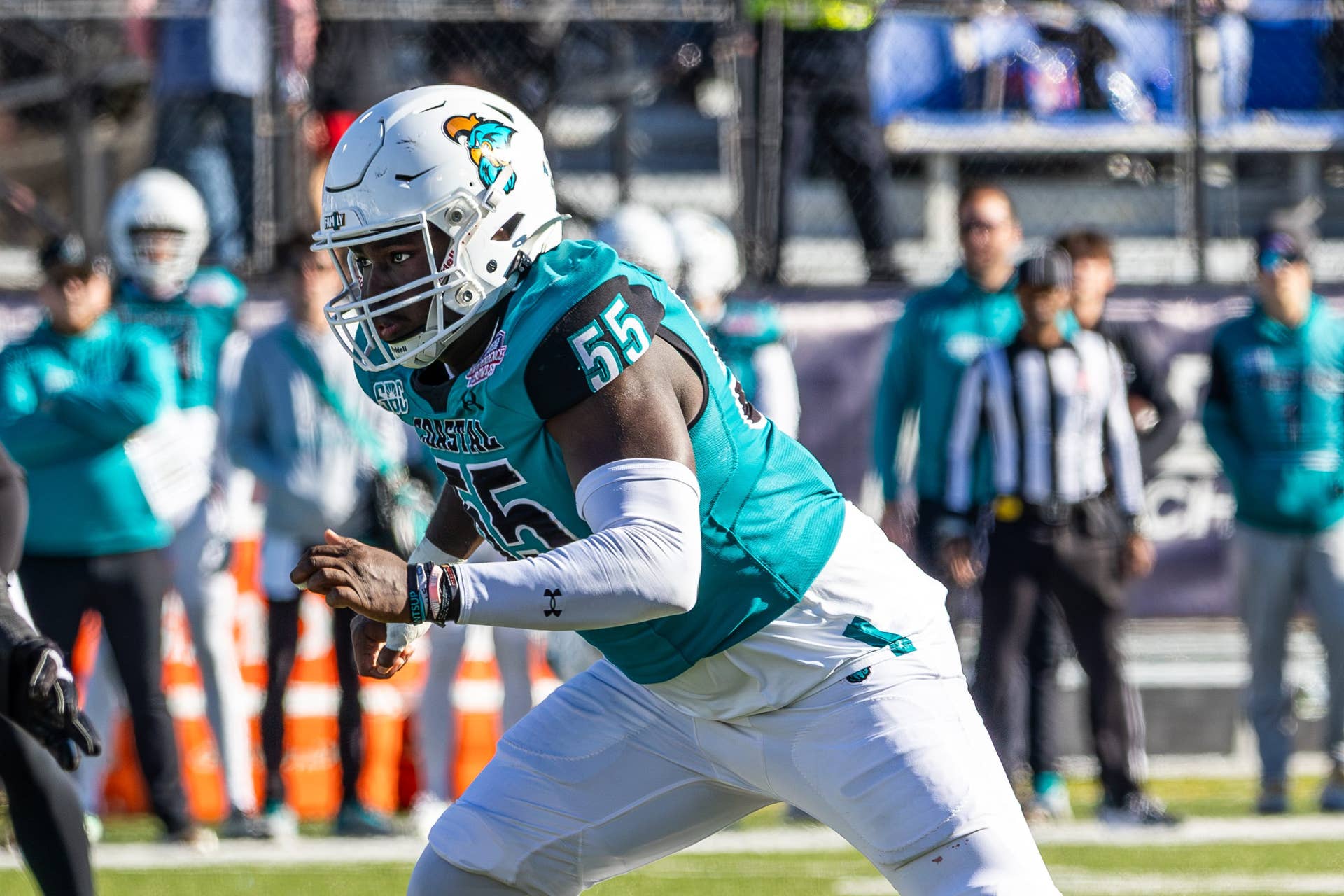
Aaron Diggs established a reputation as a competitive defensive player during his tenure as a Coastal Carolina linebacker, contributing to the program's defensive identity in the Sun Belt Conference. Evaluating his collegiate journey involves analyzing his physical attributes, his role within defensive schemes, the milestones achieved by the Chanticleers program during his playing years, and the broader context of developing linebackers within modern NCAA Division I Football Bowl Subdivision (FBS) systems.
Introduction to Aaron Diggs and Coastal Carolina Football
The Coastal Carolina University football program, representing the Chanticleers in Conway, South Carolina, has experienced a remarkable ascent within college athletics, transitioning from the Football Championship Subdivision (FCS) to a prominent contender in the Sun Belt Conference. Within this competitive environment, defensive players like Aaron Diggs have played essential roles in executing defensive coordinator schemes, setting the physical tone in the front seven, and maintaining the program's competitive edge. Understanding Diggs's role as a linebacker requires examining the specific athletic demands of the position, the tactical expectations of the Coastal Carolina defensive coaching staff, and the physical metrics that enabled him to compete at the NCAA Division I level. Linebackers must possess a combination of lateral agility, block-shedding strength, spatial awareness in pass coverage, and reliable tackling technique to neutralize opponent offenses.
Physical Profile and Athletic Attributes of a Division I Linebacker
Playing linebacker at the NCAA Division I FBS level demands a rigorous physical profile capable of absorbing high-velocity impacts while maintaining the speed necessary to track sideline-to-sideline runners and cover tight ends or slot receivers.
Size, Strength, and Conditioning Standards
At the collegiate linebacker position, players typically range from 215 to 245 pounds, paired with heights between 6 feet and 6 feet 3 inches. This structural makeup allows athletes to leverage pad level against interior offensive linemen while remaining agile enough to navigate traffic in the box.
- Core Strength: Essential for anchoring against pulling guards and fullbacks in run-heavy offensive schemes.
- Explosive Power: Measured through vertical jumps and Olympic lifting metrics, critical for closing gaps quickly upon ball-snap recognition.
- Cardiovascular Endurance: Necessary to sustain high-intensity pursuit angles across extended, up-tempo offensive drives.
Speed and Agility Requirements
Modern offenses utilize wide splits, RPOs (Run-Pass Options), and dynamic motion to stress linebackers horizontally. A linebacker at Coastal Carolina must exhibit high-level change-of-direction capabilities. Drills such as the L-drill and the pro shuttle serve as primary benchmarks for evaluating an athlete's ability to mirror ball carriers in open space and recover when caught in play-action misdirection.
Tactical Responsibilities in Coastal Carolina's Defensive Scheme
Defensive systems in college football depend heavily on the linebacker corps to serve as the communicators and general-field adjusters of the defense. Coastal Carolina's defensive play-calling historically incorporates varied fronts, mixing traditional four-man defensive lines with odd-man fronts designed to confuse opposing quarterbacks and disrupt running lanes.
Run Gap Integrity and Gap Control
The primary responsibility of an inside or outside linebacker in standard defensive alignments is gap accountability. Diggs and his defensive peers were tasked with reading offensive line blocking keys instantly:
- High-Hat vs. Low-Hat Reads: Recognizing pass sets versus run blocks based on the lineman's helmet level.
- A-Gap and B-Gap Filling: Stepping downhill decisively to plug interior running lanes before the ball carrier can accelerate through the line of scrimmage.
- Setting the Edge: Preventing outside runs from turning into explosive gains by maintaining leverage against perimeter blockers.
Pass Coverage and Zone Drop Mechanics
Beyond stopping the run, contemporary linebackers must defend the middle of the field in zone coverages or man-to-man assignments against running backs and tight ends. This requires proper depth on drop-backs, route recognition in flat and hook-to-curl zones, and disciplined eye discipline to avoid biting on play-action fakes.
| Defensive Skill | Primary Objective | Key Technical Focus |
|---|---|---|
| Run Defense | Stop ball carriers at or behind the line of scrimmage | Shedding blocks, leverage, wrap-up tackling |
| Pass Coverage | Disrupt short-to-intermediate passing lanes | Hip fluidity, route identification, ball tracking |
| Blitz Execution | Pressure the quarterback through designed gaps | Timing, acceleration, bending around edge blocks |
| Field Communication | Align front-seven players pre-snap | Audible recognition, directional checks |
The Coastal Carolina Football Culture and Program Context
To fully contextualize Aaron Diggs's time at Coastal Carolina University, one must look at the culture fostered within the Chanticleers program. Situated in Conway, South Carolina, the university invested heavily in its athletic infrastructure, culminating in national prominence during the historic 2020 season and subsequent years of sustained competitiveness in the Sun Belt.
Sun Belt Conference Competitiveness
The Sun Belt Conference has developed a reputation as one of the most competitive Group of Five conferences in college football, featuring stout defensive teams and innovative offensive coordinators. Linebackers playing in this conference face diverse offensive philosophies, ranging from triple-option variants and heavy run schemes to wide-open spread attacks. Preparing for these contrasting styles requires rigorous film study, physical resilience, and adaptability during weekly game planning.
Player Development and Coaching Infrastructure
The success of defensive standouts at mid-major programs often hinges on strength and conditioning programs and positional coaching. Coastal Carolina's coaching staffs have historically emphasized disciplined fundamentals, effort-based tackling, and team-first execution. For a linebacker like Diggs, maximizing performance within this system meant mastering assignment football—minimizing blown coverages and missed tackles that can alter the momentum of a close conference matchup.
Frequently Asked Questions
What position did Aaron Diggs play at Coastal Carolina?
Aaron Diggs played as a linebacker during his collegiate career with the Coastal Carolina Chanticleers, contributing to the team's defensive front seven through run stoppage, gap control, and pass defense responsibilities.
What are the primary physical requirements for an NCAA Division I linebacker?
Division I linebackers typically require a combination of size (ranging from 210 to 245 pounds), functional strength to shed blocks from interior linemen, lateral agility to cover open space, and high-level cardiovascular endurance to sustain performance across fast-paced offensive drives.
How do linebackers contribute to modern college football defenses?
Linebackers serve as the structural anchor of a defense. They are responsible for reading offensive keys, maintaining gap integrity against the run, dropping into zone or man coverage against tight ends and running backs, and executing situational pass rushes.
What conference does Coastal Carolina University compete in?
Coastal Carolina University competes in the Sun Belt Conference within the NCAA Division I Football Bowl Subdivision (FBS), facing competitive regional opponents across the Southeastern United States.
Where is Coastal Carolina University located?
Coastal Carolina University is located in Conway, South Carolina, approximately ten miles northwest of Myrtle Beach.
Conclusion and Next Actions
Examining the athletic career of Aaron Diggs as a Coastal Carolina linebacker highlights the dedication, physical conditioning, and tactical awareness required to succeed at the NCAA Division I level. For sports enthusiasts, researchers, and aspiring athletes looking to explore collegiate football further, reviewing official university athletic directories, Sun Belt Conference archives, and specialized sports analytics databases provides deeper statistical context and historical records regarding the program's roster development.