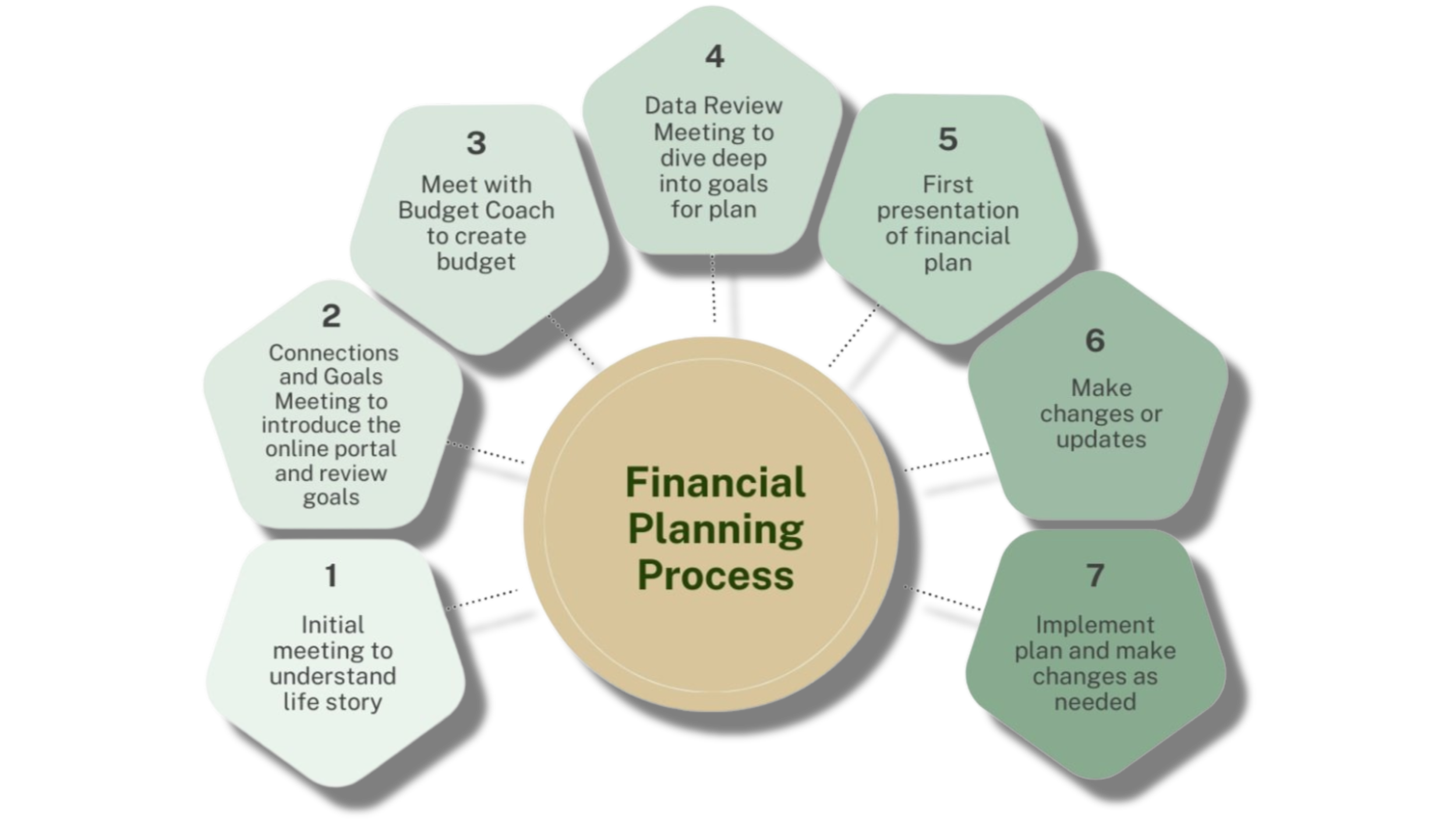
The six steps of financial planning provide a structured framework to help individuals move from financial uncertainty to a state of security and wealth growth. This professional process involves establishing a relationship, gathering data, analyzing your current status, developing recommendations, implementing a strategy, and monitoring progress to ensure long-term goals are met.
Financial planning is not a one-time event but a continuous lifecycle designed to adapt as your personal circumstances and the broader economy evolve. Whether you are managing your own finances or working with a certified professional, following this standardized sequence ensures that no critical detail—from tax efficiency to risk management—is overlooked. In 2026, with the integration of sophisticated digital tools and shifting market dynamics, these six steps remain the industry standard for achieving financial independence.
Step 1: Establishing and Defining the Client-Planner Relationship
The first step serves as the foundation for everything that follows. It is the phase where the scope of work is identified and the "rules of engagement" are set. If you are working with a professional, this step involves a formal agreement; if you are self-planning, it involves clarifying your own commitment and the tools you will use.
Defining the Scope of Engagement
In this phase, you must determine what the financial plan will cover. Is it a comprehensive plan including retirement, estate planning, and insurance? Or is it a modular plan focused specifically on a home purchase or debt reduction? For professional relationships in 2026, this is usually documented in a letter of engagement that outlines the services provided, the duration of the relationship, and how the planner will be compensated (fee-only, commission-based, or a hybrid model).
Establishing the Fiduciary Duty
A critical component of this step is identifying the standard of care. A fiduciary is legally and ethically bound to act in the client's best interest. This transparency is vital for building the trust necessary to share sensitive financial data. Without a clear understanding of responsibilities and potential conflicts of interest, the subsequent steps in the planning process may be compromised by a lack of clarity or trust.
Step 2: Gathering Client Data and Determining Goals
You cannot map a route to a destination if you do not know your current location or where you want to go. This step is divided into two distinct categories: quantitative data and qualitative information.
Quantitative Data: The Hard Numbers
This involves collecting all relevant financial documents. In the current 2026 landscape, this often involves syncing digital accounts to a centralized dashboard. Key data points include:
- Income Statements: Salary, bonuses, dividends, and rental income.
- Tax Returns: To understand effective tax rates and historical liabilities.
- Asset Lists: Bank accounts, brokerage accounts, 401(k)s, and real estate holdings.
- Liability Lists: Mortgages, student loans, credit card debt, and personal loans.
- Insurance Policies: Life, health, disability, and property insurance coverage details.
Qualitative Data: Values and Goals
While the numbers tell you what you have, qualitative data tells you what you value. This is where you define your goals using the SMART criteria (Specific, Measurable, Achievable, Relevant, and Time-bound). Are you planning for a retirement at age 60? Do you want to fund a child’s education? Are you looking to leave a charitable legacy? Understanding your risk tolerance—how you emotionally react to market volatility—is also a crucial qualitative component gathered during this stage.
Step 3: Analyzing and Evaluating Financial Status
Once the data is gathered, it must be processed to reveal the health of your financial life. This is the "diagnostic" phase of the process.
Assessing Cash Flow and Net Worth
A financial planner (or a savvy self-planner) will look at the ratio between income and expenses. Are you living within your means? Is there a "surplus" that can be redirected toward investments? Your net worth (Assets minus Liabilities) provides a snapshot of your progress toward wealth-building goals. In 2026, analysts also look closely at "burn rates" and liquidity ratios to ensure you can survive a sudden economic downturn without liquidating long-term investments.
Identifying Gaps and Weaknesses
This step involves stress-testing your current trajectory. If you continue on your current path, will you have enough for retirement? Common gaps discovered here include:
- Under-insurance: Realizing a disability would lead to immediate financial ruin.
- Tax Inefficiency: Discovering that too much of your wealth is in tax-deferred accounts that will be heavily taxed in the future.
- Concentration Risk: Having too much net worth tied up in a single stock or a single piece of real estate.
- Emergency Fund Shortfall: Having less than the recommended 3-6 months of expenses in a liquid account.
Step 4: Developing and Presenting Financial Planning Recommendations
In this stage, the "doctor" prescribes the "medicine." The analysis from Step 3 is converted into actionable strategies.
Tailoring Strategies to Goals
Recommendations should never be "cookie-cutter." If your goal is early retirement, the recommendations might focus on aggressive growth and maximizing Roth conversions. If your goal is capital preservation, the plan will lean toward high-quality bonds and dividend-paying equities.
Considering Alternatives and Trade-offs
A professional plan will often present multiple scenarios. For example, "If you save $500 more per month, you can retire at 62. If you maintain your current savings, you must work until 67." This allows you to make informed decisions about your lifestyle. In 2026, these recommendations often include sophisticated modeling like Monte Carlo simulations, which show the probability of your plan's success across thousands of different market conditions.
The presentation phase is equally important. It is not enough to have a good plan; you must understand the "why" behind each recommendation. A clear presentation addresses potential risks and the expected timeline for results.
Step 5: Implementing the Financial Planning Recommendations
Implementation is where the plan moves from paper to reality. This is often the most difficult step because it requires active change and discipline.
Assigning Responsibilities
The plan must clearly state who is responsible for each action item.
- The Individual: May be responsible for increasing their 401(k) contribution or setting up an automatic transfer to a high-yield savings account.
- The Professional: May be responsible for executing trades, opening new accounts, or coordinating with an estate attorney to draft a will.
- Third Parties: Accountants or insurance agents may need to be brought in to finalize specific components of the plan.
Overcoming Inertia
Many financial plans fail because they are never implemented. To succeed in 2026, many use "nudges"—automated systems that move money the day a paycheck arrives. Implementation should be viewed as a project with specific deadlines. For instance, "Open the 529 college savings account by the end of Q2" or "Finalize the umbrella insurance policy by June 15th."
Step 6: Monitoring the Financial Planning Recommendations
The final step is not the end; it is the beginning of a cycle. A financial plan is a living document that must be reviewed regularly.
Periodic Reviews and Adjustments
In a world of fluctuating interest rates and changing tax laws (like those anticipated in the late 2020s), an annual or semi-annual review is mandatory. During these reviews, you compare actual performance against the plan’s projections. If the market underperformed, you might need to rebalance your portfolio. If your income increased significantly, you might need to find new tax-sheltered investment vehicles.
Reacting to Life Changes
Life rarely goes exactly as planned. Major life events require an immediate return to Step 2 (Gathering Data) and Step 3 (Analysis). These events include:
- Marriage or Divorce: Changing tax statuses and beneficiary designations.
- Birth or Adoption of a Child: Increasing insurance needs and education planning.
- Job Change or Promotion: Managing 401(k) rollovers and shifting income brackets.
- Inheritance: Managing a sudden influx of capital and potential estate tax issues.
Comparison of the 6 Financial Planning Steps
The following table summarizes the primary focus and the typical deliverables associated with each of the six steps.
| Step | Primary Objective | Key Deliverables / Outcomes |
|---|---|---|
| 1. Establish Relationship | Define boundaries and responsibilities. | Signed Engagement Letter, Disclosure of Fees. |
| 2. Gather Data & Goals | Understand the current "who" and "what." | Statement of Goals, List of Assets/Liabilities. |
| 3. Analyze Status | Diagnose financial health and gaps. | Net Worth Statement, Cash Flow Analysis. |
| 4. Develop Recommendations | Create a roadmap to success. | Written Financial Plan, Investment Strategy. |
| 5. Implementation | Put the plan into action. | Account Opening, Trade Executions, Policy Updates. |
| 6. Monitoring | Ensure the plan stays on track. | Annual Progress Reports, Portfolio Rebalancing. |
Common Mistakes in the Financial Planning Process
Even with a structured 6-step approach, many individuals fall into traps that can derail their progress. Understanding these pitfalls is essential for long-term success.
Skipping the Goal-Setting Phase
Many people jump straight to "investing" (Step 5) without knowing what they are investing for (Step 2). Buying a trendy tech stock or a crypto-asset might make money, but if that money is needed for a house down payment in six months, the risk profile is entirely wrong. Investments should always be the servant of the goal, not the goal itself.
The "Set It and Forget It" Fallacy
Some treat a financial plan like a static document. However, a plan that was perfect in 2024 may be obsolete by 2026 due to changes in legislation or inflation rates. Monitoring (Step 6) is the most neglected step, yet it is the one that prevents small errors from becoming catastrophic financial failures.
Ignoring Tax Implications
Focusing solely on "gross returns" rather than "after-tax returns" is a common error. A high-yield investment in a taxable account may be less valuable than a slightly lower-yield investment in a tax-advantaged account. A comprehensive plan must integrate tax planning into every recommendation.
Frequently Asked Questions
Can I complete the 6 steps of financial planning without a professional?
Yes, it is possible to perform these steps independently, especially with the advanced financial software available in 2026. However, self-planners often struggle with Step 3 (Analysis) and Step 4 (Objectivity). A professional often adds value by identifying blind spots and providing behavioral coaching to keep you disciplined during market volatility.
How long does it usually take to go through all 6 steps?
The initial process from Step 1 to Step 5 typically takes between four to eight weeks. Step 6 is ongoing for the rest of your life. The time duration depends heavily on how quickly you can gather your data in Step 2.
What is the most important step in the financial planning process?
While all steps are interconnected, Step 2 (Gathering Data and Determining Goals) is often considered the most critical. If the data is inaccurate or the goals are poorly defined, the recommendations and implementation will be fundamentally flawed, leading you toward the wrong destination.
How often should the "Monitoring" step occur?
At a minimum, you should review your plan annually. However, a major life event—such as a job loss, a death in the family, or a significant change in the tax code—should trigger an immediate review regardless of when your last check-up occurred.
Is financial planning only for high-net-worth individuals?
No. The 6-step process is scalable. Whether you are managing $5,000 or $5,000,000, the principles of budgeting, risk management, and goal-setting remain the same. In fact, those with fewer resources often benefit more from a plan, as they have a smaller margin for error.
Next Actions for Your Financial Journey
To begin your financial planning process, start with a "Data Dump." Collect every statement, debt balance, and insurance policy you own. Once you have a clear picture of your current state, write down three specific goals you want to achieve in the next five years. This will complete the bulk of Step 2 and provide the momentum needed to move into analysis and implementation. If you feel overwhelmed by the complexity, consider reaching out to a fee-only certified planner to guide you through the initial setup of your roadmap.