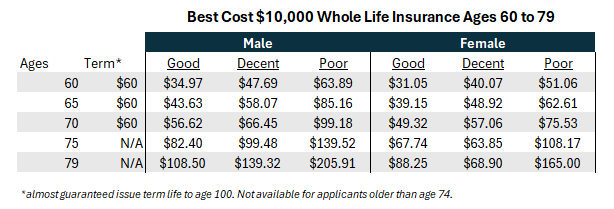
Securing life insurance after age 65 requires navigating specialized underwriting criteria, distinct policy types, and significantly higher premium baselines compared to younger demographics. Finding the best rates involves balancing permanent protection like whole life with budget-friendly term options or simplified no-exam policies, matching coverage directly to final expenses, debt management, or estate liquidity needs.
Understanding the Landscape of Life Insurance After 65
Navigating the life insurance market as a senior requires an understanding of how carriers calculate risk. When you pass the age of 65, life insurance companies view your application through a more conservative financial and medical lens. Mortality risk increases with every passing year, which directly impacts the cost of coverage. However, the senior life insurance market has evolved significantly. Insurers now offer tailored products designed specifically for older adults, moving away from a one-size-fits-all model to accommodate various health profiles, budgets, and legacy goals.
For policyholders over 65, the primary motivation for purchasing life insurance typically shifts from income replacement—the primary driver for younger families—to estate planning, final expense coverage, covering remaining mortgage balances, or leaving a tax-free inheritance. Because the goals are different, the financial instruments used must align accordingly. Understanding the mechanics of these products helps eliminate costly mistakes and ensures that you select a policy that remains sustainable over your expected lifespan.
Furthermore, shopping for life insurance in this age bracket demands transparency regarding your medical history. Insurers will examine your prescription drug history, motor vehicle records, and medical databases like the Medical Information Bureau (MIB). Being prepared with accurate medical information prevents underwriting delays and unexpected rate hikes.
How Age and Health Drive Life Insurance Rates
The cost of life insurance is fundamentally driven by two immutable factors: your age at the time of application and your current health status. Every year you wait past 65, your base premium increases by roughly 8% to 10% purely due to age-related mortality adjustments. Beyond age, underwriters categorize applicants into distinct health classes, ranging from Preferred Plus (exceptional health, non-smoker) to Table Ratings (sub-standard health categories that add a percentage surcharge to the standard rate).
Medical Underwriting Versus Simplified Issue
Traditional life insurance policies require a full medical underwriting process, which typically includes a paramedical exam. A nurse will visit your home to check your height, weight, blood pressure, draw blood, and collect a urine sample. While this process takes time, it allows healthy seniors to secure the lowest possible rates because the insurer has direct proof of their good health.
Conversely, simplified issue and guaranteed acceptance policies eliminate the medical exam entirely. Instead, you answer a series of health-related questions. While convenient, this lack of underwriting represents a higher risk for the insurance company, which is offset by higher monthly premiums and lower maximum death benefits. Seniors with chronic conditions—such as controlled type 2 diabetes, mild arthritis, or a history of high blood pressure—often find simplified issue policies to be a viable alternative when traditional coverage is too expensive or denied altogether.
Policy Types Available for Seniors Over 65
Before examining specific rate structures, it is essential to distinguish between the primary categories of life insurance available to older adults. Each type serves a distinct financial function and carries unique pricing characteristics.
1. Term Life Insurance
Term life insurance provides coverage for a specific duration, such as 10, 15, or 20 years. For a 65-year-old, a 10-year term policy is often the most cost-effective way to secure a high death benefit—such as $250,000 or $500,000—to cover a remaining mortgage or ensure a spouse is provided for during retirement years. However, term policies expire. If you outlive the term, the coverage ends without value, and renewing it at age 75 or 80 can become prohibitively expensive.
2. Whole Life Insurance
Whole life insurance is a form of permanent coverage that remains in effect for your entire life, provided premiums are paid. It features fixed premiums that never increase and builds cash value over time at a guaranteed rate. For seniors over 65, whole life insurance is frequently used for final expense planning or leaving a guaranteed legacy. Because the risk to the insurer is absolute (they will eventually pay out the death benefit), whole life premiums are significantly higher than term premiums for the same face amount.
3. Universal Life Insurance
Universal life (UL) is another permanent insurance option, but it offers more flexibility than whole life. Policyholders can often adjust their premium payments and death benefits within certain limits, tied to a cash value account that earns interest based on market conditions. While UL can be structured to provide lifetime coverage at a lower initial cost than whole life, poorly performing cash value accounts can cause premiums to spike later in life to keep the policy active.
4. Guaranteed Issue Life Insurance
Guaranteed issue policies are a subset of final expense insurance where no medical exam and no health questions are required. Anyone within the eligible age range (typically 50 to 80 or 85) is automatically approved. The trade-off for this absolute guarantee is a graded death benefit—meaning if you die from natural causes within the first two or three years of the policy, the insurer refunds the premiums paid plus interest, rather than paying the full face amount. After the graded period expires, the full death benefit applies.
Evaluating the Top Policy Categories and Rate Structures
To help you understand how different coverage options compare, the following table breaks down the primary life insurance structures available to adults over 65, highlighting their typical use cases, underwriting requirements, and cost characteristics.
| Policy Type | Primary Purpose | Medical Requirement | Premium Stability | Cost Profile |
|---|---|---|---|---|
| 10-Year Term Life | Mortgage protection, income replacement | Full medical exam & lab work | Fixed for 10 years; spikes upon renewal | Moderate initial cost; high long-term risk |
| Whole Life (Permanent) | Final expenses, guaranteed legacy | Simplified or full underwriting | Fixed for life; never increases | High initial and ongoing cost |
| Universal Life | Flexible permanent coverage | Full medical exam required | Adjustable based on cash value performance | Moderate to high; requires active monitoring |
| Simplified Issue Final Expense | Burial costs, medical bills | Health questionnaire; no exam | Fixed for life | Moderate cost for lower face values ($10k–$30k) |
| Guaranteed Acceptance | Seniors with severe health issues | None (automatic approval) | Fixed for life | Highest cost per dollar of coverage |
Determining Coverage Amounts and Cost Expectations
Calculating how much life insurance you need after 65 requires a realistic assessment of your current financial obligations. Unlike younger adults who must factor in decades of lost future earnings and college funding for children, seniors generally focus on debt liquidation and estate preservation.
Key Expenses to Cover
- Final Expenses: Funeral, burial, and cremation costs currently average between $7,000 and $12,000, making a dedicated final expense policy a prudent choice for those without significant liquid savings.
- Outstanding Debt: Remaining mortgage balances, personal loans, or credit card debt that would otherwise burden a surviving spouse or family members.
- Spousal Income Protection: Ensuring a surviving partner maintains their standard of living if a pension or Social Security survivor benefit is reduced upon your passing.
- Estate Taxes and Liquidity: High-net-worth seniors often use permanent life insurance to provide immediate liquidity to pay estate taxes without forcing the sale of real estate or family business assets.
Realistic Rate Expectations
Premiums for a 65-year-old vary dramatically based on gender, health, and policy type. For a healthy non-smoking male, a $100,000 10-year term policy might cost between $80 and $130 per month. A female of the same age and health profile will typically see lower rates, often ranging from $60 to $100 per month for the same coverage, due to actuarial life expectancy tables. Permanent whole life insurance for the same face amount will easily exceed $300 to $500 per month at age 65, reflecting the guaranteed payout nature of the contract.
Strategies for Securing the Best Rates Over 65
Securing an affordable rate when you are over 65 requires a strategic approach to shopping and application preparation. Because insurance companies utilize different underwriting algorithms, rates for the exact same health profile can vary by 30% or more between carriers.
1. Work with an Independent Insurance Broker
Captive agents work for a single insurance company and can only offer that company's proprietary products. Independent brokers, by contrast, represent dozens of top-rated carriers. An experienced independent broker can shop your specific medical profile—whether you manage high blood pressure, take cholesterol-lowering medication, or are in remission from cancer—across multiple insurers to find the company that views your specific condition most favorably.
2. Prepare Your Medical Documentation
Before applying, compile an accurate list of all your current prescription medications, dosages, the names of your treating physicians, and dates of recent diagnostic tests. Underwriters appreciate accuracy and speed. Delays in gathering medical records can stall underwriting and occasionally push your age bracket higher, resulting in higher permanent rates.
3. Consider Living Benefits
Many modern term and permanent policies include accelerated death benefit riders, often referred to as living benefits. These riders allow you to access a portion of your policy’s death benefit early if you are diagnosed with a terminal illness, chronic illness, or critical illness (such as a heart attack, stroke, or invasive cancer). Selecting a policy with these built-in or optional riders provides financial security beyond simple death payouts, though they may slightly impact your base premium.
Common Pitfalls to Avoid When Buying Senior Life Insurance
Navigating the senior insurance market exposes buyers to several recurring mistakes that can compromise their financial stability or leave them underinsured.
- Buying Too Little Coverage Due to Sticker Shock: Seeing high initial quotes for permanent insurance often leads seniors to abandon coverage altogether. Balancing needs with a mix of term and smaller whole life policies can bridge this gap.
- Failing to Disclose Medical History Accurately: Omitting pre-existing conditions on an application can result in the insurance company denying a claim during the contestability period (typically the first two years of the policy). Complete honesty is mandatory.
- Overlooking Policy Expirations: Purchasing a 10-year term policy at age 68 means the policy expires at age 78, right when health risks and mortality rates are highest. Ensure your term length matches your actual financial exposure window.
- Choosing Unrated or Low-Rated Insurers: Always verify the financial strength ratings of insurance carriers through independent agencies like A.M. Best. Selecting a financially unstable company puts your lifetime coverage at risk. You can review carrier financial ratings directly through the A.M. Best Rating Services.
Frequently Asked Questions
Can I get life insurance if I have pre-existing medical conditions like diabetes or heart disease?
Yes, many carriers specialize in underwriting applicants with controlled chronic conditions. While you may not qualify for "Preferred" rates, standard or table-rated policies are widely available. If your condition is severe, simplified issue or guaranteed acceptance policies provide alternative pathways to coverage without medical exams.
Is term life insurance a waste of money for someone over 65?
Not necessarily. If you have a specific financial obligation that will end within a set timeframe—such as a 10-year mortgage or a dependent relative who needs support for a defined period—a term policy provides high coverage amounts at a fraction of the cost of permanent insurance.
What is the difference between simplified issue and guaranteed issue policies?
Simplified issue policies require you to answer health questions, and the insurer can deny coverage based on your medical history. Guaranteed issue policies require no medical exam and ask no health questions, guaranteeing acceptance for anyone within the eligible age range, though they typically feature higher premiums and graded death benefits.
How do insurance companies verify my health without an exam?
For no-exam or simplified issue policies, carriers verify your health by reviewing your prescription drug database history, motor vehicle reports, medical information bureau (MIB) files, and your electronic health records. This background check allows them to assess risk quickly without requiring a physical exam.
Can my life insurance rates increase as I get older?
If you purchase a guaranteed renewable term policy or a permanent policy like whole life, your premium remains fixed for the duration of the contract. However, if you purchase an annually renewable term policy or a universal life policy where cash value underperforms, your rates can and often will increase as you age.
Practical Next Actions
To secure the best life insurance rates for your specific situation after 65, start by defining your exact coverage goals—whether that is covering final expenses, paying off a mortgage, or leaving an inheritance. Next, request quotes from multiple independent insurance brokers who can compare rates across top-tier, financially stable carriers. Review your medical history honestly to determine whether you can qualify for traditional underwriting or if a simplified issue policy is more appropriate. Taking these structured steps ensures you find a sustainable policy that protects your family's financial future without overpaying.