21st century innovators are visionary leaders, scientists, engineers, and entrepreneurs who leverage advanced computing, biotechnology, decentralized systems, and data science to fundamentally reshape global industries, address systemic environmental challenges, and alter how humanity interacts with technology.
The landscape of modern innovation has shifted profoundly since the turn of the millennium. The 21st century has discarded the model of isolated industrial inventors tinkering in dusty workshops, replacing it with hyper-connected, cross-disciplinary, and globally distributed networks of problem-solvers. To understand what defines a 21st-century innovator, one must look past mere product creation and examine the systemic methods, ethical implications, and structural impacts these figures have on contemporary society. This comprehensive analysis explores the defining characteristics, technological domains, operational frameworks, and enduring legacy of the minds shaping our current era.
The Paradigm Shift: From Industrial Mechanics to Digital and Biological Systems
The 19th and 20th centuries were dominated by mechanical and electrical engineering—the steam engine, the assembly line, the internal combustion engine, and telecommunications laid the groundwork for modern infrastructure. In contrast, 21st-century innovators operate at the intersections of software, biological engineering, materials science, and cognitive computing.
This evolution stems from the lowering barriers to entry for digital creation and the exponential scaling made possible by the internet and cloud computing. Where a 20th-century innovator required heavy capital investments in manufacturing plants to scale an idea, a 21st-century software innovator can deploy a digital service globally from a laptop.
Furthermore, the modern innovator operates within an environment of unprecedented data density. The proliferation of the internet of things (IoT), ubiquitous mobile connectivity, and high-performance computing means that decision-making is increasingly data-driven. Innovators today do not just design physical artifacts; they architect complex feedback loops where data continuously refines systems, algorithms, and biological applications.
Core Characteristics of Modern Innovators
While no single mold fits every pioneer, several behavioral, technical, and strategic traits consistently distinguish the most impactful figures of this century.
Interdisciplinary Synthesis
The era of the hyper-specialized silo is giving way to polymathic problem-solving. Contemporary breakthroughs rarely occur within a single academic discipline. For instance, synthetic biology requires expertise in computer science, genetics, and chemical engineering. Modern innovators excel at bridging disparate fields, applying computational algorithms to biological sequencing, or utilizing principles of behavioral economics to design user interfaces that protect digital privacy.
Systems-Level Thinking
21st-century innovators recognize that their creations do not exist in a vacuum. A software platform, an electric vehicle battery, or a renewable energy grid interacts with regulatory frameworks, labor markets, cybersecurity vulnerabilities, and ecological systems. Successful innovators anticipate second- and third-order effects, designing solutions that account for scalability, resource depletion, and systemic resilience.
Open-Source and Collaborative Frameworks
Unlike the secretive corporate research laboratories of the mid-20th century, contemporary innovators frequently embrace open-source architectures, collaborative ecosystems, and decentralized development. By releasing foundational code, sharing research data, or participating in global developer communities, they accelerate the velocity of innovation. This collaborative ethos underpins modern advancements in artificial intelligence, blockchain protocols, and quantum computing frameworks.
Agility and Rapid Prototyping
The deployment cycle of new technologies has compressed from decades to weeks. Innovators utilize agile development methodologies, minimum viable product (MVP) testing, and continuous deployment pipelines. This iterative approach allows teams to fail fast, gather real-world telemetry, and pivot before committing extensive capital to unviable concepts.
Key Domains of 21st Century Innovation
The impact of modern innovators is best observed across distinct technological frontiers that are actively redefining the global economy.
Artificial Intelligence and Machine Learning
The transition from rule-based programming to probabilistic machine learning models represents a cornerstone of 21st-century achievement. Innovators in this space have developed deep neural networks, large language models, and computer vision systems that automate complex cognitive tasks. These tools are transforming healthcare diagnostics, autonomous navigation, financial risk modeling, and scientific discovery by identifying patterns in massive datasets that elude human analysts.
Biotechnology and Genomic Engineering
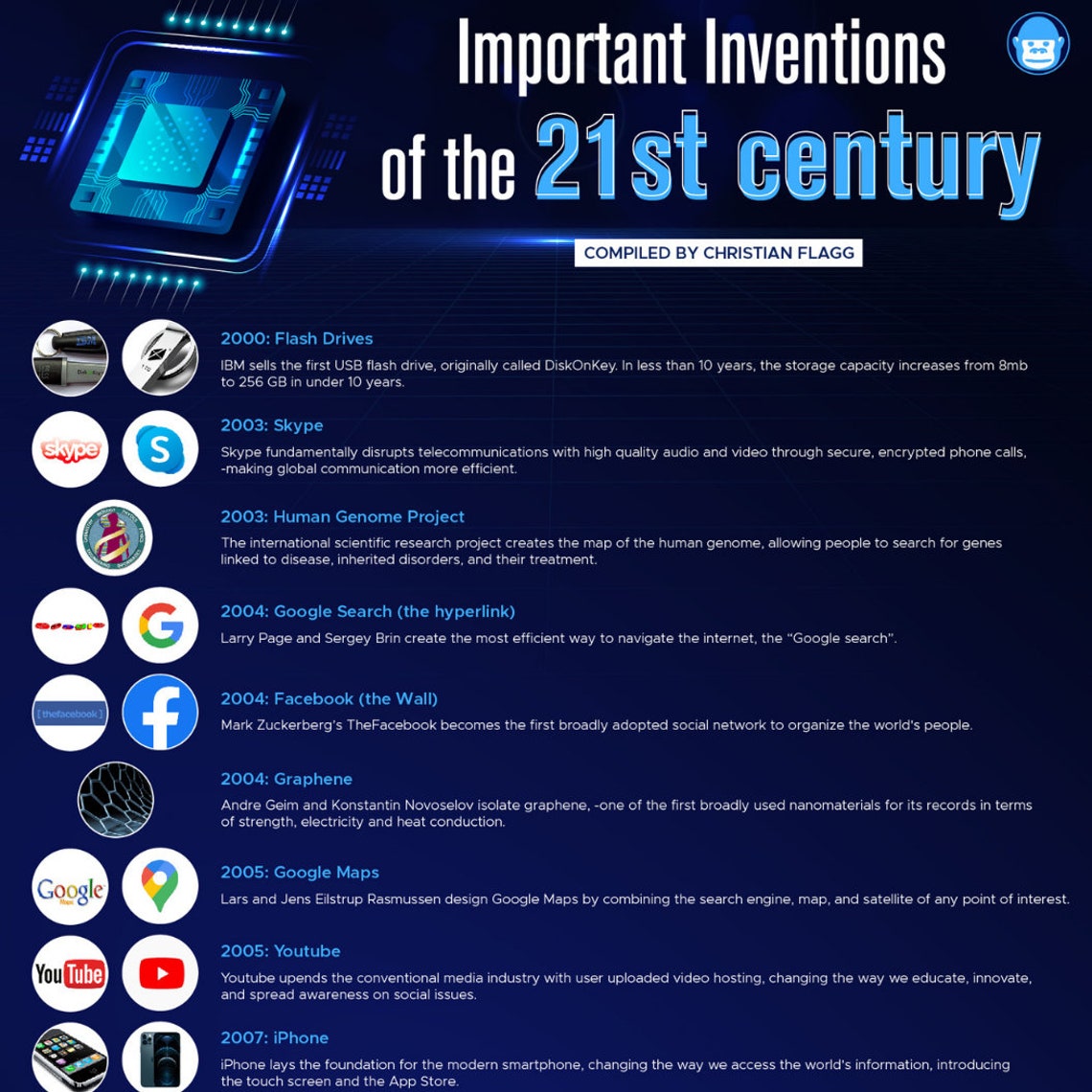
The mapping of the human genome at the turn of the century opened the door for molecular-level interventions. Modern biotech innovators have utilized tools like CRISPR-Cas9 gene editing to target hereditary disorders, accelerate vaccine development, and engineer drought-resistant crops. The integration of mRNA technology into mainstream medicine highlights how rapid biological prototyping can save millions of lives during global health emergencies.
Renewable Energy and Climate Technologies
Addressing climate change has catalyzed a wave of innovation in clean energy generation, storage, and grid management. Innovators in this sector have driven down the cost of photovoltaic solar cells, advanced lithium-ion battery chemistry, and explored solid-state batteries and green hydrogen production. Their work focuses on decoupling economic growth from carbon emissions, transforming how cities are powered, heated, and structured.
Decentralized Systems and Cryptography
The quest for trustless, peer-to-peer digital transactions and secure data verification has driven innovations in blockchain technology, zero-knowledge proofs, and distributed ledger systems. These technologies provide alternative frameworks for asset ownership, supply chain transparency, and digital identity management, challenging traditional centralized financial and institutional gatekeepers.
Comparative Framework: 20th vs. 21st Century Innovation Models
| Dimension | 20th-Century Innovation | 21st-Century Innovation |
|---|---|---|
| Primary Medium | Hardware, mechanics, analog electronics | Software, code, biotechnology, data |
| Development Style | Proprietary, secretive, corporate R&D labs | Open-source, collaborative, global networks |
| Scaling Mechanism | Physical manufacturing plants, global supply chains | Cloud deployment, digital distribution, network effects |
| Feedback Loops | Slow market research, annual product cycles | Real-time telemetry, continuous deployment, user analytics |
| Primary Constraint | Capital access, physical distribution limits | Regulatory compliance, data privacy, cybersecurity, ethics |
Ethical Dilemmas and Responsibilities
With unprecedented power comes profound societal responsibility. 21st-century innovators face intense scrutiny regarding the ethical dimensions of their creations.
Algorithmic bias, data privacy violations, automated workforce displacement, and the proliferation of disinformation are direct consequences of modern technological scale. Innovators can no longer hide behind the defense of technological neutrality. Designing ethical guardrails, ensuring algorithmic transparency, and assessing environmental footprints are now core requirements of sustainable innovation.
Regulatory bodies worldwide are catching up to the speed of technological deployment, introducing frameworks such as the European Union's Artificial Intelligence Act to hold innovators and corporations accountable for societal impacts. Consequently, legal compliance and ethical forecasting are integrated into the earliest stages of product development.
Frequently Asked Questions
What distinguishes a 21st-century innovator from a 20th-century inventor?
While 20th-century inventors primarily focused on physical mechanics, electricity, and manufacturing scale, 21st-century innovators operate at the intersection of digital software, data science, and biotechnology. They leverage global digital networks, open-source collaboration, and rapid iterative deployment rather than relying solely on proprietary, physical R&D laboratories.
How has open-source culture impacted modern technological development?
Open-source frameworks allow developers and researchers worldwide to build upon foundational code and shared data repositories without redundant effort. This collaborative model accelerates problem-solving, fosters peer review, and democratizes access to advanced tools, driving faster adoption across artificial intelligence, web infrastructure, and operating systems.
What are the primary ethical challenges facing modern innovators?
Modern innovators must navigate significant ethical concerns, including algorithmic bias, mass surveillance, data privacy breaches, automated job displacement, and the environmental cost of energy-intensive computing. Balancing rapid technological advancement with robust societal protection and security remains a central challenge.
Why is interdisciplinary thinking essential for modern innovation?
Most contemporary challenges—such as curing genetic diseases, developing carbon-capture materials, or securing digital infrastructure—cannot be solved within a single academic discipline. Innovators must synthesize insights from computer science, behavioral economics, biology, and engineering to craft comprehensive, effective solutions.
How do modern innovators secure funding for early-stage concepts?
Unlike past eras that relied strictly on traditional bank loans or corporate backing, 21st-century innovators utilize diverse funding mechanisms. These include venture capital, angel syndicates, crowdfunding platforms, tokenized decentralized autonomous organizations (DAOs), and non-dilutive government research grants.
Strategic Next Actions for Aspiring Innovators
For those seeking to contribute to the ongoing evolution of 21st-century technology and society, a deliberate approach is required:
- Master Fundamentals Across Disciplines: Combine core technical proficiency (such as data literacy or software engineering) with an understanding of human behavior, economics, or environmental science.
- Engage with Open Communities: Contribute to open-source projects, participate in collaborative hackathons, and immerse yourself in global developer or researcher networks.
- Prioritize Ethical Impact: Integrate security, privacy, and accessibility considerations into your projects from inception rather than treating them as an afterthought.
- Embrace Iterative Agility: Build minimum viable prototypes, gather empirical telemetry, and be prepared to refine your thesis based on real-world feedback.