For the 2016 Jeep Wrangler (JK), equipped with the 3.6L Pentastar V6 engine, the required oil type is SAE 5W-20 engine oil that meets the Chrysler MS-6395 specification. The total oil capacity, including a new oil filter, is 6.0 US quarts (5.7 liters).
Maintaining the proper lubrication in a 2016 Jeep Wrangler is critical for the longevity of its engine, especially as these vehicles reach a decade of service in 2026. The 3.6L Pentastar engine is known for its durability, but it is highly sensitive to oil viscosity and quality due to its complex variable valve timing (VVT) and hydraulic lifter systems. This guide provides an exhaustive look at the technical requirements, procedures, and preventative measures necessary to keep your Wrangler’s engine running optimally.
Understanding the 3.6L Pentastar V6 Engine Requirements
The 2016 Jeep Wrangler features the second iteration of the 3.6L Pentastar V6. By this model year, Chrysler had refined the engine's architecture, but it retained specific requirements for lubrication that differ from older Jeep engines.
The Significance of SAE 5W-20 Viscosity
The choice of 5W-20 oil is not merely a suggestion; it is a technical requirement for the Pentastar engine's design. The "5W" indicates the oil's flow characteristics in cold temperatures (Winter), ensuring that oil reaches the overhead camshafts and valve train immediately upon startup. The "20" represents the viscosity at operating temperature.
This lower viscosity is chosen to reduce internal friction, which slightly improves fuel economy and, more importantly, ensures that the oil can pass through the narrow passages of the Variable Valve Timing (VVT) solenoids and phasers. Using a thicker oil, such as 10W-30, can lead to "dry starts" in cold weather or trigger Check Engine lights (typically P000A or P000B codes) related to slow VVT response.
The Chrysler MS-6395 Specification
When shopping for oil in 2026, you will see various certifications on the back of the bottle, such as API SP or ILSAC GF-6. For the 2016 Jeep Wrangler, the most important label to look for is Chrysler MS-6395.
Chrysler (now part of Stellantis) requires this specification because it involves a specific two-year field test to ensure the oil prevents sludge buildup and resists oxidation under the unique thermal cycles of their engines. While many high-quality synthetic oils meet this standard, some popular brands do not always list it on the bottle. Always verify the MS-6395 certification to maintain engine health and protect any remaining powertrain service contracts.
Oil Capacity and Filling Specifics
The 2016 Jeep Wrangler has a total engine oil capacity of 6.0 US quarts. This measurement assumes that you are also replacing the oil filter, which is a standard part of every oil change.
Avoiding Overfilling and Underfilling
It is common for owners to buy a 5-quart jug and a single 1-quart bottle. When refilling, it is advisable to pour in 5.5 quarts first, start the engine to circulate the oil through the new filter, let it sit for five minutes on level ground, and then check the dipstick.
The Pentastar engine is somewhat sensitive to oil levels. Overfilling can lead to "frothing" or aeration of the oil as the crankshaft hits the oil surface in the pan, which reduces the oil's ability to lubricate effectively. Underfilling can lead to oil starvation during steep off-road inclines—a scenario many Wrangler owners face.
The 2014+ Cartridge Filter Design
A significant detail for the 2016 model year is the oil filter design. Starting in 2014, the Pentastar 3.6L moved to a specific cartridge-style filter (Mopar part number 68191349AC or equivalent).
Why the Year Matters
If you are purchasing parts, ensure you do not buy the filter meant for 2012-2013 Wranglers. Although they look similar, the 2014-2018 (JK) filters have a distinct "nipple" or stem on the bottom. Using the wrong filter will result in the oil bypass valve not functioning correctly, which can lead to catastrophic engine damage or a persistent oil pressure warning light.
Oil Filter Housing Sensitivity
The oil filter on the 2016 Wrangler is located on top of the engine, housed in a plastic assembly. This location is convenient for clean changes but requires care. The plastic cap should only be tightened to 18 lb-ft (25 Nm). Over-tightening the cap is the leading cause of cracked oil filter housings, a common and expensive failure point on the JK Wrangler.
Technical Specifications Summary Table
| Component | Specification |
|---|---|
| Engine | 3.6L Pentastar V6 |
| Oil Type (Viscosity) | SAE 5W-20 |
| Oil Specification | Chrysler MS-6395 |
| Total Capacity | 6.0 US Quarts (5.7 Liters) |
| Oil Filter Type | Cartridge (Top-Mounted) |
| Drain Plug Torque | 20 lb-ft (27 Nm) |
| Filter Cap Torque | 18 lb-ft (25 Nm) |
| Drain Plug Socket Size | 13mm |
| Filter Cap Socket Size | 24mm |
Step-by-Step Oil Change Procedure
Performing an oil change on a 2016 Jeep Wrangler is a straightforward task that requires minimal tools. Because of the vehicle's high ground clearance, most owners do not even need a jack.
1. Preparation and Safety
Ensure the vehicle is parked on a level surface. Engage the parking brake. Run the engine for a few minutes to warm the oil, which helps it drain more thoroughly and carry away contaminants.
Tools Needed:
- 13mm wrench or socket (for the drain plug)
- 24mm socket and extension (for the oil filter cap)
- Oil drain pan (minimum 7-quart capacity)
- Funnel
- Clean rags
2. Draining the Oil
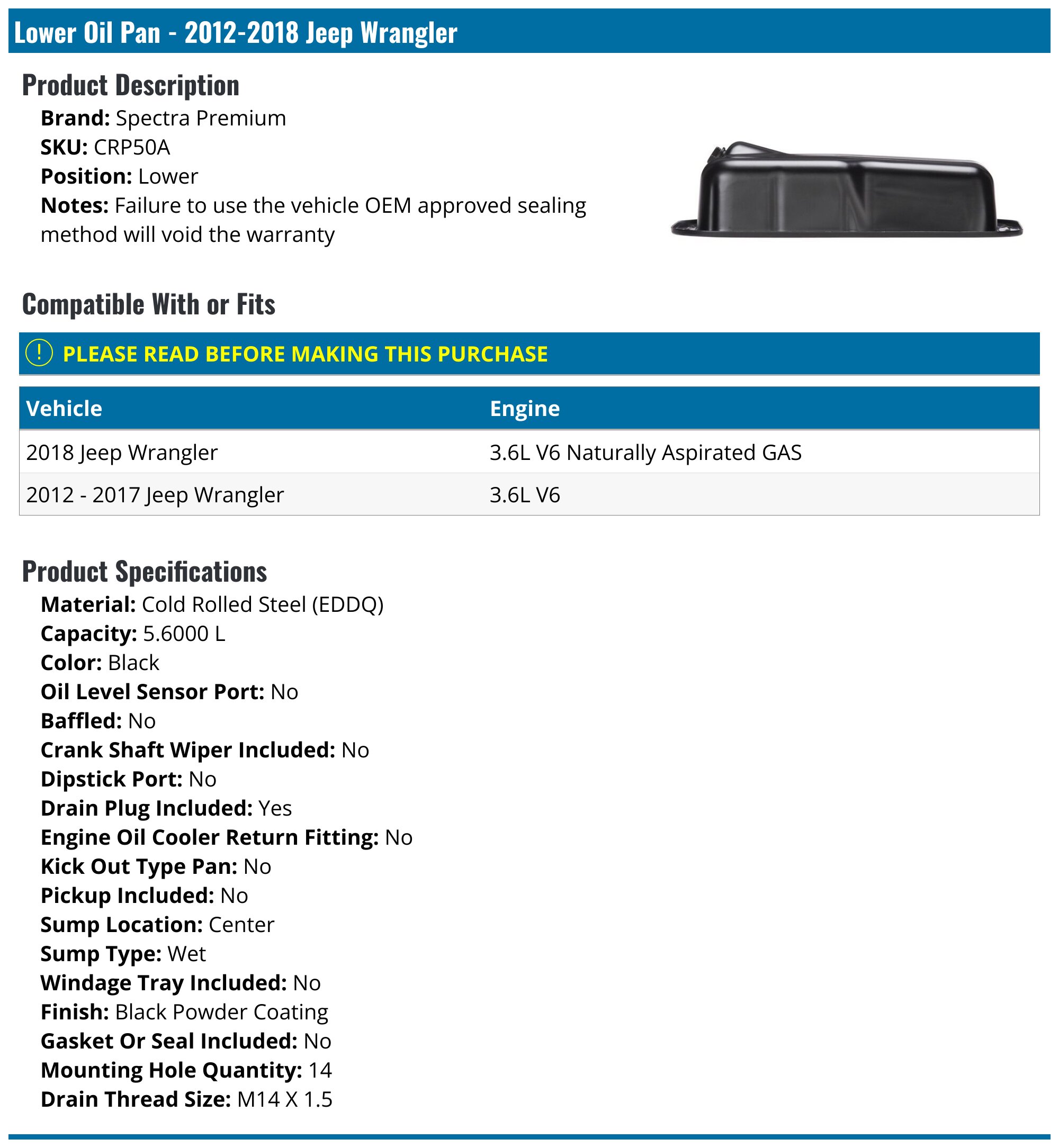
Locate the oil drain plug on the bottom of the oil pan. Position your drain pan underneath and remove the 13mm bolt. Be cautious, as the oil may be hot. Allow the oil to drain until it is a very slow drip. Inspect the drain plug gasket; if it is flattened or cracked, replace it to prevent slow leaks. Reinstall the plug and torque it to 20 lb-ft.
3. Replacing the Filter
Moving to the engine bay, locate the black plastic oil filter cap near the back-center of the engine. Use the 24mm socket to unscrew the cap. As you lift the cap, the cartridge filter will come with it.
- Pull the old filter off the cap and discard it.
- Remove the old rubber O-ring from the cap.
- Install the new O-ring (usually provided with the filter) and lubricate it with a small amount of fresh oil.
- Snap the new filter into the cap until it clicks.
- Insert the assembly back into the housing and tighten it by hand, finishing with the 24mm socket to 18 lb-ft.
4. Refilling the Engine
Using a funnel, pour 6.0 quarts of 5W-20 oil into the fill port on the passenger side valve cover. Replace the fill cap, start the engine, and check for any leaks around the drain plug or the filter housing.
The Oil Change Indicator System
The 2016 Jeep Wrangler is equipped with an engine oil change indicator system. This is not a simple mileage timer; it is a duty-cycle-based algorithm that calculates oil degradation based on engine temperature, operating hours, and driving habits.
Resetting the System
After your oil change, you must manually reset the system so it can begin tracking the new oil interval.
- Turn the ignition to the "ON/RUN" position (do not start the engine).
- Fully depress the accelerator pedal slowly three times within 10 seconds.
- Turn the ignition to the "OFF" position.
If the "Oil Change Required" message appears the next time you start the vehicle, the reset was unsuccessful and the process should be repeated.
Crucial Inspection: The Oil Filter Adapter Housing
As 2016 Wranglers age into 2026, a specific hardware issue has become prevalent: the failure of the oil filter adapter housing. This unit sits in the "V" of the engine, underneath the intake manifold.
Because the housing is made of plastic, the heat cycles of the engine eventually cause the plastic to warp or crack, leading to oil or coolant leaks that pool on top of the engine block and eventually run down the back of the transmission. During every oil change, use a flashlight to peer down past the oil filter housing into the engine valley. If you see standing oil, your adapter housing likely needs replacement with an updated aluminum version to prevent future leaks.
Common Questions and Troubleshooting
Can I use 5W-30 instead of 5W-20?
While using 5W-30 once won't immediately destroy the engine, it is not recommended. The Pentastar engine's oil pump and VVT system are calibrated for the flow rate of 5W-20. In high-mileage scenarios (over 150,000 miles), some mechanics suggest moving to a slightly thicker oil, but for most 2016 Wranglers, sticking to the manufacturer's spec is the safest path to avoid electronic timing errors.
Is synthetic oil required for the 2016 Wrangler?
The owner's manual does not explicitly require synthetic oil, but it is highly recommended. Synthetic oils provide better protection against high-temperature breakdown and flow better in extreme cold. Given that many Wranglers are used for towing or off-roading—both of which increase engine stress—the small extra cost of synthetic oil is a worthwhile investment.
How often should I change the oil?
Under the "Automatic Oil Change Indicator System," the interval can be as long as 10,000 miles or 12 months. However, for "Severe Duty" (off-roading, short trips in freezing weather, or heavy towing), many experts recommend changing the oil every 5,000 to 7,500 miles. Never exceed 10,000 miles between changes.
Why does my Jeep smell like burning oil after a change?
This is usually caused by oil spilling onto the engine block during the filter change. Because the filter is a cartridge style, oil can drip into the engine valley if the filter is removed too quickly. Always keep a rag around the base of the housing when removing the cap to catch drips.
Recommendations for 2026
As the 2016 Jeep Wrangler reaches its 10th year of operation, maintenance priorities should shift slightly. At this age, even if you have low mileage, the rubber seals and gaskets are becoming brittle.
- Switch to High-Mileage Oil: If your Wrangler has surpassed 75,000 miles, consider using a "High Mileage" 5W-20 synthetic. These oils contain seal conditioners that help prevent minor leaks from developing into major ones.
- Monitor Oil Consumption: Pentastar engines can occasionally consume small amounts of oil between changes. Check your dipstick every 1,000 miles to ensure the level remains within the "safe" zone.
- Inspect the PCV Valve: The Positive Crankcase Ventilation (PCV) valve helps regulate internal engine pressure. If it becomes clogged, it can cause increased oil consumption and gasket leaks. These are typically replaced every 100,000 miles.
By strictly adhering to the 6-quart capacity and the MS-6395 5W-20 oil specification, you ensure that your 2016 Jeep Wrangler remains a reliable vehicle for both daily commuting and rugged trail use well into the future.