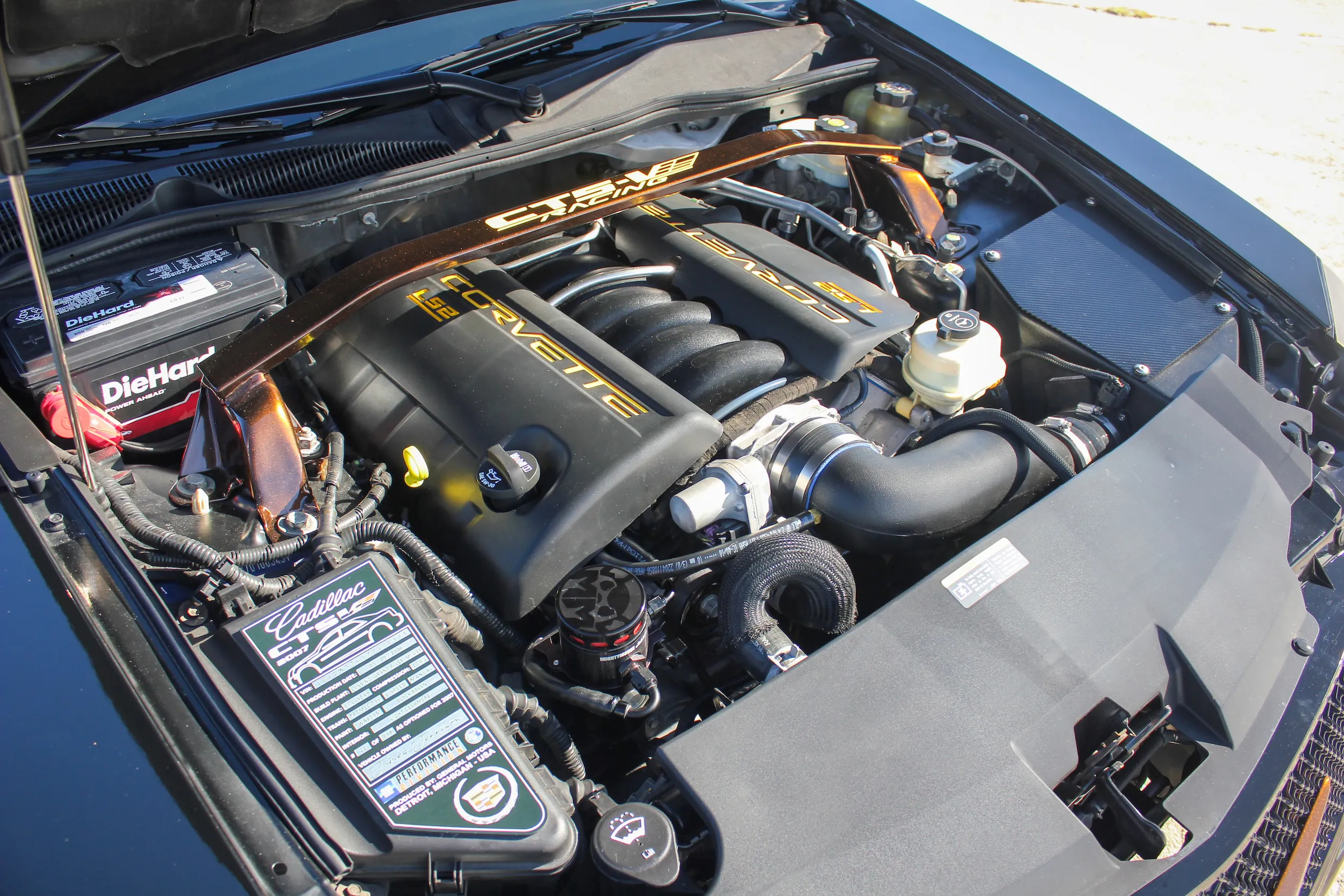
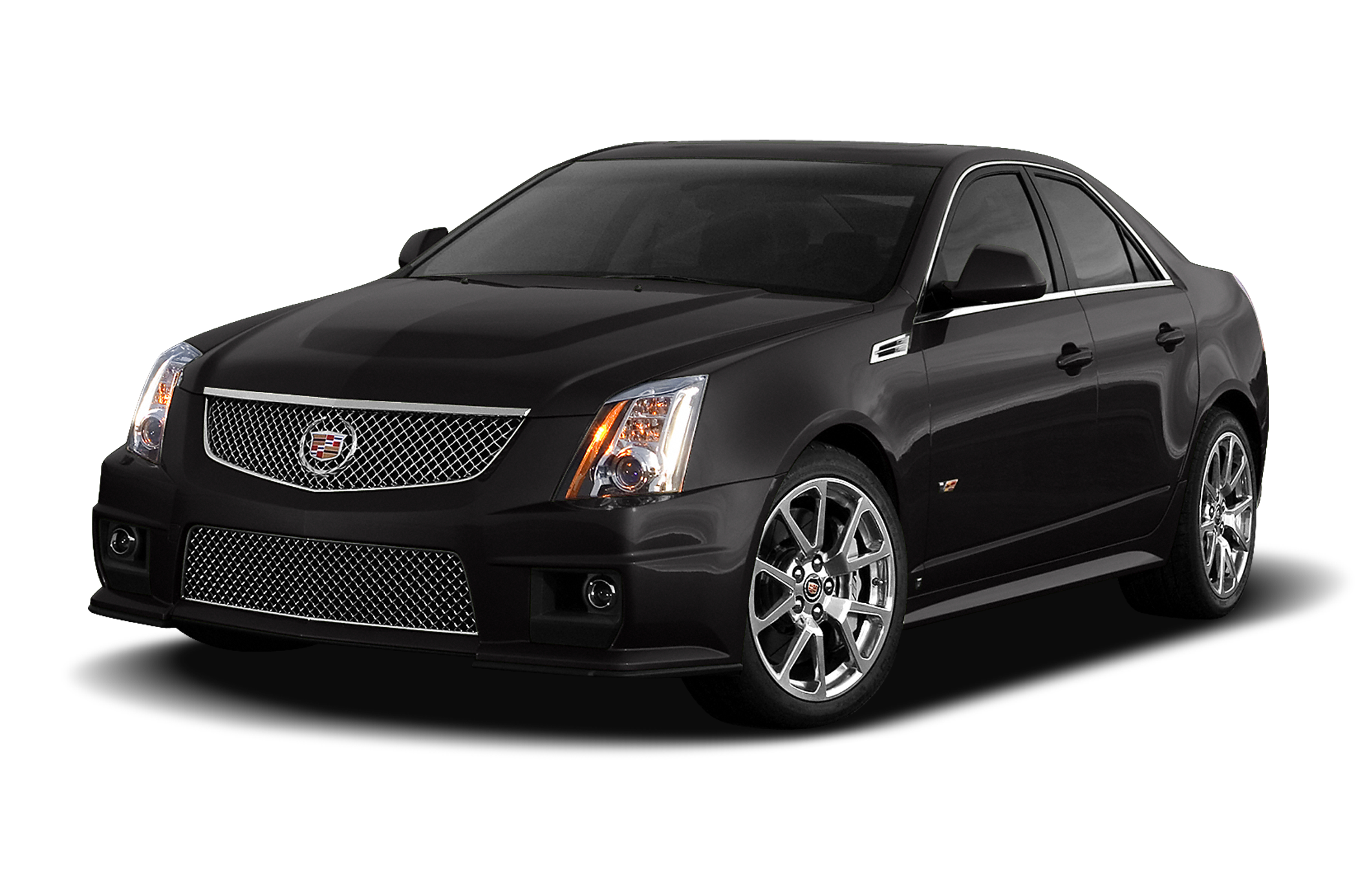
The 2010 Cadillac CTS-V engine is a supercharged 6.2-liter V8, officially designated as the LSA, which produces 556 horsepower and 551 lb-ft of torque. Derived from the legendary LS9 engine used in the C6 Corvette ZR1, the LSA powertrain transformed GM's luxury performance sedan into an iconic, track-capable supercar killer capable of accelerating from 0 to 60 mph in roughly 3.9 to 4.1 seconds.
Introduction to the 2010 Cadillac CTS-V Powertrain
When General Motors introduced the second-generation Cadillac CTS-V for the 2009 model year—carrying directly into 2010 with identical specifications—it sent shockwaves through the global automotive industry. At the heart of this high-performance luxury sedan was an engine that defied conventional expectations for American luxury vehicles. Rather than relying on high-revving displacement or complex European-style turbocharging, Cadillac engineers opted for a brute-force yet remarkably sophisticated American pushrod V8 paired with a Roots-type positive-displacement supercharger.
The resulting powerplant, known by its General Motors regular production option (RPO) code LSA, established a new benchmark for sedan performance. Displacing 6.2 liters (376 cubic inches), the engine delivered supercar-level output while retaining daily-drivetrain docility. Understanding the 2010 Cadillac CTS-V engine requires examining its architectural lineage, technical specifications, forced-induction mechanisms, cooling strategies, and long-term reliability factors. This comprehensive analysis breaks down every critical aspect of the LSA engine to explain why it remains a revered milestone in automotive engineering.
Architectural Lineage: Roots in the LS9 and Small-Block Tradition
To appreciate the engineering depth of the 2010 Cadillac CTS-V engine, one must trace its ancestry back to the conventional small-block Chevrolet V8 architecture. The LSA is a direct member of the Generation IV small-block family. However, it shares the vast majority of its DNA with the ultra-exclusive LS9 engine found in the contemporary Chevrolet Corvette ZR1.
While the LS9 was engineered to power a lightweight, two-seat halo sports car with titanium connecting rods and dry-sump lubrication, the LSA was specifically designed to handle the packaging constraints, thermal dynamics, and heavy-duty demands of a five-passenger luxury sedan. Despite these application-specific differences, the LSA retained the core structural integrity of its Corvette sibling. It utilizes a deep-skirt aluminum cylinder block with cast-in iron cylinder liners, cross-bolted main bearing caps, and a robust structural aluminum oil pan designed to reinforce the powertrain block integrity.
Block and Rotating Assembly Specifications
- Displacement: 6.162 liters (376 cubic inches)
- Bore x Stroke: 103.25 mm × 92.00 mm (4.065 in × 3.622 in)
- Block Material: Cast aluminum with cast-iron liners
- Crankshaft Material: Forged micro-alloy steel
- Connecting Rods: Powdered metal steel (fracture-split)
- Pistons: Hypereutectic cast aluminum (coated skirts)
- Compression Ratio: 9.1:1
The choice of a 9.1:1 compression ratio was a deliberate compromise. It allowed engineers to run higher boost pressures from the factory supercharger without inducing destructive engine knock on standard premium pump fuel (91 to 93 octane), while still maintaining reasonable off-boost throttle response and fuel efficiency during highway cruising.
Forced Induction and Intercooling Mechanics
The defining characteristic of the 2010 Cadillac CTS-V engine is its Eaton TVS (Twin Vortices Series) positive-displacement supercharger. Unlike traditional Roots blowers, the sixth-generation Eaton TVS unit features a four-lobe rotor design twisted to a 160-degree helix. This aerodynamic evolution dramatically improved thermal efficiency, increased volumetric output at high RPM, and reduced parasitic drag compared to older supercharger designs.
Supercharger Performance Parameters
- Unit Type: Roots-type Twin Vortices Series (TVS) R1900
- Displacement per Revolution: 1.9 liters
- Maximum Boost Pressure: 9.0 psi (factory specification)
- Drive Mechanism: Dedicated 8-rib serpentine belt system
- Ambient Air Intake -> Enters throttle body (87mm)
- Compression Stage -> R1900 TVS rotors compress air at 9 psi
- Heat Generation -> Compressed air temperature rises sharply
- Intercooling -> Dual-brick air-to-water heat exchangers
- Combustion -> Cooled, dense air enters 6.2L cylinders
Because compressing air generates substantial thermal energy, forced-induction systems require advanced intercooling to prevent detonation and protect internal engine components. The LSA utilizes an integrated air-to-water intercooler system. Two distinct tube-and-fin heat exchangers (often referred to as "bricks") are mounted directly inside the supercharger housing underneath the blower lid.
An independent electric water pump circulates coolant from a front-mounted radiator through these intercooler bricks, absorbing heat from the compressed charge air before it enters the combustion chambers. This efficient packaging ensures that intake air temperatures (IATs) remain within safe operating thresholds even during sustained high-load driving conditions, such as track sessions or repeated aggressive acceleration runs.
Cylinder Heads, Valvetrain, and Fuel Delivery
To support the massive volumetric requirements of a 6.2-liter supercharged engine operating at high RPM, the 2010 Cadillac CTS-V engine relies on high-flow cylinder heads and a specialized valvetrain profile.
Cylinder Head and Valvetrain Specifications
- Head Material: Premium Rotocast A356T6 aluminum
- Combustion Chamber Volume: 68 cc
- Intake Valve Diameter: 2.16 inches (55 mm) - Hollow-stem design
- Exhaust Valve Diameter: 1.59 inches (40 mm) - Sodium-filled
- Camshaft Type: Hydraulic roller
- Camshaft Lift (Intake/Exhaust): 0.480 in / 0.480 in
- Camshaft Duration (@ 0.050"): 198° intake / 216° exhaust
- Lobe Separation Angle: 117 degrees
The inclusion of hollow-stem intake valves and sodium-filled exhaust valves is a critical engineering detail. At sustained high RPMs, valvetrain mass dictates the engine's safe operating ceiling. By reducing the weight of the valves, engineers minimized valvetrain inertia, preventing valve float and ensuring reliable operation up to the factory redline of 6.200 RPM (with a fuel cut-off at 6,250 RPM).
Fuel System Configuration
Feeding 556 horsepower requires an aggressive fuel delivery architecture. The 2010 CTS-V engine utilizes a high-pressure returnless fuel system featuring an electronically controlled variable-displacement fuel pump housed within the fuel tank. This pump supplies fuel to high-flow multi-port fuel injectors capable of delivering the precise fuel volume required under peak 9.0 psi boost conditions.
Technical Specifications Comparison: LSA vs. LS3 vs. LS9
To contextualize the placement of the LSA within General Motors' high-performance small-block ecosystem, it is helpful to compare its core specifications directly against its naturally aspirated sibling (the LS3 found in the standard base Corvette and contemporary Camaro SS) and its track-focused sibling (the LS9 found in the Corvette ZR1).
| Specification | 2010 Cadillac CTS-V (LSA) | Chevrolet Corvette (LS3) | Corvette ZR1 (LS9) |
|---|---|---|---|
| Displacement | 6.2L (376 cu in) | 6.2L (376 cu in) | 6.2L (376 cu in) |
| Induction | Roots Supercharger (9 psi) | Naturally Aspirated | Roots Supercharger (10.5 psi) |
| Horsepower | 556 hp @ 6,100 RPM | 430 hp @ 5,900 RPM | 638 hp @ 6,500 RPM |
| Torque | 551 lb-ft @ 3,800 RPM | 424 lb-ft @ 4,600 RPM | 604 lb-ft @ 3,800 RPM |
| Compression Ratio | 9.1:1 | 10.7:1 | 9.1:1 |
| Block Material | Cast Aluminum | Cast Aluminum | Cast Aluminum |
| Crankshaft | Forged Steel | Cast Nodular Iron | Forged Steel |
| Connecting Rods | Powdered Metal Steel | Powdered Metal Steel | Titanium |
| Lubrication System | Wet Sump | Wet Sump | Dry Sump |
This comparison highlights that the LSA bridges the gap between standard high-performance street engines and ultra-expensive exotic powerplants, using heavy-duty forged components where necessary while maintaining manufacturing practicality for a production luxury sedan.
Operating Characteristics, Reliability, and Common Issues
While the 2010 Cadillac CTS-V engine is widely praised as one of the most durable and over-built performance engines of its era, ownership requires an awareness of specific mechanical traits, maintenance intervals, and potential failure points.
Supercharger Isolator Wear
One of the most widely documented mechanical quirks of the early-generation LSA engine is the factory supercharger isolator. The solid spring-loaded coupler connecting the snout shaft to the supercharger rotor assembly was constructed from a plastic material prone to degrading over time. When this isolator wears out, it produces a distinct rattling or ticking noise at idle—often colloquially referred to as the "LSA rattle." While rarely causing catastrophic immediate damage, a failed isolator requires the removal of the supercharger snout to replace the component with an upgraded solid or revised polyurethane aftermarket isolator.
Heat Soak Management
Because the LSA utilizes a relatively compact 1.9-liter supercharger, aggressive repeated acceleration runs without adequate cooldown periods can lead to "heat soak." During heat soak, the intake air temperatures rise significantly, prompting the Engine Control Module (ECM) to pull ignition timing to protect the motor from detonation. Owners who track their vehicles frequently upgrade the factory heat exchanger pump with higher-capacity auxiliary pumps or install larger front-mount heat exchangers to maintain optimal intercooler fluid temperatures.
Crank Pulley Alignment and Wobble
The factory crankshaft balancer (harmonic balancer) on the LSA is secured using a single friction-fit bolt on a keyless (or keyed, depending on production run variations) snout. Over time, high torsional loads can cause the outer ring of the balancer to separate or develop a noticeable wobble. Inspecting the harmonic balancer for alignment during routine maintenance is a standard recommendation for high-mileage examples.
Maintenance Best Practices and Fluids
Maintaining the high-performance integrity of a 2010 Cadillac CTS-V engine demands strict adherence to service intervals and high-quality consumables.
- Engine Oil: GM mandates the use of synthetic oils meeting Dexos specifications, typically 5W-30 for standard street usage. Track driving or high ambient temperatures often prompt owners to utilize high-viscosity synthetic alternatives (such as 10W-40) to maintain optimal oil pressure under extreme thermal stress.
- Spark Plugs: Forced-induction engines place higher thermal demands on ignition components. Factory ACDelco iridium spark plugs should be inspected every 30,000 to 50,000 miles, particularly if the vehicle has been modified with smaller supercharger pulleys or aftermarket engine tunes.
- Intercooler Coolant Service: The intercooler circuit operates completely independently from the primary engine cooling loop. Neglecting to flush and bleed this secondary system can lead to trapped air pockets, reduced intercooler efficiency, and chronic power loss.
Frequently Asked Questions
What engine is in the 2010 Cadillac CTS-V?
The 2010 Cadillac CTS-V features the LSA engine, which is a supercharged 6.2-liter V8 derived from the LS9 architecture used in the Corvette ZR1. It produces 556 horsepower and 551 lb-ft of torque.
How much boost does a stock 2010 Cadillac CTS-V engine run?
From the factory, the Eaton TVS 1900 supercharger on the LSA engine delivers a maximum boost pressure of approximately 9.0 pounds per square inch (psi).
Is the 2010 Cadillac CTS-V engine forged from the factory?
The LSA engine features a forged micro-alloy steel crankshaft and high-strength powdered metal connecting rods. However, unlike the Corvette ZR1's LS9 engine, it utilizes hypereutectic cast aluminum pistons rather than forged pistons.
What causes the common rattle noise in LSA superchargers?
A rattling or knocking noise at idle from the top of the engine is typically caused by wear in the factory supercharger solid spring isolator. Replacing this plastic component with an upgraded aftermarket solid isolator permanently resolves the issue.
Can the 2010 Cadillac CTS-V engine handle performance modifications safely?
Yes. The LSA block, rotating assembly, and fuel system are exceptionally robust. Many owners easily increase horsepower output past 650–700 wheel horsepower simply by installing a smaller supercharger pulley, high-flow cold air intake, aftermarket heat exchanger, and a custom engine calibration.
Conclusion and Final Recommendation
The 2010 Cadillac CTS-V engine stands as a monumental achievement in American automotive engineering, successfully marrying the raw, immediate torque of forced induction with the legendary reliability and modularity of the small-block V8 platform. For prospective buyers, automotive enthusiasts, and mechanics alike, evaluating an LSA-powered CTS-V requires verifying routine maintenance records, listening closely for supercharger isolator health, and ensuring the intercooler system is functioning at peak efficiency. When properly maintained, the LSA engine delivers world-class performance that continues to command respect on both the street and the racetrack.