The 2006 Israel-Lebanon War, often referred to in Lebanon as the July War and in Israel as the Second Lebanon War, was a 34-day military conflict that fundamentally reshaped the geopolitical landscape of the Levant. Triggered by a cross-border raid and the capture of two Israeli soldiers by Hezbollah, the war escalated into a large-scale confrontation involving sustained aerial bombardment, naval blockades, and intense ground combat, resulting in significant casualties and infrastructure damage.
Origins and Escalation: The July 12 Catalyst
The conflict began on July 12, 2006, when Hezbollah launched a diversionary rocket attack on Israeli border towns while a specialized unit crossed the "Blue Line"—the UN-demarcated boundary between Israel and Lebanon—to ambush an Israeli military patrol. The operation resulted in the deaths of three Israeli soldiers and the capture of two others, Ehud Goldwasser and Eldad Regev. Hezbollah’s stated objective was to leverage these captives to force an exchange for Lebanese prisoners held by Israel.
The Israeli government, led by Prime Minister Ehud Olmert, viewed this incursion as a direct violation of its sovereignty and a test of its deterrence. Israel responded with immediate air strikes targeting Hezbollah positions in southern Lebanon and the subsequent deployment of ground forces. Within days, the scope of the operation expanded from a surgical response to a broader military campaign aimed at neutralizing Hezbollah’s short-range rocket capabilities and pushing the organization back from the border.
The Military Conduct of the War
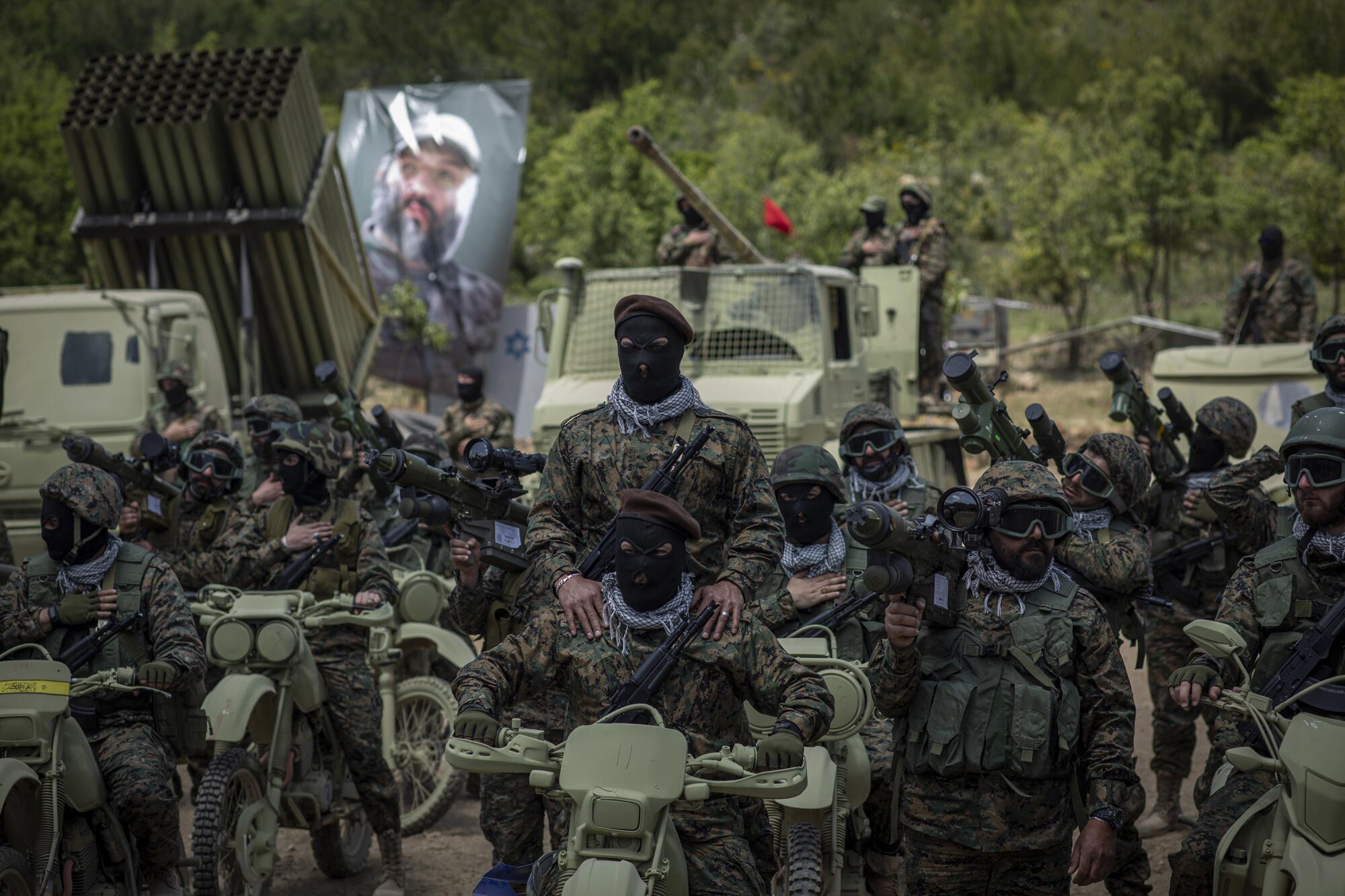
The conflict was characterized by a distinct asymmetry in tactics and military doctrine. The Israel Defense Forces (IDF) relied heavily on its technological superiority, utilizing a robust air force to target infrastructure, bunkers, and suspected weapons caches. Conversely, Hezbollah operated as a hybrid actor, employing guerrilla tactics, extensive tunnel networks, and a well-developed arsenal of anti-tank guided missiles (ATGMs) and short-range Katyusha rockets.
Israeli Objectives and Tactical Challenges
Israel’s primary operational goals included the liberation of the captured soldiers, the destruction of Hezbollah's rocket-launching infrastructure, and the enforcement of UN Security Council Resolution 1559, which called for the disarmament of all non-state militias in Lebanon. However, the IDF faced significant challenges in detecting and neutralizing Hezbollah’s decentralized, mobile rocket launchers, which were often concealed within civilian areas.
Hezbollah’s Asymmetric Strategy
Hezbollah demonstrated unexpected proficiency in defensive urban combat. By utilizing pre-prepared fighting positions in southern Lebanese villages, they inflicted significant losses on Israeli armored units. The conflict saw the effective use of the 9M133 Kornet anti-tank missile, which challenged the dominance of the Merkava main battle tank, forcing a shift in Israeli armored deployment tactics.
Regional and Humanitarian Impact
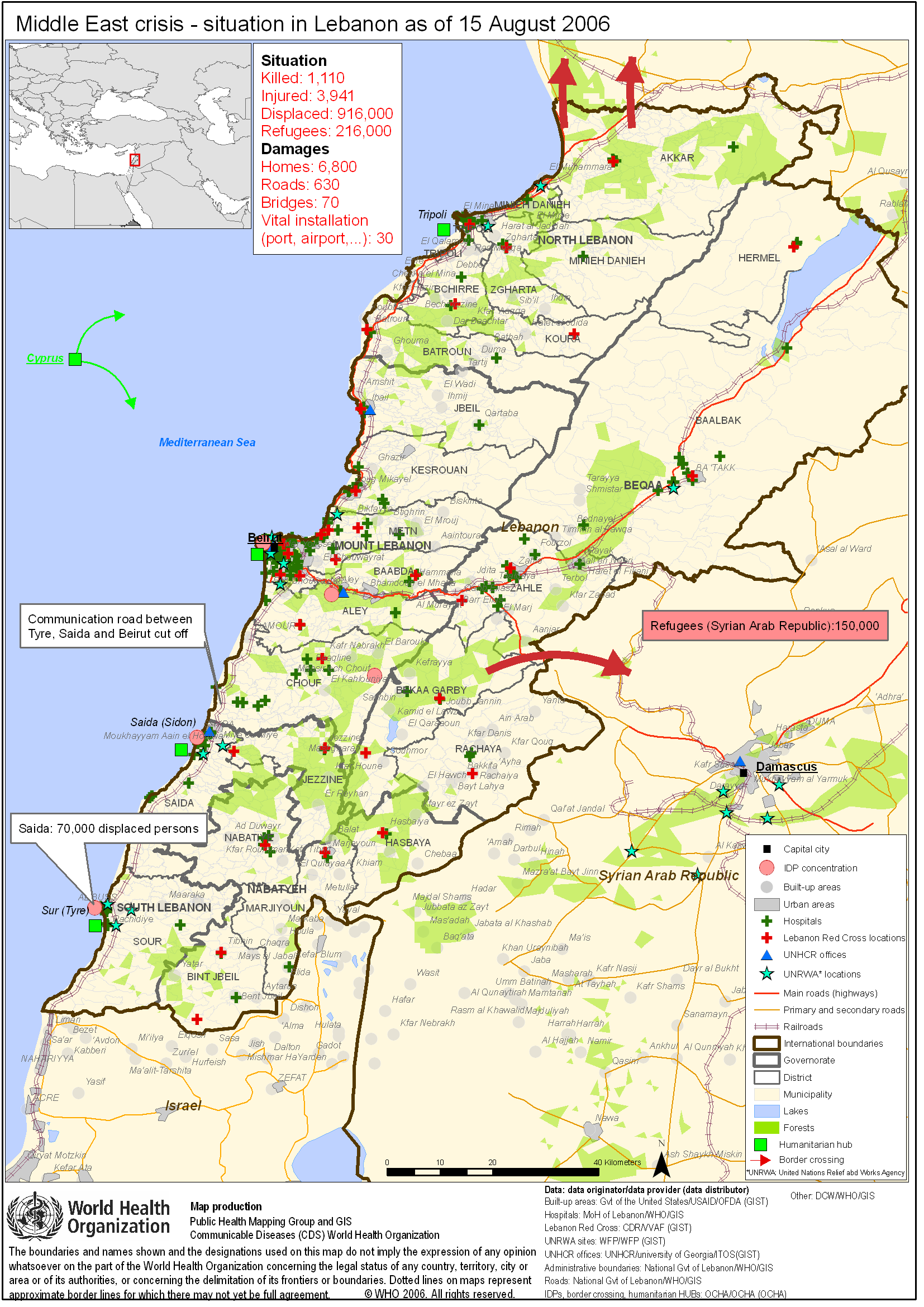
The 34-day conflict imposed a devastating toll on Lebanon’s civilian population. Infrastructure—including power plants, bridges, airports, and thousands of residential homes—suffered extensive damage from Israeli airstrikes. According to various reports from international observers and the Lebanese government, over 1,000 Lebanese civilians and combatants were killed, and approximately one million people were displaced from their homes.
In northern Israel, the civilian population endured persistent rocket fire. Hezbollah launched thousands of rockets into Israeli territory, reaching as far south as Haifa and the Galilee region. This bombardment forced hundreds of thousands of Israeli civilians into bomb shelters for weeks, causing severe economic disruption and psychological stress in the northern districts.
Resolution: UN Security Council Resolution 1701
The war concluded with the adoption of United Nations Security Council Resolution 1701 on August 11, 2006, which called for a full cessation of hostilities. Key provisions of the resolution included:
- Withdrawal: The withdrawal of Israeli forces from southern Lebanon as the Lebanese Armed Forces (LAF) and the United Nations Interim Force in Lebanon (UNIFIL) deployed to the region.
- Buffer Zone: The creation of a zone between the Blue Line and the Litani River free of any armed personnel other than the Lebanese government and UNIFIL.
- Disarmament: The disarmament of all armed groups in Lebanon, though this provision proved notoriously difficult to implement in practice.
- Embargo: An arms embargo on Lebanon to prevent the re-arming of non-state actors.
The following table summarizes the primary metrics associated with the resolution and the impact of the conflict.
| Category | Impact/Measurement |
|---|---|
| Duration | 34 Days (July 12 – August 14, 2006) |
| Primary Actors | Israel (IDF) vs. Hezbollah |
| UN Resolution | 1701 (Mandating ceasefire and buffer zone) |
| Lebanese Displaced | Approx. 1,000,000 civilians |
| Israeli Displaced | Approx. 300,000 - 500,000 civilians |
| Casualty Context | High civilian ratio in Lebanon; significant infrastructure loss |
Aftermath and Strategic Consequences
The conclusion of the 2006 war left a legacy that influenced the security doctrine of all parties involved for two decades. For Israel, the Winograd Commission was established to investigate the failures of the political and military leadership during the conduct of the war. The findings led to a significant overhaul in IDF training, intelligence gathering, and reserve force readiness.
For Hezbollah, the war was framed as a "Divine Victory," significantly boosting the group's political standing and recruiting capabilities across the region. However, the organization also faced criticism within Lebanon regarding the unilateral decision to launch the operation without parliamentary approval.
For UNIFIL, the resolution mandated an expansion of its mandate and force size. The mission was tasked with supporting the LAF in maintaining a calm environment, though its ability to actively disarm militants remained limited by its mandate, which emphasized "support" rather than "enforcement" against armed actors.
Long-term Regional Implications
The 2006 conflict effectively froze the border for a significant duration, creating a state of "armed peace." However, it did not resolve the underlying tensions. The period between 2006 and 2026 saw a continued arms race, with Hezbollah significantly expanding its long-range rocket and precision-guided missile inventory, and Israel developing the Iron Dome and David’s Sling interceptor systems to mitigate the threat of short- and medium-range projectiles.
The war also highlighted the limits of conventional air power in dealing with non-state, decentralized, and entrenched adversaries. It marked a transition point in modern warfare, where technology—while vital—proved insufficient to force a rapid political outcome against an insurgent force capable of blending into the civilian environment.
Frequently Asked Questions
1. What was the primary cause of the 2006 Israel-Lebanon War? The conflict was triggered by a cross-border raid by Hezbollah on July 12, 2006, in which three Israeli soldiers were killed and two were taken captive. Israel launched a military operation to recover the soldiers and weaken Hezbollah's military presence along the northern border.
2. How did UN Resolution 1701 impact the border region? Resolution 1701 ended the fighting and established a buffer zone south of the Litani River. It increased the presence of UNIFIL forces and tasked the Lebanese Armed Forces with keeping the area free of unauthorized weapons.
3. Did the war achieve Israel's stated objectives? The war achieved a temporary cessation of hostilities and a reduction in immediate cross-border attacks. However, it failed to disarm Hezbollah or prevent the group from rebuilding its military capabilities, which remained a primary strategic challenge for Israel in the following years.
4. What role did UNIFIL play during and after the conflict? UNIFIL had been in Lebanon since 1978. Following the 2006 war, its mandate was strengthened under Resolution 1701 to include monitoring the ceasefire and providing support to the Lebanese government in establishing control over the southern region.
5. How are the events of 2006 viewed in the context of current regional security? The 2006 war serves as a foundational case study for modern asymmetric conflict. It is frequently referenced by military analysts to illustrate the difficulties of neutralizing state-like actors that utilize guerrilla tactics and hidden, hardened infrastructure.
Conclusion and Next Steps for Research
For those looking to understand the mechanics of the 2006 conflict, the official report of the Winograd Commission remains the most authoritative primary source for understanding the Israeli political and military decision-making process. For international perspectives and humanitarian data, the reports from the United Nations Office for the Coordination of Humanitarian Affairs (OCHA) regarding the post-conflict reconstruction phase are essential.
To further investigate the technical aspects of the military engagement, consult institutional records on the evolution of anti-tank warfare and the development of air defense systems post-2006. Understanding this period is critical for analyzing the broader history of the Levant and the shifting nature of non-state military threats in the 21st century.