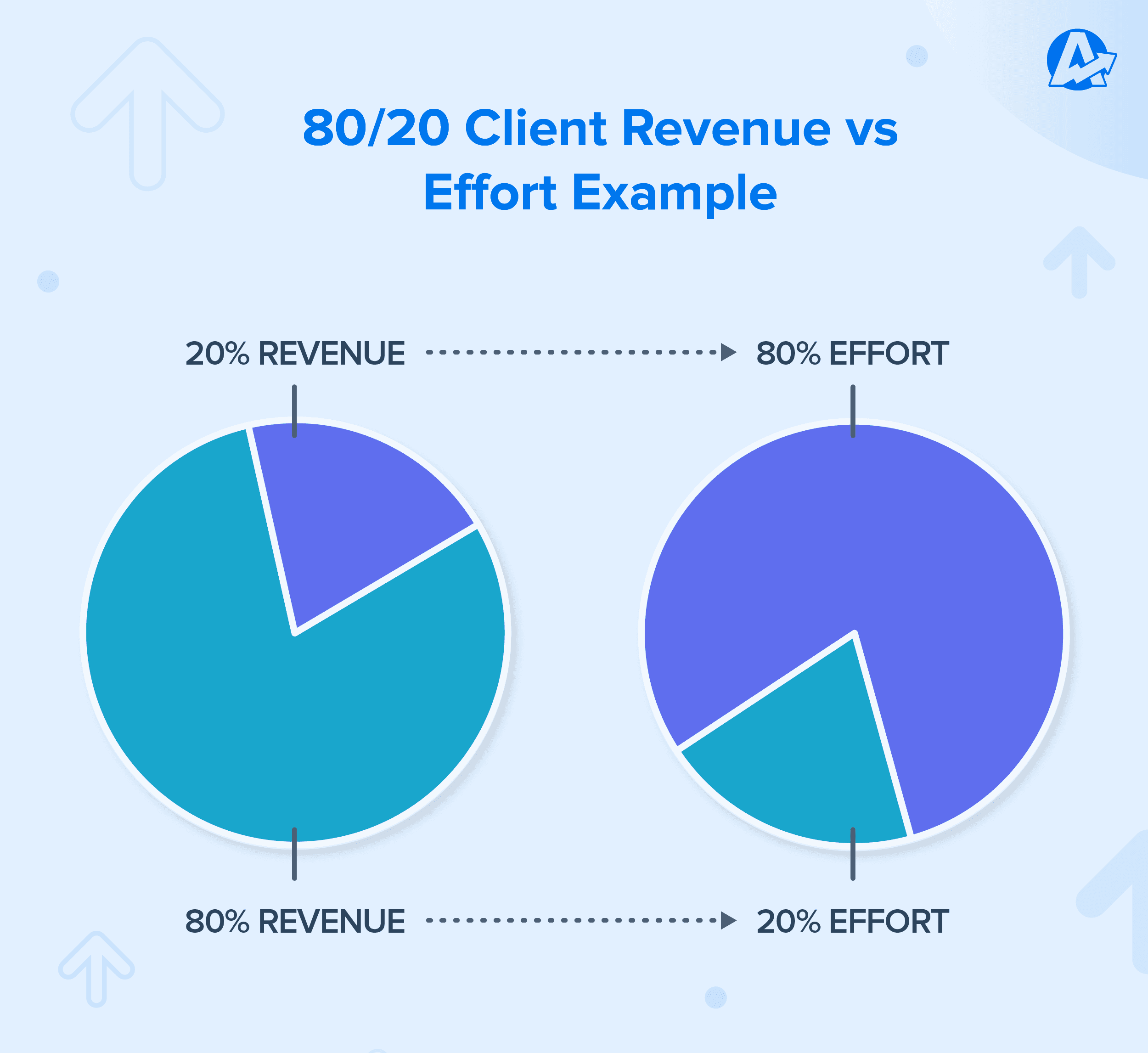
The 80/20 rule in marketing dictates that approximately 80 percent of your results—whether sales, revenue, or customer engagement—will stem from 20 percent of your efforts, campaigns, and audience segments. By identifying and doubling down on this high-performing minority, organizations can optimize budgets, minimize operational waste, and scale sustainable growth.
Understanding the Pareto Principle in Modern Marketing
The Pareto Principle, originally observed by economist Vilfredo Pareto regarding land ownership and wealth distribution, applies reliably to human behavior and commercial ecosystems. In marketing, this principle is not a rigid mathematical law, but a persistent empirical pattern. Recognizing this imbalance allows marketing leaders to shift away from scattershot tactics toward focused, high-leverage execution.
When applied strategically, the 80/20 rule forces a hard look at resource allocation. Most brands spread budgets evenly across dozens of channels, ad formats, and audience subsets under the assumption that diversification guarantees stability. In practice, this often dilutes impact. A minority of products drive the vast majority of profit, a handful of traffic sources generate qualified leads, and a small segment of loyal buyers accounts for repeat orders. Isolating these variables transforms marketing from a cost center into a predictable growth engine.
The Core Premise of Input Imbalance
The fundamental mechanism of the Pareto Principle rests on disproportionate inputs versus outputs. Consider the following structural distributions typically observed in mature marketing ecosystems:
- 20% of marketing campaigns produce 80% of conversions.
- 20% of customer base accounts for 80% of lifetime value.
- 20% of content assets generate 80% of organic traffic.
- 20% of product catalog yields 80% of gross revenue.
Failing to recognize these imbalances leads to the "boiled ocean" syndrome, where teams spend equal energy optimizing failing campaigns as they do scaling winning ones.
Identifying Your High-Yield 20 Percent
To leverage the 80/20 rule, you must first audit your historical data to separate high-impact drivers from background noise. This requires deep analytical rigor across customer data platforms, web analytics, and customer relationship management (CRM) systems.
Channel and Campaign Audits
Begin by mapping every marketing channel to measurable business outcomes, moving beyond vanity metrics like impressions or clicks down to customer acquisition cost (CAC) and return on ad spend (ROAS).
- Pull Historical Data: Export at least 12 to 24 months of attribution data to smooth out seasonal anomalies.
- Segment by Revenue Contribution: Rank campaigns, ad sets, and publishing channels from highest revenue generator to lowest.
- Calculate Cumulative Totals: Determine the exact point where cumulative revenue hits 80 percent of your total.
- Evaluate Resource Investment: Compare the output percentage against the time, budget, and human capital invested in that specific channel.
If 80 percent of your qualified leads originate from LinkedIn sponsored content and targeted email newsletters, while Facebook, TikTok, and display ads combine for the remaining 20 percent despite consuming half the budget, you have found an immediate optimization target.
Audience Segmentation and the Power Buyer
Not all customers possess equal lifetime value. The 80/20 rule frequently manifests as a 64/4 calculation when compounded (80 percent of 80 percent), meaning roughly 4 percent of customers may drive 64 percent of total profits in extreme cases.
Conduct a cohort analysis to identify your top tier of buyers. Look beyond initial transaction volume and analyze behavioral patterns:
- What specific search terms did they use initially?
- Which content pieces did they consume before purchasing?
- What is their support ticket frequency compared to lower-tier buyers?
- Do they refer other customers organically?
Building lookalike audiences or tailoring retention campaigns directly around the behavioral traits of this elite 20 percent drastically improves acquisition efficiency.
Reallocating Resources: Doing More with Less
Once you isolate the vital few inputs, the operational challenge is reallocating capital, creative bandwidth, and strategic focus away from the trivial many.
| Marketing Area | The Trivial 80% (Reduce/Eliminate) | The Vital 20% (Scale/Optimize) |
|---|---|---|
| Paid Advertising | Broad-targeting display networks, experimental social platforms with unproven ROI, low-intent keyword bidding. | High-intent search campaigns, retargeting pools, lookalike audiences built from top-tier buyers. |
| Content Creation | High-volume, low-depth blog posts designed purely for keyword stuffing; daily social media updates without strategy. | Comprehensive pillar guides, original industry research, high-value case studies, and conversion-focused assets. |
| Email Marketing | Generic daily blasts to entire unsegmented mailing lists with low open rates. | Automated behavioral triggers, VIP loyalty sequences, highly segmented retention campaigns. |
| Product Marketing | Promoting low-margin accessory items or slow-moving stock that requires heavy discounting. | Flagship products with high customer lifetime value and low return rates. |
Strategic Budget Shifting
Cutting spend on underperforming channels can feel counterintuitive, but capital preservation is a core pillar of efficiency. Shift funds systematically:
- Phase 1 (Audit): Pause campaigns operating below your target acquisition cost threshold for 30 days to test baseline stability.
- Phase 2 (Reallocate): Funnel 50 percent of the liberated budget into your top-performing 20 percent of channels, scaling spend incrementally to monitor for diminishing returns.
- Phase 3 (Reinvest): Allocate the remaining 50 percent into testing new variations within those proven channels, such as new ad creatives or advanced audience layering.
Content Marketing and the 80/20 Rule
Content marketing provides one of the clearest examples of the Pareto Principle in action. In many organizations, 80 percent of organic search traffic flows to a tiny fraction of published articles or landing pages, while the rest sit unread in digital archives.
The Hub-and-Spoke Content Strategy
To align content operations with the 80/20 rule, adopt a structured hub-and-spoke (or pillar-cluster) architecture.
- The 20% (Pillar Content): Invest 80 percent of your writing, design, and promotional resources into creating definitive, deeply researched, authoritative guides on core topics that directly tie to your commercial offerings.
- The 80% (Cluster Content): Use secondary assets to support the main pillars, linking back to the primary hubs to pass authority and capture long-tail search queries.
Pruning dead weight is equally vital. Periodically update, consolidate, or redirect low-performing, thin content pieces that dilute your site's overall topical authority in search engine indexes.
Common Pitfalls and Limitations
While powerful, blind adherence to the 80/20 rule can introduce strategic blind spots if executed without nuance. Marketers must guard against several recurring errors.
Neglecting Future Innovation
If you invest exclusively in the proven 20 percent of today, you risk missing the emerging channels of tomorrow. The Pareto Principle evaluates historical data, which inherently lags behind market shifts.
- The Solution: Allocate a protected "innovation budget" (typically 10 to 15 percent of total resources) specifically for experimental tactics, emerging platforms, and unproven product lines. Treat this budget as R&D rather than immediate-ROI generation.
Confusing Correlation with Causation
Do not assume that an input is inherently valuable simply because it correlates with a high output. Ensure attribution models account for multi-touch journeys. A top-of-funnel awareness campaign might represent only a small fraction of direct conversions, yet serve as the mandatory catalyst that introduces users to your brand before they convert via a branded search query later.
Ignoring Churn and Retention
Focusing solely on acquiring the top 20 percent of customers can cause brands to neglect the foundational service required to keep them. High-value buyers have high expectations; if customer experience degrades while chasing scale, your most lucrative segment will attrit rapidly.
Frequently Asked Questions
How do I find my 20 percent marketing drivers?
Analyze your historical analytics, CRM records, and financial reports to map revenue, leads, and engagement back to their specific sources. Rank every campaign, channel, content piece, and customer segment by output, then calculate cumulative totals to find the tipping point where 80 percent of results are generated.
Does the 80/20 rule apply to small businesses and startups?
Yes, but the application differs slightly. Startups often lack historical data, meaning their initial 20 percent must be hypothesized through customer development interviews and competitor benchmarking before transitioning to data-driven allocation as volume grows.
Should I completely eliminate channels that fall into the 80 percent?
Not necessarily. While you should defund channels that actively lose money, maintain a baseline presence on secondary channels if they serve early-stage awareness, provide necessary brand defensibility, or support multi-touch attribution pathways.
How often should I re-evaluate my 80/20 distribution?
Market dynamics, algorithm updates, and consumer preferences shift constantly. Conduct a comprehensive Pareto audit of your marketing ecosystem on a quarterly basis to catch emerging performance drop-offs or new high-yield opportunities early.
Conclusion and Next Actions
The 80/20 rule in marketing is a call for radical prioritization. By shifting focus from activity volume to impact concentration, marketing teams can reduce wasted spend, amplify high-converting channels, and drive predictable revenue growth.
Begin your implementation today by pulling a single performance report from your primary analytics platform, ranking your traffic sources or campaigns by conversion output, and identifying the top 20 percent of drivers. Reallocate a modest portion of budget from your lowest-performing initiative into your top performer, monitor the results over a 30-day testing window, and iterate systematically.