Determining whether 12 gauge or 16 gauge wire is "better" depends entirely on the electrical load, the distance of the run, and the specific application, as neither is universally superior. In the American Wire Gauge (AWG) system, 12 gauge wire is thicker and capable of carrying more current (up to 20 amps in residential settings), while 16 gauge is thinner, more flexible, and generally limited to lower-amperage tasks like light fixtures or speaker connections.
When selecting wire in 2026, the primary objective is to balance safety, signal integrity, and cost. Using a wire that is too thin (high gauge number) for a high-current load can lead to overheating and fire hazards. Conversely, using a wire that is thicker than necessary (low gauge number) is often a waste of money and makes installation significantly more difficult due to reduced flexibility.
Understanding the American Wire Gauge (AWG) System
To compare 12 gauge and 16 gauge effectively, one must first understand the mechanics of the American Wire Gauge (AWG) system. This standardized scale is used in North America for the diameters of round, solid, nonferrous, electrically conducting wire.
The AWG system is an inverse scale: as the gauge number increases, the wire diameter decreases. This stems from the historical manufacturing process where wire was pulled through a series of successively smaller dies. A 12 gauge wire was pulled through 12 dies, while a 16 gauge wire was pulled through 16, resulting in a thinner finished product.
In 2026, standard electrical engineering principles still dictate that the cross-sectional area of a wire determines its resistance. A 12 AWG wire has a diameter of approximately 0.0808 inches (2.05 mm), while a 16 AWG wire has a diameter of approximately 0.0508 inches (1.29 mm). This seemingly small difference in diameter results in a massive difference in cross-sectional area—12 gauge wire has nearly 2.5 times the copper area of 16 gauge wire. This physical reality governs everything from heat dissipation to voltage drop.
Electrical Capacity and Amperage Limits
The most critical factor in the "12 gauge vs 16 gauge" debate is ampacity—the maximum amount of electric current a conductor can carry continuously under the conditions of use without exceeding its temperature rating.
The Powerhouse: 12 Gauge Wire
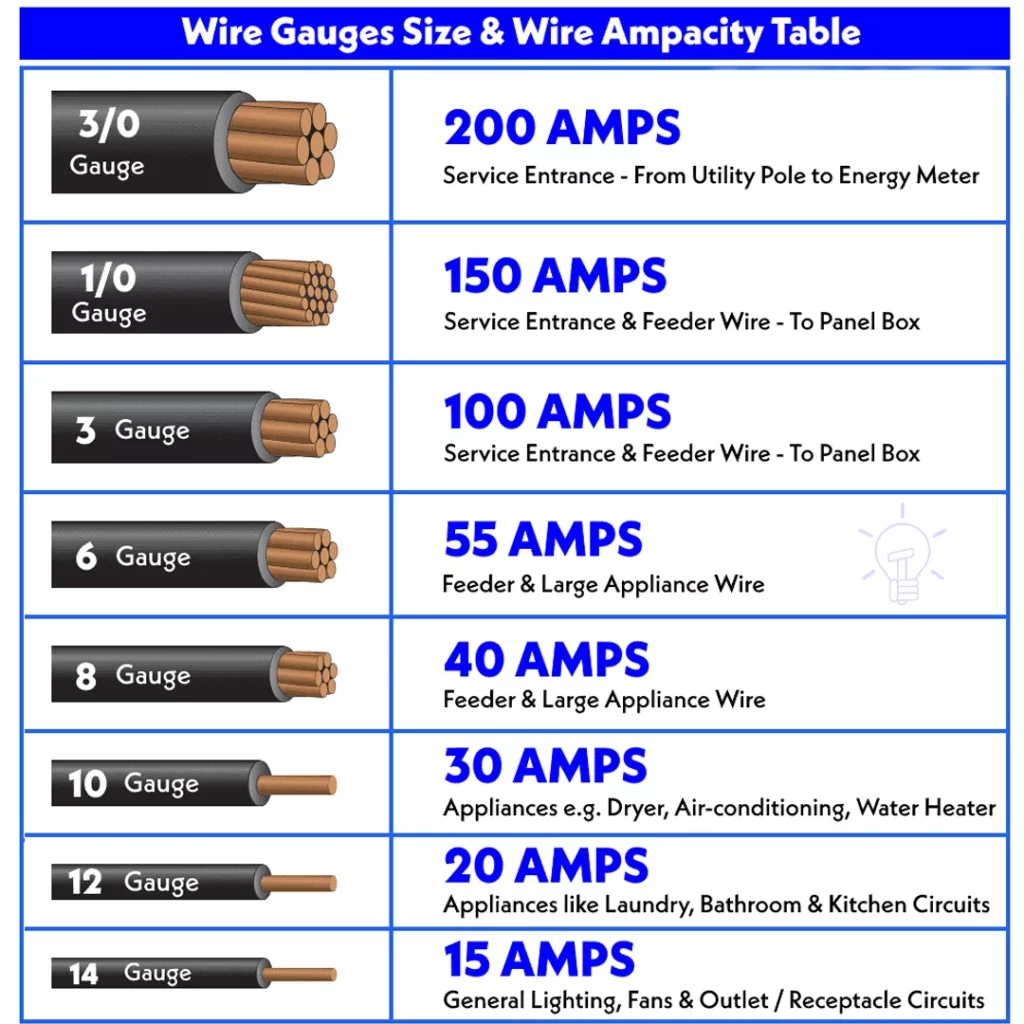
In residential and commercial construction, 12 gauge wire is the standard for 20-ampere circuits. If you are wiring a kitchen, a bathroom, or a workshop where high-draw appliances like microwave ovens, hair dryers, or power tools are used, 12 gauge is the required choice.
According to National Electrical Code (NEC) standards, which remain the benchmark for safety in 2026, 12 AWG copper wire is rated for a maximum of 20 amps in most common household environments. Using 12 gauge provides a safety buffer for 15-amp circuits as well, though it is physically harder to work with than 14 gauge.
The Light-Duty Specialist: 16 Gauge Wire
16 gauge wire is generally not permitted for standard "branch circuit" wiring (the wiring that goes from your breaker panel to your wall outlets). Instead, 16 AWG is typically found in:
- Extension cords for lamps and small electronics.
- Internal wiring for light fixtures (fixture wire).
- Low-voltage landscape lighting.
- Doorbell systems.
- Signal and control wiring.
A 16 gauge wire is generally rated for about 10 to 13 amps depending on the insulation type and whether it is bundled. Using 16 gauge wire for a 20-amp circuit would cause the wire to heat up rapidly, potentially melting the insulation and causing a fire long before the circuit breaker trips.
Performance in Audio and Speaker Applications
While 12 and 16 gauge wires are compared in electrical power contexts, they are most frequently debated in the world of high-fidelity audio and home theater installations. Here, "better" is defined by signal fidelity and the prevention of power loss over distance.
When 16 Gauge Is Sufficient
For the vast majority of home theater setups where the distance between the amplifier and the speakers is less than 50 feet, 16 gauge wire is often more than adequate. It is thin, easy to hide under carpets or run through cable management channels, and cost-effective. At 8 ohms of impedance (the standard for most home speakers), a 16-gauge wire can run up to 48 feet before the resistance reaches a level that could theoretically affect sound quality.
When 12 Gauge Is Essential
Audiophiles and professional installers prefer 12 gauge wire for several specific reasons:
- Long Runs: If you are running wire across a large room or into another zone (exceeding 50–100 feet), the lower resistance of 12 gauge wire is necessary to prevent audible high-frequency roll-off and power loss.
- Low Impedance Speakers: If you are using high-end 4-ohm speakers, the wire's resistance becomes a larger percentage of the total circuit resistance. In this case, 12 gauge wire is "better" because it maintains a high damping factor, allowing the amplifier to control the speaker cone more precisely.
- High Power Delivery: For high-wattage subwoofers or external power amplifiers, 12 gauge ensures that the peak current demands are met without restriction.
| Feature | 12 Gauge (AWG) | 16 Gauge (AWG) |
|---|---|---|
| Diameter | 0.0808 inches (2.05 mm) | 0.0508 inches (1.29 mm) |
| Cross-Sectional Area | 3.31 mm² | 1.31 mm² |
| Resistance (per 1000 ft) | ~1.588 Ohms | ~4.016 Ohms |
| Max Household Amperage | 20 Amps | 10-13 Amps (Not for branch circuits) |
| Primary Use | Kitchen/Laundry/20A Circuits | Lighting/Extension Cords/Audio |
| Flexibility | Rigid/Stiff | High/Very Flexible |
| Cost (2026 Avg) | Higher ($0.60 - $0.90 per ft) | Lower ($0.25 - $0.45 per ft) |
Physics of Resistance and Voltage Drop
The reason 12 gauge wire outperforms 16 gauge in high-load situations is rooted in Ohm's Law and the formula for resistance. Resistance ($R$) is determined by the resistivity of the material ($\rho$), the length of the wire ($L$), and the cross-sectional area ($A$): $R = \rho(L/A)$.
Because 12 gauge wire has a much larger area ($A$), its total resistance is significantly lower. This becomes vital when dealing with Voltage Drop. Voltage drop is the amount of voltage lost as electricity travels through a wire due to resistance.
In a 100-foot run of 16 gauge wire carrying 10 amps, the voltage drop might be significant enough to cause a motor to run sluggishly or a light to flicker. In contrast, 12 gauge wire would handle that same 10-amp load over 100 feet with much less loss. In 2026, as smart home devices and high-efficiency appliances become more sensitive to voltage fluctuations, choosing the thicker 12 gauge wire for longer runs is increasingly seen as a "future-proofing" measure.
Material Considerations: Copper vs. CCA
When shopping for 12 vs 16 gauge wire, especially in the automotive or audio sectors, you will encounter Oxygen-Free Copper (OFC) and Copper-Clad Aluminum (CCA).
In 2026, the distinction is more important than ever due to fluctuating raw material costs.
- OFC (Copper): This is the gold standard. It has the highest conductivity and best durability.
- CCA (Aluminum): This wire is aluminum with a thin coating of copper. Aluminum is less conductive than copper.
Critical Warning: A 12 gauge CCA wire actually has the resistance profile of a 14 or 16 gauge copper wire. If you are choosing between a 12 gauge CCA wire and a 16 gauge OFC wire, the 16 gauge copper wire might actually be the "better" and safer choice for certain electronic applications because copper is a far superior conductor. Always verify the metal type before comparing gauges.
Installation and Practicality
While technical specs often favor 12 gauge, the practical realities of installation sometimes favor 16 gauge.
Flexibility and Routing
12 gauge wire is thick and heavy. If you are trying to snake wire through tight bends in a vehicle's dashboard or behind a crowded entertainment center, 12 gauge can be a nightmare to manage. 16 gauge wire is much more pliable, allowing for cleaner aesthetics and easier routing through small holes or conduit.
Termination and Connectors
Most standard consumer-grade connectors—such as those on the back of mid-range receivers or small LED controllers—are designed for 16 or 14 gauge wire. Attempting to force a 12 gauge wire into a terminal designed for 16 gauge can result in stray wire strands, which may cause a short circuit. If your equipment only accepts 16 gauge, using 12 gauge requires additional "pin" adapters, adding complexity and another potential point of failure.
Cost-Benefit Analysis for 2026
Budgetary constraints are a reality for any project. As of 2026, copper prices remain volatile, making the price gap between 12 and 16 gauge significant.
If you are wiring a whole house, the price difference between 250-foot rolls of 12/2 Romex and 14/2 Romex (a more common household comparison) is substantial. However, when comparing 12 gauge to 16 gauge, you are usually looking at different categories of use.
For a 100-foot outdoor lighting project, using 12 gauge wire might cost double what 16 gauge costs. If your total load is only 50 watts of LED bulbs, the 16 gauge wire is "better" because the 12 gauge offers no tangible benefit for the extra expense. However, if you plan to add 200 more watts of lighting in the future, the 12 gauge becomes the better long-term investment.
Common Mistakes to Avoid
- Using 16 Gauge on 15A or 20A Breakers: This is the most dangerous mistake. Never use 16 gauge wire for standard wall outlets or any circuit protected by a 15-amp or 20-amp breaker.
- Ignoring the "Round Trip" in DC Circuits: In automotive or 12V DC setups, the "length" of the wire includes the distance to the device and the distance back to the ground. This doubles the effective length, often making 12 gauge the better choice to prevent voltage drop.
- Mixing Gauges Improperly: While you can technically use a thicker wire (12 AWG) on a circuit that only requires 16 AWG, you must never do the reverse. The circuit breaker is there to protect the wire, not the appliance. If the wire is thinner than what the breaker allows, the wire becomes a fuse.
Frequently Asked Questions
Can I use 12 gauge wire for my home theater speakers?
Yes, you can use 12 gauge wire for speakers, and it is often considered "better" for high-end systems or very long cable runs. However, for standard distances (under 50 feet) and average speakers, you likely won't hear a difference between 12 and 16 gauge. 12 gauge is thicker and harder to work with, so only use it if you have high-power demands or long distances.
Is 16 gauge wire safe for outdoor lighting?
16 gauge wire is safe for low-voltage (12V-24V) outdoor landscape lighting, provided the total wattage of the lights does not exceed the ampacity of the wire. For long runs of outdoor lights, 12 gauge is usually preferred to ensure the lights at the end of the string are just as bright as the ones at the beginning.
Why is 12 gauge wire more expensive than 16 gauge?
The price of wire is primarily determined by the volume of copper it contains. Since 12 gauge wire has a much larger diameter and more than double the cross-sectional area of 16 gauge wire, it requires significantly more copper to manufacture, leading to a higher market price.
What happens if I use 16 gauge wire for a microwave?
Using 16 gauge wire for a microwave is a severe fire hazard. Microwaves typically pull 10-15 amps. A 16 gauge wire is not designed to carry that much current for extended periods in a wall cavity. The wire will overheat, potentially causing the insulation to combust before the 20-amp breaker even detects a problem.
Which is better for automotive wiring, 12 or 16 gauge?
In automotive applications, 12 gauge is better for high-draw items like fuel pumps, cooling fans, or amplifiers. 16 gauge is better for low-draw items like signal lights, interior cabin lights, or basic sensors. Always calculate the total amp draw and the length of the wire run before choosing.
Final Recommendation: Which Should You Choose?
The "better" wire is the one that meets the safety requirements of your project while remaining cost-effective.
- Choose 12 Gauge Wire if: You are wiring a 20-amp household circuit, running speaker wire over 50 feet, powering high-wattage DC accessories, or if you want to minimize voltage drop over long distances. It is the choice for durability, power, and safety in high-load scenarios.
- Choose 16 Gauge Wire if: You are wiring low-voltage signals, small LED fixtures, short-run speakers (under 50 feet), or portable electronics. It is the choice for flexibility, ease of installation, and budget-friendliness in low-demand scenarios.
In 2026, with the increasing focus on electrical efficiency and the sensitivity of modern electronics, when in doubt, sizing up to 12 gauge is almost always the safer and more reliable technical decision, provided the wire physically fits your connectors.