When a life insurance policy or annuity distributes payouts to a beneficiary, the financial institution or insurance company often issues an IRS Form 1099-R. While many people associate life insurance death benefits with tax-free windfalls, certain policy features, interest earnings, or annuity conversions can trigger taxable events that require formal tax reporting.
Decoding Form 1099-R in the Context of Life Insurance
Internal Revenue Service (IRS) Form 1099-R, titled Distributions From Pensions, Annuities, Retirement or Profit-Sharing Plans, IRAs, Insurance Contracts, etc., is an informational tax document. It reports distributions made from various financial vehicles, including permanent life insurance policies and commercial annuities.
For a beneficiary, receiving a 1099-R can be confusing, especially if they expected the payout to be entirely exempt from income taxes. The presence of this form does not automatically mean that taxes are owed on the entire amount. Instead, it indicates that money moved out of an insurance contract and into the hands of a beneficiary, prompting the insurance company to notify both the IRS and the taxpayer.
Understanding this form requires examining how life insurance proceeds are taxed under United States federal tax laws, specifically under Section 101(a) of the Internal Revenue Code (IRC). While standard term and permanent life insurance death benefits paid out in a lump sum are generally income-tax-free, exceptions and complex payout structures frequently introduce tax reporting requirements.
When Does a Life Insurance Beneficiary Receive a Form 1099-R?
Under most circumstances, a pure death benefit paid under a life insurance contract is excluded from gross income. However, insurance companies issue Form 1099-R under specific contractual and financial scenarios where earnings, interest, or specific policy structures come into play.
1. Interest Earned on Retained Asset Accounts
When an insurance company distributes a death benefit, they often deposit the funds into a retained asset account or a specialized checking account managed by the insurer, rather than writing a single physical check. While the principal death benefit remains income-tax-free, any interest accumulated on that balance from the date of the insured's death until the funds are fully withdrawn is considered taxable income. The insurer will issue a 1099-R or a Form 1099-INT to report this interest.
2. Payouts from Annuity Contracts and Riders
Many life insurance policies feature built-in riders, or they are structured as hybrid products combining permanent life insurance with an annuity. If the payout originates from an annuity phase or a supplemental contract that distributes periodic payments, the earnings portion of those payments is taxable. The insurer calculates the taxable versus non-taxable portions using the exclusion ratio and reports the distribution on Form 1099-R.
3. Surrendered Policies and Cash Value Distributions
If a policy was not held purely for the death benefit and was instead surrendered for its cash surrender value before the insured's death—or if the beneficiary receives remaining cash value alongside or instead of a pure death benefit—a 1099-R is generated. If the total cash surrender value exceeds the total cost basis (the aggregate premiums paid into the policy minus any prior dividends or withdrawals), the excess gain is treated as taxable ordinary income.
4. Structured Settlements and Installment Options
If the beneficiary chooses to receive the death benefit in periodic installments over a period of years rather than a lump sum, the insurance company typically splits each payment into two components:
- Principal Component: The tax-free return of the base death benefit divided across the installment term.
- Interest Component: The earnings generated by the retained principal while held by the insurer. This interest is subject to ordinary income tax and is reported annually via Form 1099-R.
Anatomy of IRS Form 1099-R for Beneficiaries
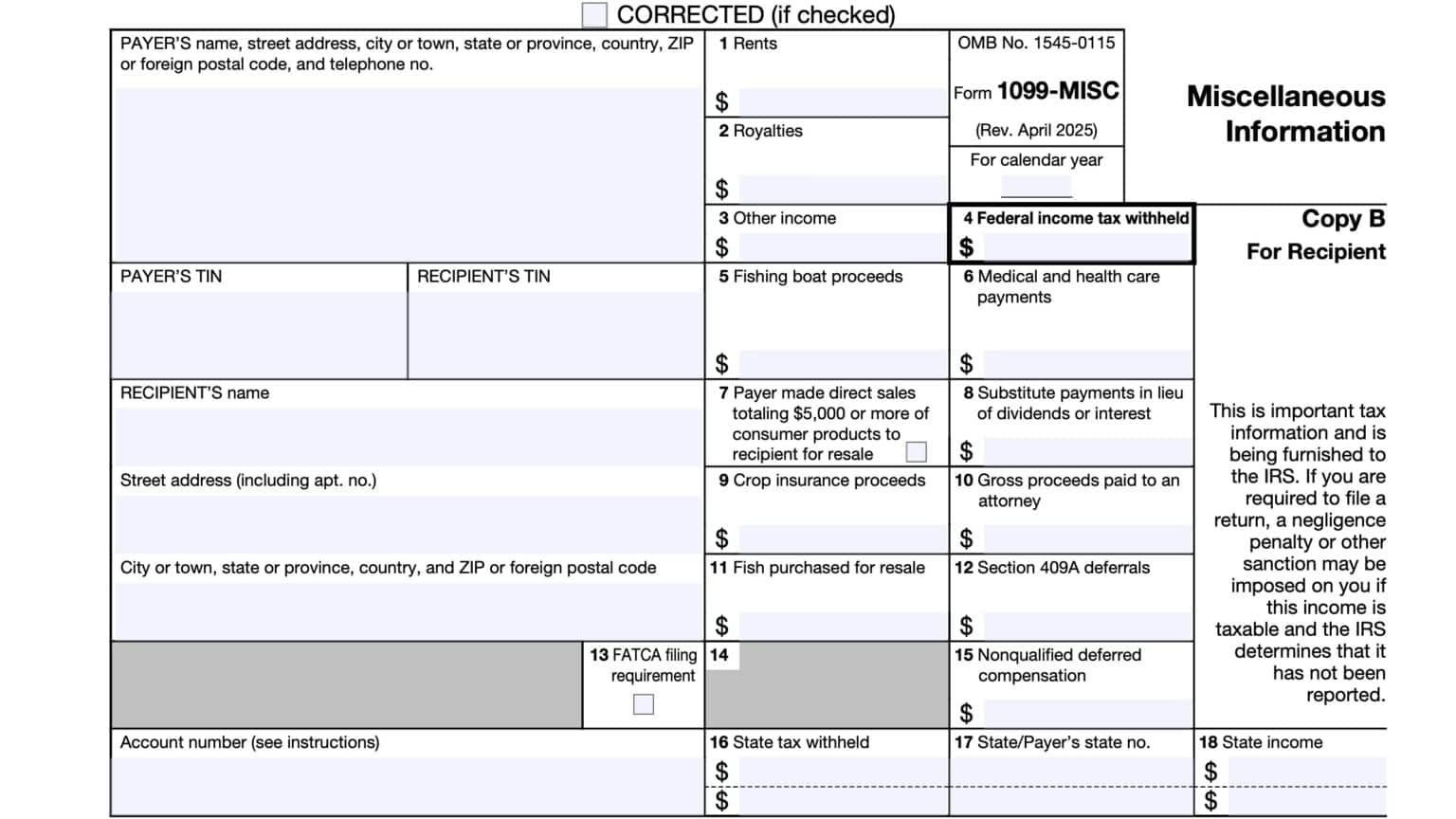
Examining the layout of Form 1099-R helps beneficiaries identify why the document was issued and how it impacts their tax return. The form features several numbered boxes that provide specific financial data:
| Box Number | Field Name | Description & Relevance for Beneficiaries |
|---|---|---|
| Box 1 | Gross Distribution | The total amount of money distributed from the insurance contract or annuity during the tax year before any tax withholdings. |
| Box 2a | Taxable Amount | The portion of the distribution that is subject to federal income tax. For pure death benefits, this may be zero or blank; for interest or gains, it reflects the taxable profit. |
| Box 4 | Federal Income Tax Withheld | The amount of federal tax the insurance company withheld from the payout and sent directly to the IRS on the beneficiary's behalf. |
| Box 7 | Distribution Code | A critical alphanumeric code (e.g., Code 4 for death) that tells the IRS the reason for the distribution and any special tax rules that apply. |
| Box 9a | Your Percentage of Total Distribution | If multiple beneficiaries share the policy, this box shows the recipient's specific share percentage. |
Key Distribution Codes in Box 7
Box 7 of Form 1099-R contains a numerical or letter code that explains the nature of the distribution. For beneficiaries dealing with life insurance and annuity contracts, certain codes appear frequently:
- Code 4: Indicates a death distribution. This is the standard code used when payouts are made to a beneficiary following the death of the insured individual. It alerts the IRS that the funds stem from a death claim, though taxability still depends on whether interest or cash value gains are present.
- Codes 1, 2, or 7: These codes typically apply to retirement plans (such as traditional IRAs or 401(k)s) or deferred annuities where distributions occur prior to or after age 59½. If a life insurance policy is bundled with a qualified retirement plan or acts as a modified endowment contract (MEC), these alternative codes may appear.
Tax Implications: What Is Taxable and What Is Exempt?
Navigating the tax code regarding insurance proceeds requires separating the return of principal from investment gains or interest earnings.
Tax-Free Portions
- Lump-Sum Death Benefits: Under IRC Section 101(a), life insurance proceeds paid out by reason of the insured's death are generally excluded from gross income. Beneficiaries do not report a standard lump-sum death benefit on their federal income tax return.
- Cost Basis in Surrendered Contracts: If a policy is surrendered, the portion of the payout equal to the total premiums paid represents the cost basis and is tax-free.
Taxable Portions
- Policy Interest: Any interest earned after the date of death while funds sit in a retained asset account must be reported as interest income.
- Cash Value Gains: Earnings exceeding the cost basis on surrendered permanent policies (whole life, universal life, variable life) are taxed as ordinary income, not capital gains.
- Annuity Accumulations: The earnings portion of an annuity payout is subject to ordinary income tax rates based on the beneficiary's tax bracket.
Step-by-Step Guide: What a Beneficiary Should Do After Receiving Form 1099-R
Receiving a tax form related to a deceased loved one can be stressful. Following a structured approach ensures compliance with tax laws without overpaying the IRS.
- Verify Personal Information: Confirm that your name, address, and Social Security Number (or Taxpayer Identification Number) match the details listed on the form. Errors should be reported immediately to the issuing insurance company so they can file a corrected Form 1099-R.
- Determine the Taxable Amount: Review Box 2a. If Box 2a is blank or zero, the distribution is generally non-taxable, but you may still need to report the gross distribution amount on your tax return depending on filing software requirements. If Box 2a shows a positive dollar amount, that specific figure must be included as taxable income.
- Gather Supporting Documentation: Collect the original life insurance policy contract, settlement statements from the insurance carrier, and letters or statements showing the breakdown between the base death benefit and any accumulated interest or retained asset earnings.
- Consult a Qualified Tax Professional: Because tax laws regarding insurance trusts, estate taxes, and sophisticated annuity riders are complex, consulting a Certified Public Accountant (CPA) or a tax attorney ensures proper filing and helps prevent costly auditing triggers.
Frequently Asked Questions
Do I have to pay income tax on a life insurance death benefit?
Generally, no. Under federal tax law, life insurance proceeds paid to a beneficiary due to the death of the insured are received income-tax-free. However, taxes may apply to any interest earned after the insured's death or if the policy was transferred to a third party for valuable consideration (the "transfer for value" rule).
Why did I receive a Form 1099-R if life insurance is tax-free?
You likely received a Form 1099-R because the payout included taxable elements, such as interest earned while funds were held in a retained asset account, gains from a surrendered permanent policy, or periodic payments from an annuity rider attached to the insurance contract.
How do I report Form 1099-R on my federal tax return?
Form 1099-R data is typically reported on IRS Form 1040 (lines related to pensions, annuities, and IRA distributions). Tax software guides users through entering Box 1, Box 2a, and Box 7 data automatically, ensuring the taxable portion is correctly integrated into your adjusted gross income.
What should I do if the information on the 1099-R is incorrect?
Contact the customer service or tax reporting department of the insurance company that issued the document immediately. Request a corrected Form 1099-R (often marked as a "Corrected" checkbox at the top of the form) before filing your tax return to avoid discrepancies with IRS matching systems.
Does a Form 1099-R mean I owe taxes immediately?
Not necessarily. Box 4 of the form shows whether federal income tax was already withheld by the insurance company. If sufficient withholding occurred, your tax liability for that distribution may already be covered, though you must still report the transaction on your tax return.
Next Actions for Beneficiaries
If you have received a Form 1099-R concerning a life insurance policy or beneficiary payout, your immediate next step is to examine Box 2a to determine if any taxable income was generated. Cross-reference the figures on the form with the final settlement statements provided by the insurance carrier. If the distribution involves complex structures like trusts, retained asset accounts, or significant annuity earnings, schedule a consultation with a licensed tax professional to ensure accurate reporting and compliance with current federal and state tax regulations.