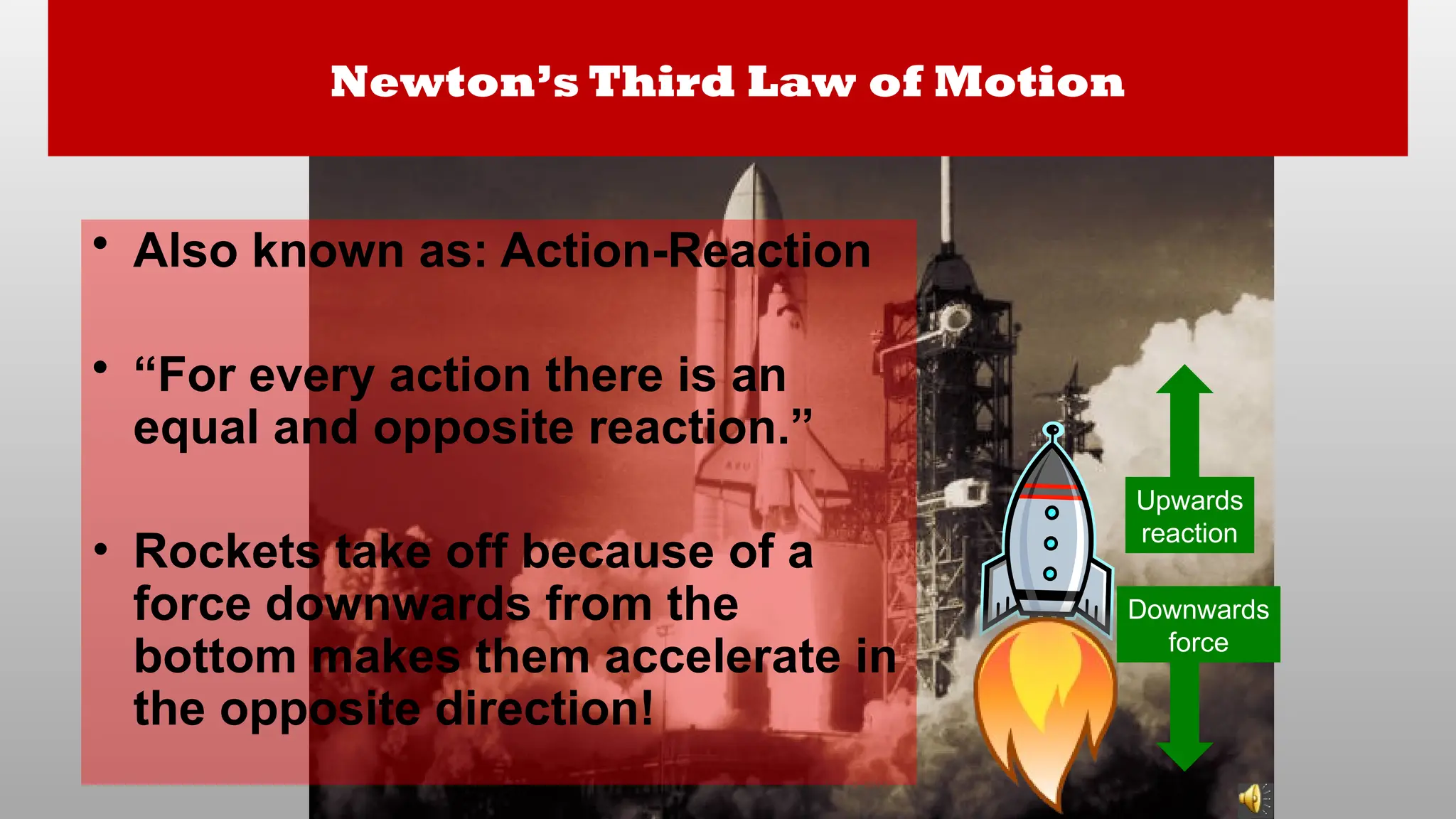
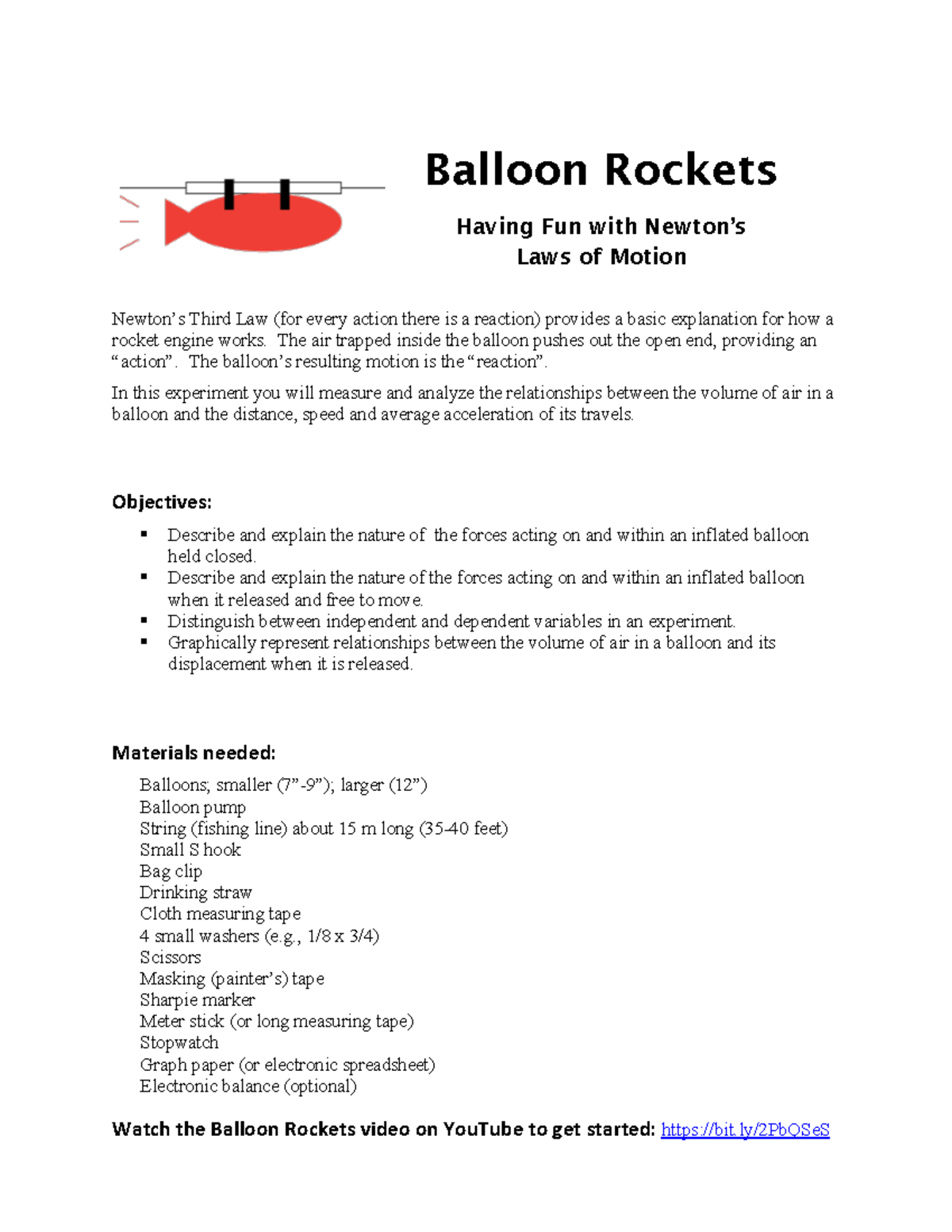
Newton’s Third Law of Motion states that for every action, there is an equal and opposite reaction. In rocketry, this principle is the fundamental mechanism of propulsion: by accelerating and expelling mass (exhaust gases) out of a nozzle at high velocity, the rocket generates a reactive force called thrust that pushes it in the opposite direction.
As we stand in 2026, the principles established by Sir Isaac Newton in 1687 remain the non-negotiable foundation of all aerospace engineering. Whether observing a small model rocket or the heavy-lift vehicles supporting the latest lunar base expansions, the physics of "action and reaction" governs every millimeter of ascent. This overview examines the mechanics, mathematical underpinnings, and practical applications of Newton’s Third Law in the context of modern rocketry.
Defining the Third Law in a Vacuum and Atmosphere
To understand a rocket’s journey, one must first master the formal definition of Newton’s Third Law. Originally published in Philosophiæ Naturalis Principia Mathematica, the law posits that whenever one body exerts a force on a second body, the second body simultaneously exerts a force of equal magnitude and opposite direction on the first body.
In the context of a rocket, the "two bodies" involved are the rocket vehicle itself and the propellant mass. It is a common misconception—one that persisted even in reputable publications well into the 20th century—that rockets require an atmosphere to "push against" to move. In reality, Newton’s Third Law functions most efficiently in a vacuum. A rocket does not move by pushing against the air; it moves by pushing against its own exhaust.
The Mechanics of Internal Pressure
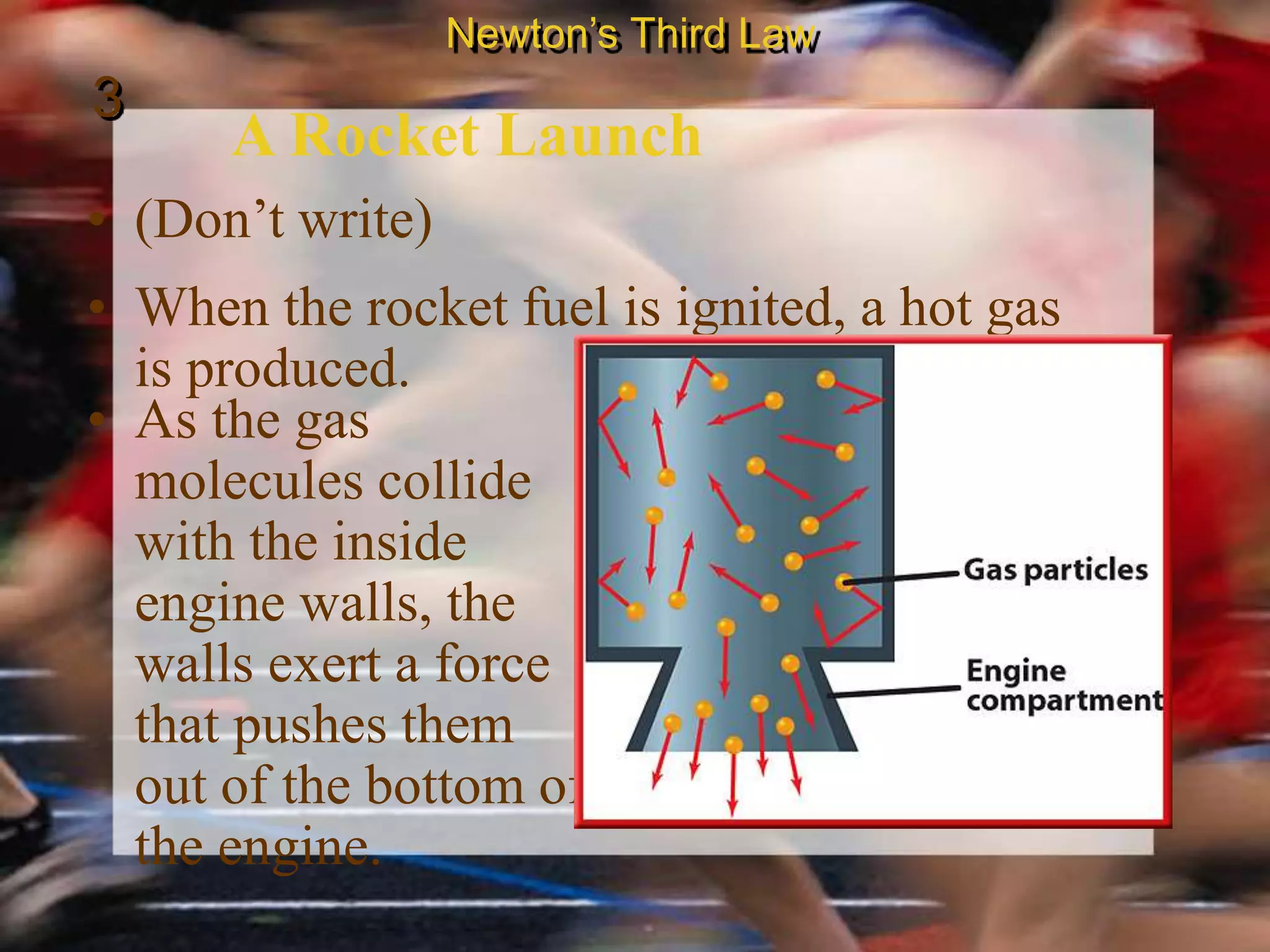
Inside the combustion chamber of a liquid-propellant or solid-fuel rocket, high-energy chemical reactions create rapidly expanding gases. These gases exert pressure in all directions. If the chamber were entirely sealed, the pressures would balance out, and the chamber would remain stationary (or explode if the pressure exceeded the material strength).
However, the rocket engine features an opening: the nozzle. Because gas escapes through this opening, the pressure on the wall directly opposite the nozzle is no longer balanced by pressure on the nozzle side. This pressure imbalance, combined with the momentum of the expelled gas, creates the "action" that results in the "reaction" of forward thrust.
The Action-Reaction Pair: Exhaust and Thrust
In rocketry, the "action" is the high-velocity expulsion of gas particles. The "reaction" is the thrust force applied to the vehicle. To maximize this reaction, engineers focus on two primary variables: the amount of mass being thrown out (mass flow rate) and how fast it is being thrown (exhaust velocity).
The Role of the De Laval Nozzle
To optimize Newton’s Third Law, modern rockets utilize a convergent-divergent nozzle, known as a De Laval nozzle. This component is designed to:
- Compress the gas: The convergent section narrows the flow, increasing pressure and speed until it reaches the "throat."
- Choke the flow: At the throat, the gas reaches Mach 1 (the speed of sound).
- Expand the gas: The divergent section allows the gas to expand, converting heat and pressure into kinetic energy. This accelerates the exhaust to supersonic speeds.
By increasing the velocity of the "action" (the exhaust), the "reaction" (thrust) is proportionally increased. This is why the shape of a rocket's nozzle is as critical as the fuel it burns; it is the physical tool used to manifest Newton’s Third Law with maximum efficiency.
Mathematical Integration: Momentum and Force
While the Third Law describes the existence of the force, Newton’s Second Law ($F = ma$) and the Law of Conservation of Momentum provide the means to calculate it. The momentum of a system is defined as the product of its mass and velocity ($p = mv$).
According to the principle of conservation of momentum, the total momentum of an isolated system remains constant. Before ignition, the rocket’s momentum is zero. Once the engine fires, the downward momentum of the exhaust must be perfectly balanced by the upward momentum of the rocket.
The Thrust Equation
The total thrust ($T$) generated by a rocket engine can be expressed by the following simplified equation:
$$T = \dot{m} V_e + (P_e - P_a)A_e$$
Where:
- $\dot{m}$ (m-dot): The mass flow rate (how much propellant is consumed per second).
- $V_e$: The effective exhaust velocity.
- $P_e$: The pressure of the exhaust at the nozzle exit.
- $P_a$: The ambient atmospheric pressure.
- $A_e$: The area of the nozzle exit.
The first part of the equation ($\dot{m} V_e$) represents the "momentum thrust," which is the direct result of Newton’s Third Law. The second part represents "pressure thrust." In a vacuum, where $P_a$ is zero, the rocket actually generates more thrust because there is no atmospheric pressure pushing back against the exhaust flow.
Comparative Dynamics of Action and Reaction
To visualize how Newton's Third Law scales from simple classroom demonstrations to orbital launches, consider the following comparisons:
| System | Action (The "Push") | Reaction (The Result) | Primary Efficiency Factor |
|---|---|---|---|
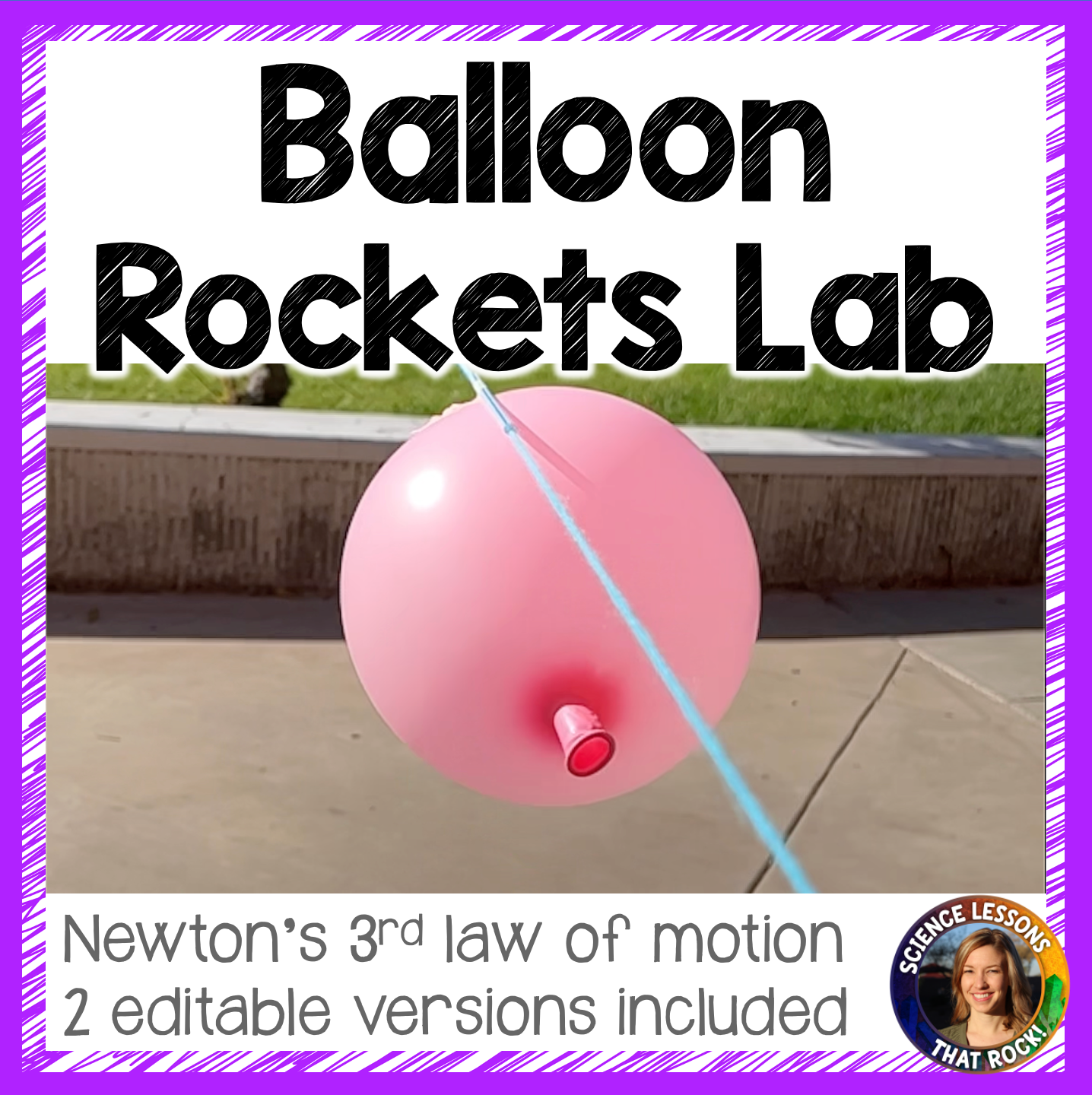
| Toy Balloon | Air escaping through the neck | Balloon flies forward | Neck diameter and air pressure |
| Cold Gas Thruster | Compressed nitrogen expelled via valve | Precise, small-scale maneuvering | Gas storage pressure |
| Solid Rocket Motor | Combustion of grain (powder/binder mix) | High-thrust, non-stop acceleration | Grain surface area |
| Liquid Rocket Engine | High-pressure combustion of LOX/RP-1 | Massive thrust for Earth departure | Nozzle expansion ratio |
| Ion Thruster | Accelerated xenon ions (extremely high velocity) | Low-thrust, long-duration propulsion | Electrical power and ion speed |
Overcoming Misconceptions: Why Rockets Work Better in Space
A persistent hurdle for students of physics is the "pushing against the air" myth. If we analyze the Third Law strictly, we see that the atmosphere is actually a hindrance, not a help.
- Atmospheric Resistance (Drag): Air molecules collide with the rocket, creating friction and slowing it down.
- Back Pressure: The atmosphere pushes against the exhaust as it exits the nozzle. This limits the expansion of the gases, reducing the effective exhaust velocity ($V_e$).
- Vacuum Efficiency: In a vacuum, there is no air to create drag and no ambient pressure to resist the exhaust. Consequently, the exhaust can expand more fully, reaching higher velocities and generating more thrust for the same amount of fuel.
This confirms that the "equal and opposite reaction" is entirely internal to the relationship between the rocket and its propellant. The environment through which the rocket travels is irrelevant to the generation of the force itself, though it significantly affects the vehicle's performance.
Prerequisites for Successful Propulsion
To harness Newton's Third Law effectively in 2026, a launch vehicle must meet several technical requirements:
- Propellant Mass Fraction: A rocket must be composed mostly of propellant. Since the "action" depends on throwing mass away, a rocket that is too heavy with structural weight won't achieve enough "reaction" to reach orbit.
- Specific Impulse ($I_{sp}$): This is a measure of how efficiently a rocket uses its propellant. It is essentially the "miles per gallon" of rocketry, derived directly from the exhaust velocity.
- Structural Integrity: The vehicle must be able to withstand the very forces it creates. The "reaction" force is transmitted through the engine mounts to the rest of the airframe, requiring immense structural strength.
Related Concepts: The Tsiolkovsky Rocket Equation
Newton's Third Law tells us that throwing mass out the back moves us forward, but it doesn't tell us how much total velocity change ($\Delta v$) we can get before we run out of fuel. For that, we look to the Tsiolkovsky Rocket Equation:
$$\Delta v = V_e \ln \left( \frac{m_0}{m_f} \right)$$
This formula shows that the change in velocity is determined by the exhaust velocity ($V_e$)—the "action"—and the natural log of the ratio between the initial mass ($m_0$) and the final mass ($m_f$). This highlights the brutal reality of the Third Law: to go faster, you must either throw the mass out faster or throw more mass away.
Common Mistakes in Understanding Rocketry Physics
- Confusing Force and Velocity: Many assume that if the exhaust moves at a certain speed, the rocket must move at that same speed in the opposite direction. This is only true if the mass of the exhaust and the rocket are equal. Since the rocket is much heavier than the exhaust it expels at any given moment, the rocket's velocity increase is much smaller than the exhaust's velocity.
- Ignoring the "System": People often forget that the "action" is not just the fire, but the mass of the gas particles. If you don't expel mass, you don't get a reaction. This is why "photon drives" (which expel light) provide so little thrust—light has no rest mass.
- Gravity Misinterpretation: Newton's Third Law works the same way regardless of gravity. Gravity is an external force that the rocket must overcome using thrust, but gravity does not change the fundamental action-reaction relationship between the rocket and its exhaust.
Frequently Asked Questions
Does Newton's Third Law apply to electric propulsion like Ion drives?
Yes. Even though Ion thrusters use electricity to accelerate ions rather than chemical combustion, they still function by expelling mass (ions) at incredibly high velocities. The "action" is the movement of the ions, and the "reaction" is the thrust. Because the ions move so fast, these engines are very efficient, even though they expel very little mass per second.
Why is the "action" in a rocket directed downward?
In most launch scenarios, the goal is to reach orbit or escape Earth's gravity, which requires moving upward. According to the Third Law, to get a reaction force (thrust) directed upward, the action (exhaust) must be directed in the exact opposite direction—downward.
Can a rocket work if it has no nozzle?
Technically, yes, but it would be extremely inefficient. Without a nozzle to direct the flow and convert the internal pressure into organized kinetic energy, the gas would escape in a disorganized "cloud." The nozzle ensures that the "action" is concentrated in a single direction, maximizing the "reaction" in the desired direction of travel.
Is the reaction force instantaneous?
Yes. Newton’s Third Law describes a simultaneous interaction. The moment the gas particles are accelerated by the internal pressure and the nozzle, the reaction force is applied to the engine. There is no "lag" between the action and the reaction.
How does the Third Law explain how a rocket turns in space?
To turn in space, a rocket uses small maneuverable thrusters (Reaction Control Systems or RCS). By firing a small amount of gas to the left, the rocket receives a reaction force to the right. By firing thrusters at the nose in one direction and the tail in another, the rocket can rotate (pitch, yaw, or roll) around its center of mass.
Practical Next Actions for Students and Engineers
Understanding Newton’s Third Law is the first step toward more advanced studies in fluid dynamics and orbital mechanics. To further your knowledge, consider the following:
- Study the NASA Glenn Research Center's educational resources: They offer interactive simulators that allow you to change mass flow rates and observe the resulting thrust.
- Experiment with Water Rockets: These provide a safe, visual way to see how the mass of the water (action) translates to the height of the flight (reaction).
- Review the History of the V2 and Saturn V: Analyzing these historical vehicles through the lens of Newton's laws provides context for how engineering has evolved to better harness these 300-year-old principles.
By 2026, our mastery of these principles has allowed for sustainable presence on the Moon and the first crewed missions to Mars. While the fuels and materials change, the fundamental physics remains as Sir Isaac Newton described it: a simple, elegant balance of forces that allows us to reach the stars.