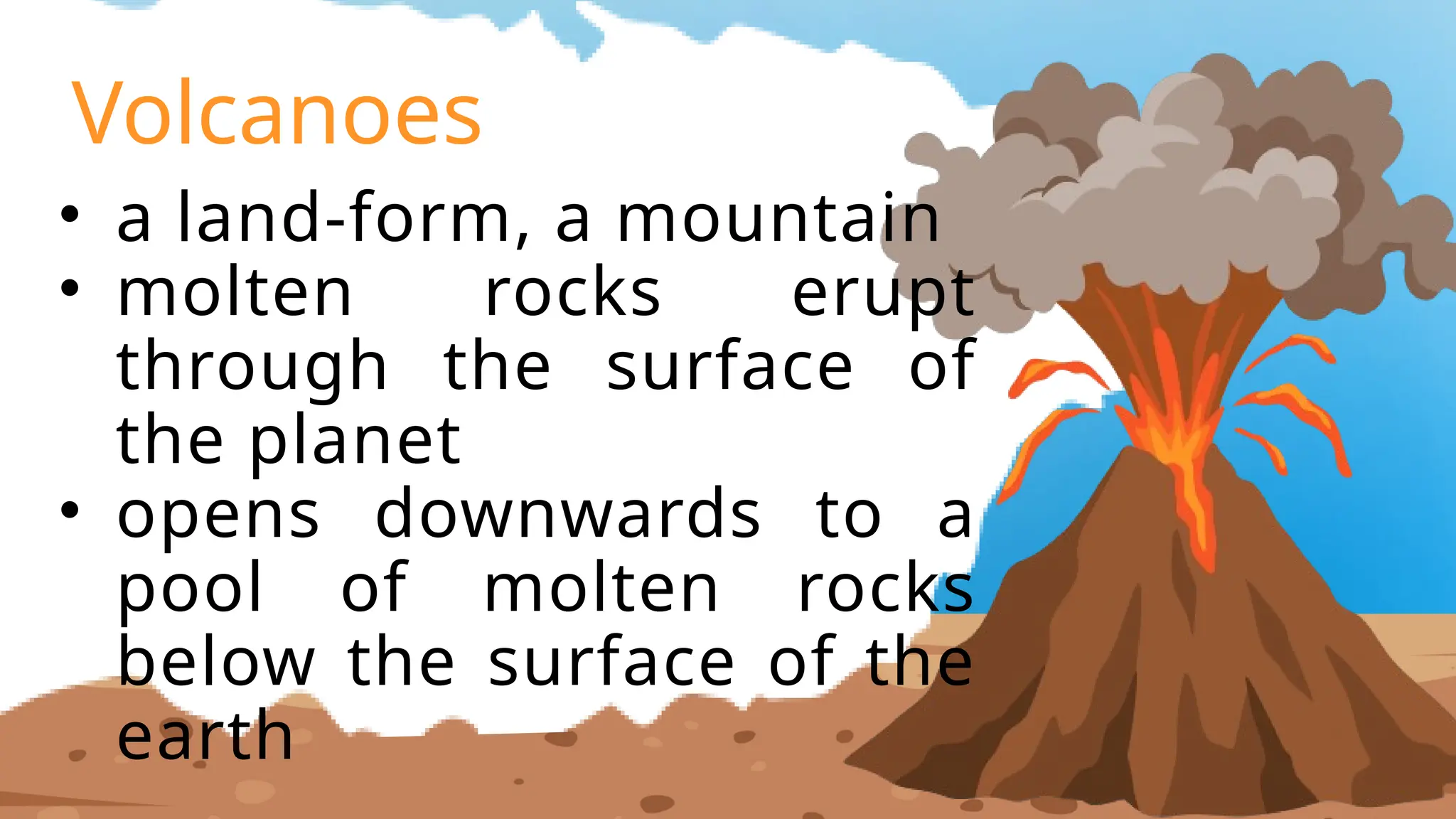
Lava types vary primarily based on their chemical composition—specifically their silica content—which dictates their viscosity, temperature, gas content, and eruption style. The most prominent example is basaltic lava, characterized by low silica content, high fluidity, and gentle, effusive flows that shape vast volcanic plains and shield volcanoes.
Volcanology is a branch of Earth science that seeks to understand not only the molten rock beneath our feet, but also the physical and chemical mechanics that govern how this material behaves when it breaches the Earth's crust. When discussing volcanic phenomena, a common point of confusion arises between magma and lava. Magma refers to molten rock stored beneath the surface of the Earth, whereas lava is the exact same substance once it has successfully extruded onto the surface through a volcanic vent or fissure. The characteristics of lava are not uniform; they vary dramatically depending on the tectonic setting, the depth of the magma chamber, fractional crystallization, and assimilation of crustal rocks.
Understanding these variations is vital for geologists, hazard mitigation teams, and anyone seeking to comprehend the dynamic nature of our planet. By examining the primary example of lava types—basaltic lava—alongside its compositional counterparts, we can unlock the fundamental principles of how planetary surfaces are shaped by volcanism.
The Fundamentals of Lava Rheology and Composition
To understand any specific type of lava, one must first examine the chemical and physical properties that control its movement. Rheology is the study of the flow of matter, primarily in a liquid state, but also as a ‘soft solid’ or solids under conditions in which they can respond with plastic flow rather than deforming elastically. In volcanology, rheology is dictated heavily by chemical composition, temperature, and the presence of suspended crystals and gas bubbles.
The single most important chemical component influencing lava behavior is silica ($\text{SiO}_2$). Silica tetrahedra can bond together in complex chains, sheets, and three-dimensional frameworks, a process known as polymerization. The higher the silica content, the more polymerized the melt becomes. This polymerization creates a thick, highly viscous fluid that resists flow and traps volcanic gases. Conversely, low silica content results in a depolymerized melt with isolated molecules, allowing the liquid to flow easily and release gases smoothly.
Temperature and Viscosity Relationships
Temperature plays an equally critical role in determining how lava flows. Higher temperatures increase the kinetic energy of the atoms within the melt, breaking down silica bonds and reducing viscosity. Basaltic lavas, which are extremely hot—often ranging between 1,000°C and 1,200°C—maintain high fluidity even with minimal volatile content. Rhyolitic lavas, by contrast, erupt at much lower temperatures (typically 650°C to 800°C), compounding the thickening effect of their high silica content.
As lava travels across the surface, it begins to cool. This cooling process increases viscosity and causes minerals to crystallize out of the melt, transforming a fluid liquid into a sluggish, pasty mass. The presence of these crystals (phenocrysts) and vesicles (trapped gas bubbles) further complicates the rheological behavior, often turning the lava into a non-Newtonian fluid whose resistance to flow changes depending on the applied stress.
Basaltic Lava: The Primary Example of Fluid Volcanism
When examining an archetypal example of lava types, volcanologists universally point to basaltic lava. Basalt is the most abundant volcanic rock type on Earth, making up the vast majority of the ocean floor and significant portions of continental volcanic provinces, such as the Columbia River Basalt Group and the Deccan Traps.
Basaltic lava is characterized by a low silica content, typically ranging between 45% and 52% by weight. Because of this low silica percentage, it is classified as a mafic rock, meaning it is rich in magnesium and iron (ferromagnesian minerals). These compositional traits result in distinct physical properties:
- High Temperature: Erupts at temperatures between 1,000°C and 1,200°C (1,832°F to 2,192°F).
- Low Viscosity: Flows easily and rapidly, often resembling thick syrup or motor oil rather than a sluggish solid.
- Low Volatile Content: Generally contains lower concentrations of dissolved gases ($\text{H}_2\text{O}$, $\text{CO}_2$, $\text{SO}_2$), leading to non-explosive, effusive eruptions.
- High Density: Yields dense, dark-colored rocks (basalt) upon cooling due to the abundance of minerals like olivine, pyroxene, and plagioclase feldspar.
Because basaltic lava is so fluid, it rarely piles up steeply around a vent. Instead, it spreads out over vast distances, forming broad, gently sloping structures known as shield volcanoes (such as Mauna Loa and Kīlauea in Hawaii) or extensive lava plateaus.
Surface Textures of Basaltic Lava: Pahoehoe and A'a
As basaltic lava flows and cools, it develops distinct surface textures that depend on the rate of cooling, shear stress, and gas loss. Volcanologists use terms derived from Hawaiian geology to classify these textures:
- Pahoehoe: This surface texture is smooth, billowy, or ropy. It forms when fluid basaltic lava has a low effective viscosity and a relatively steady flow rate. As the top surface of the flow cools and forms a thin, flexible skin, the moving lava underneath drags the skin into wrinkles, folds, and smooth, glassy ridges that resemble coiled ropes.
- A'a: This texture is rough, jagged, and spinose. It forms when cooler, more viscous basaltic lava moves more sluggishly. The semi-solid crust is broken into rough, angular blocks and clinkers by the shearing action of the molten interior below. Walking on an a'a flow is notoriously difficult and hazardous due to the sharp, glass-like edges of the fragmented rock.
Both pahoehoe and a'a can form from the exact same batch of molten basalt; a pahoehoe flow can transition into an a'a flow as it loses heat, cools, and encounters obstacles that increase its internal shear stress.
Comparing Basaltic Lava with Other Major Lava Types
To fully appreciate the characteristics of basaltic lava, it is helpful to place it within the broader framework of the classification scheme used in igneous petrology. Lavas are generally categorized based on their chemical composition and silica content into four primary groups: basaltic, andesitic, dacitic, and rhyolitic.
| Lava Type | Silica Content ($\text{SiO}_2$) | Eruption Temperature | Viscosity | Eruption Style | Primary Landforms |
|---|---|---|---|---|---|
| Basaltic | 45% – 52% | 1,000°C – 1,200°C | Very Low (Fluid) | Effusive (Gentle) | Shield volcanoes, fissure vents, basalt plateaus |
| Andesitic | 52% – 63% | 800°C – 1,000°C | Intermediate | Effusive to Explosive | Stratovolcanoes (composite cones) |
| Dacitic | 63% – 68% | 750°C – 900°C | High | Explosive | Lava domes, composite volcanoes |
| Rhyolitic | > 68% | 650°C – 800°C | Very High (Stiff) | Highly Explosive | Calderas, lava domes, pumice rings |
Andesitic and Dacitic Lavas: Intermediate Behavior
Andesitic lava, named after the Andes Mountains, features an intermediate silica content between 52% and 63%. It represents a middle ground in terms of temperature, viscosity, and explosive potential. Andesitic eruptions frequently build classic stratovolcanoes (composite cones) like Mount St. Helens or Mount Fuji, characterized by alternating layers of lava flows, tephra, pumice, and volcanic ash.
Dacitic lavas push the boundaries further toward high silica content (63% to 68%), resulting in thick, sluggish flows that often extrude as steep-sided lava domes or contribute to catastrophic pyroclastic activity when gas pressures fracture the cooling viscous mass.
Rhyolitic Lava: The Extreme Contrast
At the opposite end of the spectrum from basalt is rhyolitic lava. With a silica content exceeding 68%, rhyolite is highly polymerized and viscous. Because it traps large volumes of gases and resists flow, rhyolitic eruptions are frequently explosive, producing vast blankets of ash, pumice, and pyroclastic flows rather than flowing rivers of molten rock. When rhyolite does extrude non-explosively, it forms thick, steep mounds called lava domes, or obsidian flows where the lava cooled so rapidly that no crystals had time to form, resulting in volcanic glass.
Mechanisms of Emplacement and Volcanic Hazards
The physical characteristics of lava dictate the nature of the hazards it presents to human populations and infrastructure. While explosive eruptions generate life-threatening hazards like pyroclastic flows, lahars (volcanic mudflows), and airborne ash, effusive eruptions of fluid basaltic lava present a different set of challenges centered around inundation.
Lava Flow Dynamics and Infrastructure Inundation
Basaltic lava flows can travel at speeds ranging from a few meters per hour to tens of kilometers per hour on steep slopes. Although they rarely move fast enough to trap healthy adults, their massive thermal energy and unstoppable momentum make them destructive to property, agriculture, and infrastructure.
When a basaltic flow advances, its high temperature (often exceeding 1,000°C) ignites wood, asphalt, and vegetation instantly. Buildings are crushed, buried, or incinerated. Because basaltic lava forms channels and tubes beneath cooled crusts, it can travel significant distances from its source vent without losing substantial heat, insulating the molten core and allowing flows to reach populated coastal areas or valleys far from the summit craters.
Volcanic Gases and Secondary Hazards
Even during effusive eruptions dominated by basaltic lava, significant quantities of gas are released into the atmosphere. The primary volatile emitted is water vapor ($\text{H}_2\text{O}$), followed by carbon dioxide ($\text{CO}_2$), sulfur dioxide ($\text{SO}_2$), and trace amounts of hydrogen sulfide ($\text{HCl}$ and $\text{HF}$).
Sulfur dioxide reacts with atmospheric water vapor, oxygen, and sunlight to produce sulfuric acid aerosols and sulfate particles, creating a phenomenon known locally in places like Hawaii as VOG (volcanic smog). VOG poses chronic respiratory hazards to downwind populations, damages agricultural crops, and corrodes metal structures. Additionally, when hot basaltic lava enters the ocean, it reacts violently with seawater to produce Laze—a toxic steam plume composed of hydrochloric acid and fine glass particles.
Frequently Asked Questions About Lava Types
What is the most common type of lava on Earth?
Basaltic lava is by far the most common type of lava on Earth. It constitutes the primary composition of the oceanic crust, forms mid-ocean ridge systems, and creates extensive terrestrial shield volcanoes and flood basalt provinces.
Why do some lavas flow easily while others explode?
The primary driver of eruption style is silica content and gas solubility. Low-silica lavas (like basalt) have low viscosity, allowing dissolved gases to escape easily and resulting in gentle, flowing eruptions. High-silica lavas (like rhyolite) are extremely viscous, trapping gases until pressure builds to catastrophic, explosive levels.
Can basaltic lava turn into rhyolitic lava?
Through geological processes such as fractional crystallization—where minerals crystallize out of a melt sequentially, altering the remaining chemical composition—or the assimilation of continental crust, a mafic magma can evolve into a more felsic composition over long periods. However, a single active batch of lava does not spontaneously change its classification on the surface.
How hot is basaltic lava when it erupts?
Basaltic lava typically erupts at temperatures ranging from 1,000°C to 1,200°C (1,832°F to 2,192°F), making it the hottest commonly observed category of natural lava on the surface of the Earth.
What causes pahoehoe lava to turn into a'a?
As a pahoehoe flow moves away from its vent, it cools, loses heat to the air and ground, and experiences internal shearing forces. These changes increase its viscosity and break the smooth surface crust into jagged, blocky fragments, transforming the texture into a'a.
Practical Recommendations for Volcanic Hazard Awareness
For individuals living near active volcanic zones, particularly in regions characterized by basaltic shield volcanism like Hawaii or Iceland, understanding lava characteristics informs practical preparedness:
- Monitor Official Bulletins: Rely on real-time monitoring from authorized geological institutions (such as the United States Geological Survey's Hawaiian Volcano Observatory) for up-to-date tracking of flow paths, vent locations, and emission rates.
- Respect Evacuation Orders: Even slow-moving basaltic lava flows can trap residents if they cut off access roads or ignite surrounding brush and structures unexpectedly.
- Mitigate VOG and Air Quality Risks: Keep indoor air filtered and limit outdoor exertion during periods of high volcanic sulfur dioxide emissions.