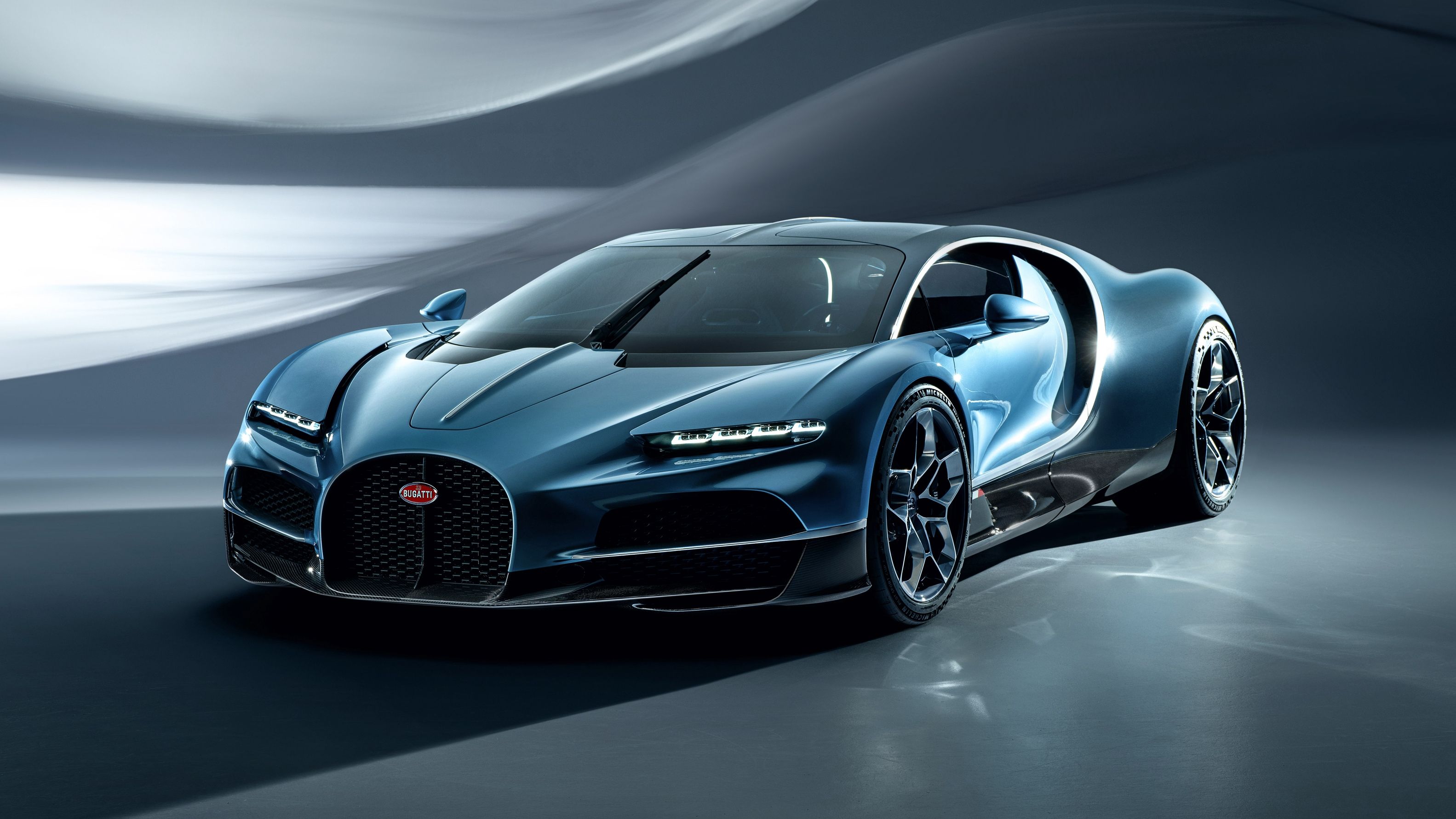
The Bugatti V16 engine represents a monumental shift in hypercar engineering, succeeding the iconic 8.0-liter W16 engine found in the Bugatti Chiron. While the Chiron utilized a quad-turbocharged W16 configuration, the new 8.3-liter V16 engine—introduced with the Bugatti Tourbillon—is a naturally aspirated masterpiece developed in collaboration with Cosworth. In 2026, this engine stands as the world’s most advanced internal combustion unit, delivering 1,000 horsepower on its own, which is further augmented by an 800-horsepower triple-electric motor system to produce a total of 1,800 horsepower.
The Shift from W16 to V16: A New Paradigm for Bugatti
For two decades, the W16 engine was the heart of Bugatti, powering the Veyron and the Chiron to world-record speeds. However, as the automotive landscape moved toward 2026, the requirements for emotion, mechanical purity, and weight management led Bugatti to move away from the "four-bank" W16 layout toward a "two-bank" V16.
The original Chiron W16 was essentially two VR8 engines joined at the crankshaft. It was compact in length but very wide, requiring four turbochargers to achieve its massive power output. The new V16, by contrast, is significantly longer—nearly one meter in length—but narrower. This change in geometry dictated a complete redesign of the vehicle's monocoque and gearbox placement. By choosing a V16, Bugatti opted for a higher-revving, more linear power delivery that emphasizes the mechanical "soul" of the car, moving away from the muffled, pressurized sound of the turbocharged W16 era.
Technical Specifications of the 8.3L V16 Engine
The V16 engine is a triumph of lightweight materials and precision machining. Developed alongside the legendary high-performance engineers at Cosworth, the engine was designed to be as light as possible despite its increased physical length.
Bore, Stroke, and Displacement
The engine features a total displacement of 8.3 liters. Unlike the Chiron's 8.0L engine, which relied on forced induction to fill its cylinders, the V16 uses atmospheric pressure. To achieve 1,000 horsepower without turbos, the engine utilizes an extremely high compression ratio and a high-flow cylinder head design. The bore and stroke are optimized for high-RPM stability, allowing the engine to reach a redline of 9,000 RPM—a figure previously unheard of for an engine of this scale.
Material Science and Weight Reduction
Despite having more cylinders and a larger displacement than the Chiron's engine, the V16 unit is remarkably light. The engine block and cylinder heads are cast from high-strength aluminum alloys, while the connecting rods and valves are crafted from titanium. This focus on mass reduction ensures that the engine does not negatively impact the car's center of gravity or overall agility. In 2026, the dry weight of the engine remains a benchmark for large-displacement powerplants, weighing significantly less than the outgoing W16 assembly when including the latter's four turbochargers and extensive intercooling plumbing.
The Firing Order and Crankshaft
One of the most complex aspects of a V16 is managing the secondary vibrations inherent in such a long crankshaft. Bugatti and Cosworth engineered a cross-plane crankshaft that ensures perfect balance and a smooth delivery of torque across the entire rev range. The firing order is specifically tuned to create a unique acoustic signature—one that transitions from a deep, mechanical growl at low RPMs to a piercing, high-pitched scream as it approaches the 9,000 RPM limit.
The Role of Natural Aspiration in a Turbocharged Legacy
The decision to omit turbochargers in the V16 is perhaps the most significant detail for enthusiasts. The Chiron’s W16 was defined by "infinite" torque, but it suffered from a slight delay (turbo lag) and a muffled exhaust note. By returning to natural aspiration, Bugatti has prioritized throttle response and auditory experience.
- Instantaneous Throttle Response: Without the need for exhaust gases to spool up turbine wheels, the V16 reacts to driver input within milliseconds. This creates a direct connection between the accelerator pedal and the rear wheels.
- Thermal Management: Turbocharged engines generate immense heat. By removing the turbos, Bugatti simplified the cooling requirements for the internal combustion element, allowing the radiators to be more efficiently packaged for both the engine and the hybrid battery system.
- Acoustic Purity: The V16 exhaust manifold is a work of art, designed to merge the pulses of 16 cylinders into a coherent, orchestral sound. In 2026, this is considered a "mechanical watch" equivalent in the automotive world—a tribute to analog excellence in a digital age.
The Hybrid Component: Integrating Electric Power
The V16 does not work alone. To exceed the performance of the Chiron Super Sport, Bugatti integrated a sophisticated 800-volt hybrid system. This system compensates for the lower low-end torque of a naturally aspirated engine compared to a turbocharged one.
- Front Axle Motors: Two electric motors drive the front wheels, providing independent torque vectoring. This allows the car to pull itself through corners with extreme precision, a massive upgrade over the Chiron's traditional all-wheel-drive system.
- Rear Motor: A third electric motor is integrated into the 8-speed dual-clutch transmission at the rear. This motor acts as a "torque filler," ensuring that there is never a dip in acceleration during gear shifts.
- The Battery: A 25 kWh oil-cooled battery is housed in the central tunnel. In 2026, this battery provides enough energy for an all-electric driving range of approximately 60 kilometers (37 miles), allowing the V16 to remain silent in urban environments before unleashing its full power on the open road.
Comparative Analysis: Chiron W16 vs. Tourbillon V16
To understand the magnitude of the V16's engineering, it is helpful to compare its specifications directly with the outgoing Chiron W16 engine.
| Feature | Bugatti Chiron (W16) | Bugatti Tourbillon (V16) |
|---|---|---|
| Engine Layout | 8.0L W16 Quad-Turbo | 8.3L V16 Naturally Aspirated |
| ICE Power Output | 1,500 - 1,600 hp | 1,000 hp |
| Electric Power | N/A | 800 hp (3 Motors) |
| Total System Power | 1,600 hp | 1,800 hp |
| Maximum RPM | 6,700 - 7,000 RPM | 9,000 RPM |
| Transmission | 7-Speed Dual-Clutch | 8-Speed Dual-Clutch |
| Torque Delivery | Turbo-dependent | Instant (Electric + ICE) |
| Engine Weight | Approx. 400 kg (Engine only) | Approx. 252 kg (Engine only) |
Engineering Challenges: Size, Cooling, and Vibration
Designing a V16 is a task most manufacturers avoid due to the physical dimensions and the "torsional vibration" of the crankshaft. A crankshaft for a V16 is incredibly long; if not designed correctly, it can twist like a rubber band under high load, leading to catastrophic engine failure.
Torsional Rigidity
Bugatti addressed the crankshaft length by using ultra-high-grade steel alloys and a series of sophisticated dampers. The engine block itself acts as a stressed member of the chassis, contributing to the overall rigidity of the car. This integration requires the engine to be incredibly stiff so that it doesn't flex under the massive G-forces generated during cornering.
Longitudinal Packaging
Because the V16 is roughly 25 centimeters longer than the W16, the engineering team had to rethink the entire layout of the car. In the Chiron, the gearbox was in front of the engine. In the V16-powered Tourbillon, the gearbox is mounted behind the engine to save space and improve weight distribution. This shift allowed the designers to keep the wheelbase relatively compact, maintaining the car's maneuverability.
Cooling 16 Cylinders
Cooling a 1,000-hp naturally aspirated engine requires massive airflow. The V16 utilizes a "split-cooling" system. One circuit manages the engine block and heads at high temperatures for combustion efficiency, while a second, lower-temperature circuit handles the intake air and the hybrid system's power electronics. By 2026, the aerodynamics of the Bugatti have been perfected to "wash" the radiators with high-velocity air without increasing drag excessively.
Performance Metrics and Top Speed in 2026
The synergy between the V16 and the electric motors results in performance figures that surpass the Chiron in every metric. As of 2026, the following performance data has been verified:
- 0-100 km/h (0-62 mph): Less than 2.0 seconds.
- 0-200 km/h (0-124 mph): Less than 5.0 seconds.
- 0-300 km/h (0-186 mph): Less than 10.0 seconds.
- Top Speed: Electronically limited to 380 km/h for standard driving, but capable of 445 km/h (276 mph) with the "Speed Key" engaged.
The electric motors provide the "punch" off the line, while the V16 engine provides the "legs" for high-speed runs. Because the V16 is naturally aspirated, it does not suffer from the power drop-off sometimes associated with turbochargers at extremely high exhaust temperatures, allowing for sustained high-speed cruising.
Maintenance and Longevity of the V16 System
Owning a V16-powered Bugatti in 2026 comes with specific maintenance requirements. While the removal of turbochargers reduces the number of components that can fail under high pressure, the hybrid system and the high-revving nature of the engine require specialized care.
- Valve Adjustments: Given the 9,000 RPM redline, the valvetrain is under immense stress. Regular inspections of the titanium valves and finger followers are necessary to ensure timing remains perfect.
- Hybrid Battery Health: The 25 kWh battery is designed for high-discharge cycles. Bugatti’s 2026 service guidelines include proprietary diagnostic checks to monitor cell degradation and cooling efficiency.
- Fluids and Lubrication: The V16 uses a dry-sump lubrication system with high-performance synthetic oils specifically formulated to withstand the shear forces of a 9,000 RPM engine. Oil changes are more frequent than in a standard luxury vehicle, typically occurring once a year or every 5,000 kilometers.
FAQs about Bugatti V16 Engine Details
Is the Bugatti V16 engine just two V8s joined together?
No, the Bugatti V16 is a bespoke, clean-sheet design. While it shares the "V" configuration of a standard V8, the block, crankshaft, and cylinder heads are specifically engineered as a single, integrated unit. This was necessary to achieve the required structural rigidity and to manage the unique harmonic vibrations of a 16-cylinder engine.
Why did Bugatti move away from the W16 engine?
The move was driven by a desire for a more emotional driving experience. The W16 was a masterpiece of power, but the V16 offers a higher redline, a better sound profile, and a slimmer profile that allows for better aerodynamics. Additionally, the transition to a hybrid-ready V16 allows Bugatti to meet modern emissions standards while actually increasing total power output.
How does the V16 engine sound compared to the Chiron?
The Chiron's W16 had a low, thundering bass tone dominated by the "whoosh" of four turbochargers. The V16 is much more melodic and higher-pitched. Enthusiasts often compare it to the Formula 1 engines of the 1990s, characterized by a mechanical "scream" as it nears its 9,000 RPM redline.
Does the V16 engine require more cooling than the W16?
Actually, the naturally aspirated V16 produces less "waste heat" than the quad-turbocharged W16 for every unit of horsepower produced. However, the addition of the hybrid battery and high-output electric motors means the car overall has more components that require thermal management. The cooling system is more complex but more efficient than the system found in the Chiron.
Can the car run on the electric motors if the V16 engine fails?
Yes, the hybrid system is designed to allow for "limp-home" or pure EV driving. The two front motors and the rear motor can propel the car up to 140 km/h without the V16 engine ever turning over, provided the 25 kWh battery has sufficient charge.
Practical Recommendation for Enthusiasts and Buyers
For those looking to understand or acquire a vehicle featuring this V16 powertrain in 2026, it is essential to recognize that this engine represents the "end of an era." It is likely the last great large-displacement naturally aspirated engine ever to be produced.
If you are a collector, prioritize models with documented service histories regarding the hybrid battery's health and the valvetrain's maintenance. For technical enthusiasts, focusing on the collaboration between Bugatti and Cosworth provides the best insight into how this engine achieved its 1,000-hp atmospheric benchmark. The V16 is not just a motor; it is a piece of kinetic art that balances 20th-century mechanical ambition with 21st-century electrical efficiency.