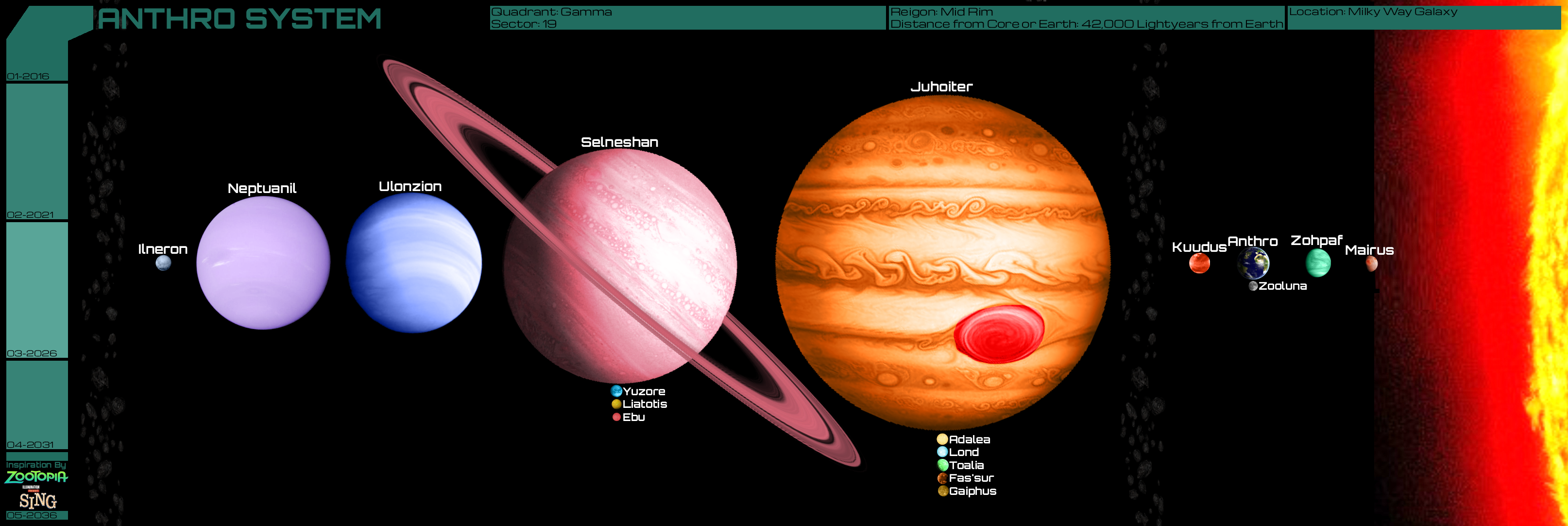
Despite both franchises featuring anthropomorphic animals living in bustling metropolises, Sing and Zootopia are not in the same universe. They are produced by different, competing animation studios—Illumination (Universal Pictures) and Walt Disney Animation Studios—and operate under entirely different world-building rules, biological scales, and cultural histories.
The confusion between these two cinematic worlds often stems from their shared aesthetic: bipedal animals wearing clothes, using smartphones, and navigating urban environments. However, once you look beneath the surface of the fur and catchy soundtracks, it becomes clear that these two worlds are fundamentally incompatible. As of 2026, both franchises have expanded through sequels and spin-offs, further solidifying their distinct identities within the animation landscape.
The Studio Divide: Disney vs. Illumination
To understand why a crossover is legally and creatively impossible, one must first look at the corporate entities behind the films. Zootopia (2016) is a flagship property of Walt Disney Animation Studios. It was directed by Byron Howard and Rich Moore, and it represents Disney’s deep dive into social allegory and high-concept world-building.
On the other hand, Sing (2016) and its sequel Sing 2 (2021) are products of Illumination, a subsidiary of Universal Pictures. Illumination is the same studio responsible for the Despicable Me and Minions franchises. In the film industry, Disney and Universal are major competitors. Much like Marvel and DC, or Coca-Cola and Pepsi, these studios maintain strict control over their intellectual property. A shared universe would require a historic licensing agreement that has no precedent in modern 3D animation.
Creative Leadership and Vision
The creative DNA of the two franchises is also distinct. Zootopia was built as a "talking animal movie for adults," focusing on complex themes like systemic prejudice and bureaucratic inefficiency. The directors spent years researching animal biology and sociology to create a world that felt "real."
Sing, directed by Garth Jennings, focuses more on the "jukebox musical" format. Its primary goal is entertainment through familiar music and character-driven comedy. While Zootopia asks "How would a giraffe use a subway?", Sing asks "What song would a teenage gorilla sing to impress his father?" These different creative priorities result in worlds that feel different to the viewer, even if the characters look somewhat similar.
World-Building: The "Human" Factor
One of the most significant differences between the two universes is the history of their respective worlds. In the world of Zootopia, the filmmakers have explicitly stated that humans never existed. The animals evolved over thousands of years from "primitive" states to "civilized" ones. The architecture, the technology, and the social structures were designed by animals, for animals. For example, the city of Zootopia features climate-controlled districts like Sahara Square and Tundratown to accommodate different species' biological needs.
In contrast, the world of Sing feels like a human world that simply happens to be inhabited by animals. The city of Calatonia (the setting of the first film) and Redshore City (the setting of the second) are essentially replicas of Los Angeles and Las Vegas. The buildings are standard human-proportioned skyscrapers, and the technology—microphones, stage rigging, and cars—is identical to what we use. While Sing doesn't explicitly mention humans, its world is a mirror of our own, whereas Zootopia is a complete reimagining of what a world would look like if humans were absent from the evolutionary chain.
Biological Scaling and Realism
A hallmark of Zootopia is its commitment to biological scale. In the Disney film, an elephant is realistically massive compared to a fennec fox or a shrew. This scaling created immense challenges for the animators, but it added a layer of grounded reality to the world. A mouse in Zootopia lives in "Little Rodentia," a miniature city-within-a-city, because it would be physically dangerous for them to walk on the same sidewalk as a rhino.
The Sing universe takes a much more "cartoony" approach to scaling. While there are size differences—Meena the elephant is obviously larger than Buster Moon the koala—the differences are often minimized to allow characters to interact more easily on a theater stage. In Sing, animals of vastly different sizes share the same spaces, sit in the same chairs, and use the same equipment without the complex infrastructural adjustments seen in Zootopia. This lack of strict biological scaling is a tell-tale sign that Sing is prioritizing comedic staging over the rigorous world-building found in the Disney counterpart.
The Role of Music and Pop Culture
The way these two universes handle culture is perhaps the easiest way to tell them apart. Sing is a jukebox musical. Its entire premise relies on the audience recognizing real-world pop songs by artists like Taylor Swift, Elton John, and Billie Eilish. By using these songs, Sing anchors itself to our real-world culture. The characters in Sing are essentially "playing" us; they share our musical history and our celebrities.
Zootopia treats music very differently. While it features a massive pop star, Gazelle (voiced by Shakira), she is an original character within that world. Her hit song, "Try Everything," was written specifically for the film. There are no references to the Beatles or Frank Sinatra in Zootopia because those people never existed in that timeline. The cultural artifacts of Zootopia are entirely self-contained, which reinforces the idea that it is a truly separate reality.
| Feature | Zootopia (Disney) | Sing (Illumination) |
|---|---|---|
| Parent Company | The Walt Disney Company | NBCUniversal |
| Humans | Never existed in this timeline | Absent, but world is built for humans |
| City Design | Specific climate-controlled districts | Based on real-world cities (LA/Vegas) |
| Music Strategy | Original songs and in-universe stars | Popular licensed hits (Jukebox musical) |
| Species Scale | Strictly realistic (Elephant vs. Shrew) | Stylized for staging and comedy |
| Central Themes | Prejudice, social bias, law enforcement | Following dreams, performance, family |
| Latest Entry | Zootopia 2 (Expected Nov 2025/Early 2026) | Sing 2 (2021) / Sing 3 in development |
Why Fans Think They Are Connected
If the differences are so stark, why do so many viewers ask if they are in the same universe? The answer lies in the "Anthropomorphic Era" of the mid-2010s. Both films were released in 2016, a year when computer animation reached a point where rendering realistic fur and textures became standard.
Furthermore, both films utilize similar tropes:
- The Underdog Story: Both Judy Hopps (Zootopia) and Buster Moon (Sing) are small animals trying to make it in a world that doubts their abilities.
- The Big City Dream: Both protagonists move to or live in a massive, bright-lights metropolis to achieve their goals.
- Easter Eggs: Both Disney and Illumination are famous for hiding references to their other films. Fans often mistake a "generic" animal cameo in one film as a specific character from the other. For example, a pig in the background of a Disney movie might be mistaken for Gunter from Sing, simply because the art styles of modern 3D animation have begun to converge.
The Status of the Franchises in 2026
As of 2026, the gap between these two franchises has only widened. Disney has doubled down on the "Zootopia" brand with the opening of "Zootopia: Better Together" land at Shanghai Disneyland and the release of Zootopia 2. The sequel has expanded the lore to include new biomes and semi-aquatic animals, further detailing the unique evolutionary path of that world.
Illumination, meanwhile, has continued to develop Sing as a premier musical franchise. Following the massive success of Sing 2 on streaming platforms, development on Sing 3 has focused on expanding the musical repertoire and the cast of celebrity voices. While Zootopia moves toward becoming a complex socio-political epic, Sing remains a joyous, music-first celebration of talent.
Technical Animation Differences
From a technical standpoint, the way the fur is rendered and how light interacts with the characters differs between the two studios. Disney uses a proprietary engine called Hyperion, which excels at complex light bounces and "global illumination," giving Zootopia a soft, cinematic, and slightly more realistic glow.
Illumination uses its own specialized pipeline that prioritizes vibrant, saturated colors and snappy, "squash-and-stretch" animation. If you were to place Buster Moon next to Nick Wilde, the difference in texture density and facial rigging would be immediately apparent to a trained eye. Nick Wilde’s movements are based on fox-like skeletal structures adapted to two legs, whereas Buster Moon’s movements are purely "cartoon" in nature.
FAQ: Common Questions About Sing and Zootopia
Is there any official crossover planned?
No. There are no plans for a crossover between Sing and Zootopia. Because the characters are owned by competing corporations (Disney and Universal), a crossover is legally improbable. Furthermore, the creative directions of the two franchises are too different to merge effectively without breaking the internal logic of Zootopia.
Are the "Secret Life of Pets" and "Sing" in the same universe?
This is much more likely. Both are produced by Illumination. While there hasn't been a definitive "Avengers-style" crossover, there are several Easter eggs in Sing that reference The Secret Life of Pets. For example, characters from The Secret Life of Pets have appeared on posters and in background cameos within Sing. Since they share a studio and a similar "real world with animals" logic, they could theoretically exist in the same universe.
Does Zootopia have any humans?
The creators of Zootopia, including Byron Howard and Rich Moore, have explicitly confirmed that humans do not and have never existed in the Zootopia universe. The animals evolved to fill the ecological and social niches that humans occupy in our world.
Why does the animation look so similar?
Modern 3D animation often looks similar because many studios use similar software (like Autodesk Maya or Pixologic ZBrush) and hire from the same pool of talented artists. However, if you look at the "character silhouettes" and the way shadows fall on the fur, the unique "house styles" of Disney and Illumination become more apparent.
Will there be a Zootopia 3 or Sing 3?
As of 2026, Sing 3 is in active development at Illumination following the strong performance of the first two films and the "Sing Thriller" short. Zootopia 2 is the current focus for Disney, but given the massive popularity of the franchise and its presence in theme parks, a third Zootopia film is highly probable in the future.
Final Verdict: Two Different Worlds
While it is fun to imagine Buster Moon trying to put on a show in the heart of Zootopia, the two franchises are destined to remain separate. Zootopia is a meticulously crafted alternate evolution story, while Sing is a vibrant, music-filled reflection of our own modern culture.
If you are looking for more content in these worlds, your best path is to follow the specific studio releases. For more of the grounded, detective-style storytelling of Zootopia, look toward Disney+ for shorts and the theatrical sequels. For the high-energy musical performances of Sing, keep an eye on Illumination’s upcoming slate and their collaborations with major music labels.