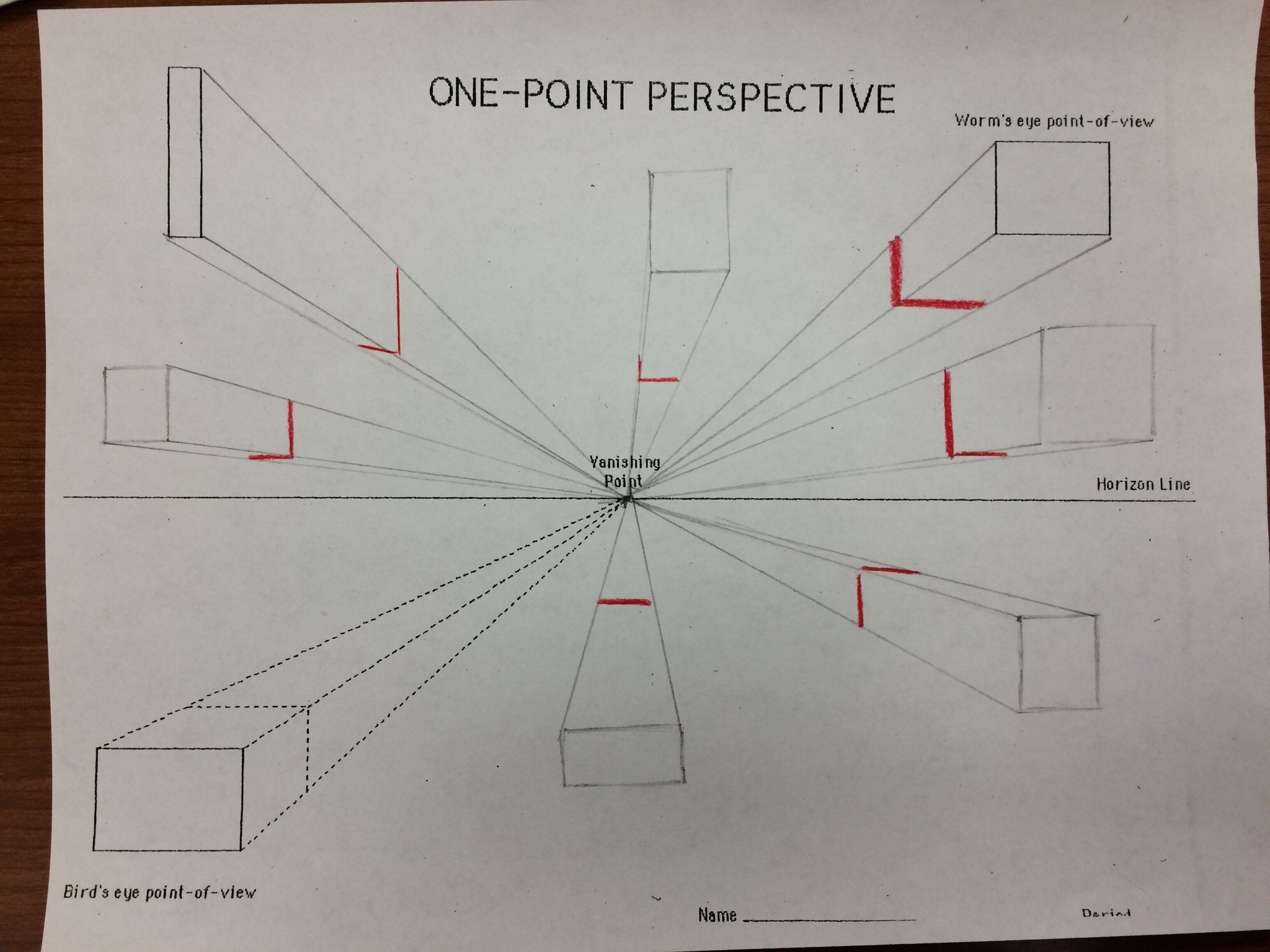
A bird’s eye view is an elevated perspective of an object or area from directly above, providing a comprehensive overview that prioritizes the "big picture" over granular details. In 2026, this concept is applied literally in drone photography and cartography, and metaphorically in business leadership to describe high-level strategic summaries and long-term planning frameworks.
The term "bird’s eye view" has transitioned from a descriptive phrase used by early 16th-century cartographers to a vital technical and cognitive tool used across various industries. Whether you are a project manager looking for a strategic overview or a photographer capturing a landscape, understanding the nuances of this perspective is essential for effective communication and analysis.
Defining the Bird’s Eye View in a Modern Context
At its core, a bird’s eye view—often referred to in technical fields as a nadir view or plan view—is a top-down perspective. Historically, this required the observer to be physically elevated, such as on a mountain or a tall building. Today, technology has democratized this vantage point, allowing anyone with a smartphone or a drone to access perspectives that were once reserved for aviators.
The Geometry of Perspective
Technically, a true bird's eye view is an orthographic projection where the camera or eye is positioned at a 90-degree angle relative to the ground. This eliminates the "keystone effect" or perspective distortion found in oblique views (angled shots). By looking straight down, the viewer can see the spatial relationship between objects with mathematical precision. This is why the perspective is the standard for blueprints, floor plans, and digital maps.
Literal vs. Metaphorical Application
It is important to distinguish between the physical act of looking down and the cognitive act of "zooming out."
- Literal: A drone capturing a 90-degree vertical shot of a shipping terminal to analyze container placement.
- Metaphorical: A CEO reviewing a 2026 annual report to identify market trends without getting bogged down in individual department expense reports.
Both applications share the same goal: to gain clarity by removing immediate obstacles and focusing on the relationship between larger components.
Literal Examples: Aerial Photography and Mapping
In the physical world, a bird's eye view example is most easily recognized in visual media. As of 2026, aerial imaging has become the backbone of various logistical and creative sectors.
Architecture and Site Planning
Before a single brick is laid, architects use bird's eye perspectives to understand how a building will interact with its environment. This is not just about aesthetics; it is about utility. A top-down view allows planners to calculate solar exposure, drainage patterns, and traffic flow. For instance, in the development of "Smart Districts," planners use 1:1 scale top-down digital twins to simulate how pedestrian movement interacts with autonomous transit lanes.
Precision Agriculture
One of the most impactful literal examples of bird's eye views is found in modern farming. Farmers utilize multispectral cameras mounted on drones to look straight down at hundreds of acres of crops. From this height, they can see patterns of irrigation failure or pest infestation that are invisible from the ground. The "big picture" here literally saves thousands of dollars by allowing for targeted intervention rather than blanket pesticide application.
The Role of Drone Technology in 2026
The Federal Aviation Administration (FAA) has standardized the use of Remote ID and automated flight paths, making it easier for professionals to capture consistent bird's eye data. Modern drones can now lock their gimbals to a perfect -90 degree pitch, ensuring that every frame of a survey is a true planimetric representation of the earth below.
Metaphorical Examples: Strategic Management and "Big Picture" Thinking
In a professional or academic setting, "taking a bird's eye view" is a mental exercise. It requires a person to detach from the immediate, daily tasks—often called the "weeds"—to look at the overarching trajectory of a project.
The Executive Summary
A classic example of a metaphorical bird’s eye view is the Executive Summary of a business proposal. While the full document may be 100 pages of technical data, the summary provides a 2-page overview of the goals, costs, and expected outcomes. The reader does not need to know the specific SKU of every computer being purchased; they need to see if the overall investment aligns with the company’s 2026 growth targets.
Project Management Roadmaps
In Agile or Waterfall project management, the bird's eye view is the Roadmap. While a "Worm’s Eye View" focuses on individual tasks, tickets, or lines of code, the Roadmap shows the timeline of major milestones.
- Worm’s Eye: "Fixing the login bug in the beta environment."
- Bird’s Eye: "Completing the User Authentication Phase by Q3."
The Psychological Aspect: Construal Level Theory
Psychologically, shifting to a bird’s eye view is supported by Construal Level Theory (CLT). This theory suggests that the "psychological distance" we put between ourselves and a problem affects how we think about it. When we take a distant, high-level view (the bird's eye), we tend to think more abstractly and creatively. This is why "stepping back" from a problem often leads to a breakthrough that was impossible to see while focused on minute details.
Technical Comparison: Bird’s Eye vs. Other Perspectives
To fully understand the bird's eye view, it is helpful to compare it with other common vantage points used in design and analysis.
| Perspective Type | Angle of View | Primary Use Case | Key Benefit |
|---|---|---|---|
| Bird's Eye (Nadir) | 90° (Straight Down) | Mapping, Blueprints, Site Surveys | Accurate spatial measurements and layouts. |
| High Oblique | 45° - 60° | Real Estate, Scenic Photography | Shows both the top and sides of objects; feels more "natural." |
| Eye Level | 0° (Horizontal) | Virtual Tours, Street View | Represents the human experience and scale. |
| Worm's Eye | 90° (Straight Up) | Architecture Photography, Structural Inspections | Emphasizes height, power, or detail on the underside. |
| Isometric | 30° (Technical) | Video Games, Technical Manuals | Maintains scale across all axes without perspective distortion. |
How to Create an Effective Bird's Eye Overview
Whether you are designing a graphic or writing a report, creating an effective bird's eye example requires specific steps to ensure the "zoom out" doesn't lead to a loss of meaning.
1. Define the Boundaries
A bird's eye view is only useful if the viewer knows what they are looking at. If you zoom out too far, you lose the subject entirely. In a business report, this means defining the scope (e.g., "This overview covers the North American sector for the 2026 fiscal year"). In photography, it means ensuring your frame includes enough context to identify the location.
2. Remove "Visual Noise"
The primary benefit of this perspective is clarity. If your top-down map is cluttered with every single utility line, it ceases to be a bird's eye view and becomes a chaotic data dump. Effective bird's eye examples use abstraction. In a project roadmap, use color-coding to represent departments rather than listing every staff member's name.
3. Maintain Scale and Proportion
In literal bird's eye views, maintaining a consistent scale is vital. For photographers, this involves using a lens with minimal distortion (usually a "flat" or "rectilinear" lens). For managers, it means ensuring that the importance of various project segments is reflected in the space they occupy in the summary.
4. Provide "Anchors"
Even from a high altitude, the viewer needs points of reference. In a literal map, this might be a North arrow or a scale bar. In a metaphorical summary, this is often a set of Key Performance Indicators (KPIs) that serve as the "landmarks" the reader can use to navigate the broader data.
Common Challenges and Limitations
Despite its utility, the bird's eye view is not a perfect solution for every situation. There are specific pitfalls to avoid.
The "Disconnected" Trap
The biggest danger of the bird's eye view—especially in leadership—is becoming too disconnected from reality. This is often referred to as "Ivory Tower" management. If a leader only ever looks at the high-level data, they may miss the underlying systemic issues that are only visible from the "ground floor." For example, a bird's eye view of a factory might show that production is high, but it won't show that the workers are being overworked to the point of a safety crisis.
Loss of Texture and Depth
In photography and design, a 90-degree top-down view can sometimes feel "flat." Because you lose the ability to see the height of objects (the Z-axis), it can be difficult to interpret the three-dimensional nature of a space. This is why many "bird's eye" illustrations in textbooks are actually oblique views, as they provide a better sense of volume.
Technical Limitations in 2026
While drone technology is advanced, capturing a true nadir view over large distances still faces challenges such as atmospheric haze and the need for complex "orthomosaic" stitching. Software like Esri’s ArcGIS is used to stitch thousands of individual bird's eye photos into a single, seamless map, but the process requires significant computational power and careful overlap of images.
Frequently Asked Questions
What is the difference between an aerial view and a bird's eye view?
An aerial view is a broad term for any image taken from an elevated position (airplane, drone, or satellite). A bird's eye view is a specific type of aerial view that is taken from directly above the subject. While all bird's eye views are aerial views, not all aerial views (such as those taken at a side angle) are bird's eye views.
Why is it called a "bird's eye" view?
The term originates from the idea of how a bird, such as a hawk or an eagle, would perceive the world while circling high in the sky. The first documented use of the phrase in English dates back to the early 17th century, where it was used to describe the "plan-like" drawings of cities that were becoming popular during the Renaissance.
Can a bird's eye view be used in literature?
Yes. In literature, a "bird's eye view" refers to an omniscient narrator. This is a narrator who knows everything about the world, the characters, and the plot, and can look down upon the events from a detached, all-knowing perspective. This allows the author to explain the interconnectedness of different plot points that the characters themselves cannot see.
Is a satellite view the same as a bird's eye view?
Essentially, yes. Satellite imagery provided by services like Google Earth or the USGS Landsat program is a literal bird's eye view. However, because satellites are so far away, these views are always orthographic (flat) and lack the perspective distortion that a lower-altitude drone or plane might produce.
How do I use a bird's eye view in a presentation?
To use this concept effectively in a presentation, start with a "Bird's Eye Slide." This should be a high-level map or a 3-point bulleted list of the core objectives. Once the audience understands the "landscape" of your presentation, you can "zoom in" to specific details, always returning to the bird's eye view between sections to remind them where they are in the overall journey.
Practical Recommendation
When applying a bird's eye view to your next project—whether it is a literal photograph or a strategic plan—start with the "Why." If your goal is to show the beauty and scale of a location, an oblique (angled) view is often better than a true bird's eye view because it preserves depth. However, if your goal is to analyze patterns, measure distances, or simplify complex information for an audience, the top-down perspective is your most powerful tool.
In 2026, the ability to synthesize vast amounts of data into a single, coherent overview is a "superpower." Practice moving fluidly between the bird's eye view (strategy) and the worm's eye view (execution). The best leaders and creators are those who can zoom out to see the destination but zoom in to navigate the obstacles.