SAP Ariba is a cloud-based B2B marketplace and procurement platform that facilitates seamless collaboration between buyers and suppliers. In 2026, it operates as the premier component of the SAP Business Network, providing a unified ecosystem for sourcing, contracting, purchasing, and payment automation to enhance global supply chain transparency and efficiency.
Understanding the SAP Ariba Ecosystem
SAP Ariba represents the digital transformation of the traditional "source-to-pay" cycle. Rather than relying on disparate spreadsheets, paper-based invoices, and siloed communication, organizations use this platform to manage their entire spend portfolio in one centralized location. By 2026, the platform has matured significantly, integrating advanced artificial intelligence and machine learning to predict supply chain disruptions and automate routine procurement tasks.
The ecosystem is divided into two primary perspectives: the buyer side and the supplier side. For buyers, it serves as an Enterprise Resource Planning (ERP) extension that manages spend and vendor relationships. For suppliers, it functions as a sales and fulfillment channel that connects them to thousands of large-scale procurement organizations globally. This interconnectedness creates a "network effect," where the value of the platform increases for every new participant that joins.
The Role of the SAP Business Network
In recent years, SAP has transitioned the Ariba Network into the broader SAP Business Network. This shift signifies a move toward holistic collaboration that includes not just procurement, but also logistics, asset management, and sustainability tracking. While the core functionality remains "Ariba," its integration with other SAP modules means that a purchase order generated in Ariba can trigger real-time updates in a supplier’s production schedule or a logistics provider’s shipping queue.
Core Modules of the SAP Ariba Suite
The platform is modular, allowing businesses to implement specific tools based on their maturity and needs. These modules are generally categorized into Strategic Sourcing and Operational Procurement.
Strategic Sourcing Solutions
Strategic sourcing focuses on the "upstream" part of the procurement process—everything that happens before a purchase order is actually issued.
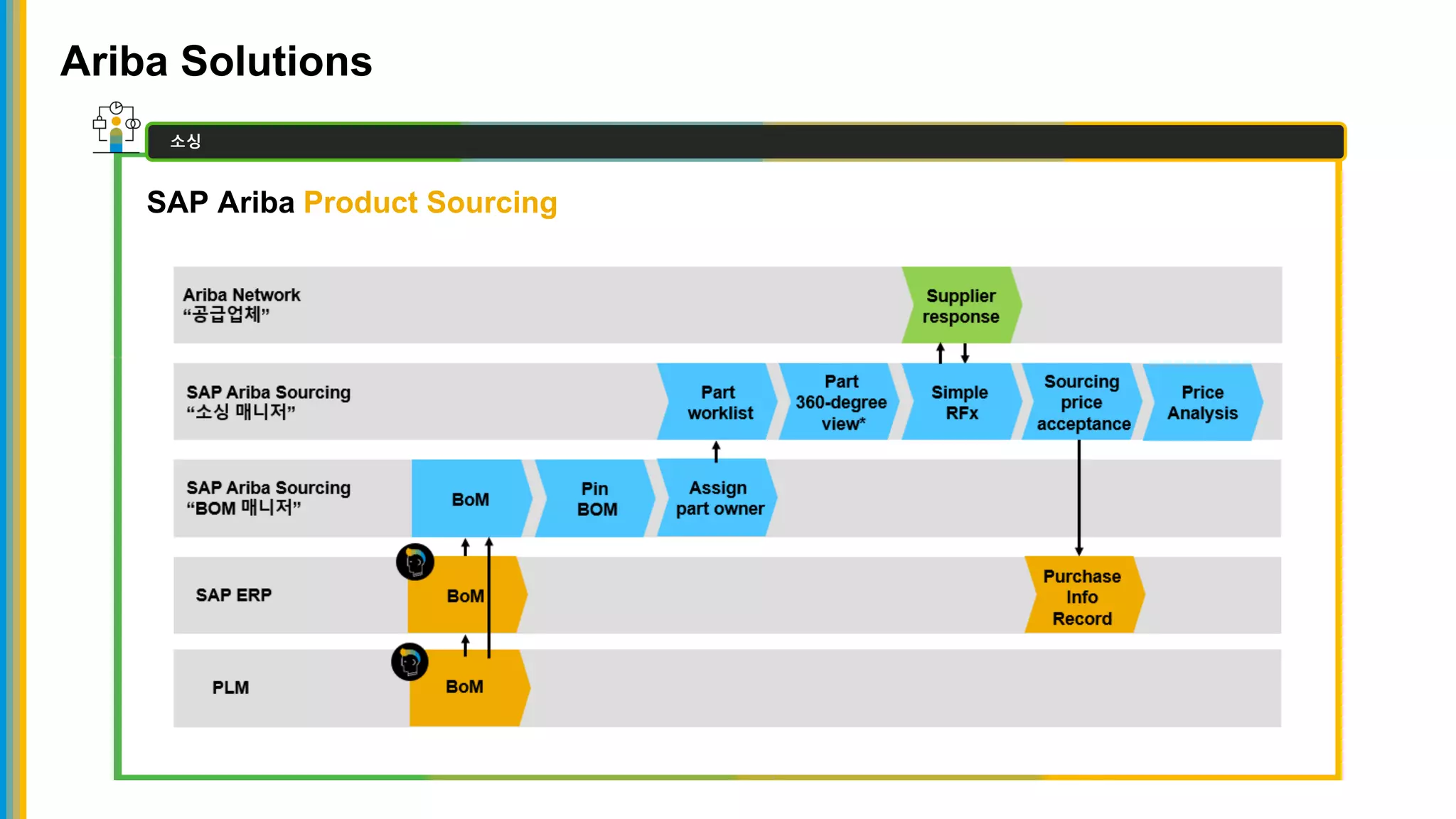
- SAP Ariba Sourcing: This module manages the Request for Proposal (RFP), Request for Information (RFI), and Request for Quotation (RFQ) processes. It allows buyers to host competitive auctions (reverse auctions) where suppliers bid against each other in real-time, driving down costs while ensuring transparent competition.
- SAP Ariba Contracts: Moving legal documents from filing cabinets to the cloud, this module provides a central repository for all vendor agreements. In 2026, it utilizes AI-driven contract analysis to identify non-standard clauses or expiring terms, ensuring that the legal department can manage risks proactively.
- SAP Ariba Spend Analysis: To save money, a company must first understand where it is spending. This tool pulls data from various sources (including non-SAP systems), cleanses it, and categorizes it to provide a 360-degree view of corporate spend. It helps identify "maverick spend"—unauthorized purchases made outside of negotiated contracts.
Operational Procurement (Procure-to-Pay)
Operational procurement handles the "downstream" activities—the daily transactional work of buying goods and services.
- SAP Ariba Buying and Invoicing: This is the interface most employees see. It offers a "Guided Buying" experience similar to a consumer e-commerce site. Employees can search a catalog, add items to a cart, and submit them for approval. The system automatically checks the purchase against budget limits and company policies.
- SAP Ariba Commerce Automation: This module automates the exchange of documents like purchase orders, invoices, and shipping notices between the buyer's ERP and the supplier. By 2026, manual data entry for invoicing has become largely obsolete in mature Ariba environments.
- SAP Ariba Catalog Management: This allows suppliers to upload their product lists and pricing directly into the buyer's system. It ensures that employees are always purchasing current items at the most recent negotiated rates.
Benefits for Buyers: Efficiency and Risk Mitigation
For procurement departments, the primary objective is to move from a cost center to a value-added strategic partner. SAP Ariba enables this transition by addressing several key pain points.
Cost Savings and Compliance
By forcing spend through negotiated contracts and approved catalogs, companies can realize significant "hard" cost savings. Furthermore, "soft" savings are achieved through process efficiency. In 2026, the time required to process an invoice has dropped from weeks to hours for organizations utilizing full Ariba automation. Compliance is also streamlined, as every transaction leaves a digital audit trail, making it easier to adhere to internal policies and external regulations like the Sarbanes-Oxley Act or global ESG (Environmental, Social, and Governance) reporting requirements.
Supplier Risk and Performance Management
In a volatile global economy, knowing your supplier is critical. SAP Ariba Supplier Management provides tools to onboard vendors, verify their credentials, and monitor their performance continuously. In 2026, this includes real-time risk feeds that alert buyers to financial instability, geopolitical risks, or environmental violations within their supply base. This allows companies to pivot to alternative sources before a disruption hits their production line.
Benefits for Suppliers: Access and Transparency
While many suppliers initially join Ariba because a major customer requires it, there are distinct advantages to using the platform as a seller.
Discovery and Lead Generation
SAP Ariba Discovery is a tool that allows suppliers to find new business opportunities. When a buyer creates an open RFP, suppliers on the network are notified based on their product categories and service locations. This provides a lower cost of customer acquisition compared to traditional sales methods.
Faster Payment Cycles
One of the greatest frustrations for suppliers is delayed payment due to "lost" invoices or disputes over quantities. Because Ariba uses a "closed-loop" system—where the invoice is flipped directly from the digital purchase order—the margin for error is minimal. Suppliers can see the exact status of their payment in real-time, reducing the need for "where is my check?" phone calls to the buyer’s accounts payable department.
Technical Architecture and Integration
As of 2026, SAP Ariba is a multi-tenant SaaS (Software as a Service) application. This means users access the software through a web browser or mobile app, while SAP manages the infrastructure, security, and updates.
Integration with SAP S/4HANA
For most large enterprises, Ariba does not exist in a vacuum; it must communicate with the core financial system, usually SAP S/4HANA. The integration is typically handled via the SAP Integration Suite or the Cloud Integration Gateway (CIG). This ensures that when an invoice is approved in Ariba, the corresponding liability is automatically recorded in the general ledger of the S/4HANA system.
Data Security and Localization
Operating a global supply chain requires adherence to various data privacy laws, such as GDPR in Europe. SAP Ariba maintains data centers worldwide to ensure that data residency requirements are met. In 2026, the platform utilizes advanced encryption and blockchain-based verification for sensitive documents, providing a level of security that internal legacy systems often cannot match.
Implementation Considerations and Costs
Implementing SAP Ariba is a significant undertaking that requires more than just technical configuration; it requires organizational change management.
The Implementation Roadmap
A typical implementation starts with a "Discovery" phase to map existing procurement processes. This is followed by "Design," where the Ariba modules are configured to meet business requirements. After "Testing" and "User Acceptance," the system goes live. Organizations often choose a "phased approach," perhaps starting with Strategic Sourcing before moving into the more complex Buying and Invoicing modules.
Subscription and Transaction Fees
The cost structure for SAP Ariba varies. Buyers typically pay an annual subscription fee based on their total spend volume and the number of modules licensed. Suppliers, on the other hand, often have a tiered model.
- Standard Account: Usually free, but offers limited functionality and manual document processing.
- Enterprise Account: Involves an annual subscription and transaction fees but provides full automation, priority support, and advanced reporting.
| Feature | Standard Account (Supplier) | Enterprise Account (Supplier) |
|---|---|---|
| Cost | Free | Fee-based (based on volume) |
| Invoicing | Manual (PO Flip) | Automated (EDI/cXML) |
| Catalog Management | No | Yes |
| Technical Support | Online Help/Community | Priority 1:1 Support |
| Reporting Tools | Basic | Advanced Analytics |
Common Challenges and Troubleshooting
Despite its power, SAP Ariba is not without its hurdles. Success depends heavily on data quality and user adoption.
- Supplier Onboarding: The most common point of failure is a lack of supplier participation. If your vendors refuse to join the network, the system's value is diminished. Successful companies often launch a formal "Supplier Enablement" campaign to explain the benefits to their partners.
- Master Data Cleanliness: If your vendor names, tax IDs, and addresses are incorrect in your legacy ERP, they will be incorrect in Ariba. Data cleansing must happen before the migration.
- User Resistance: Employees who are used to calling a "preferred" vendor directly may find the new requisition process cumbersome. Guided Buying is designed to mitigate this, but training remains essential.
Future Outlook: Ariba in 2026 and Beyond
By 2026, the focus of SAP Ariba has shifted toward Autonomous Procurement. We are seeing the rise of "self-healing" supply chains where AI identifies a potential stockout of a critical component and automatically initiates a sourcing event or suggests a substitute from a pre-vetted supplier.
Furthermore, sustainability has moved from a "nice-to-have" feature to a core requirement. SAP Ariba now includes integrated carbon tracking, allowing procurement officers to see the environmental impact of their purchase decisions in real-time. This helps organizations meet their "Net Zero" targets by favoring suppliers with lower carbon footprints.
FAQs
What is the difference between SAP Ariba and SAP Fieldglass?
While both are procurement tools, they serve different purposes. SAP Ariba is primarily for the procurement of goods and services (indirect and direct materials). SAP Fieldglass is specifically designed for managing external workforces, such as contingent labor, contractors, and Statement of Work (SOW) based services. Often, organizations use both in tandem for a total spend management strategy.
Can SAP Ariba integrate with non-SAP ERP systems?
Yes. Although it is optimized for SAP S/4HANA, SAP Ariba is designed to be "ERP-agnostic." It can integrate with Oracle, Microsoft Dynamics, and other legacy systems using standard APIs or middleware. This flexibility is vital for multi-national corporations that may have acquired various subsidiaries using different financial systems.
Is SAP Ariba suitable for small businesses?
For very small businesses, the cost and complexity of a full Ariba implementation may be prohibitive. However, SAP offers "Ariba Snap," a pre-configured version of the software designed specifically for mid-market companies that want the benefits of Ariba with a faster implementation time and lower price point.
How does Ariba handle different currencies and languages?
SAP Ariba is a global platform supporting over 20 languages and nearly every global currency. It automatically handles currency conversions based on integrated daily exchange rates, allowing a buyer in London to see a price in GBP for a product listed by a supplier in Tokyo in JPY.
What is "PO Flip" in the context of Ariba?
"PO Flip" is a feature that simplifies the invoicing process for suppliers. Instead of creating a new invoice from scratch, the supplier simply clicks a button on the digital Purchase Order within the Ariba portal. The system "flips" the PO data into an invoice, ensuring that the quantities, prices, and line items match exactly, which speeds up approval and payment.
Final Recommendation
For organizations aiming to modernize their supply chain in 2026, a comprehensive deployment of SAP Ariba is no longer optional; it is a strategic necessity. To succeed, begin by auditing your current procurement data and identifying your most critical supplier relationships. Prioritize the implementation of Strategic Sourcing to capture immediate cost savings, and then gradually expand into Guided Buying to improve internal compliance. Engaging a certified implementation partner can help navigate the technical complexities of S/4HANA integration while ensuring that your supplier enablement strategy is robust enough to achieve high network participation.