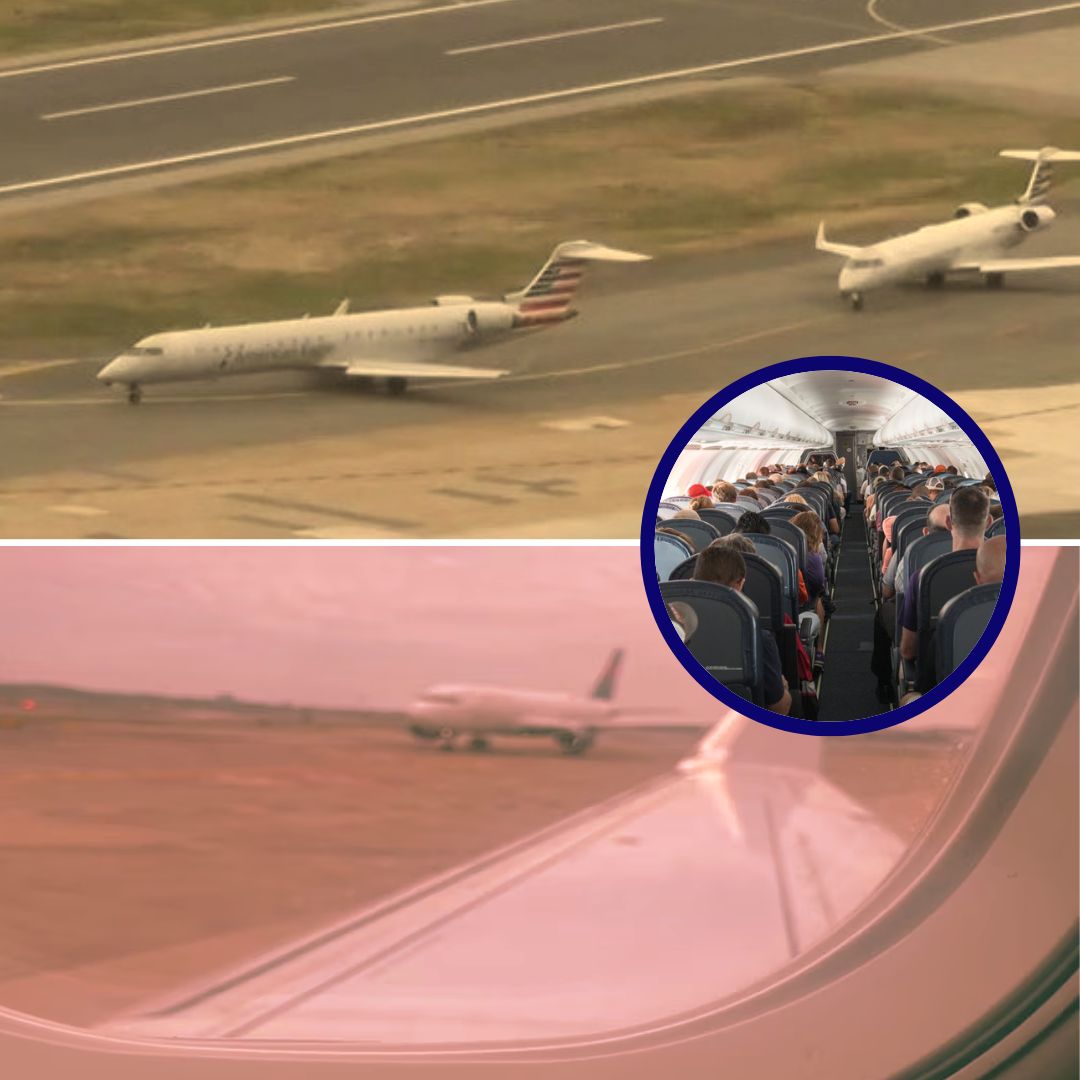
When an American Airlines aircraft veers off a taxiway, the event is classified as a taxiway excursion, a specific type of surface safety incident. These occurrences are typically caused by a combination of inclement weather, reduced surface friction, or navigational challenges during ground movement. While rarely resulting in injuries, these incidents prompt comprehensive FAA investigations into airport maintenance, pilot procedure, and ground-control technology to enhance overall aviation safety.
Recent years have seen a renewed focus on "surface safety"—the phase of flight involving movement on the ground between the gate and the runway. While mid-air collisions and engine failures often capture public attention, the complexities of maneuvering a multi-ton aircraft on narrow, often slick taxiways present a distinct set of challenges. This analysis explores the technical variables of taxiway excursions, using notable American Airlines incidents as case studies to understand how the aviation industry is evolving in 2026 to mitigate these risks.
The Mechanics of a Taxiway Excursion
A taxiway excursion occurs when an aircraft’s landing gear leaves the prepared pavement of a taxiway and enters the surrounding safety area, which may consist of grass, dirt, or snow. Unlike a runway excursion, which often happens at high speeds during takeoff or landing, taxiway excursions usually occur at low speeds (typically under 20 knots). However, the technical implications are significant.
Aircraft Steering and Traction
Large commercial jets, such as the Boeing 737 or Airbus A320 frequently operated by American Airlines, utilize a nose-wheel steering system controlled by a "tiller" in the cockpit or through the rudder pedals. At low speeds, the tiller allows for sharp turns. However, the effectiveness of this steering is entirely dependent on the friction between the tires and the pavement.
In conditions involving "black ice," slush, or heavy rain, the tires may lose grip, leading to a phenomenon similar to hydroplaning in a car. If the nose gear loses traction while the main gear is still providing forward momentum (or if the pilot applies differential braking unevenly), the aircraft may fail to negotiate a turn, sliding off the paved surface.
Momentum and Centripetal Force
Even at ten miles per hour, an aircraft weighing 150,000 pounds carries immense momentum. If a pilot attempts a turn on a contaminated surface without sufficiently reducing speed, the centripetal force required to change the aircraft's direction may exceed the available friction. In several historical American Airlines reports, "excessive taxi speed for conditions" has been cited as a contributing factor in minor excursions during winter operations.
Case Study: American Airlines Flight 5811 (Rochester, NY)
A pivotal incident that continues to inform safety training in 2026 occurred in early 2024 at Frederick Douglass Greater Rochester International Airport. American Airlines Flight 5811, an Embraer ERJ-145 operated by Piedmont Airlines, veered into the grass while taxiing after a safe landing.
Environmental Factors
The incident took place during a period of active snowfall. While the runway had been cleared and treated, the taxiways—which often receive lower priority for chemical de-icing than active runways—remained "slick" according to pilot reports. This highlights a critical gap in airport safety: the "transition zone" between a high-friction runway and a lower-friction taxiway.
Response and Recovery
The 50 passengers and three crew members were uninjured, but the logistical challenge of deplaning passengers on a snowy field required a coordinated response from the Airport Rescue and Firefighting (ARFF) teams. This incident highlighted the necessity for airports to maintain specialized "stair trucks" and off-road buses to safely evacuate passengers when a plane becomes immobilized off-pavement.
Determining Surface Friction: The TALPA Framework
In the wake of these incidents, the Federal Aviation Administration (FAA) refined the Takeoff and Landing Performance Assessment (TALPA) framework. This system is designed to reduce the ambiguity of "braking action" reports.
| Braking Action Term | RCAM Score | Description |
|---|---|---|
| Good | 6 | No noticeable degradation in steering or braking. |
| Good-to-Medium | 5 | Slight increase in stopping distance; steering is reliable. |
| Medium | 4 | Noticeable degradation in braking; caution required during turns. |
| Medium-to-Poor | 3 | Significant skidding potential; steering is sluggish. |
| Poor | 2 | Large stopping distances; aircraft may drift during taxi. |
| Nil | 0 | Total loss of control potential; operations usually suspended. |
Note: RCAM (Runway Condition Assessment Matrix) values are used by airport operators to communicate surface conditions to pilots via NOTAMs (Notice to Air Missions).
In 2026, the industry has moved toward more automated friction-measuring devices (Mu-meters) integrated into airport ground vehicles. These sensors provide real-time data to the tower, which is then broadcast digitally to the aircraft's Electronic Flight Bag (EFB), allowing American Airlines pilots to see a heat map of taxiway grip before they even exit the runway.
Technical Safety Systems: ASDE-X and ASSC
To prevent both excursions and collisions, major hubs utilize sophisticated surveillance technology. American Airlines’ primary hubs, such as Dallas/Fort Worth (DFW) and Charlotte Douglas (CLT), rely on two primary systems:
- Airport Surface Detection Equipment, Model X (ASDE-X): This system integrates data from surface movement radar, sensors, and transponders to track every vehicle and aircraft on the airfield. In 2026, ASDE-X is increasingly paired with AI-driven "predictive pathing" that alerts controllers if an aircraft’s trajectory suggests it is failing to make a turn.
- Airport Surface Surveillance Capability (ASSC): Similar to ASDE-X, ASSC is deployed at medium-sized airports to provide controllers with a clear picture of ground traffic, even in "Cat III" (near zero visibility) conditions.
These systems are critical during "Low Visibility Operations." When a pilot cannot see the taxiway edge lights clearly, the "ground-radar eyes" of the controller act as a redundant safety layer, providing verbal corrections if the aircraft deviates from the centerline.
Human Factors and Situational Awareness
Despite technological advances, the "human in the loop" remains the most critical factor. The cockpit environment during taxiing is a period of high workload. Pilots must complete "after-landing" checklists, communicate with ground control, monitor their position on an airport diagram, and manage engine cooling—all while steering a massive machine.
Spatial Disorientation
At night or in blowing snow, a phenomenon known as "whiteout" can occur on the airfield. The lack of visual contrast makes it difficult for pilots to distinguish between the gray pavement and the gray-white safety areas. American Airlines has addressed this in 2026 by increasing the use of "Enhanced Flight Vision Systems" (EFVS), which allow pilots to see taxiway markings through a Head-Up Display (HUD) using infrared technology.
Sterile Flight Deck Rule
The FAA's "Sterile Flight Deck" rule prohibits non-essential conversation during critical phases of flight, including taxiing. Investigations into taxiway veers often look at whether cockpit distractions played a role. Maintaining "outside-the-window" vigilance is emphasized in American Airlines' recurrent training programs to ensure that pilots are not overly reliant on digital maps.
Airport Infrastructure and Maintenance Safety
The "airport safety" highlighted by these incidents also refers to the physical infrastructure. Not all taxiways are created equal.
- Fillet Design: Modern airport engineering in 2026 focuses on widening the "fillets"—the paved areas at the corners of taxiway intersections. Wider fillets provide a larger margin for error for "long-wheelbase" aircraft like the Boeing 787.
- LED Lighting and Surface Markings: High-intensity LED edge lights and "Centerline Lighting" are essential for low-visibility navigation. In many excursion incidents, investigators found that obscured or burnt-out edge lights contributed to the pilot's loss of situational awareness.
- Chemical De-icing: The use of potassium acetate and other non-corrosive de-icers on taxiways has become a standard requirement for Part 139 certified airports. In 2026, many airports have installed automated "sprinkler" systems on high-traffic taxiway curves to prevent ice buildup before it starts.
The Role of the NTSB and FAA Investigations
Whenever an American Airlines plane veers off a taxiway, the National Transportation Safety Board (NTSB) may launch a fact-finding mission, even if there is no damage. The goal is not to assign blame but to identify systemic failures.
- Flight Data Recorder (FDR) Analysis: Investigators examine the "Black Box" to determine the exact speed of the aircraft, the degree of nose-wheel deflection, and the engine thrust settings at the time of the excursion.
- Voice Recorder (CVR) Review: This helps determine if the pilots were following standard operating procedures (SOPs) or if there was confusion regarding a controller's instruction.
- Surface Testing: Mechanical "friction testers" are often deployed to the site of the incident within minutes to document the exact RCAM score at the time of the veer.
The findings from these investigations are summarized into "Safety Alerts for Operators" (SAFOs). For example, a series of taxiway incidents led to a 2025 SAFO regarding the "re-frozen slush" hazard, which cautioned pilots that a taxiway that was "Wet" in the afternoon could become "Ice" within minutes after sunset.
Frequently Asked Questions (FAQ)
What is the difference between a runway excursion and a taxiway excursion?
A runway excursion occurs during the high-speed takeoff or landing roll, often involving the aircraft overrunning the end of the runway or veering off the side. These are high-energy events with a higher risk of hull damage. A taxiway excursion occurs at much lower speeds during ground transit between the gate and the runway. While less dangerous, taxiway excursions can still cause structural stress to the landing gear and significant operational delays.
Is it dangerous for passengers if a plane veers off the taxiway?
In the vast majority of cases, these incidents result in no injuries. The primary danger is not the "veer" itself, but the potential for the aircraft to strike a sign, a light pole, or another vehicle. Modern aircraft are designed to withstand the stress of moving onto soft ground, though the sudden stop can be jarring. The most significant risk often comes during the evacuation process if passengers are required to exit the plane onto an unpaved, slippery surface.
Why don't airports just clear all the snow off taxiways immediately?
Airports prioritize "active surfaces." This means the primary runways and the "taxiway arteries" leading to the gates are cleared first. During heavy, continuous snowfall, airport equipment may struggle to keep up with secondary taxiways. This is why "Braking Action" reports are so vital; if a taxiway cannot be maintained to a safe standard, it should be closed until treatment is possible.
How do pilots know if a taxiway is too slippery to use?
Pilots rely on several sources: the ATIS (Automatic Terminal Information Service) broadcast, direct reports from other pilots who just used the taxiway ("PIREPs"), and RCAM scores provided by air traffic control. If a pilot feels the conditions are unsafe, they have the "Pilot-in-Command" authority to refuse a specific taxi route and request an alternative path that has been more recently treated.
Does an aircraft have to be taken out of service after a taxiway excursion?
Yes. FAA regulations require a thorough "conditional inspection" after any excursion. Maintenance crews must check the landing gear for "side-loading" stress, inspect the tires for damage, and ensure that no debris (such as mud or grass) has been ingested into the engines or lodged in the wheel wells. Only after a certified mechanic signs off can the aircraft return to flight status.
Practical Recommendations for Travelers
While taxiway excursions are rare and generally safe, being an informed passenger can reduce anxiety. Always keep your seatbelt fastened until the "Fasten Seatbelt" sign is turned off at the gate—this is the most effective protection against the minor jolts of a low-speed veer. If an incident occurs, remain seated and follow the flight crew's instructions. In 2026, airlines like American Airlines have streamlined the "bus-to-terminal" transfer process for such events, so the primary inconvenience will likely be a delay in reaching your destination.