On January 10, 2010, championship barrel racer Amberley Snyder suffered a catastrophic rollover truck accident on Highway 77 near Rawlins, Wyoming. The crash ejected her from the vehicle, resulting in a T12 spinal cord injury that left her paralyzed from the waist down. Through custom saddle modifications, spinal rehabilitation, and determination, Snyder returned to competitive rodeo and became an international motivational icon.
The Events of January 10, 2010: Chronology of the Crash
In early 2010, eighteen-year-old Amberley Snyder was an accomplished equestrian athlete. Having won the National Little Britches Rodeo Association All-Around Cowgirl World Championship in 2009 and serving as the Utah State FFA President, she had built a promising career in Western riding and barrel racing.
On the morning of January 10, 2010, Snyder was driving her pickup truck from her home state of Utah toward Denver, Colorado, to attend the National Western Stock Show. During a brief stop at a gas station in Rawlins, Wyoming, she unbuckled her seatbelt to adjust her seating and comfort. Upon returning to the highway, she inadvertently neglected to re-buckle her seatbelt.
While traveling down Highway 77, Snyder looked down briefly to check her map and navigation notes. During that split-second distraction, her truck drifted off the paved shoulder into the snow-dusted median. Realizing her vehicle had left the lane, she attempted to correct the vehicle's path. The sudden steering input on the uneven terrain caused the pickup truck to catch its tires, destabilize, and roll multiple times down the embankment.
Because Snyder was not wearing a seatbelt, the kinetic forces of the rollover ejected her through the window of the cab. Her body struck a metal fence post along the highway margin before coming to rest in a field. Snyder remained conscious following the impact, quickly realizing she could not feel or move her legs. Passersby and emergency medical services (EMS) personnel arrived shortly after to stabilize her and arrange immediate transport to the nearest trauma center in Rawlins.
Medical Diagnosis, Immediate Surgery, and Prognosis
Upon arrival at the emergency medical facility in Rawlins, trauma surgeons stabilized Snyder’s vital signs and conducted diagnostic imaging, including X-rays and CT scans. The scans revealed severe structural damage to her thoracic spine, specifically a crushed and fractured T12 vertebra.
Normal Spinal Alignment vs. T12 Vertebral Fracture:
- Thoracic Vertebrae T1-T11: Intact spinal cord passage
- T12 Vertebra Fracture: Complete spinal cord compression / disruption
- Lumbar Vertebrae L1-L5: Loss of motor & sensory signals (Paraplegia)
Snyder underwent an urgent five-hour surgical procedure to decompress the spinal cord, realign the vertebral column, and fuse the surrounding spine using titanium rods and screws. Despite surgical stabilization, the physical damage to the nerves at the T12 level was severe.
Understanding a T12 Spinal Cord Injury
The T12 vertebra sits at the junction between the thoracic spine (chest area) and the lumbar spine (lower back). A complete injury at the T12 neurological level disrupts nerve signaling between the brain and the body below the waistline. The physiological impacts include:
- Complete Motor Paralysis: Loss of voluntary muscle movement in the lower limbs, including the hips, legs, ankles, and feet.
- Sensory Loss: Absence of tactile sensation, pain perception, and temperature awareness below the T12 dermatome.
- Abdominal and Core Impairment: Partial loss of lower abdominal muscle control, affecting trunk stability and dynamic balance.
- Autonomic Disruption: Alterations in bowel, bladder, and thermal regulation mechanisms managed by the lower nervous system.
Following surgery, physicians informed Snyder that her chance of ever regaining sensation or motor function in her legs was less than one percent. She was transferred to an inpatient spinal cord rehabilitation center, where she spent nearly two months undergoing intensive physical and occupational therapy to learn mobility techniques, wheeling skills, and daily living adaptations.
Engineering the Return: Adaptive Equestrian Biomechanics
For a competitive barrel racer, riding requires precise communication between rider and horse. Traditional barrel racing relies heavily on leg pressure, heel cues, seat shifts, and weight distribution to guide a horse through tight, high-speed turns around cloverleaf patterns. Paraplegia eliminated Snyder's ability to use leg cues or lower-body gripping mechanisms.
Refusing to abandon her equestrian career, Snyder began experimenting with adaptive equipment four months after her accident. Working alongside her family, leathercrafters, and saddlemakers, she engineered specialized gear to stabilize her upper body on horseback.
| Adaptive Equestrian Gear Configuration | Function |
|---|---|
| 1. Seatbelt / Lap Strap | Secures pelvis deep into saddle seat |
| 2. Velcro Leg Straps | Secures knees & thighs to saddle skirts |
| 3. High-Back Saddle Foam | Supports lumbar spine & prevents sores |
| 4. Soft Leather Reins | Facilitates clear one-handed rein cues |
Key Adaptations for Adaptive Riding
- Custom Lap Belt: A modified safety belt attached directly to the saddle tree secures Snyder’s pelvis into the deep pocket of the saddle, preventing her from being thrown off during rapid acceleration or sharp turns.
- Hook-and-Loop Leg Restraints: Industrial velcro straps loop around her thighs and calves, pinning her legs against the saddle skirts to maintain alignment and stop lower-limb movement.
- High-Density Foam Padding: Specialized medical-grade sheepskin and high-density foam lines the saddle seat to distribute pressure evenly, mitigating the risk of pressure ulcers (bedsores) caused by continuous friction.
- Voice and Upper-Body Re-Training: Snyder re-trained her horses to respond to verbal commands, rein pressure, hand movements, and subtle shifts in upper-torso weight, substituting for traditional leg squeeze signals.
Through these adaptations, Snyder achieved balance and security in the saddle. She gradually returned to high-speed barrel racing, demonstrating that biomechanical adjustments can bridge severe physical limitations in competitive sports.
Timeline of Recovery, Milestones, and Career Achievements
The following table outlines the timeline from Snyder’s 2010 truck accident to her modern achievements as an adaptive athlete, author, and speaker.
| Year / Timeframe | Milestone / Event | Description & Significance |
|---|---|---|
| January 10, 2010 | Rollover Truck Accident | Ejected on Hwy 77 near Rawlins, WY; sustained a T12 complete spinal cord injury. |
| January 2010 | Emergency Spinal Fusion | 5-hour emergency surgery inserting titanium hardware to stabilize the T12 fracture. |
| May 2010 | Return to Riding | Mounted a horse for the first time post-injury, four months after the crash. |
| 2011–2014 | Adaptive Gear Refinement | Developed lap safety belts, leg straps, and horse re-training methods for competition. |
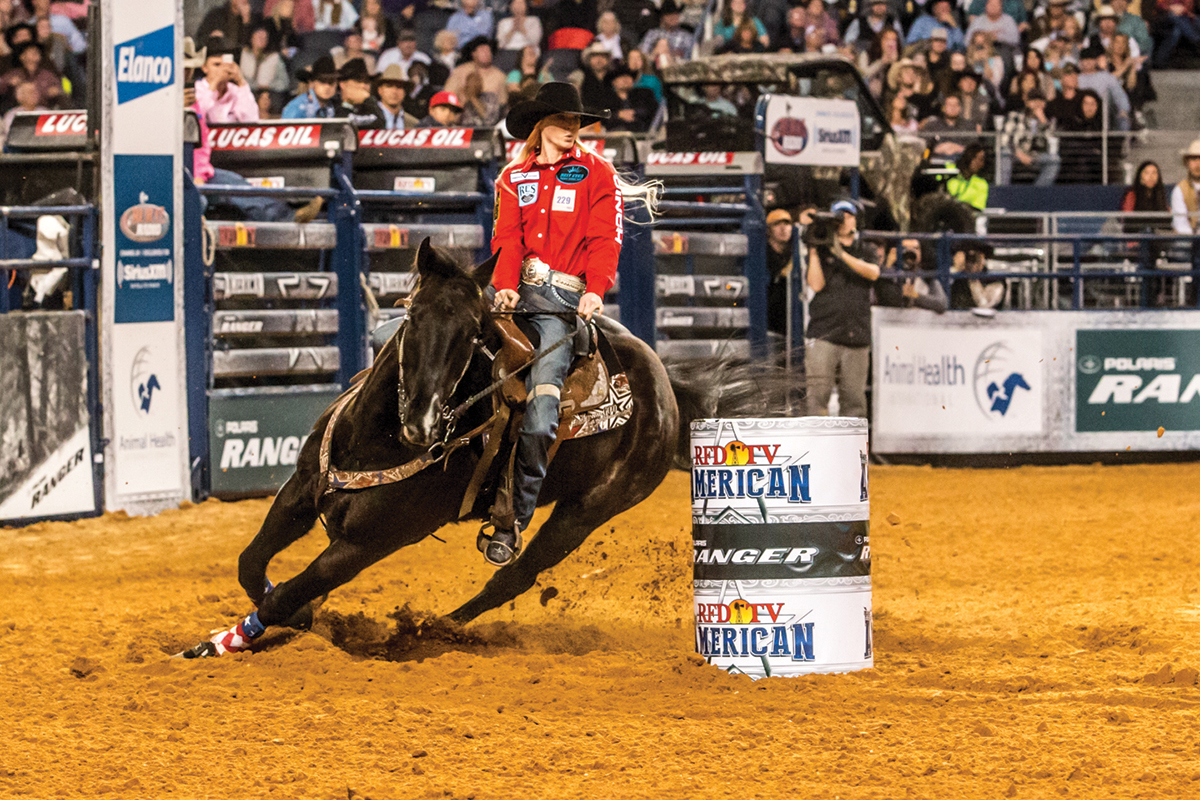
| March 2015 | RFD-TV’s The American | Voted by fans to compete at AT&T Stadium alongside the world's top barrel racers. |
| 2019 | Walk. Ride. Rodeo. Release | Netflix released her biopic; Snyder performed her own post-injury stunt riding in the film. |
| 2020–2025 | Global Motivational Tour | Expanded keynote speaking and advocacy for disability inclusion in Western sports. |
| 2026 | Ongoing Career & Advocacy | Continues competing, mentoring adaptive athletes, and promoting road safety awareness. |
Media Representation: Walk. Ride. Rodeo.
Snyder's story gained international attention through her public speaking and social media platforms, leading to the creation of the 2019 Netflix original biographical film Walk. Ride. Rodeo.
The movie faithfully depicts the timeline of her crash, her physical therapy in the rehab hospital, the emotional hurdles of adapting to life in a wheelchair, and her return to barrel racing.
Walk. Ride. Rodeo. - Horseback Stunt Execution:
- Pre-Accident Scene Stunts: Performed by Autumn Snyder (Sister)
- Post-Accident Scene Stunts: Performed by Amberley Snyder (Self)
To preserve authenticity, the film's production team enlisted Amberley Snyder to perform her own riding stunts for all scenes set post-injury. Because her riding style with adaptive gear is unique to her body mechanics, she performed the high-speed barrel runs on screen herself. Her sister, Autumn Snyder, served as the stunt double for the pre-accident riding sequences, ensuring physical resemblance and equestrian accuracy throughout the film.
Road Safety Lessons and Biomechanical Insights
Snyder speaks openly about the specific cause of her injuries: unbuckling her seatbelt and experiencing a momentary distraction. Her accident offers key lessons regarding motor vehicle safety and kinetic physics during rollover crashes.
- The Protective Role of Restraints: Ejection from a vehicle drastically increases the likelihood of severe trauma or fatality during a rollover. Seatbelts keep occupants inside the crash-tested protective safety cage of the vehicle cab, allowing airbags and crumple zones to absorb kinetic energy.
- The Hazard of Momentary Distractions: Driver distraction, such as glancing at notes or maps while driving at highway speeds, covers hundreds of feet in seconds. At 65 mph, looking down for just three seconds means driving blind for over 280 feet.
- Impact Dynamics: During an unbuckled ejection, the human body acts as an unrestrained projectile. The collision between Snyder’s back and the roadside fence post concentrated the entire impact energy directly onto her lumbar-thoracic junction, shattering the T12 vertebra.
Frequently Asked Questions
When and where did Amberley Snyder's truck accident happen?
Amberley Snyder's truck accident occurred on January 10, 2010, on Highway 77 near Rawlins, Wyoming. She was driving alone from Utah to Denver, Colorado, to attend the National Western Stock Show when her pickup truck drifted off the road and rolled down an embankment.
What injuries did Amberley Snyder sustain in the crash?
Snyder suffered a severe fracture of her T12 vertebra, resulting in a complete spinal cord injury. The trauma caused permanent paraplegia, depriving her of sensation and voluntary motor control from the waist down.
How does Amberley Snyder ride horses while paralyzed?
Snyder uses a custom adaptive saddle system featuring a heavy-duty lap safety belt to hold her pelvis firm in the saddle seat, along with industrial velcro straps that secure her legs to the skirts of the saddle. She uses specialized sheepskin padding to prevent skin damage and relies on voice cues, rein movement, and torso balance to guide her horse.
Did Amberley Snyder perform her own riding stunts in Walk. Ride. Rodeo.?
Yes. Snyder served as her own stunt double for all post-accident horseback riding sequences in the 2019 Netflix biopic Walk. Ride. Rodeo. Her sister, Autumn Snyder, performed the pre-accident riding stunts.
What type of vehicle was involved in Amberley Snyder's accident?
Amberley Snyder was driving her personal pickup truck when the crash occurred. After she briefly looked away from the road to check directions, the vehicle drifted onto the shoulder, leading to an overcorrection and a subsequent multi-rollover crash.
Recommendations and Resources
For individuals navigating spinal cord injuries, adaptive sports, or vehicle safety education, the following steps offer practical pathways for recovery and involvement:
- Explore Adaptive Sports Organizations: Organizations such as the National Wheelchair Basketball Association and the Adaptive Sports USA network provide adaptive sports equipment, training programs, and competition networks for individuals with mobility challenges.
- Consult Certified Rehabilitation Specialists: Patients seeking to return to specialized hobbies post-injury should consult with Physical Therapists (PT) and Occupational Therapists (OT) certified in Assistive Technology (ATP) to engineer customized, safe adaptive equipment.
- Prioritize Vehicle Restraint Safety: Review state and national seatbelt guidelines via the National Highway Traffic Safety Administration (NHTSA) to understand restraint efficacy in rollover protection. Always keep seatbelts fastened, even on quick highway trips.