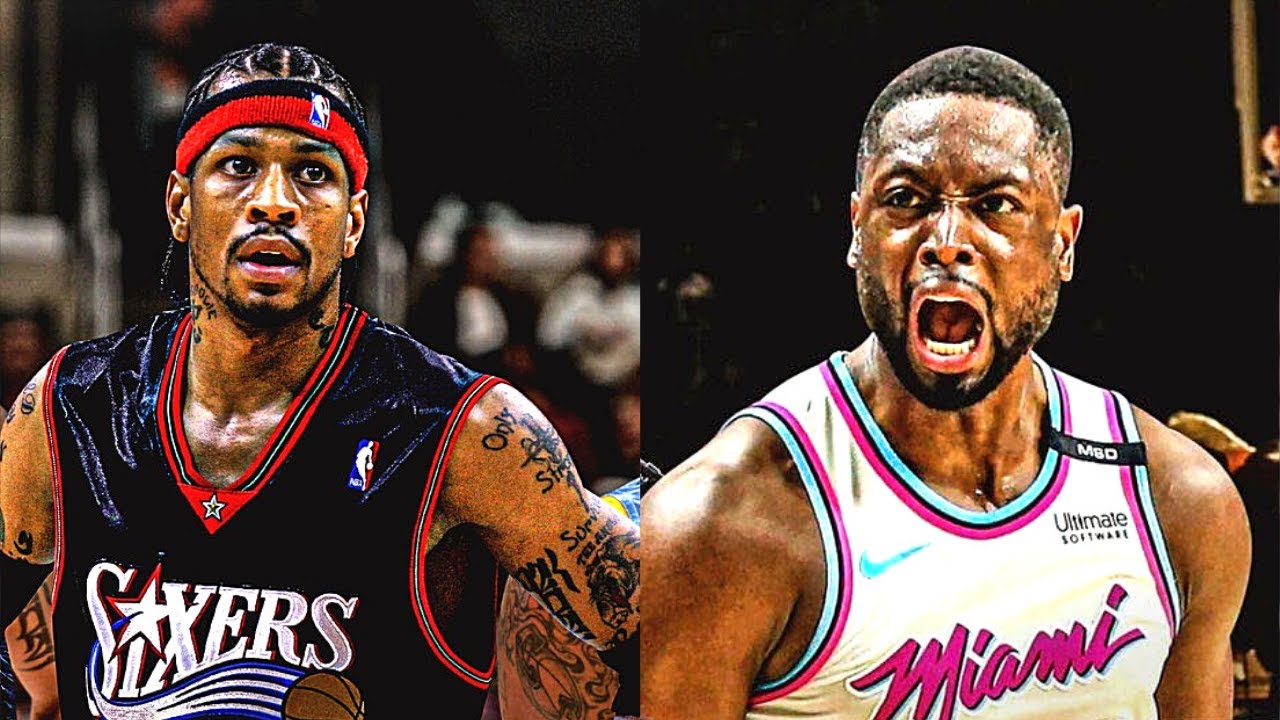
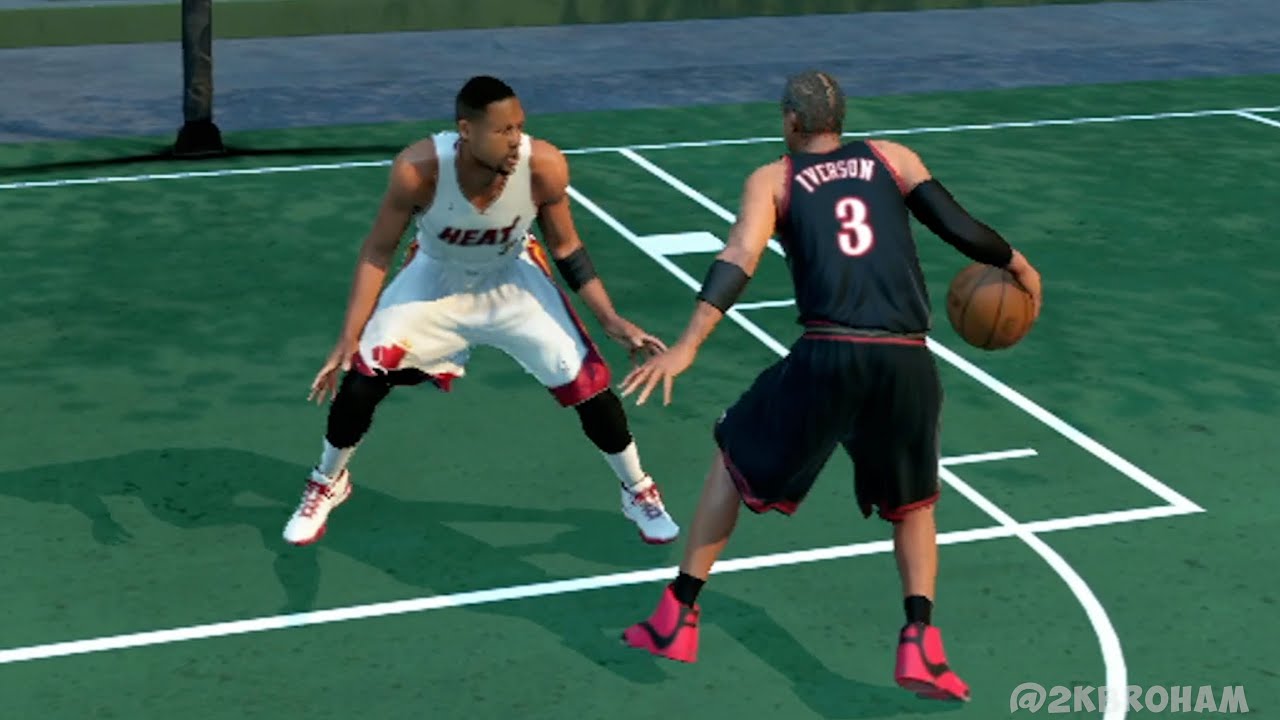
Comparing Allen Iverson and Dwyane Wade involves weighing individual brilliance against championship success. Wade holds the edge in titles (3 to 0), defensive impact, and shooting efficiency. Iverson, however, boasts a league MVP and a greater cultural legacy, having carried less talented rosters with unmatched scoring volume and perimeter creativity throughout his prime years.
The debate between Allen Iverson and Dwyane Wade is a cornerstone of basketball discourse, primarily because both men redefined what it meant to be a "small" guard in a league historically dominated by giants. While they both occupied the shooting guard position, their paths to the Naismith Memorial Basketball Hall of Fame were paved with vastly different styles, team contexts, and personal philosophies. As we look back from the perspective of 2026, the legacy of "The Answer" and "Flash" remains as relevant as ever for fans analyzing the pantheon of all-time greats.
The Scorer’s Paradox: Efficiency vs. Volume
To understand the statistical divide between Iverson and Wade, one must look at the offensive environments in which they thrived. Allen Iverson entered a Philadelphia 76ers team that lacked a secondary scoring option for much of his tenure. This necessitated a "high-volume, high-usage" approach. Iverson led the league in scoring four times, a feat surpassed only by Michael Jordan and Wilt Chamberlain among guards. His career average of 26.7 points per game ranks among the highest in NBA history.
However, the critique often leveled against Iverson is his efficiency. His career field goal percentage sits at 42.5%. To the modern analyst, this looks underwhelming, but it requires context. Iverson played in the "dead ball" era of the early 2000s, characterized by slow paces, illegal defense transitions, and hand-checking. He was frequently the only player on his team capable of creating a shot at the end of a shot clock, leading to forced attempts that lowered his percentages.
Dwyane Wade, conversely, was a model of efficiency for a guard who lived in the paint. With a career field goal percentage of 48.0%, Wade was elite at getting to the rim and finishing through contact. Unlike Iverson, who relied heavily on his crossover and a high-arcing jump shot, Wade utilized a powerful first step and an uncanny ability to navigate tight spaces. While Wade only won one scoring title (2009), his ability to score within the flow of an elite offense—whether alongside Shaquille O'Neal or LeBron James—gave him a higher "offensive floor" in terms of team success.
Championship Pedigree and Postseason Success
The most significant gap in the Allen Iverson versus Dwyane Wade comparison is the championship hardware. Dwyane Wade is a three-time NBA Champion, having won his first in 2006 and two more in 2012 and 2013. His 2006 Finals performance is statistically regarded as one of the greatest individual displays in sports history. After falling behind 0-2 against the Dallas Mavericks, Wade averaged 34.7 points, 7.8 rebounds, and 3.8 assists over the series, earning the Finals MVP.
Iverson’s postseason resume is defined by the legendary 2001 run. With a roster composed mostly of defensive specialists like Dikembe Mutombo and Aaron McKie, Iverson dragged the 76ers to the NBA Finals. He famously handed the "Kobe and Shaq" Lakers their only loss of that entire postseason in Game 1, scoring 48 points and executing the iconic "step-over" on Tyronn Lue. While Iverson never won a ring, his ability to carry a limited offensive roster to the biggest stage remains a testament to his singular competitive will.
Defensive Impact and Physical Tools
When evaluating the defensive side of the ball, Dwyane Wade is widely considered the superior player. At 6'4" with a 6'11" wingspan, Wade was a physical anomaly. He holds the record for the most blocks by a player 6'4" or shorter in NBA history. His ability to provide "weak-side" rim protection was unheard of for a shooting guard. Wade was named to the All-Defensive Second Team three times, proving he could stifle elite opponents while still carrying a heavy offensive load.
Allen Iverson was a different kind of defensive threat. Standing roughly 6'0" (and weighing only 165 pounds), Iverson could not match Wade’s physicality. Instead, he used his lightning-fast hands to dominate the passing lanes. Iverson led the league in steals for three consecutive seasons (2001–2003). While he was often a liability in man-to-man post-ups due to his size, his ability to create fast-break opportunities from turnovers was a vital part of the Sixers' identity.
Advanced Metrics and Career Comparison
A side-by-side look at their career achievements provides a clear picture of their standing in NBA history. While Iverson has the edge in individual accolades like the league MVP and scoring titles, Wade’s contributions to winning basketball are reflected in his advanced metrics.
| Metric / Accolade | Allen Iverson | Dwyane Wade |
|---|---|---|
| NBA Championships | 0 | 3 |
| Finals MVP | 0 | 1 |
| NBA League MVP | 1 (2001) | 0 |
| Scoring Titles | 4 | 1 |
| All-NBA First Team | 3 | 2 |
| All-Defensive Team | 0 | 3 |
| Career Points Per Game | 26.7 | 22.0 |
| Career Assists Per Game | 6.2 | 5.4 |
| Career Steals Per Game | 2.2 | 1.5 |
| Career PER (Player Efficiency Rating) | 20.9 | 23.5 |
| Win Shares (Career) | 99.0 | 120.7 |
Wade’s higher Player Efficiency Rating (PER) and Win Shares indicate that he contributed more to his team's victories over the long haul. However, Iverson’s higher assist numbers are often overlooked; despite his reputation as a "ball hog," he was a primary playmaker who frequently set up his teammates.
Cultural Legacy and Impact on the Game
It is impossible to discuss Allen Iverson without mentioning his cultural impact. Iverson changed the NBA's aesthetic and demographic connection. He brought hip-hop culture to the forefront of the league, popularizing tattoos, cornrows, and the "arm sleeve." Beyond fashion, his "Pound for Pound" mantra resonated with fans who saw themselves in the undersized guard who took a beating every night but never backed down. Iverson's influence is seen today in every guard who uses a double-crossover or wears compression gear.
Dwyane Wade’s legacy is one of professionalism, sacrifice, and community. In Miami, he is "Father Prime," the undisputed greatest player in franchise history. His decision to take a pay cut and a secondary role to accommodate LeBron James and Chris Bosh in 2010 redefined the "Super Team" era. While Iverson was the ultimate individualist, Wade became the ultimate winner, showing that a superstar could gracefully transition through different phases of a career to maintain championship relevance.
Playing Styles: "The Answer" vs. "Flash"
The mechanical differences in their games are fascinating. Allen Iverson played with a frantic energy. He was a "rhythm" shooter who needed to touch the ball frequently to be effective. His signature move, the crossover, was not just a trick; it was a functional tool used to create space against much taller defenders. Iverson's game was predicated on "the break"—getting out in transition or using his speed to weave through a set defense before a shot-blocker could rotate.
Dwyane Wade's game was more calculated. Known as "Flash" early in his career for his explosive speed, he later developed one of the most effective mid-post games for a guard. Wade was a master of the "pump fake," often drawing defenders into the air to secure trips to the free-throw line. His chemistry with big men was also superior to Iverson's; Wade was an elite lob-passer and knew how to use screens to create high-percentage looks at the rim.
Head-to-Head Matchups
When the two legends faced each other on the court, the battles were legendary. Throughout their careers, they played against each other 20 times in the regular season.
- Dwyane Wade's record: 11 wins
- Allen Iverson's record: 9 wins
In these head-to-head matchups, Iverson actually outscored Wade, averaging 26.3 points compared to Wade’s 24.3. However, Wade’s teams were generally more successful, reflecting the career-long trend of Wade's efficiency versus Iverson's volume. These games were a treat for fans, usually featuring Iverson trying to burn Wade with speed while Wade tried to use his strength to overpower Iverson on the block.
The Verdict: Who Was Greater?
Determining the "greater" player depends on the criteria used. If the goal is to build a championship contender from scratch, Dwyane Wade is the logical choice. His defensive versatility, high shooting percentage, and ability to thrive alongside other stars make him a more "pluggable" asset for a winning team.
If the goal is to identify the most talented individual scorer and cultural icon, Allen Iverson takes the lead. There has never been another player of his size who could dominate a game purely through offensive willpower. Iverson had to do "more with less" for the majority of his prime, and his 2001 MVP season remains a higher individual peak than any single regular season Wade produced.
Frequently Asked Questions
Was Allen Iverson actually 6 feet tall?
While officially listed at 6'0", it is widely accepted by teammates and trainers that Allen Iverson was closer to 5'10" or 5'11". His ability to lead the league in scoring at that height is considered one of the greatest physical anomalies in professional sports history.
Why didn't Allen Iverson ever win a championship?
Iverson’s lack of a ring is largely attributed to the team construction in Philadelphia. For most of his prime, the 76ers focused on surrounding him with defensive players who could not create their own shots. When he finally joined other stars later in his career (like Carmelo Anthony in Denver), he was past his physical peak.
Is Dwyane Wade the third-best shooting guard ever?
In most historical rankings, Dwyane Wade is placed third all-time at the shooting guard position, trailing only Michael Jordan and Kobe Bryant. His three championships and Finals MVP give him a significant edge over other greats like Jerry West or Allen Iverson in most "all-time" lists.
How did the "step-over" affect Allen Iverson's legacy?
The "step-over" on Tyronn Lue in the 2001 Finals became the defining image of Iverson’s career. It symbolized his defiance, his skill, and his status as an underdog taking on a giant. It cemented his legacy as a "warrior" even though the 76ers ultimately lost that series.
Who was the better defender, Iverson or Wade?
Dwyane Wade was significantly better defensively. While Iverson was an elite thief (steals), Wade was an elite all-around defender who could block shots, rebound, and guard multiple positions. Wade’s three All-Defensive selections verify this advantage.
Final Recommendation for Fans and Analysts
When participating in the Allen Iverson versus Dwyane Wade debate, avoid the trap of using "rings" as the only metric. To truly appreciate both players, one should watch full-game film from Iverson’s 2001 playoff run and Wade’s 2006 Finals performance.
For those building a historical "All-Time" team, Dwyane Wade fits better as a secondary or primary star due to his efficiency and defense. For those looking to understand the "soul" of basketball in the post-Jordan era, Allen Iverson is the essential study. Both players are undisputed legends who proved that heart and skill can overcome a lack of height in a league of giants.