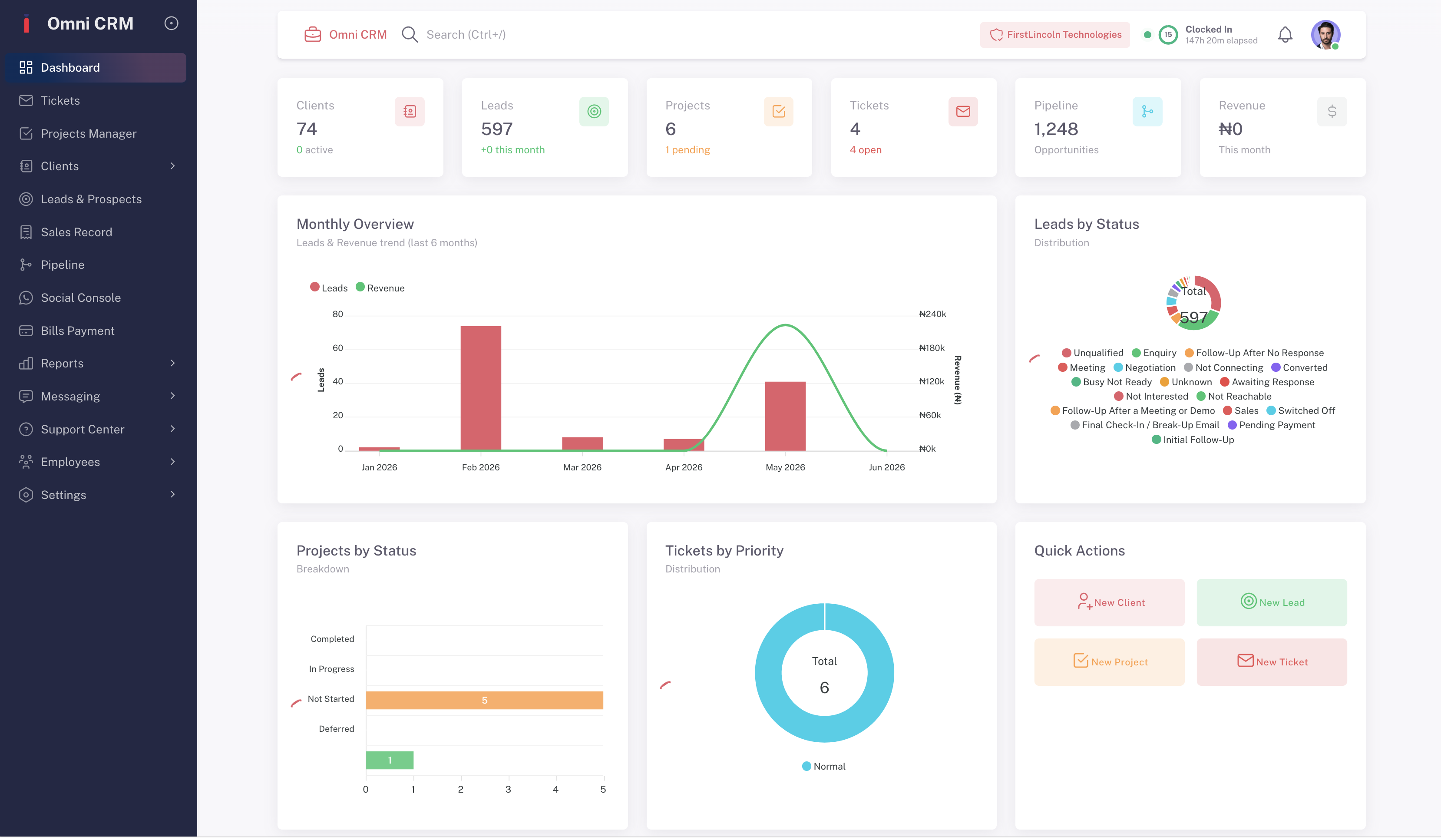
Miri Infotech offers a comprehensive all-in-one CRM solution designed to unify sales, marketing, and customer support into a single, scalable cloud environment. By integrating these core business functions, the software eliminates data silos, streamlines lead-to-revenue workflows, and provides a centralized dashboard for real-time customer analytics and performance tracking across the organization.
In the landscape of 2026, the demand for integrated business tools has shifted from simple data entry to sophisticated ecosystem management. Miri Infotech addresses this by providing a robust Customer Relationship Management (CRM) framework that prioritizes flexibility, cloud accessibility, and deep customization. For organizations looking to move away from fragmented toolsets—where marketing uses one platform, sales uses another, and support uses a third—Miri Infotech’s all-in-one approach serves as a single source of truth.
Understanding the "All-in-One" Philosophy in Modern CRM
An "all-in-one" CRM is more than just a contact database; it is an integrated platform that manages the entire lifecycle of a customer. Miri Infotech’s solution is built on the principle that data should flow seamlessly between departments without the need for complex, third-party connectors that often break or lag.
When we discuss all-in-one CRM software by Miri Infotech, we are looking at a system that handles:
- Lead Generation and Nurturing: Capturing potential customers and moving them through the funnel.
- Sales Force Automation (SFA): Managing deals, quotes, and forecasts.
- Marketing Automation: Executing email campaigns and tracking engagement.
- Customer Service Management: Handling tickets, cases, and knowledge bases.
- Inventory and Order Management: Linking sales directly to product fulfillment.
By housing these features under one roof, Miri Infotech enables businesses to maintain a 360-degree view of their clients. This means a sales representative can see a customer's recent support tickets before making a renewal call, or a marketing manager can segment audiences based on actual purchase history rather than just clicks.
Core Modules and Functional Depth
To appreciate the value of the Miri Infotech CRM package, it is necessary to examine the specific modules that constitute the "all-in-one" experience. Each module is designed to function independently but reaches its full potential when interacting with the others.
Sales Management and Pipeline Tracking
The sales module is the heartbeat of the CRM. It allows sales teams to visualize their pipeline through customizable stages. Users can track opportunities from the initial "Discovery" phase through to "Closed-Won" status.
Miri Infotech’s implementation focuses on reducing administrative overhead for sales reps. Features such as automated follow-up reminders, template-based quoting, and mobile access ensure that the sales team spends more time selling and less time updating records. In 2026, these systems are increasingly optimized for remote and hybrid teams, offering synchronized data across devices so that field agents and office-based managers stay aligned.
Marketing Automation and Lead Scoring
Marketing within the Miri Infotech ecosystem is not just about sending newsletters. It involves sophisticated lead scoring models where prospects are assigned points based on their interactions with the brand—such as opening an email, visiting a pricing page, or downloading a whitepaper.
Once a lead reaches a specific threshold, the CRM automatically notifies the sales team. This "hot lead" handoff is a critical component of the all-in-one system, ensuring that no high-intent prospect falls through the cracks. The marketing module also supports A/B testing for campaigns and detailed ROI tracking, allowing marketing directors to see exactly which channels are driving revenue.
Customer Support and Case Management
Retaining a customer is often more cost-effective than acquiring a new one. The support module in Miri Infotech’s CRM enables businesses to provide top-tier service. It includes a ticketing system that can ingest queries from email, web forms, and social media.
Tickets are automatically routed to the appropriate agent based on expertise or workload. Furthermore, the system maintains a historical log of every interaction the customer has had with the company. When an agent opens a ticket, they can see the customer’s purchase history and previous sales conversations, allowing for personalized and efficient resolution.
Technical Deployment and Cloud Flexibility
One of the distinguishing factors of Miri Infotech is its deployment model. While many CRM providers force users into a proprietary, multi-tenant cloud, Miri Infotech specializes in deploying CRM solutions on major cloud infrastructures like Amazon Web Services (AWS) and Microsoft Azure.
The Advantage of Managed Cloud Instances
By offering CRM software as a pre-configured Machine Image (AMI for AWS or VM for Azure), Miri Infotech provides businesses with greater control over their data and server environment. This is particularly important for industries with strict compliance requirements, such as finance or healthcare.
- Data Sovereignty: You own the instance and the database. You are not just a "tenant" in a massive shared database.
- Scalability: As your business grows, you can scale the underlying hardware (CPU, RAM) of your cloud instance to maintain high performance.
- Security: Leverage the enterprise-grade security protocols of AWS or Azure, combined with Miri Infotech’s optimized software configuration.
Customization and Extensibility
Miri Infotech recognizes that no two businesses operate identically. Their CRM solution is built to be extensible. This means developers can add custom fields, create unique workflows, and build proprietary modules that plug directly into the core framework. Whether it is integrating with a specific ERP system or a niche third-party communication tool, the architecture supports deep-level API connectivity.
Strategic Benefits for Small and Mid-sized Enterprises (SMEs)
While large enterprises have the budget for massive CRM deployments, SMEs often struggle with the complexity and cost of "Big Tech" CRM solutions. Miri Infotech fills this gap by offering enterprise-level features at a price point and complexity level manageable for growing companies.
| Feature Comparison | Generic SaaS CRM | Miri Infotech All-in-One |
|---|---|---|
| Data Ownership | Often restricted or gated | Full ownership of the cloud instance |
| Customization | Limited to UI/Basic fields | Deep code-level and workflow flexibility |
| Integration | Requires expensive middleware | Built-in modules for Sales, Marketing, Support |
| Pricing Model | Per-user, per-month (scales poorly) | Cloud-based instance (more predictable for teams) |
| Deployment | Vendor-hosted only | AWS, Azure, or Private Cloud |
Efficiency and Reduced "App Fatigue"
In 2026, "app fatigue" is a genuine productivity killer. When employees have to switch between five different browser tabs to complete a single task, errors increase and morale drops. Miri Infotech’s all-in-one software solves this by centralizing the workspace. A single login provides access to everything needed to manage the customer journey, leading to higher adoption rates among staff and more accurate data entry.
Implementation Guide: Transitioning to Miri Infotech CRM
Moving to an all-in-one system requires careful planning. Miri Infotech typically follows a structured deployment process to ensure business continuity.
Phase 1: Business Process Audit
Before installing the software, it is vital to map out existing workflows. Who touches the customer data? Where does a lead come from? How is a sale handed off to the billing department? Identifying these touchpoints ensures that the CRM configuration mirrors the actual needs of the business.
Phase 2: Data Migration and Cleaning
The "garbage in, garbage out" rule applies to CRMs. This phase involves exporting data from old spreadsheets or legacy systems, cleaning it (removing duplicates, fixing formatting), and mapping it to the new Miri Infotech fields.
Phase 3: Configuration and Customization
This is where the technical team sets up the AWS or Azure instance. They configure the user roles, security permissions, and custom dashboards. If specific integrations are needed—such as connecting to an e-commerce store or a legacy accounting package—they are established during this stage.
Phase 4: Training and Go-Live
A CRM is only as good as the people using it. Miri Infotech emphasizes user training to ensure that the sales, marketing, and support teams understand how to use the integrated features. Go-live is typically managed in stages, often starting with one department before rolling out to the entire organization.
Troubleshooting and Ongoing Support
Even the best software requires maintenance. Miri Infotech provides support for their deployments, addressing technical issues ranging from server performance to software bugs. Since the software is hosted on major cloud providers, most "downtime" issues are mitigated by the high availability of AWS and Azure. However, if a configuration error occurs or a custom workflow breaks, Miri Infotech’s technical team is available to provide resolutions.
Common areas of support include:
- Performance Optimization: Tuning the database to handle large volumes of records.
- Security Patching: Ensuring the CRM instance is protected against the latest digital threats.
- Version Upgrades: Helping businesses move to the latest version of the CRM without losing custom data or configurations.
Frequently Asked Questions
Is Miri Infotech’s CRM suitable for very small teams?
Yes, because the solution is deployed on scalable cloud infrastructure, a team of five can use it as effectively as a team of five hundred. The primary benefit for small teams is the "all-in-one" nature, which prevents them from having to pay for and manage multiple separate subscriptions for email marketing and helpdesk tools.
Can I host this CRM on my own local servers?
While Miri Infotech specializes in cloud deployments (AWS/Azure), the underlying architecture is often flexible enough for on-premise installation if your organization has the necessary IT infrastructure and expertise to manage it. However, most clients prefer the cloud for its redundancy and ease of access.
Does the software include mobile access?
Absolutely. In 2026, mobile-first design is standard. Miri Infotech’s CRM includes mobile-responsive interfaces and/or dedicated apps that allow sales reps to update lead status, check calendars, and view customer history while on the go.
How does Miri Infotech handle data security?
Security is handled at two levels. First, the physical and network security is provided by the cloud host (like AWS). Second, Miri Infotech configures the software with robust user-level permissions, encryption at rest, and secure login protocols to ensure that only authorized personnel can access sensitive customer information.
What happens if I want to switch to a different CRM later?
Because Miri Infotech provides a solution where you own the instance and the database, exporting your data is straightforward. You are not locked into a proprietary format that makes migration impossible. You can export your records to standard formats like CSV or SQL at any time.
Final Recommendation
For businesses that find themselves struggling with disconnected tools and inconsistent data, the all-in-one CRM software by Miri Infotech represents a strategic investment in operational efficiency. By consolidating marketing, sales, and support into a single cloud-managed environment, organizations can significantly reduce their software overhead while gaining a much clearer understanding of their customer base.
If you are ready to move beyond basic contact management and want a system that grows with your enterprise, the next logical step is to perform a detailed audit of your current customer data workflows and consult with a technical specialist to determine the ideal cloud configuration for your Miri Infotech deployment.