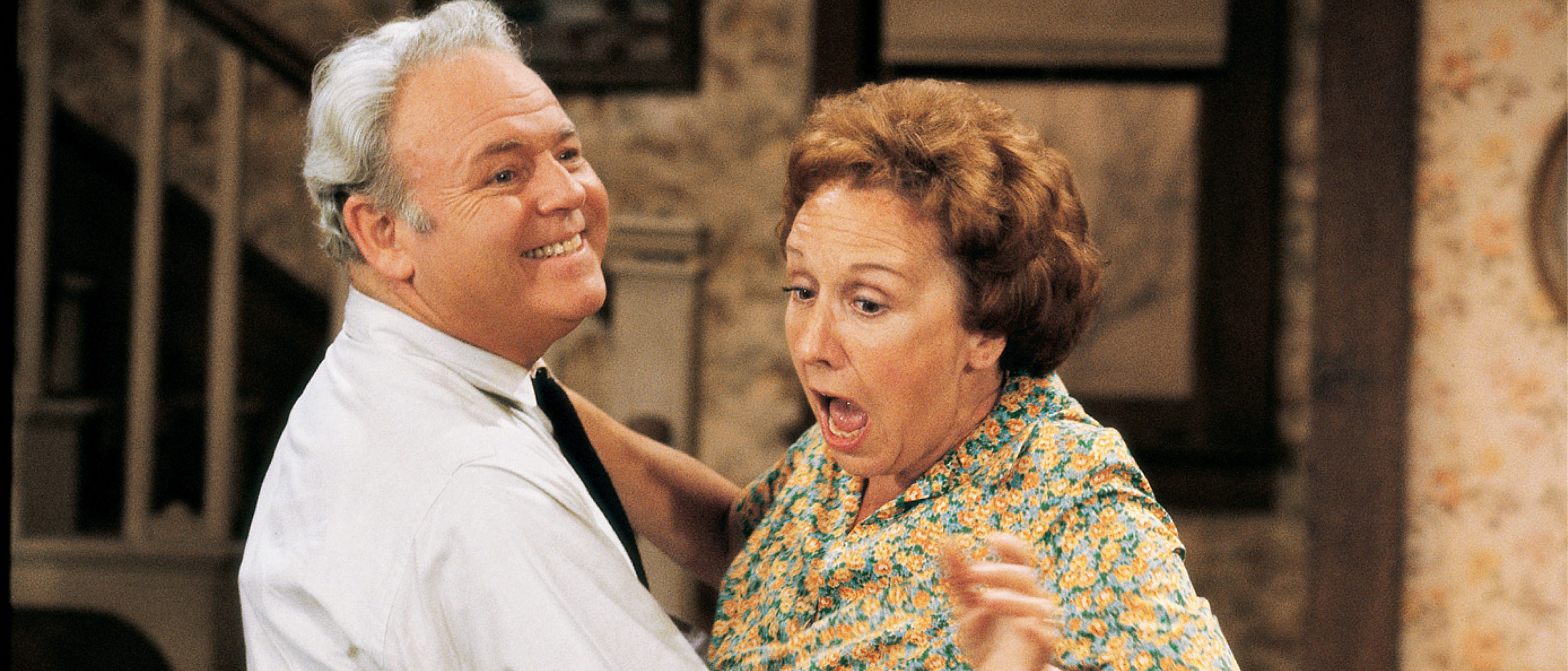
As of 2026, All in the Family remains a cornerstone of American cultural history, having fundamentally altered the landscape of the situational comedy. The series, which originally aired on CBS from 1971 to 1979, transitioned the sitcom from escapist fantasy to a mirror for social, political, and generational conflict.
The show centers on Archie Bunker, a working-class bigot from Queens, New York, and his interactions with his family and neighbors. By utilizing sharp satire and unflinching dialogue, creator Norman Lear and his team addressed topics that were previously considered taboo on television, including racism, sexism, religion, and the Vietnam War. Decades later, the series is still studied for its writing, acting, and its role as a precursor to modern "prestige" television.
The Genesis and Historical Context of All in the Family
Before the premiere of All in the Family on January 12, 1971, American television was dominated by "rural comedies" like The Beverly Hillbillies and Green Acres. These shows were popular but largely avoided the social upheavals of the late 1960s. Norman Lear, inspired by the British sitcom Till Death Us Do Part, sought to create a program that reflected the real-world tensions occurring in American living rooms.
The road to production was fraught with difficulty. Lear shot three different pilots before CBS finally agreed to air the series. The network was so concerned about potential backlash to Archie Bunker’s controversial language and views that they hired extra security and telephone operators to handle the expected flood of complaints. To their surprise, while the show was controversial, it quickly became a massive hit, eventually spending five consecutive years at the top of the Nielsen ratings—a record at the time.
Analyzing the Central Characters
The brilliance of the series lay in the chemistry and complexity of its four lead characters. Each represented a different facet of the American psyche during a period of intense cultural transition.
Archie Bunker (Carroll O'Connor)
Archie was the quintessential "angry white male" of the 1970s. A veteran of World War II and a blue-collar worker, he felt the world was moving too fast and leaving his values behind. While his language was often offensive, Carroll O’Connor’s portrayal added layers of vulnerability and ignorance rather than pure malice. Archie became a vehicle through which the audience could see the absurdity of prejudice.
Edith Bunker (Jean Stapleton)
Often referred to by Archie as a "dingbat," Edith was the moral heart of the show. Over the course of the series, her character evolved from a submissive housewife into a woman of quiet strength and profound empathy. Jean Stapleton’s performance ensured that Edith was never just a caricature; she was often the only person capable of bridging the gap between Archie and the rest of the world.
Gloria Stivic (Sally Struthers)
The Bunkers' only child, Gloria, represented the burgeoning feminist movement and the youth of the 1970s. Her relationship with Archie was a constant tug-of-war between her loyalty to her father and her desire for social progress. Her marriage to Michael Stivic served as the primary catalyst for the show’s central ideological debates.
Michael "Meathead" Stivic (Rob Reiner)
Archie’s son-in-law, a college student and Polish-American liberal, provided the ideological antithesis to Archie. The moniker "Meathead," bestowed by Archie, became a cultural shorthand for the generational divide. Their arguments, while often loud and aggressive, were the primary mechanism the writers used to explore contemporary political issues.
Technical Specifications and Production Style
All in the Family was a pioneer in more than just its writing. It helped popularize the use of the multi-camera setup taped before a live studio audience, a format that became the industry standard for decades. Unlike previous sitcoms that used canned laughter (laugh tracks), Norman Lear insisted that the reactions be genuine, which added to the show’s visceral, theater-like energy.
| Feature | Specification / Detail |
|---|---|
| Original Network | CBS |
| Original Run | January 12, 1971 – April 8, 1979 |
| Total Episodes | 205 (Original Series) |
| Creator | Norman Lear |
| Format | Videotape / Multi-Camera |
| Theme Song | "Those Were the Days" (Performed by Carroll O'Connor and Jean Stapleton) |
| Key Spin-offs | The Jeffersons, Maude, Good Times, Archie Bunker's Place |
The Legacy of "The Lear-iverse"
The success of All in the Family allowed Norman Lear to build a television empire. The series is notable for having one of the most successful "family trees" in entertainment history. By introducing secondary characters and then spinning them off into their own shows, Lear was able to explore different demographics and social perspectives.
- Maude: Edith’s cousin, Maude Findlay (played by Beatrice Arthur), was an outspoken liberal who starred in her own series, which in turn addressed topics like abortion and mental health.
- The Jeffersons: Archie’s neighbors, George and Louise Jefferson, moved "on up" to a luxury apartment in Manhattan, becoming one of the longest-running sitcoms featuring a Black family.
- Good Times: A spin-off of Maude, this series focused on the Evans family living in a Chicago public housing project, further expanding the diversity of stories told on network TV.
- Archie Bunker's Place: Following the conclusion of the original series in 1979, this sequel continued Archie’s story as he transitioned from a loading dock worker to a tavern owner.
Why All in the Family Still Matters in 2026
In 2026, the themes of the series remain strikingly relevant. The "culture wars" depicted in the Bunker household—arguments over immigration, women's rights, and economic instability—are echoed in modern digital and political discourse. The show serves as a historical document, capturing the raw friction of a society in flux.
Furthermore, the 2019-2022 "Live in Front of a Studio Audience" specials, which recreated classic episodes with modern stars like Woody Harrelson and Marisa Tomei, proved that the scripts themselves hold up under modern scrutiny. The humor is derived not just from the shock value of Archie’s remarks, but from the universal human struggle to understand those with whom we disagree.
Accessing the Series: Where to Watch
For those looking to experience the series in 2026, there are several reliable methods to access all nine seasons.
- Streaming Services: As of current licensing agreements, the series is frequently available on platforms such as Freevee (supported by ads) and Pluto TV. Because it is a Sony Pictures Television property, it often rotates through different subscription-based services like Hulu or Peacock.
- Physical Media: For collectors, the complete series is available in DVD box sets. These are highly recommended for the inclusion of bonus features, such as interviews with Norman Lear and behind-the-scenes documentaries that explain the historical context of specific episodes.
- Digital Purchase: Platforms like Amazon Prime Video and Apple TV allow for the purchase of individual seasons or the entire series, ensuring permanent access regardless of streaming library shifts.
Critical Acclaim and Recognition
The series was a powerhouse at the Emmy Awards, becoming the first of only four sitcoms in which all four lead actors won an Emmy for their roles. Over its eight-year run, it won 22 Emmys out of 72 nominations and three Golden Globes. The show’s impact was so profound that Archie Bunker’s famous wing chair was donated to the National Museum of American History at the Smithsonian Institution, where it remains a popular exhibit.
Notable Episodes for New Viewers
- "Sammy's Visit" (Season 2, Episode 21): Featuring Sammy Davis Jr., this episode contains one of the most famous moments in TV history—the kiss between Sammy and Archie.
- "The Cousin Liz" (Season 8, Episode 2): A groundbreaking episode for its time, dealing with Edith learning that her late cousin was in a long-term lesbian relationship.
- "Edith's 50th Birthday" (Season 8, Episodes 4 & 5): A harrowing two-part episode dealing with an attempted sexual assault, showcasing the series' ability to handle drama with the same skill as comedy.
Common Mistakes When Interpreting the Show
One frequent error modern viewers make is assuming the show endorsed Archie’s views. On the contrary, the writers used the other characters—and Archie’s own frequent social defeats—to debunk his prejudices. The show’s intent was to use Archie as a "lighting rod" to expose the flaws in his logic.
Another mistake is viewing Archie Bunker as a villain. The series worked because Archie was portrayed as a "lovable bigot." He was a man who loved his wife and daughter, worked hard, and was deeply afraid of a world he no longer understood. By making him a three-dimensional human being rather than a monster, the show forced the audience to reckon with the "Archies" in their own lives.
FAQ
Is All in the Family appropriate for modern audiences? Yes, but it requires context. The series contains language and slurs that were common in the 1970s but are considered highly offensive today. However, these terms are used to characterize Archie’s ignorance and are almost always challenged by other characters or the narrative itself.
Who wrote the theme song "Those Were the Days"? The music was composed by Charles Strouse and the lyrics were by Lee Adams. It was famously performed by Carroll O'Connor and Jean Stapleton while sitting at a piano, a tradition that became one of the most recognizable openings in television history.
Why did Jean Stapleton leave the show? Jean Stapleton felt she had explored everything possible with the character of Edith Bunker. When the show transitioned into Archie Bunker's Place, she appeared in a limited capacity before her character was written out (off-screen death) in the second season of the sequel.
Was the show filmed in New York? No. Although set at 704 Hauser Street in Queens, the series was primarily filmed at CBS Television City in Los Angeles, California. The house shown in the opening credits is a real home in Queens, but the interior was a studio set.
How many spin-offs did All in the Family have? Directly or indirectly, the show spawned seven spin-offs: Maude, The Jeffersons, Archie Bunker's Place, Gloria, 704 Hauser, Checking In, and Good Times.
Practical Recommendation
If you are a first-time viewer in 2026, start with the first season but allow for the fact that the show finds its "groove" in Season 2. Pay close attention to the non-verbal acting of Jean Stapleton; her reactions often provide the most poignant commentary on the scene. For the best experience, watch the series chronologically to witness the genuine character growth of the Stivics as they move from being students to parents and eventually move out of the Bunker house.