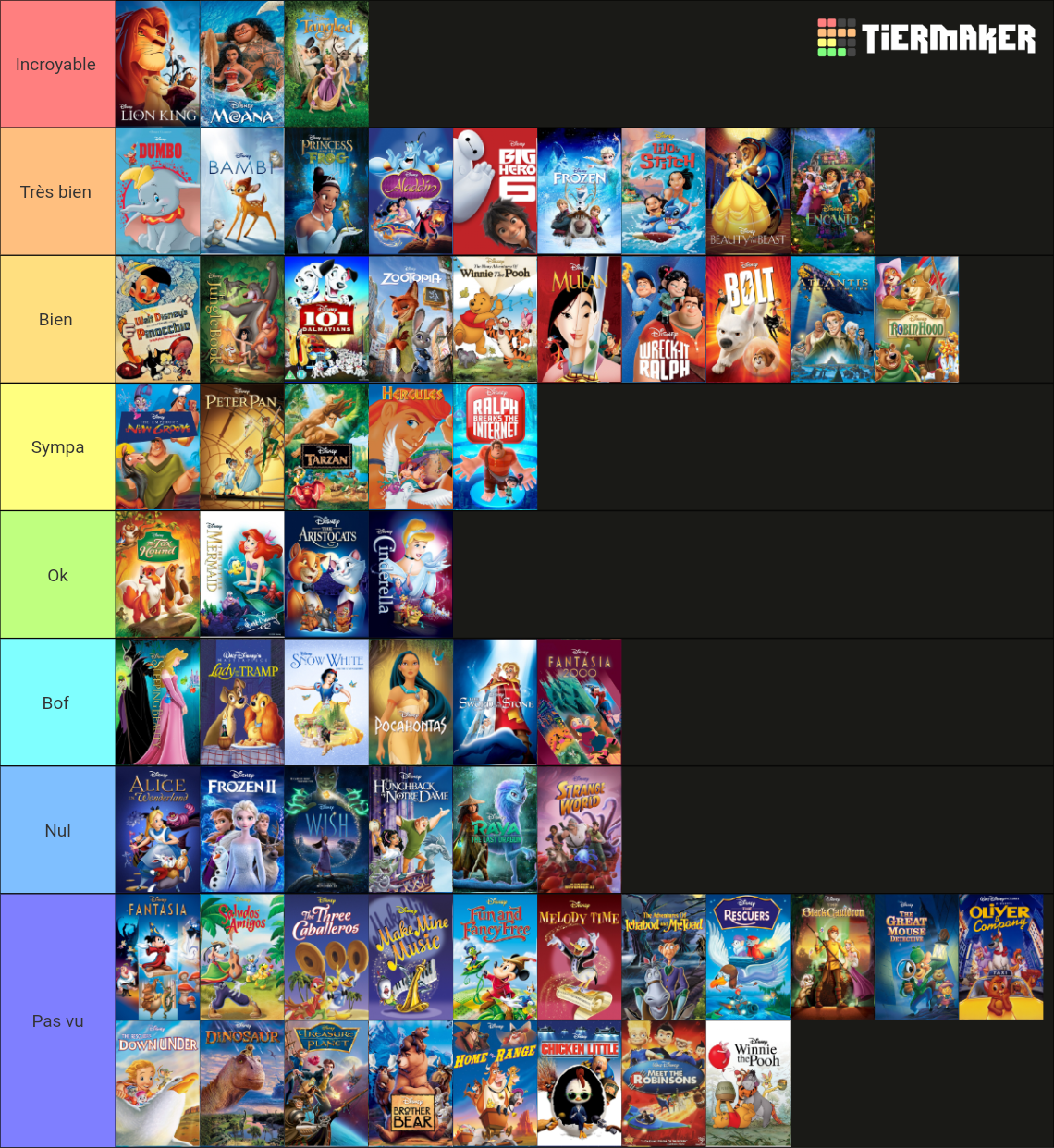
Organizing the vast library of Disney movies in alphabetical order requires distinguishing between Walt Disney Animation Studios’ core "Canon," Pixar’s computer-animated features, and the hundreds of live-action films produced since the 1950s. This comprehensive guide provides a definitive alphabetical reference for these films, specifically focusing on the animated classics that define the Disney brand.
Navigating the Disney Cinematic Library
The Walt Disney Company has grown into a massive conglomerate, but for most viewers, "Disney movies" refers to the feature-length films produced by Walt Disney Animation Studios (WDAS) and Pixar Animation Studios. While the company also owns Marvel Studios, Lucasfilm, and 20th Century Studios, these are typically categorized under their own respective umbrellas.
As of 2026, the Disney library consists of over 60 films in the "Official Canon" (WDAS) and nearly 30 Pixar features. When sorting these films alphabetically, the standard industry practice is to ignore leading articles such as "A," "An," or "The." For example, The Lion King is indexed under "L," and A Bug’s Life is indexed under "B." This method ensures that the list remains functional for researchers and collectors alike.
Understanding the "why" behind the alphabetical organization is as important as the list itself. Disney films are often grouped by "Eras," such as the Golden Age (1937–1942), the Renaissance (1989–1999), or the Revival Era (2010–present). Organizing them alphabetically breaks these historical silos, allowing fans to see the evolution of storytelling techniques and animation technology—from the hand-painted cels of Bambi to the hyper-realistic rendering in Zootopia 2.
Alphabetical List of Walt Disney Animation Studios Films
The following list comprises the primary animated features produced by Walt Disney Animation Studios. This list includes titles released through early 2026, including the most recent additions to the official canon.
A to E: From Aladdin to Encanto
This section contains some of the most critically acclaimed films in the Disney library. The transition from traditional fairy tales to contemporary musical epics is evident here.
- 101 Dalmatians (1961): Notable for introducing the Xerox process to animation, which allowed the studio to replicate the hundreds of spots required for the dogs without hand-painting every frame.
- Aladdin (1992): A cornerstone of the Disney Renaissance, this film was revolutionary for its use of celebrity voice talent (Robin Williams) and its blend of traditional hand-drawn characters with computer-generated environments.
- Alice in Wonderland (1951): A surrealist masterpiece that deviated from the traditional Disney "look" of the 1940s, embracing a more stylized, Mary Blair-inspired aesthetic.
- Aristocats, The (1970): The last film project approved by Walt Disney himself before his death, capturing a distinct "sketchy" animation style prevalent in the late 60s.
- Atlantis: The Lost Empire (2001): A departure from the musical format, focusing on action-adventure and inspired by the comic book art style of Mike Mignola.
- Bambi (1942): Famous for its naturalistic backgrounds and the use of the multiplane camera to create a sense of three-dimensional depth in a forest setting.
- Beauty and the Beast (1991): The first animated film to be nominated for the Academy Award for Best Picture, setting a high bar for storytelling and musical integration.
- Big Hero 6 (2014): A fusion of Marvel source material and Disney animation, showcasing the "Hyperion" rendering system that allowed for complex lighting in a dense urban environment.
- Bolt (2008): A pivotal film that marked the beginning of the "Revival Era" under the leadership of John Lasseter.
- Brother Bear (2003): One of the final traditional hand-drawn films produced by Disney before the studio's temporary shift toward full CGI.
- Chicken Little (2005): Disney’s first fully in-house 3D computer-animated feature, representing a major technical pivot for the studio.
- Cinderella (1950): The film that saved the studio from financial ruin after World War II, returning to the high-concept fairy tale roots of Snow White.
- Dumbo (1941): Known for its simplicity and emotional resonance, produced on a tight budget to recoup losses from Fantasia.
- Emperor's New Groove, The (2000): Originally planned as an epic drama titled Kingdom of the Sun, it was reworked into one of Disney’s most successful comedies.
- Encanto (2021): A cultural phenomenon that utilized advanced hair and fabric simulation technology to bring the Madrigal family to life.
F to L: From Fantasia to Lilo & Stitch
The middle of the alphabet covers the experimental years and the peak of the 90s Renaissance.
- Fantasia (1940) / Fantasia 2000 (1999): These films represent Walt Disney’s vision of "seeing music," utilizing the "Fantasound" system—an early precursor to surround sound.
- Frozen (2013) / Frozen II (2019): These films redefined the modern Disney Princess, focusing on sisterly bonds rather than romantic interests and utilizing advanced snow physics engines.
- Great Mouse Detective, The (1986): A film often credited with proving that Disney animation still had a future during the dark years of the early 1980s.
- Hercules (1997): Known for its unique visual style influenced by British illustrator Gerald Scarfe and its gospel-inspired soundtrack.
- Home on the Range (2004): Historically significant as the final film before the studio's multi-year hiatus from hand-drawn animation.
- Hunchback of Notre Dame, The (1996): One of Disney’s most mature and visually ambitious films, dealing with themes of prejudice and social exclusion.
- Jungle Book, The (1967): The final film overseen by Walt Disney, characterized by its personality-driven animation and iconic jazz-influenced music.
- Lady and the Tramp (1955): The first animated feature filmed in the CinemaScope widescreen process, requiring animators to rethink how they staged characters.
- Lilo & Stitch (2002): Notable for its use of watercolor backgrounds—a technique that had not been used at the studio since Dumbo in 1941.
M to R: From Moana to The Rescuers
This segment showcases the expansion of Disney’s global storytelling and the technological leap into the 2020s.
- Make Mine Music (1946): One of the "Package Films" produced during the 1940s, consisting of several short musical segments.
- Many Adventures of Winnie the Pooh, The (1977): A compilation of previously released shorts that became a cornerstone of the Disney brand.
- Moana (2016) / Moana 2 (2024): These films pushed the boundaries of fluid dynamics, creating a sentient ocean character that required entirely new animation shaders.
- Mulan (1998): This film utilized the "Atilla" software to manage the massive crowds during the Hun charge sequences, a major technical feat at the time.
- Oliver & Company (1988): A modern retelling of Oliver Twist that integrated early computer-aided design for vehicles and cityscapes.
- Peter Pan (1953): A classic example of the "Nine Old Men" (Disney’s core animators) at the height of their technical prowess.
- Pinocchio (1940): Often cited by animators as the most technically perfect hand-drawn film ever made, due to its complex effects animation involving water, smoke, and wood.
- Pocahontas (1995): Notable for its more realistic character proportions and sophisticated color palettes compared to its predecessors.
- Princess and the Frog, The (2009): The brief return to hand-drawn animation, celebrating the heritage of New Orleans and traditional Disney storytelling.
- Rescuers, The (1977) / Rescuers Down Under, The (1990): The latter was the first film to use the CAPS (Computer Animation Production System), which eliminated the need for physical cels.
S to Z: From Sleeping Beauty to Zootopia
The final portion of the alphabet includes the technical marvels of the 2020s and the foundation of the Disney library.
- Sleeping Beauty (1959): The most expensive film produced by the studio at that time, featuring a distinctive, sharp-edged art style inspired by medieval tapestries.
- Snow White and the Seven Dwarfs (1937): The film that started it all. As the first full-length cel-animated feature, it established the grammar of animated filmmaking.
- Strange World (2022): A pulp-adventure inspired film that experimented with unique biological designs and non-traditional environments.
- Sword in the Stone, The (1963): Known for its character-driven comedy and the famous "wizard's duel" sequence.
- Tangled (2010): The first CGI film to successfully replicate the "soft" look of traditional Disney hand-drawn animation, using a custom hair-rendering engine for Rapunzel’s locks.
- Tarzan (1999): Introduced "Deep Canvas," a software tool that allowed 2D characters to move through 3D painted environments with fluid perspective.
- Treasure Planet (2002): A high-concept sci-fi adaptation of Treasure Island that blended 2D and 3D animation seamlessly.
- Wish (2023): A celebratory film released for Disney’s 100th anniversary, utilizing a unique watercolor-CGI hybrid style.
- Wreck-It Ralph (2012) / Ralph Breaks the Internet (2018): These films showcased Disney’s ability to handle massive amounts of licensed characters and complex digital worlds.
- Zootopia (2016) / Zootopia 2 (2025): These films are landmarks in world-building, with the second film expanding the technical limits of fur grooming and urban simulation.
Pixar Animation Studios: Alphabetical Checklist
While distinct from the WDAS Canon, Pixar films are essential to the Disney identity. Alphabetizing them often requires users to look past the "Disney/Pixar" branding to the core title.
| Movie Title | Release Year | Primary Theme/Innovation |
|---|---|---|
| Brave | 2012 | Advanced hair and fabric physics |
| Bug's Life, A | 1998 | Sub-surface scattering for translucent skin |
| Cars (Trilogy) | 2006–2017 | Ray-tracing for reflective surfaces |
| Coco | 2017 | Complex lighting with thousands of sources |
| Elemental | 2023 | Character animation based on particle effects |
| Finding Nemo / Dory | 2003–2016 | Water and particulate simulation |
| Incredibles, The (1 & 2) | 2004–2018 | Human character anatomy and muscle movement |
| Inside Out (1 & 2) | 2015–2024 | Abstract environmental design |
| Monsters, Inc. / University | 2001–2013 | Breakthroughs in fur rendering (Sulley) |
| Ratatouille | 2007 | High-fidelity food and liquid modeling |
| Toy Story (1–4) | 1995–2019 | The first fully computer-animated feature |
| Up | 2009 | Stylized caricature and emotional pacing |
| Wall-E | 2008 | Cinematic cinematography in a digital space |
The Impact of Disney+ on Alphabetical Access
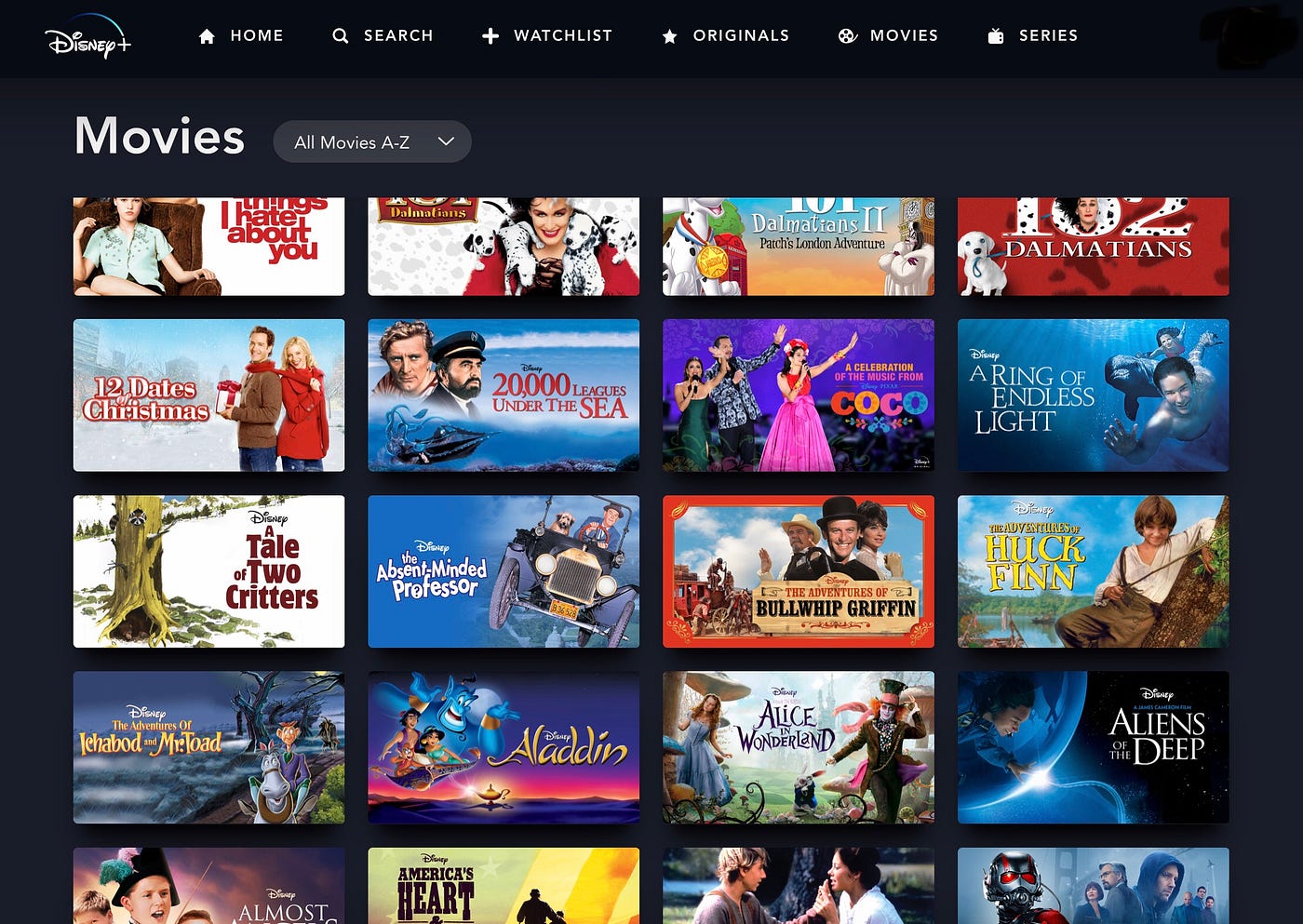
By 2026, the primary way audiences interact with these films is through Disney+. The platform’s interface typically offers a "Disney Through the Decades" collection, but the "A-Z" sort remains the most reliable way to find specific titles.
One common point of confusion is the inclusion of direct-to-video sequels. During the late 1990s and early 2000s, Disney's television animation wing produced dozens of sequels like The Lion King 1½ or The Little Mermaid II: Return to the Sea. These are generally not included in the official WDAS Canon, though they appear in alphabetical lists on streaming services. For a "pure" list, these are usually excluded in favor of the primary theatrical releases.
Common Misconceptions in Disney Film Sorting
When searching for "all Disney movies," users frequently encounter several categorization hurdles.
1. The Live-Action Remake Distinction
Movies like The Little Mermaid (2023) or Snow White (2025) are live-action/CGI hybrids. In an alphabetical list, these often appear right next to their animated counterparts. However, for film historians, they are categorized under Walt Disney Pictures rather than the Animation Studio.
2. The Acquisition Confusion
Is Star Wars: A New Hope a Disney movie? In a corporate sense, yes. In a brand sense, it is a Lucasfilm production. Standard alphabetical lists of "Disney movies" typically omit Marvel and Star Wars unless the list is specifically defined as "The Walt Disney Company Portfolio."
3. The "The" Rule
As mentioned earlier, failing to ignore the word "The" is the most common mistake in alphabetical sorting. Most modern databases are programmed to handle this, but manual lists often stumble. Always look for The Aristocats under A and The Nightmare Before Christmas under N.
Frequently Asked Questions
Which Disney movie is first in alphabetical order?
101 Dalmatians is typically the first film in the alphabetical canon, though some lists may include 20,000 Leagues Under the Sea (1954) if live-action films are being counted. If using numeric sorting, 101 Dalmatians almost always takes the lead.
Are Marvel and Star Wars included in "all Disney movies"?
Generally, no. While owned by Disney, they are branded under Marvel Studios and Lucasfilm. Most fans and databases separate these into their own specific categories to avoid cluttering the primary Disney Animation list.
How many movies are in the official Walt Disney Animation Studios Canon?
As of 2026, there are 64 films in the official canon. This count began with Snow White and the Seven Dwarfs in 1937 and includes the most recent theatrical releases like Zootopia 2.
Where do the Pixar movies fit in the list?
Pixar films are usually listed separately or as a sub-category. While they are "Disney movies" by ownership and distribution, they are produced by a different studio with a different creative lineage.
Why are some movies missing from Disney+ alphabetical lists?
Licensing agreements can sometimes lead to temporary removals, though by 2026, most legacy Disney-owned content has been consolidated. Some controversial historical titles, such as Song of the South, are intentionally omitted from the platform and the official modern canon due to sensitivity concerns.
Next Steps for Collectors and Fans
For those looking to build a complete collection or conduct a "chronological marathon," the best next step is to download a printable checklist of the Walt Disney Animation Studios Canon. This allows you to track your progress through the 60+ films that define the history of animation. For streaming users, creating a custom "Watchlist" on Disney+ and sorting it manually can help organize your viewing experience for the year 2026.