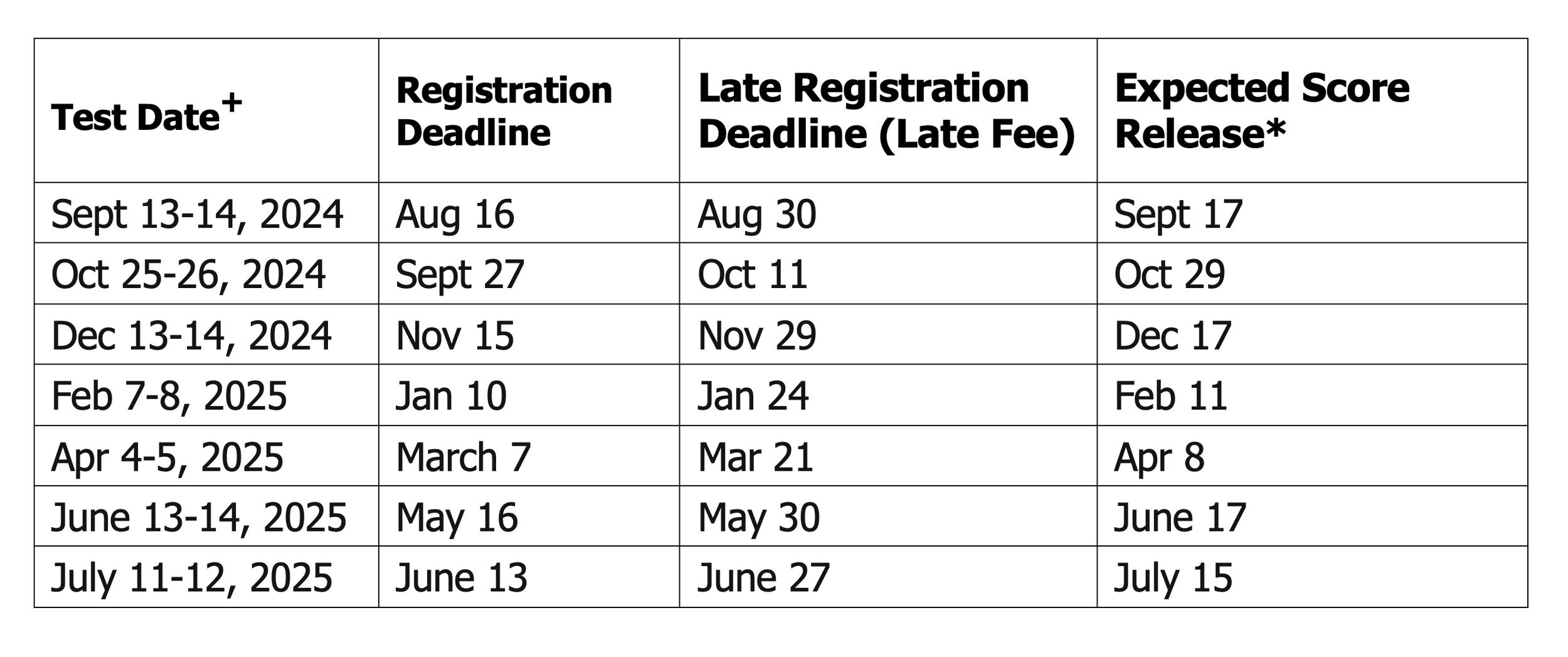
The ACT national test dates for 2024 were held on February 10, April 13, June 8, July 13, September 14, October 26, and December 14. These dates provided students with multiple opportunities to meet college application deadlines, with registration typically closing five weeks prior to each exam and late registration periods extending two weeks beyond the initial deadline.
Understanding the historical schedule of the 2024 ACT is essential for students and educators analyzing testing trends or confirming past score report timelines. As we navigate the 2026 academic landscape, the 2024 cycle remains a significant benchmark, particularly as it marked a period of transition toward expanded digital testing options and shifting university admissions requirements. This guide provides a comprehensive breakdown of the 2024 national testing calendar, registration requirements, and strategic considerations for standardized testing.
The 2024 ACT National Test Schedule
The ACT National Testing program follows a standardized cadence designed to provide students with approximately seven testing windows throughout the calendar year. In 2024, these dates were strategically placed to accommodate the needs of juniors finishing their primary curriculum and seniors finalizing their college applications.
During the 2024 cycle, students typically registered through the MyACT portal, an integrated system that manages everything from test center selection to score reporting. Each date in 2024 had a corresponding regular registration deadline, a late registration window (which incurred an additional fee), and a final deadline for photo uploads and standby requests.
2024 ACT National Test Dates and Deadlines
The following table outlines the official schedule for the 2024 calendar year. Note that these dates apply to national testing; state-funded or district-specific testing usually occurred on weekdays during school hours and followed a separate schedule.
| Test Date | Regular Registration Deadline | Late Registration Deadline | Photo Upload & Standby Deadline |
|---|---|---|---|
| February 10, 2024 | January 5, 2024 | January 19, 2024 | February 2, 2024 |
| April 13, 2024 | March 8, 2024 | March 22, 2024 | April 5, 2024 |
| June 8, 2024 | May 3, 2024 | May 17, 2024 | May 31, 2024 |
| July 13, 2024* | June 7, 2024 | June 21, 2024 | July 5, 2024 |
| September 14, 2024 | August 9, 2024 | August 25, 2024 | September 6, 2024 |
| October 26, 2024 | September 20, 2024 | October 7, 2024 | October 18, 2024 |
| December 14, 2024 | November 8, 2024 | November 22, 2024 | December 6, 2024 |
*Note: The July test date was generally not available at test centers located in New York or Canada.
Navigating the Registration Process in 2024
Registration for the 2024 ACT was primarily an online affair. The ACT organization utilizes the MyACT platform, which serves as the central hub for all student activity. In 2024, the registration process was refined to be more user-friendly, though it still required significant time to complete—often 30 to 45 minutes for first-time users.
Prerequisites for Registration
Before a student could secure a seat for a 2024 test date, several pieces of information were required. These included:
- High School Coursework: A list of courses taken in core subjects like English, Mathematics, and Science. This data is used by the ACT to provide context for score reports.
- A Valid Photo: Students were required to upload a clear headshot that met specific identification standards. This photo appeared on the student's admission ticket and the roster at the testing center to prevent identity fraud.
- Payment Method: A credit card or a fee waiver code was necessary to finalize the seat.
Strategic Selection of Test Centers
In 2024, test center availability varied significantly by region. Students in high-density areas often found that popular locations—such as local high schools or community colleges—filled up within days of the registration window opening. The ACT organization recommends that students register as early as possible to ensure they are assigned to a center close to home, reducing travel stress on the morning of the exam.
Fee Structures and Financial Considerations
The cost of the ACT underwent minor adjustments during the 2024 period. For the majority of the 2023-2024 and 2024-2025 academic years, the pricing reflected the organization's efforts to balance operational costs with student accessibility.
Standard Testing Fees
In 2024, the basic registration fee for the ACT (No Writing) was approximately $68.00. For students opting for the ACT with Writing, the fee was roughly $91.00. The Writing section is an optional 40-minute essay that some highly competitive universities required or recommended during the 2024 admissions cycle.
Additional Costs and Late Fees
Missing the regular registration deadline for a 2024 test date resulted in a late registration fee, typically around $38.00. This fee was added to the base price of the exam. Other potential costs included:
- Standby Testing: If a student missed all deadlines, they could attempt to test as a standby for an additional fee of approximately $68.00 (refunded only if the student was not admitted to the test center).
- Test Center Changes: Changing a testing location after registration incurred a fee of roughly $44.00.
- Additional Score Reports: While the base fee included four score reports sent to colleges of the student's choice, additional reports were priced at $19.00 each.
Fee Waiver Eligibility
Recognizing the financial burden of standardized testing, the ACT provided fee waivers to eligible students in 2024. To qualify, a student generally had to be enrolled in the 11th or 12th grade in the U.S., U.S. territories, or Puerto Rico and meet one or more indicators of economic need, such as participation in the National School Lunch Program. A fee waiver in 2024 covered the cost of the registration fee (with or without writing) and provided additional benefits like free access to ACT self-paced prep materials.
The Shift to Digital Testing in 2024
One of the most significant developments during the 2024 testing year was the expanded rollout of the Digital ACT. While the paper-and-pencil format remained the dominant method of testing in the United States, ACT began offering more computer-based testing options at select national test centers.
Characteristics of the 2024 Digital ACT
The digital version of the exam was identical in content and length to the paper version. It consisted of the same four core sections: English, Math, Reading, and Science, plus the optional Writing section. The primary difference was the interface. Students used a secure browser on a computer provided by the testing center.
The move toward digital was motivated by several factors:
- Faster Score Reporting: Digital tests often allow for quicker processing of results.
- Accessibility Features: Computer-based testing provided built-in tools like magnification and high-contrast modes for students with specific needs.
- Modernization: Aligning the test format with the way modern students learn and work in a classroom setting.
By the latter half of 2024, more test centers were equipped to handle digital testing, though students were still given the choice at many locations between the two formats, provided they registered early enough.
Score Reporting and Interpretation
For the 2024 test dates, the timeline for receiving scores followed a predictable pattern. Most students received their multiple-choice scores within two to eight weeks after the test date.
How Scores Were Released
Scores were released in batches. The first batch typically appeared on the MyACT portal about 10 days after the Saturday test date. However, students who took the Writing section had to wait longer—usually about two weeks after their multiple-choice scores were posted—as the essays required human grading by two independent readers.
Understanding the 2024 Scale
The ACT is scored on a scale of 1 to 36. This "Composite Score" is the average of the four multiple-choice sections (English, Math, Reading, and Science), rounded to the nearest whole number. In 2024, the national average composite score hovered around 19 to 20, though this varied significantly depending on the demographic and the specific testing pool of each date.
Superscoring in 2024
The ACT "Superscore" remained a vital tool for students in 2024. A superscore is the average of the highest section scores from all test dates a student has sat for. By 2024, the majority of colleges and universities in the United States accepted superscores, allowing students who performed exceptionally well in one section on a February date and another section on an April date to combine those high marks into a single, more competitive composite score.
Accommodations and English Learner Supports
The ACT is committed to providing access to all students, and the 2024 cycle saw continued emphasis on accommodations for students with documented disabilities.
Types of Accommodations
In 2024, accommodations were categorized into two main groups:
- National Testing (Standard Time with Accommodations): This included minor adjustments like seating near the front of the room, use of a large-print test booklet, or permission to use a glucose monitor.
- Special Testing: This was for students who required more significant adjustments, such as extended time (triple time or double time), testing over multiple days, or the use of a reader or scribe.
Requesting Accommodations
The process for requesting accommodations in 2024 required coordination between the student, their parents, and their school counselor. All requests had to be submitted through the ACT Accommodations and English Learner (EL) system by the registration deadline. Because this process required official documentation from the school (such as an IEP or 504 plan), students were advised to start this process months in advance of their desired 2024 test date.
Strategic Timing: Which 2024 Date Was Best?
Choosing the right test date in 2024 was often a matter of balancing the student’s academic workload with college application deadlines.
For High School Juniors
Juniors were generally encouraged to take their first ACT in February or April 2024. This allowed them to see their baseline scores and identify areas for improvement before the end of the school year. It also provided the opportunity to take the exam again in June or July 2024 after they had completed more of their math and science curriculum.
For High School Seniors
For students graduating in the class of 2025, the September and October 2024 dates were the most critical. These dates were the final opportunities to secure scores for "Early Action" or "Early Decision" college applications, which typically have deadlines in early November. The December 2024 date served as the final chance for regular decision deadlines, which usually fall in January or February.
Common Mistakes to Avoid
Based on the 2024 testing cycle, several common pitfalls were identified that students should avoid to ensure a smooth testing experience:
- Waiting Until the Late Deadline: Registering during the late window not only costs more but also significantly reduces the chance of getting a preferred test center. In 2024, many students were forced to drive over an hour because their local center reached capacity early.
- Incorrect Identification: Students frequently arrived at test centers with the wrong type of ID. In 2024, the ACT required a current, government-issued or school-issued photo ID. Digital IDs or photocopies were not accepted.
- Calculator Non-Compliance: The ACT has strict rules about which calculators are allowed (specifically forbidding those with built-in Computer Algebra Systems like the TI-89). Many students in 2024 had their calculators confiscated or were disqualified for using unapproved models.
- Forgetting the Admission Ticket: Despite the digital nature of the MyACT portal, students in 2024 were still required to bring a printed copy of their admission ticket to the test center.
Frequently Asked Questions
Can I still take the ACT in July in New York?
No. Historically, and continuing through 2024, the July national test date was not available in New York. This is due to specific state laws regarding the "Truth in Testing" act, which requires testing agencies to release a certain number of test forms to the public each year—a requirement that the ACT does not meet for the July session.
How long does the ACT take with the Writing section?
In 2024, the standard ACT without writing took approximately 2 hours and 55 minutes of actual testing time. If you added the optional Writing section, the total testing time increased to 3 hours and 35 minutes. When you include administrative tasks, breaks, and instructions, students were typically at the test center for about 4.5 to 5 hours.
What is the 2024 "Test Information Release" (TIR)?
The Test Information Release (TIR) was a service offered for specific 2024 test dates (usually April, June, and September). For an additional fee, students could receive a copy of the test questions and their answers. This was an invaluable tool for students planning to retake the exam, as it allowed them to see exactly which questions they missed.
Is the ACT 2024 test harder than previous years?
Standardized tests like the ACT use a process called "equating" to ensure that scores are comparable across different test dates and years. While the specific questions on a 2024 exam might have felt more difficult to one student than a 2023 exam, the scaling process ensures that a 28 in April 2024 represents the same level of ability as a 28 in December 2024.
Can I change my 2024 test date after I've registered?
Yes, students in 2024 were able to change their test date through the MyACT portal. However, this required paying a change fee (approximately $44.00) plus the difference in registration fees if the student was moving from a non-writing to a writing exam. Date changes were only possible if there was still seat availability for the new date.
Recommendations for Future Testing
For those looking back at the 2024 ACT national test dates to plan for the current 2026 cycle, the most important takeaway is the value of early planning. Standardized testing is not merely about content knowledge; it is about logistical preparation and strategic timing.
If you are a student or parent currently preparing for upcoming exams, use the 2024 schedule as a template for understanding how the ACT organization structures its year. Ensure that you have a MyACT account established well in advance, and always aim to register during the regular window to save on fees and secure a local testing site. Finally, check with your target universities to see their current stance on "Test-Optional" policies, as many institutions that went optional during the 2020-2024 period have begun reinstating testing requirements as of 2026.