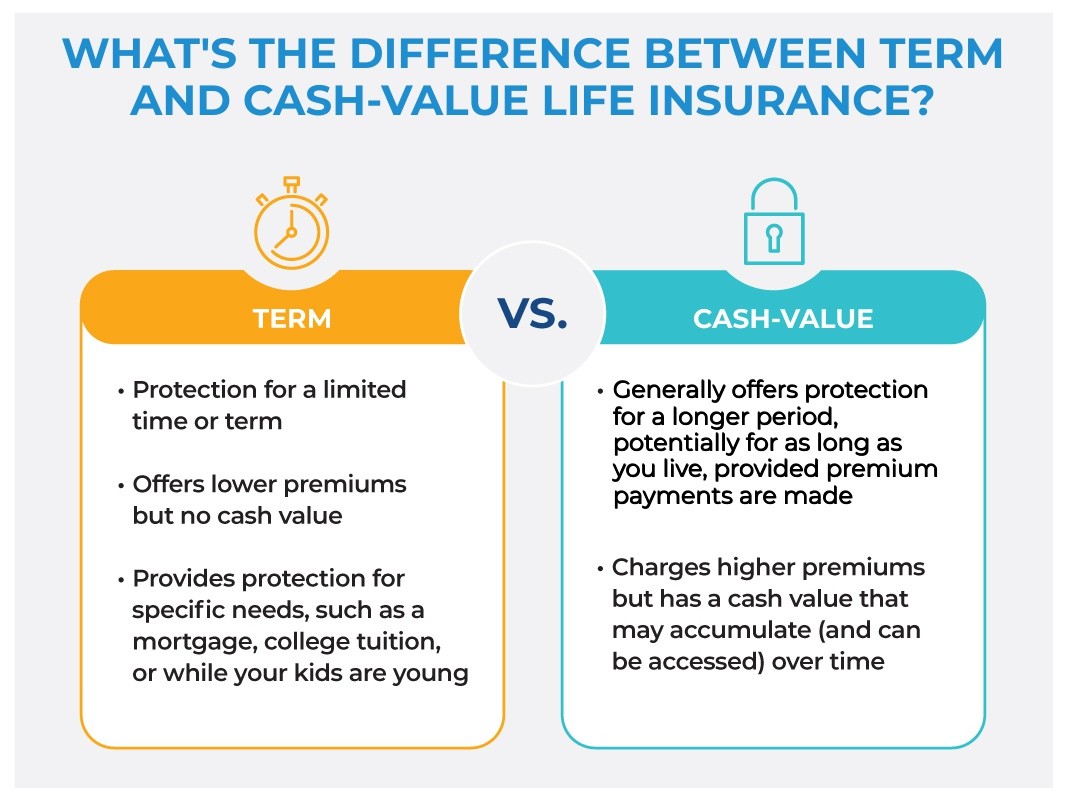
Choosing the right life insurance policy requires balancing the immediate need for death benefit coverage against long-term goals for capital growth or tax-advantaged savings. Protection-oriented policies focus on affordable, temporary coverage for income replacement, while accumulation-oriented policies integrate a permanent death benefit with a cash value component designed to grow over time, serving as a versatile financial asset.
Understanding the Core Philosophical Divide
The life insurance industry is primarily bifurcated into two conceptual categories: protection and accumulation. While all life insurance provides a death benefit—the sum paid to beneficiaries upon the insured's passing—the mechanism and intent behind how that benefit is maintained or enhanced vary significantly.
Protection-oriented insurance is characterized by its singularity of purpose: the mitigation of financial risk associated with the premature death of the insured. It is designed to be an expense rather than an investment, providing the highest possible coverage for the lowest possible premium. Because these policies generally do not build equity, they are often compared to other "pure" insurance products like homeowners or auto insurance, where the objective is to indemnify against a specific loss rather than to store value.
Accumulation-oriented insurance, conversely, functions as a hybrid vehicle. It combines mortality protection with a savings component known as "cash value." A portion of the premiums paid is directed into a sub-account or internal ledger that grows according to the policy type—whether through fixed interest, market-linked indices, or equity-based sub-accounts. The intent here is to leverage the tax-deferred growth characteristics of life insurance to build a secondary asset that can be accessed during the policyholder's lifetime, while still providing a death benefit.
Protection Insurance: The Role of Term Policies
Term life insurance remains the standard-bearer for protection-based coverage. It is defined by its finite duration—typically ranging from 10 to 30 years—and its lack of an internal savings component.
Why Choose Protection Products?
The primary advantage of protection insurance is cost-efficiency. Because the insurance carrier is only on the hook for a defined, limited period, the actuarial risk is lower, and the premiums reflect this. For most families in 2026, term insurance is the most practical tool for covering major financial milestones, such as:
- Income Replacement: Ensuring the household can maintain its standard of living if a primary earner dies.
- Debt Liquidation: Providing funds to pay off a mortgage, student loans, or business liabilities.
- Educational Funding: Replacing the projected earnings that would have gone toward children’s college tuition.
Operational Characteristics
When purchasing a protection policy, the insured undergoes medical underwriting. The premium is generally fixed for the length of the term. Once the term expires, the coverage ends unless the policyholder converts to a permanent policy or purchases a new term, which will be priced at their then-current age—significantly increasing the cost.
Accumulation Insurance: Leveraging Permanent Policies
Accumulation policies are classified as "permanent" because they are designed to last for the insured’s entire life, provided that sufficient premiums are paid to maintain the policy. These include Whole Life, Universal Life (UL), Indexed Universal Life (IUL), and Variable Universal Life (VUL).
The Mechanics of Cash Value
The "accumulation" in these products occurs when the insurance carrier invests a portion of the premium in its general account or allows the policyholder to direct funds into specific investment options. Over time, these funds accrue value. This accumulation serves several strategic purposes:
- Tax-Advantaged Access: Policyholders can typically withdraw their basis (the amount paid in premiums) tax-free or take policy loans against the cash value, which may be income-tax-free, provided the policy remains in force.
- Supplemental Retirement Income: In the later years of a policy, the accumulated cash value can be used to supplement retirement income, acting as a non-correlated asset class that does not trigger capital gains taxes upon withdrawal in the same way a taxable brokerage account might.
- Premium Flexibility: In some Universal Life products, the cash value can be used to cover the cost of insurance if the policyholder encounters a period of financial hardship, preventing the policy from lapsing.
Risks and Considerations
Accumulation policies require a higher level of oversight. Unlike term insurance, which is "set it and forget it," accumulation policies are sensitive to interest rates, market performance, and the cost of insurance (COI) charges. If the cash value is depleted—due to poor market performance or excessive borrowing—the policy may lapse, resulting in a large, potentially taxable gain if there are outstanding loans that exceed the policy's cost basis.
Comparative Analysis: Key Decision Factors
| Feature | Protection (Term) | Accumulation (Permanent) |
|---|---|---|
| Primary Goal | Risk Mitigation | Wealth Building & Legacy |
| Duration | Temporary (10–30 years) | Lifetime (if funded correctly) |
| Premiums | Low and Fixed | High and Potentially Variable |
| Cash Value | None | Yes (Builds over time) |
| Complexity | Low | High |
| Tax Status | N/A | Tax-deferred growth |
Balancing Cost and Utility
When evaluating whether to prioritize protection or accumulation, the decision often hinges on the "opportunity cost" of the capital. If you purchase an accumulation policy, the premiums will be significantly higher than a term policy with the same death benefit. The question for the consumer is: Would the difference in premiums produce a better result if invested in a diversified portfolio (like an index fund or retirement account) versus the cash value of a life insurance policy?
For many, the answer is to "buy term and invest the difference." However, for high-net-worth individuals or those seeking specific tax-diversification strategies or asset protection from creditors, the accumulation route can offer unique benefits that traditional taxable accounts cannot match.
Common Mistakes in Product Selection
The most frequent error in selecting between these two categories is misalignment between the product structure and the financial goal.
- Over-leveraging the Policy: Some policyholders treat accumulation products like a high-yield savings account. Life insurance is designed as a long-term vehicle. Early withdrawals or loans can undermine the death benefit and potentially cause a "tax bomb" if the policy lapses.
- Under-insuring via Accumulation: Because permanent insurance is expensive, some people opt for a lower death benefit than they actually need just to make the monthly premiums affordable. If your goal is protecting a young family, the priority must be a large death benefit, which is almost exclusively achieved through term insurance.
- Ignoring the "Cost of Insurance": In Universal Life products, the cost of insurance increases as you age. If the policy is not properly funded, you may be forced to pay higher premiums in your 60s or 70s to keep the policy alive—a time when you may have hoped to be finished with premium payments.
Strategy: Integrating Both Approaches
It is rarely an "either-or" decision for sophisticated financial planning. A common strategy involves a "layered" approach. A foundation of term insurance provides the necessary high-limit protection during the "accumulation years" (when children are young and mortgages are large). As the individual progresses in their career and their wealth grows, they may then introduce a permanent policy to serve as a long-term liquidity vehicle, a legacy-planning tool, or a tax-efficient supplement to retirement income.
Frequently Asked Questions
Is the cash value in an accumulation policy guaranteed?
It depends on the product. Whole life insurance typically offers guaranteed cash value growth and fixed premiums. Universal life insurance (including IUL and VUL) does not provide guarantees on the growth component, as it is tied to interest rates or market performance. Always review the policy illustration to understand what is guaranteed versus what is projected.
Can I convert a protection policy to an accumulation policy later?
Many term life insurance policies include a "conversion privilege." This allows you to convert your term policy into a permanent (accumulation) policy without undergoing a new medical exam. This is a valuable feature for those who may have health changes that would otherwise make them uninsurable or subject to higher premium ratings later in life.
Are life insurance loans taxable?
Generally, policy loans are not taxable as long as the policy remains in force. However, if the policy lapses while a loan is outstanding, the IRS may treat the outstanding loan balance as a distribution, which can result in significant income tax liabilities. It is essential to manage loan balances carefully.
Does an accumulation policy replace a 401(k) or IRA?
No. An accumulation policy should be viewed as a supplement to, not a replacement for, qualified retirement plans. While it offers tax-advantaged growth, it carries significantly higher fees than low-cost index funds within a 401(k). Most financial advisors recommend fully funding your qualified retirement accounts before prioritizing cash-value life insurance.
Who is the ideal candidate for an accumulation-oriented product?
The ideal candidate is typically someone who has already maximized their tax-advantaged retirement contributions (401k, IRA, HSA), is in good health, has a long-term time horizon for the policy (20+ years), and is seeking a tax-efficient way to transfer wealth or access capital without relying solely on traditional market-correlated assets.
Next Steps for Consumers
If you are evaluating your life insurance needs for 2026, begin by conducting a comprehensive financial needs analysis. Determine the specific amount of death benefit required to cover your liabilities and your family’s income needs. If that number is substantial, ensure that a term life policy is secured to cover those risks. Only once your protection needs are fully met should you explore whether an accumulation-oriented policy serves a secondary goal, such as estate liquidity, tax diversification, or supplemental cash flow. Always request a "ledger" or "illustration" from your agent that demonstrates the worst-case scenario and sensitivity to interest rate changes before committing to a permanent policy.