If your air conditioner is running but failing to lower the indoor temperature, the issue typically stems from restricted airflow, a malfunctioning thermostat, or a critical mechanical failure such as a refrigerant leak or a dead capacitor. Most cooling problems can be resolved by cleaning filters or resetting breakers, though professional repair is required for sealed system issues.
Understanding the Mechanics of Modern Cooling Systems
As of 2026, air conditioning technology has moved toward high-efficiency variable-speed compressors and the widespread adoption of A2L refrigerants like R-454B and R-32. Despite these advancements, the fundamental physics of the refrigeration cycle remain the same: your AC does not "create" cold; it removes heat from your home and transfers it outdoors.
When an AC stops blowing cold air, it means this heat-exchange process has been interrupted. This interruption can occur at the indoor evaporator coil, the outdoor condenser unit, or within the electrical communication lines that connect them. Understanding which part of the cycle is broken is the first step toward a cost-effective resolution.
Immediate Steps: The "Low-Hanging Fruit"
Before assuming the worst, several common culprits are easy to identify and fix without specialized tools.
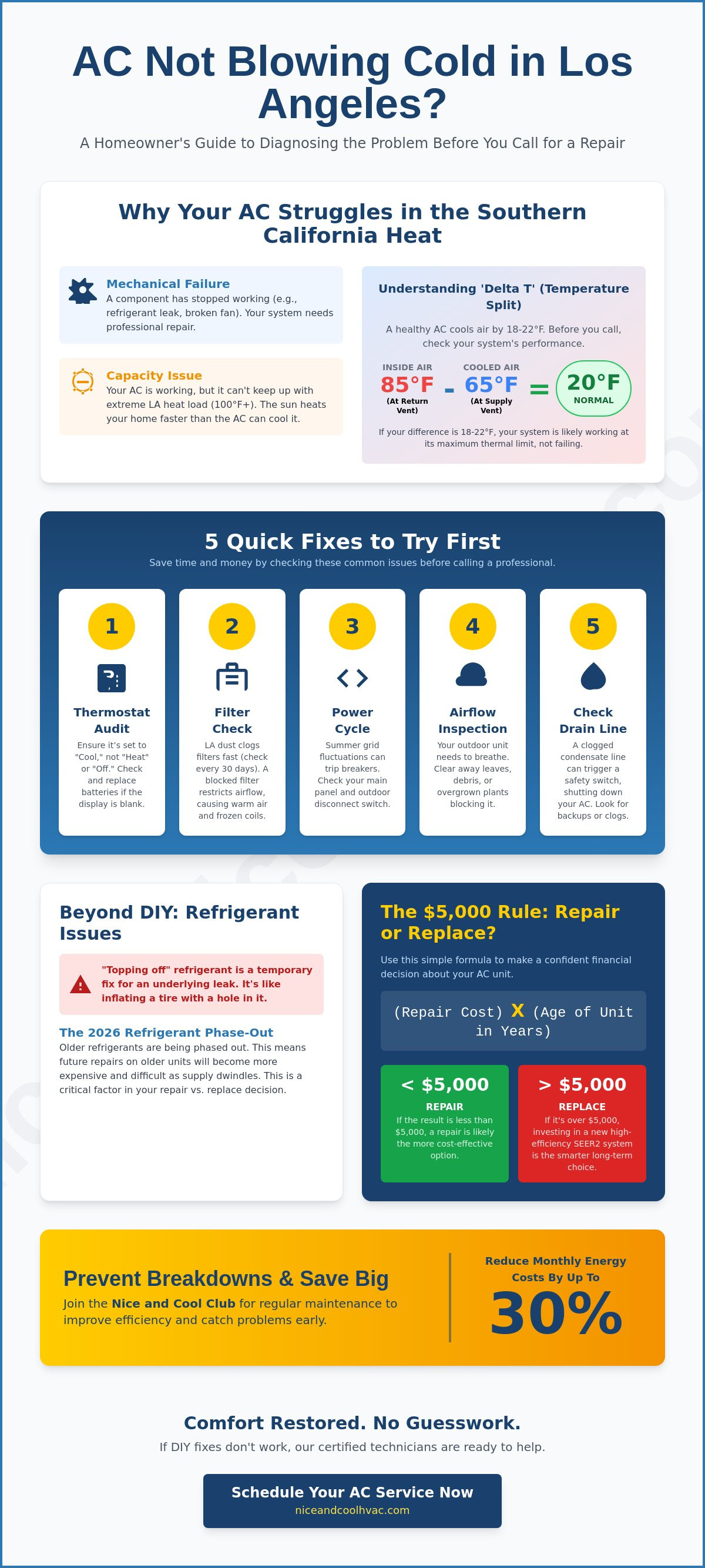
1. Check the Thermostat Settings
It sounds simple, but a significant percentage of service calls in 2026 are resolved by simply adjusting the thermostat.
- Mode: Ensure the system is set to "Cool" rather than "Heat" or "Fan Only."
- Fan Setting: If the fan is set to "On," it will blow air continuously even when the cooling cycle is off, which may feel warm. Set it to "Auto" so the fan only runs when the air is actively being chilled.
- Batteries: If you have an older digital thermostat, low batteries can cause the screen to stay on while failing to send the "start" signal to the outdoor unit.
2. Inspect the Air Filter
A clogged air filter is the leading cause of "AC not blowing cold" complaints. When the filter is packed with dust, pet dander, and debris, airflow across the evaporator coil is restricted. Without enough air passing over it, the coil becomes too cold and eventually freezes into a block of ice. This ice acts as an insulator, preventing the system from absorbing any further heat from your home.
3. Verify Power at the Breaker
High-efficiency AC units can sometimes trip a circuit breaker during a power surge or a particularly intense heatwave. Check your home’s electrical panel. If the breaker for the "AC" or "Condenser" is in the middle position, flip it to "Off" and then back to "On." If it trips again immediately, do not force it; this indicates a short circuit that requires professional attention.
Airflow Obstructions and Coil Issues
If the basic checks don't solve the problem, the next level of troubleshooting involves the physical components that manage heat exchange.
The Indoor Evaporator Coil
The evaporator coil is located inside your furnace or air handler. If you notice a "hissing" sound or see ice forming on the copper lines leading into the unit, your coil is likely frozen.
- The Thaw Process: If the unit is frozen, turn the AC off at the thermostat and turn the fan to "On." This will circulate unchilled air over the ice to melt it. This can take 4 to 24 hours. Do not attempt to scrape the ice off, as you may puncture the delicate aluminum fins.
- Dirty Coils: Even if not frozen, a layer of grime on the coils prevents efficient heat transfer. In 2026, most homeowners use self-rinsing coil cleaners, but heavy buildup may require a technician to perform a "pull and clean" service.
The Outdoor Condenser Unit
The outdoor unit is responsible for releasing the heat collected from inside. If the condenser cannot "breathe," the refrigerant cannot release its heat, and the cycle fails.
- Clearance: Ensure there are at least two feet of clear space around the unit. Overgrown shrubs, tall grass, or stored items can choke the system.
- Cleaning the Fins: Use a garden hose (never a pressure washer) to gently spray out dirt, pollen, and lawn clippings from the exterior fins. Be careful not to bend the delicate metal slats.
Mechanical and Electrical Failures
If the fans are spinning and the filters are clean, but the air remains lukewarm, the problem likely lies in the electrical components or the refrigerant levels.
The Start/Run Capacitor
The capacitor is a small, cylindrical component in the outdoor unit that acts like a battery to provide the high-voltage jolt needed to start the compressor. They are notorious for failing during extreme heat.
- Symptoms: You may hear a humming sound from the outdoor unit, but the fan or compressor won't start. A "bulging" or "leaking" top on the capacitor is a definitive sign of failure.
- 2026 Context: Modern capacitors are more resilient than those from a decade ago, but they remain a common point of failure. Replacing one is a standard repair but involves high-voltage risks.
The Compressor
The compressor is the "heart" of the AC. If it fails, the refrigerant cannot circulate. Compressor failure is often signaled by a loud grinding noise or a complete lack of vibration from the outdoor unit while the fan is running. Because this is the most expensive part of the system, a failed compressor in a unit older than 10–12 years often necessitates a full system replacement.
Refrigerant Leaks
The AC system is a "closed loop," meaning it should never need more refrigerant unless there is a leak.
- Signs of a Leak: Bubbling or hissing noises, ice on the lines, and a steady decline in cooling performance over several days or weeks.
- Regulatory Note: Under the EPA’s American Innovation and Manufacturing (AIM) Act, older refrigerants like R-22 are virtually phased out, and R-410A is becoming increasingly expensive. If your system uses these and has a leak, the cost of the refrigerant alone might make repair unfeasible compared to upgrading to a 2026-compliant A2L system.
Troubleshooting Summary Table
| Symptom | Potential Cause | Difficulty | Action |
|---|---|---|---|
| Fan runs, air is room temp | Dirty Air Filter | Easy | Replace filter and check for ice. |
| Outdoor unit is silent | Tripped Breaker | Easy | Reset breaker at the main panel. |
| Humming sound, no fan | Failed Capacitor | Medium | Professional replacement recommended. |
| Ice on copper pipes | Airflow restriction or low Freon | Medium | Thaw unit; check filter; call pro if it recurs. |
| Outdoor unit covered in dirt | Clogged Condenser Fins | Easy | Clean with a gentle garden hose stream. |
| Clicking sound, no start | Faulty Contactor | Medium | Inspect for burnt points or insect debris. |
Professional Diagnostics and Costs in 2026
When DIY troubleshooting fails, calling an HVAC professional is the next step. In 2026, diagnostic fees typically range from $100 to $200, which usually covers the first 30–60 minutes of labor to identify the fault.
Estimated Repair Costs (2026 Projections)
- Capacitor Replacement: $250 – $450 (including labor).
- Contactor Replacement: $200 – $400.
- Blower Motor Repair: $500 – $900.
- Refrigerant Leak Repair & Recharge: $600 – $1,800 (highly dependent on refrigerant type).
- Evaporator Coil Replacement: $1,200 – $2,500.
It is important to note that if your system is more than 15 years old, the transition to newer, more efficient refrigerants may make certain repairs strategically unwise. Technicians in 2026 are increasingly trained to evaluate the "Total Cost of Ownership," weighing the price of a major repair against the energy savings and rebates available for new SEER2-compliant heat pumps and AC units.
Safety and Environmental Considerations
Working on an air conditioner involves high-voltage electricity and pressurized chemicals. Always turn off the power at both the thermostat and the outdoor disconnect box before inspecting internal components.
Furthermore, venting refrigerant into the atmosphere is illegal under federal law. If you suspect a leak, do not attempt to "top it off" yourself with store-bought kits, which often contain sealants that can permanently damage modern variable-speed compressors. Only Section 608-certified technicians should handle refrigerant recovery and charging.
Frequently Asked Questions
Why is my AC blowing air but it’s not cold?
This usually indicates that the blower fan inside is working, but the cooling cycle has been interrupted. The most common causes are a tripped outdoor breaker, a failed capacitor, or a dirty evaporator coil that has frozen over. If the air is "room temperature," the compressor is likely not engaging.
Can a dirty filter really stop the AC from cooling?
Yes. A dirty filter restricts airflow, which causes the temperature of the evaporator coil to drop below freezing. Moisture from the air then turns to ice on the coil, blocking any further heat absorption. This can eventually lead to liquid refrigerant "slugging" back into the compressor, potentially destroying it.
How do I know if my AC is low on refrigerant?
The most common signs are a hissing sound near the indoor or outdoor unit, ice forming on the refrigerant lines, and the system running constantly without reaching the set temperature. Because AC systems are sealed, being "low" always implies a leak that must be found and repaired.
Should I turn my AC off if it’s not blowing cold?
Yes. If the system is running but not cooling, it is likely straining the compressor or the motor. If the issue is a frozen coil, keeping the system "on" will only build more ice. Turn the system to "Off" or "Fan Only" to prevent mechanical damage while you troubleshoot or wait for a technician.
How often should I clean my outdoor unit?
Ideally, you should inspect the outdoor condenser every spring before the heavy cooling season begins. If you have "cottonwood" trees or high amounts of dust in your area, you may need to gently hose off the coils every few months to maintain peak efficiency and prevent the system from overheating.
Final Recommendation
If your AC is not blowing cold, start by replacing your air filter and checking your circuit breaker. If the system still fails to cool after these steps, turn the unit off to prevent compressor damage and contact a certified HVAC technician. Early intervention often prevents a simple electrical failure from turning into a costly mechanical replacement. For homeowners with systems over 12 years old, consider requesting a "health check" to see if your unit is compatible with current 2026 energy standards and refrigerant regulations.