An Associate of Applied Science (AAS) in Information Technology is a two-year undergraduate degree program designed to provide students with the practical, hands-on technical skills required for entry-level roles in the IT sector. Unlike academic associate degrees focused on transfer credits for bachelor’s programs, the AAS emphasizes specific technical competencies, including network administration, cybersecurity, database management, and systems support, preparing graduates for immediate workforce entry in 2026.
Defining the AAS in Information Technology
The AAS in Information Technology functions as a terminal technical degree. While some students do use these credits to transition into a Bachelor of Science (BS) program, the primary objective of the curriculum is to ensure that by the time of graduation, a student possesses the verified ability to configure hardware, manage software deployments, secure networks, and troubleshoot complex technical environments.
In the current professional landscape, the distinction between an Associate of Arts (AA), an Associate of Science (AS), and an Associate of Applied Science (AAS) is critical. The AA and AS degrees are traditionally "transfer-oriented," requiring a heavy load of general education credits such as history, literature, and higher-level mathematics. The AAS, by contrast, is "career-oriented." It minimizes general education requirements in favor of intensive labs, project-based learning, and industry-aligned certification training.
Curriculum Structure and Core Competencies
The curriculum of an AAS program is structured to mimic the modular nature of corporate IT departments. Students generally spend their first semester building foundational knowledge in computer architecture and operating systems before branching into specialized tracks.
Foundational Pillars
Every robust AAS program mandates a foundation in three core areas:
- Hardware and Infrastructure: Understanding the physical components of servers, workstations, and networking equipment. This often involves physical assembly, cabling standards, and understanding power and cooling requirements in data centers.
- Operating Systems: Mastery of both Windows Server and Linux environments. Given the prevalence of cloud infrastructure in 2026, proficiency in command-line interfaces (CLI) and shell scripting is a non-negotiable requirement for graduation.
- Networking Protocols: Comprehensive study of the OSI model, TCP/IP, subnetting, and routing. Students are expected to configure routers, switches, and firewalls in simulated or physical sandbox environments.
Specialized Concentrations
As students progress, they often select a concentration. These concentrations allow the student to align their education with current market demands. Common concentrations include:
- Cybersecurity: Focused on ethical hacking, penetration testing, intrusion detection, and disaster recovery planning.
- Cloud Computing: Utilizing platforms like AWS, Microsoft Azure, or Google Cloud to deploy and manage virtualized resources.
- Systems Administration: Managing Active Directory, user permissions, group policies, and enterprise-wide software distribution.
- Data Analytics and Database Management: Designing SQL databases and maintaining data integrity within a corporate framework.
The Role of Industry Certifications
A hallmark of a modern AAS in Information Technology is the integration of professional certification exam preparation into the coursework. Colleges that align their curricula with industry standards—such as those set by CompTIA, Cisco, and Microsoft—provide students with a significant competitive advantage.
By 2026, many programs have replaced traditional final exams in specific courses with actual vendor-neutral or vendor-specific certification exams. This dual-purpose approach ensures that a graduate does not simply hold a degree; they hold the industry-recognized credentials required by human resources departments for initial hiring. Common certifications integrated into these programs include:
- CompTIA A+ (Hardware/Software support)
- CompTIA Network+ or Cisco CCNA (Networking)
- CompTIA Security+ (Foundation for cybersecurity roles)
- Cloud Practitioner certifications (AWS/Azure)
Prerequisites and Academic Requirements
Entry requirements for an AAS in Information Technology vary by institution, but most community and technical colleges maintain an "open enrollment" or "accessible" policy.
Admissions Prerequisites
- High School Diploma or GED: This is the baseline requirement. Some institutions may offer "bridge programs" for individuals who lack these but have significant prior work experience.
- Mathematics Proficiency: While the AAS does not typically require Calculus, students must be comfortable with Boolean logic and basic algebra, which are essential for subnetting and programming logic.
- Technical Aptitude: Many programs require an assessment test (such as the ACCUPLACER or internal institutional exams) to determine readiness for college-level English and mathematics.
Financial and Time Commitments
The AAS is a 60-to-72 credit hour commitment. For a full-time student, this is typically completed in four semesters (two years). Part-time students or those working while attending school often extend this to three or four years. Cost considerations include tuition, which is substantially lower at public community colleges compared to private universities, and the cost of necessary hardware or simulation software subscriptions.
Comparison: AAS vs. Other Educational Paths
Prospective students must weigh the AAS against other pathways to determine the best return on investment.
| Feature | AAS Degree | Bachelor’s Degree | Professional Bootcamps |
|---|---|---|---|
| Duration | 2 Years | 4 Years | 3–9 Months |
| Focus | Technical Implementation | Theory + Management | Skill-Specific Training |
| Cost | Low/Moderate | High | Variable |
| Career Entry | Immediate | Long-term/Management | Specialized/Niche |
| Credential | Accredited Degree | Accredited Degree | Certificate of Completion |
As shown in the table, the AAS serves as a "middle ground." It offers the formal validation of an accredited institution without the significant time and financial expenditure of a four-year degree, while providing more structural, holistic training than a short-term intensive bootcamp.
Practical Steps for Prospective Students
If you are considering an AAS in Information Technology, follow this systematic approach to ensure you choose a program that aligns with your professional goals.
- Check Accreditation: Ensure the college is regionally accredited. Without regional accreditation, your credits will likely not transfer to a university if you decide to pursue a bachelor’s degree later.
- Review Industry Partnerships: Look for colleges that have active partnerships with local businesses or global tech companies. These partnerships often translate into internship opportunities, which are the single most important factor in securing a job after graduation.
- Audit the Labs: If possible, visit the campus or view a virtual tour. A high-quality IT program requires modern labs equipped with current-generation hardware and enterprise-grade software. If a program relies entirely on outdated simulations, consider another institution.
- Evaluate Faculty Qualifications: Look for instructors who maintain current professional certifications. In the IT field, theory becomes obsolete quickly; you want instructors who are actively engaged in the industry or maintain up-to-date vendor certifications.
- Connect with Career Services: A robust program will have a dedicated career center that helps students with resume building, mock interviews, and, crucially, job placement services.
Common Challenges and Troubleshooting
Even within a strong program, students encounter specific hurdles. Recognizing these early can prevent academic frustration.
- Difficulty with Abstract Concepts: Many students struggle with the jump from using software to understanding the underlying network architecture. Solution: Utilize office hours and join student-led study groups. The "peer-teaching" model is highly effective in IT education.
- Balancing Work and Study: IT programs are credit-intensive and require significant lab time outside of the classroom. Solution: Manage expectations early. Recognize that an IT degree is a hands-on pursuit that cannot be "crammed" in the same way as a literature course.
- Certification Fatigue: Managing the pressure of classwork while studying for external certifications can be overwhelming. Solution: Focus on the certifications that are core to your target job role. Do not attempt to collect every certification; focus on depth in your chosen concentration.
Career Outlook and Earning Potential
As of 2026, the demand for IT professionals remains resilient across all sectors. Graduates with an AAS are primarily positioned for roles such as:
- Help Desk Technician: Tier 1 and Tier 2 support roles.
- Network Administrator: Managing small-to-mid-sized business networks.
- Security Analyst: Entry-level monitoring of security operations centers (SOC).
- Systems Support Specialist: Maintaining corporate hardware/software ecosystems.
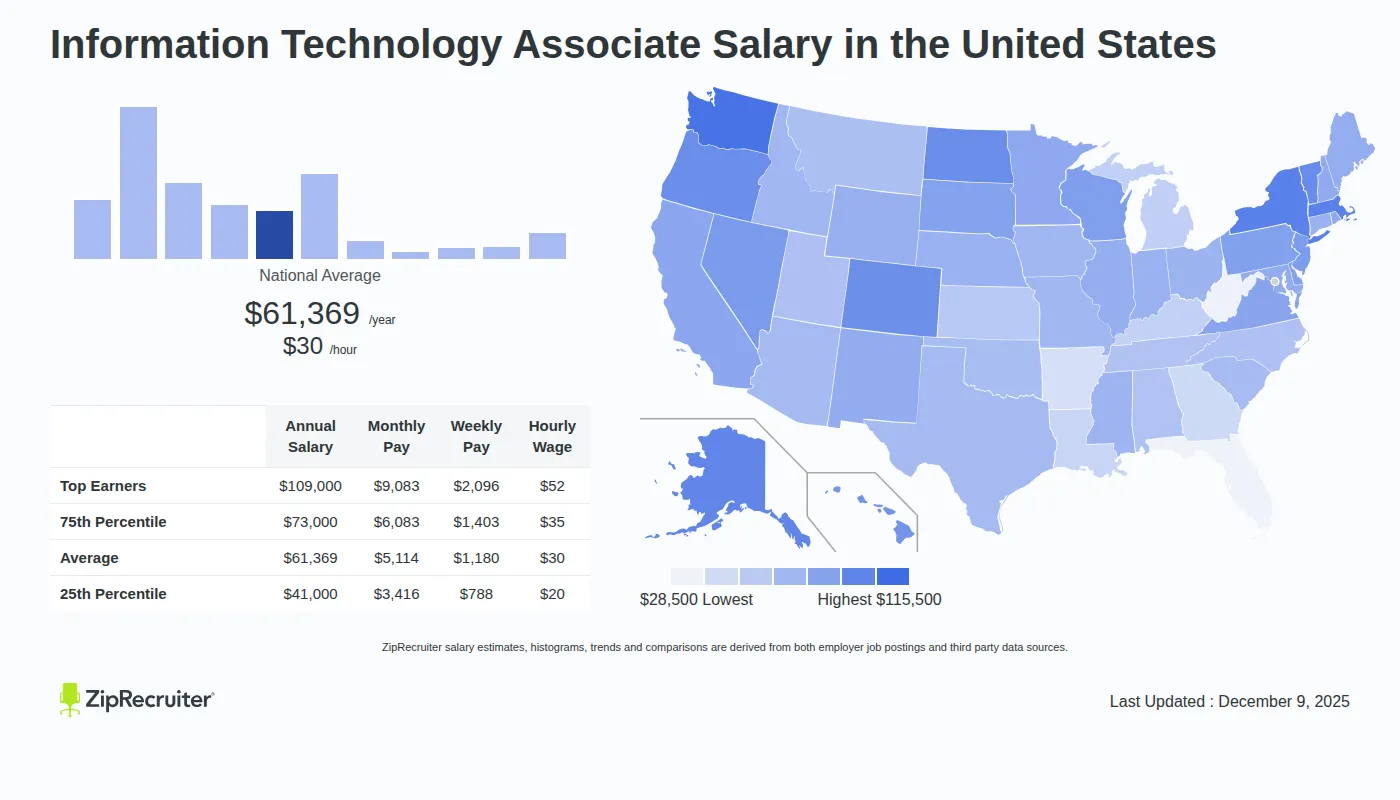
While salary expectations vary by geographic region, the AAS provides a viable entry point into a career path with significant growth potential. The key to long-term success is treating the AAS not as the end of your education, but as the foundation. In the IT industry, continuous learning—through additional certifications and potentially a later degree—is expected.
Frequently Asked Questions (FAQ)
Is an AAS in Information Technology enough to get a job?
Yes. Many employers in 2026 prioritize hands-on skillsets and certifications over a four-year degree for entry-level technical roles. An AAS provides the proof of technical literacy and formal training required to pass initial screening processes.
Can I transfer my AAS credits to a four-year university?
It depends on the institution. Regional accreditation is vital here. Many community colleges have "articulation agreements" with state universities, which guarantee that your AAS credits will count toward a Bachelor of Science in Information Technology or Computer Science. Always check for these agreements before enrolling.
What is the biggest difference between an AAS and a BS in IT?
The primary difference is the focus on theory versus practice. A BS degree typically includes more management, organizational behavior, and advanced mathematics, preparing students for leadership roles. An AAS is focused entirely on the "how-to" of current technology.
Do I need to be a math genius to succeed in this program?
No. While logic and basic algebra are necessary, you are not expected to perform high-level calculus. Most IT roles require the ability to understand logical patterns, binary, and basic data manipulation rather than complex theoretical mathematics.
How often do IT curricula get updated?
Good IT programs update their curriculum annually. If a department is teaching technology that was standard five years ago but is obsolete today, they are failing their students. Check the syllabus for modern tools like current server versions and modern cloud service providers.
Next Actions
If you are ready to pursue an AAS in Information Technology, your first step should be to research the local community colleges in your area. Use their public course catalogs to find the "Program of Study" document. This document will list every class you will take for the next two years. Compare this against the job descriptions for roles you want on professional hiring boards. If the classes offered align with the skills listed in those job descriptions, you have found a program that will provide a high return on your investment. Reach out to an academic advisor at that institution to discuss the enrollment timeline and current prerequisite requirements.