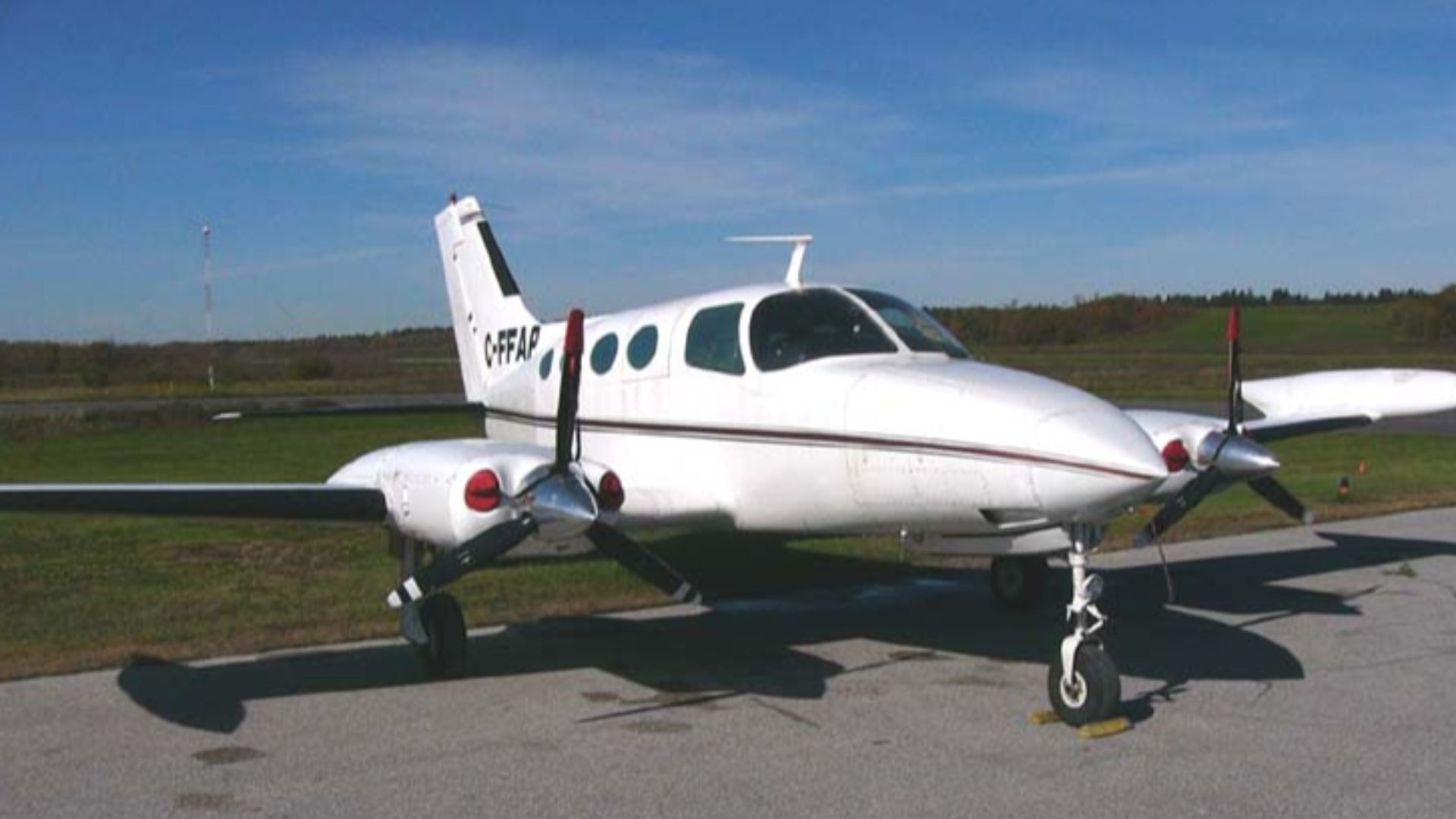
The airplane crash that claimed the life of American singer and actress Aaliyah on August 25, 2001, remains one of the most tragic and scrutinized events in music history. The accident, which occurred in Marsh Harbour, Bahamas, killed all nine people on board and was later attributed to significant pilot error, aircraft overloading, and systemic failures in charter flight oversight.
On a clear Saturday afternoon in late August 2001, a twin-engine Cessna 402B carrying Aaliyah and her entourage plummeted to the ground shortly after takeoff from Marsh Harbour Airport. The group was returning to the United States after filming the music video for the single "Rock the Boat." What was intended to be a celebratory conclusion to a successful production turned into a catastrophe that halted the career of a rising global superstar and exposed dangerous negligence within the private aviation industry.
As we reflect on this event from 2026, the investigation into the crash continues to serve as a primary case study in aviation safety, specifically regarding the critical importance of weight and balance and the verification of pilot credentials.
The Context: Filming "Rock the Boat" and the Flight Departure
Aaliyah’s trip to the Bahamas was professional in nature. She was at the height of her career, having recently released her self-titled third album, which was receiving critical acclaim. The production for "Rock the Boat," directed by Hype Williams, had been completed ahead of schedule, and the crew was eager to return to Florida.
The original plan for the return flight reportedly involved a larger aircraft. However, the plane that arrived at Marsh Harbour was a smaller Cessna 402B, operated by Blackhawk International Airways. This change in aircraft size created an immediate logistical conflict. The entourage had a substantial amount of heavy camera equipment, lighting gear, and personal luggage.
Witnesses at the airport later reported that the pilot and airport staff warned the group that the Cessna was too small to safely carry all the passengers and their equipment. Despite these warnings, the luggage was loaded. This decision would prove to be the primary catalyst for the disaster.
The Sequence of the Crash
At approximately 6:49 PM local time, the aircraft, registered as N8097W, began its takeoff roll on Runway 27. The flight was destined for Opa-locka Airport in Florida. According to eyewitness accounts and the subsequent investigation by the Bahamian Department of Civil Aviation and the National Transportation Safety Board (NTSB), the aircraft lifted off the runway but failed to gain significant altitude.
Almost immediately after becoming airborne, the Cessna 402B pitched up sharply, stalled, and then banked to the left before nose-diving into a swampy area approximately 200 feet from the end of the runway. The impact was devastating. The aircraft was obliterated upon contact with the ground, and a localized fire broke out.
Rescue workers arrived quickly, but the force of the impact left no chance for survival for most on board. Aaliyah, aged 22, was among those pronounced dead at the scene.
The Victims of the Crash
The tragedy claimed nine lives, including Aaliyah and several key members of her creative and security teams:
- Aaliyah Haughton: Singer and actress.
- Luis Morales III: The pilot.
- Keith Wallace: 33, an employee of Virgin Records.
- Douglas Kratz: 28, an employee of Virgin Records.
- Gina Smith: 30, Aaliyah’s product manager.
- Eric Foreman: 29, Aaliyah’s hair stylist.
- Anthony Dodd: 34, Aaliyah’s makeup artist.
- Christopher Maldonado: 32, Aaliyah’s security guard.
- Scott Gallin: 41, Aaliyah’s security guard (initially survived the impact but died shortly after at a clinic).
The Official Investigation: Weight, Balance, and Negligence
The investigation into the crash of N8097W was conducted by the Bahamian authorities with assistance from the NTSB and Cessna. The findings revealed a harrowing series of negligent acts that contributed to the accident.
Critical Overloading and Center of Gravity
The most significant finding was that the aircraft was significantly over its maximum takeoff weight (MTOW). Aviation records for the Cessna 402B indicate a strict limit on how much weight the airframe can support while maintaining the ability to climb. The investigation determined that the plane was overloaded by roughly 700 to 800 pounds.
Furthermore, the weight was not distributed correctly. Because the heavy equipment was packed into the rear of the aircraft, the Center of Gravity (CG) shifted significantly aft (toward the tail). In aviation, an "aft CG" is extremely dangerous during takeoff. It causes the nose of the plane to pitch up uncontrollably. Once the nose pitches past a certain angle, the wings lose lift—a condition known as a stall. Because the plane was at a low altitude, there was no room for the pilot to recover.
Pilot Qualifications and Toxicology
The investigation also turned its focus to the pilot, Luis Morales III. It was discovered that Morales was not authorized to fly the Cessna 402B for Blackhawk International Airways. His Federal Aviation Administration (FAA) records showed that he had been granted a pilot's license, but he did not have the required "type rating" or the necessary Part 135 certification required to fly commercial charters for that specific company.
More disturbingly, Morales had a criminal record involving drug charges. A toxicology report performed during the autopsy revealed traces of cocaine and alcohol in his system at the time of the crash. The impairment likely affected his judgment regarding the weight limits and his physical ability to manage the aircraft's trim during the emergency.
Blackhawk International Airways
The charter company, Blackhawk International Airways, was also found to be in gross violation of safety standards. The company did not have a valid permit to operate commercial charter flights in the Bahamas. This "pirate" operation circumvented the rigorous safety checks that legitimate charter companies must undergo.
| Flight Detail | Information |
|---|---|
| Aircraft Model | Cessna 402B |
| Registration Number | N8097W |
| Date of Accident | August 25, 2001 |
| Location | Marsh Harbour, Abaco Islands, Bahamas |
| Probable Cause | Overloading and Aft Center of Gravity |
| Contributing Factor | Pilot impairment and lack of certification |
| Fatalities | 9 (all on board) |
The Legal Aftermath and Industry Changes
The death of Aaliyah triggered a series of high-profile lawsuits and a broader discussion about the safety of "on-demand" charter flights used by the entertainment industry.
Lawsuits and Settlements
Aaliyah’s parents, Diane and Michael Haughton, filed a wrongful death lawsuit against Virgin Records, Blackground Records (Aaliyah's label), and various production companies involved in the music video shoot. The lawsuit alleged that the companies were negligent in hiring a charter operator with a questionable safety record and for failing to ensure that the flight arrangements were safe for their daughter.
The defense argued that the companies were not directly responsible for the pilot's actions or the loading of the plane. However, the case was eventually settled out of court in 2003 for an undisclosed amount. Similar lawsuits were filed by the families of the other victims. These legal battles highlighted a "grey market" in the aviation industry where production companies would often book the cheapest available charter without verifying the operator's safety certifications (known as Part 135 certificates in the U.S.).
Aviation Safety Reforms
In the years following the 2001 crash, the FAA and international aviation bodies increased their scrutiny of small charter operators. There was a push for better "Safety Management Systems" (SMS) even for small carriers. The tragedy serves as a perennial warning to travelers and organizations to verify the "charter broker" and the actual "operating carrier."
Today, in 2026, digital tracking of pilot certifications and aircraft weight-and-balance logs has become more automated, making it harder (though not impossible) for unauthorized pilots to operate commercial flights.
The Cultural Impact and Legacy of Aaliyah
Beyond the technical and legal ramifications, the crash left a massive void in the world of R&B and pop music. At 22, Aaliyah was not just a singer; she was a fashion icon and a budding actress with roles in Romeo Must Die and Queen of the Damned. She had also been cast in the Matrix sequels at the time of her death.
Posthumous Influence
Her influence remained potent long after 2001. Her "street but sweet" aesthetic and her collaborations with producers Timbaland and Missy Elliott defined the sound of the early 2000s. Artists like Drake, Rihanna, and SZA have cited her as a primary influence.
For many years, her music was famously absent from streaming services due to complex estate and record label disputes. It wasn't until 2021 that her full catalog was finally made available to a new generation of listeners. This re-release reinforced her status as a visionary whose music felt contemporary even decades after its original release.
Remembering the "Princess of R&B"
Aaliyah’s funeral was held in New York City, where 22 white doves were released—one for each year of her life. The outpouring of grief from fans and peers underscored her position as a beloved figure in the industry. Her death joined a somber list of aviation accidents that have claimed musical icons, including Buddy Holly, Otis Redding, and Stevie Ray Vaughan.
Lessons Learned: Preventing Future Tragedies
The 2001 crash was a "preventable" accident. Unlike mechanical failures that occur mid-flight due to metal fatigue or unforeseen weather events, the crash of N8097W was the result of human decisions made on the ground.
- Respecting Maximum Takeoff Weight: Pilots and passengers must adhere strictly to weight limits. In small aircraft, "just a few more bags" can be the difference between a successful climb and a fatal stall.
- Verifying Operator Credentials: Organizations must conduct due diligence when hiring private charters. Using reputable brokers who verify FAA Part 135 compliance is essential.
- Pilot Accountability: The presence of drugs in a pilot's system and the falsification of flight hours are catastrophic risks. Rigorous, unannounced testing and centralized pilot databases are critical for safety.
Frequently Asked Questions
Why didn't the pilot refuse to fly with the extra weight?
According to the investigation, the pilot, Luis Morales III, did initially express concerns about the weight. However, witnesses indicated that the passengers and crew were insistent on departing. In aviation, this is known as "get-home-itis," a psychological pressure to complete a flight despite safety concerns. Morales, who was also impaired by cocaine and alcohol, ultimately succumbed to this pressure or failed to recognize the severity of the risk.
Could Aaliyah have survived the impact?
The NTSB report indicated that the impact forces were well beyond the limits of human survivability for almost everyone on board. The nose-down attitude of the aircraft at high speed meant the cabin was crushed instantly. While security guard Scott Gallin survived the initial impact, his injuries were too severe for the limited medical facilities available in Marsh Harbour at that time.
Was the plane itself defective?
No evidence of mechanical failure was found in the engines or the airframe of the Cessna 402B. The engines were producing power at the time of the impact. The investigation concluded that the aircraft was functioning as designed, but it was being operated outside of its safe flight envelope due to the excessive weight and the aft center of gravity.
Who was ultimately held responsible for the crash?
Responsibility was shared across several parties. Blackhawk International Airways was held responsible for employing an uncertified pilot and operating an illegal charter. The pilot, Luis Morales III, was responsible for the operational decisions that led to the crash. Ultimately, the lawsuits settled the matter of financial liability among the labels and production companies that facilitated the travel.
Practical Recommendation for Private Air Travel
If you are booking a private charter in the current era, always request the "D085" report or a current Part 135 Certificate. These documents prove that the aircraft and the operator are authorized by the FAA (or relevant international body) to carry passengers for hire. Never pressure a pilot to "squeeze in" extra luggage; weight and balance calculations are mathematical certainties that cannot be ignored without grave risk.