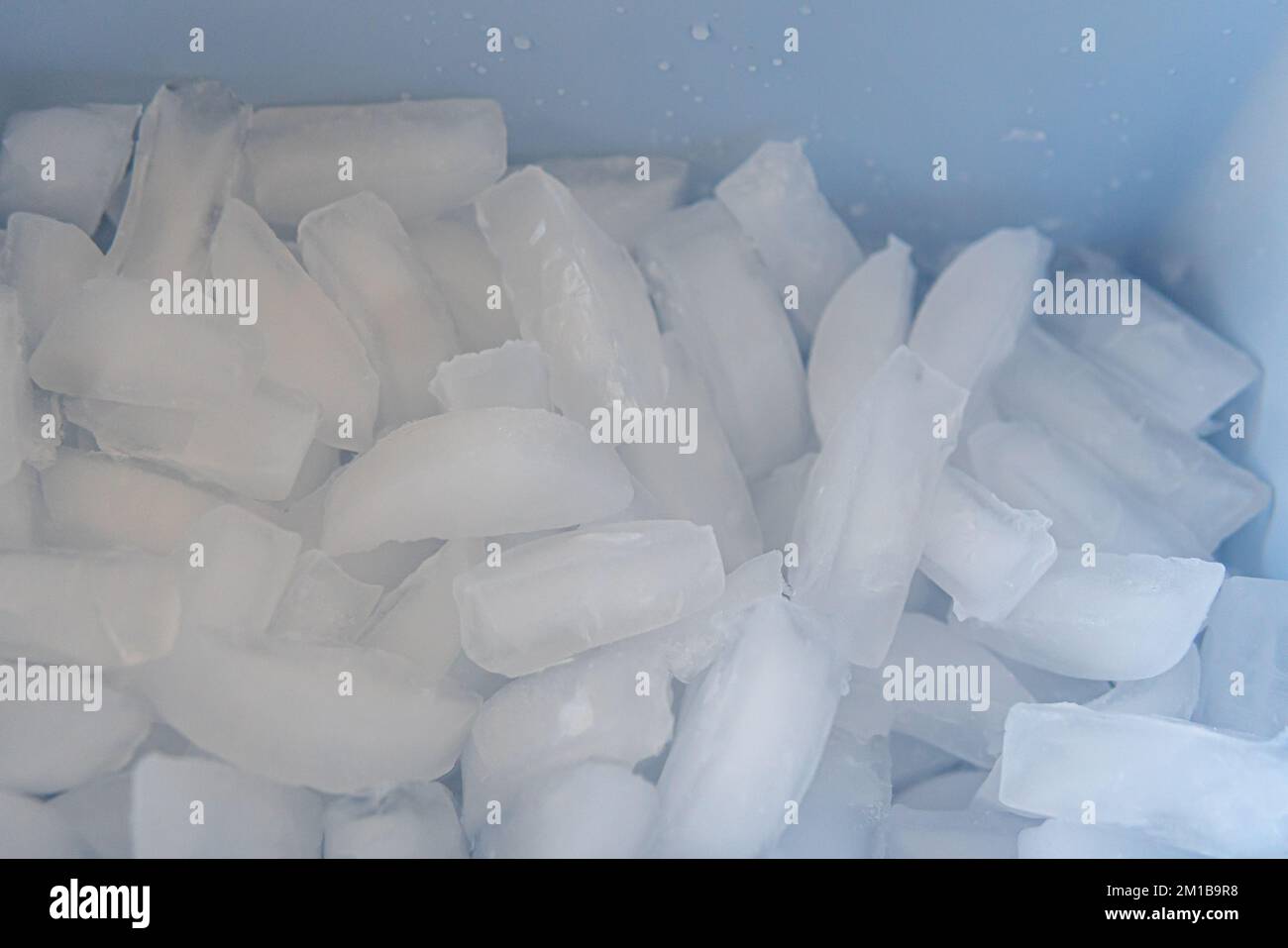
To convert 8 fluid ounces of ice chips to milliliters, you must distinguish between total volume and liquid yield. In terms of raw container volume, 8 oz equals 236.59 milliliters. However, in medical and clinical settings for tracking fluid intake, 8 oz of ice chips is standardly recorded as 118 to 120 milliliters of liquid water.
The conversion of ice chips to milliliters is a task that appears simple on the surface but involves significant nuance when applied to clinical hydration, physics, and standardized measurement systems. Whether you are a healthcare professional monitoring a patient’s "Intake and Output" (I&O) or an individual following a specific fluid-restricted diet in 2026, understanding the distinction between the volume of the solid ice and the resulting volume of liquid water is critical.
The Mathematics of Volume: Fluid Ounces vs. Milliliters
To begin any conversion, we must establish the baseline relationship between the United States Customary System (USCS) and the International System of Units (SI), commonly known as the metric system. In the United States, the fluid ounce is the standard unit for liquid volume, while the milliliter is the preferred unit in scientific, medical, and international contexts.
The Standard Conversion Factor
A single US fluid ounce is defined as approximately 29.5735 milliliters. When performing standard mathematical conversions for non-critical purposes, the calculation for 8 ounces is as follows:
8 fl oz × 29.5735 ml/fl oz = 236.588 ml
In most everyday scenarios, such as cooking or general hydration tracking, this is often rounded to 237 ml or even 240 ml for simplicity.
The "Medical 30" Rule
In the healthcare sector, particularly within hospitals and long-term care facilities, practitioners often use a simplified conversion factor to reduce the risk of manual calculation errors during fast-paced shifts. This is known as the "30 ml rule," where 1 fluid ounce is treated as exactly 30 milliliters. Under this convention:
8 fl oz × 30 ml/fl oz = 240 ml
While this is technically an overestimation of about 1.4%, it is the accepted standard for most clinical charting because it provides a consistent, easy-to-calculate baseline across different departments and staff rotations.
The Physics of Ice: Why State of Matter Changes Volume
The core complexity of converting "8 oz of ice chips" lies in the physical properties of water as it transitions from a solid to a liquid state. Unlike most substances, water expands when it freezes. This expansion, combined with the way ice chips are packed into a container, means that 8 ounces of space filled with ice does not contain 8 ounces of liquid water.
Density and Expansion
When water freezes into ice, its molecular structure organizes into a hexagonal lattice that takes up more space than its liquid form. Ice has a density of approximately 0.9167 grams per cubic centimeter (g/cm³), whereas liquid water has a density of approximately 1.00 g/cm³ at room temperature. This means that ice occupies roughly 9% more volume than the water it originated from.
The Factor of Interstitial Space
When you fill an 8 oz cup with ice chips, you are not just measuring the volume of the ice itself; you are also measuring the air gaps, or "interstitial spaces," between the chips. The amount of actual water contained in that 8 oz cup depends heavily on the "packing factor."
- Large Ice Cubes: Have large air gaps; an 8 oz cup of large cubes contains very little water.
- Ice Chips/Nuggets: Have smaller air gaps; they pack more tightly and contain more water.
- Shaved Ice: Has the smallest air gaps and the highest water density per volume of the container.
Because of these variables, there is no single "perfect" physical conversion, which led the medical community to establish a standardized protocol for estimating fluid intake.
Clinical Standards for Fluid Intake and Output (I&O)
In 2026, medical protocols for monitoring hydration remain centered on the "Intake and Output" (I&O) sheet. This is a vital tool for managing patients with conditions such as congestive heart failure, renal failure, or those recovering from major surgery.
The 50% Rule for Ice Chips
Because it is impossible for a nurse or nursing assistant to wait for ice to melt before recording it, the medical standard is to record ice chips as half of their volume in liquid water.
If a patient consumes an 8 oz cup of ice chips, the documented intake is:
- Total Volume: 8 oz (approx. 240 ml).
- Liquid Yield: 4 oz (approx. 120 ml).
This 50% estimation accounts for both the expansion of water when frozen and the air gaps between the chips. It provides a safe, conservative estimate that prevents healthcare providers from overestimating a patient’s actual fluid volume, which could be dangerous for someone on a strict fluid restriction.
Clinical Significance of 120 ml vs. 240 ml
Accurate recording of that 120 ml difference is crucial. For a patient with severe edema or kidney dysfunction, an extra 120 ml of "uncounted" fluid multiplied across several cups of ice a day could lead to fluid overload. This can result in pulmonary edema (fluid in the lungs) or increased strain on the heart. Therefore, the conversion of 8 oz of ice chips to 120 ml of water is not just a math problem—it is a safety protocol.
Comparison of Ice Volumes and Liquid Equivalents
The following table provides a quick reference for converting various volumes of ice chips into their liquid milliliter equivalents based on the standard clinical 50% rule and the "30 ml per ounce" rounding method.
| Container Size (Ounces) | Total Volume (Milliliters) | Liquid Yield (Ounces) | Clinical Fluid Intake (Milliliters) |
|---|---|---|---|
| 2 oz | 60 ml | 1 oz | 30 ml |
| 4 oz | 120 ml | 2 oz | 60 ml |
| 6 oz | 180 ml | 3 oz | 90 ml |
| 8 oz | 240 ml | 4 oz | 120 ml |
| 10 oz | 300 ml | 5 oz | 150 ml |
| 12 oz | 360 ml | 6 oz | 180 ml |
| 16 oz | 480 ml | 8 oz | 240 ml |
Note: For exact scientific calculations, use 29.57 ml per ounce, but for 2026 clinical standards, 30 ml is the preferred multiplier.
Factors Influencing Conversion Accuracy
While the 50% rule is the standard, several factors can influence how much liquid is actually in an 8 oz serving of ice chips.
1. Type of Ice
Not all ice chips are created equal.
- "Sonic" Ice or Nugget Ice: These small, porous nuggets are popular in healthcare because they are easy to chew. Because they are soft and contain more air, their liquid yield is often slightly less than 50%.
- Crushed Ice: Usually made by a machine grinding larger cubes. This results in irregular shapes that may pack more or less densely depending on the grind setting.
- Flake Ice: Often used in physical therapy or for food displays. This packs very tightly and may yield closer to 60% of its volume in water.
2. Melting Time
If a patient receives 8 oz of ice chips but lets them sit for twenty minutes before consuming them, some of the ice will have melted into liquid at the bottom of the cup. If they then eat the remaining ice and drink the melted water, the total intake is still effectively 4 oz (120 ml) of water, but the density of the mixture they are consuming has changed.
3. Container Displacement
If the ice chips are served in a cup that already contains some liquid water, the conversion becomes much more complex. In these cases, the liquid water is measured 1:1 (ml to ml), while the remaining volume of ice is measured 2:1 (volume to ml).
Tools for Precise Measurement
In professional environments, guessing is replaced by standardized tools. To ensure you are accurately measuring 8 oz of ice chips, you should use the following:
- Graduated Measuring Cups: These feature markings for both ounces and milliliters. When measuring ice, ensure the chips are leveled at the 8 oz mark without being packed down with force, as compression changes the volume-to-liquid ratio.
- Digital Scales: While weight (grams) is the most accurate way to measure water (1g = 1ml), it is rarely used for ice chips in a clinical setting because the weight of the ice is the weight of the water. If you weigh 8 "weight ounces" of ice, you have exactly 8 fluid ounces of water (approx 237 ml) once it melts. However, we usually measure ice by cup volume, which is why the 50% rule is necessary.
- Standardized Medical Carafe: Most hospitals in 2026 use carafes with pre-molded milliliter markings on the side to eliminate the need for manual conversion charts.
Frequently Asked Questions
Is 8 oz of ice the same as 8 oz of water?
No. In terms of weight, 8 ounces of ice will melt into 8 ounces of water. However, in terms of volume (the space it takes up), 8 ounces of ice chips will only yield about 4 ounces of liquid water. This is because ice is less dense than water and because there is air between the chips in the container.
Why do nurses count ice as half the volume?
Nurses use the 50% rule to ensure they do not overestimate a patient's fluid intake. Since an 8 oz cup of ice is filled with both frozen water and air, counting it as 8 oz of fluid would be inaccurate. The 50% rule is a safe, evidence-based estimation used for consistent medical charting.
How many milliliters are in 8 oz of shaved ice?
Shaved ice packs much more tightly than ice chips. While the standard clinical 50% rule might still be used for charting consistency, the actual liquid yield of 8 oz of shaved ice is often closer to 140–150 ml because there is less air between the fine particles.
How do I convert milliliters back to ounces for ice?
To find the ice volume from a liquid milliliter goal, you reverse the process. If you want to give someone 120 ml of liquid via ice chips, you multiply by 2 to get the volume (240 ml) and then convert to ounces (approx. 8 oz).
Does the temperature of the ice affect the ml conversion?
Practically, no. While ice does change density slightly at extremely low temperatures, the difference is negligible for the purpose of converting 8 oz of ice chips to milliliters. The packing factor and the 50% rule are far more significant variables.
Practical Recommendations
For those needing to convert 8 oz of ice chips to milliliters in a professional or health-conscious capacity, follow these guidelines:
- Identify the Goal: If you are measuring the physical space the ice takes up (e.g., for a container), use 236.59 ml. If you are measuring how much fluid a person is consuming, use 118-120 ml.
- Use Consistent Rounding: In clinical environments, stick to the 30 ml per ounce rule. This makes 8 oz of ice volume 240 ml, and the liquid intake 120 ml.
- Account for Ice Type: If the ice is very large and chunky, the liquid yield will be less than 50%. If it is finely shaved or "slushy," the yield will be slightly more.
- Documentation: If you are charting this for a patient in 2026, always follow your specific facility's protocol, as some specialized renal units may have more precise requirements than the standard 50% rule.
By understanding that 8 oz of ice chips represents a volume of roughly 237-240 ml but a nutritional/hydration value of only 120 ml, you can ensure accurate hydration tracking and better health outcomes.