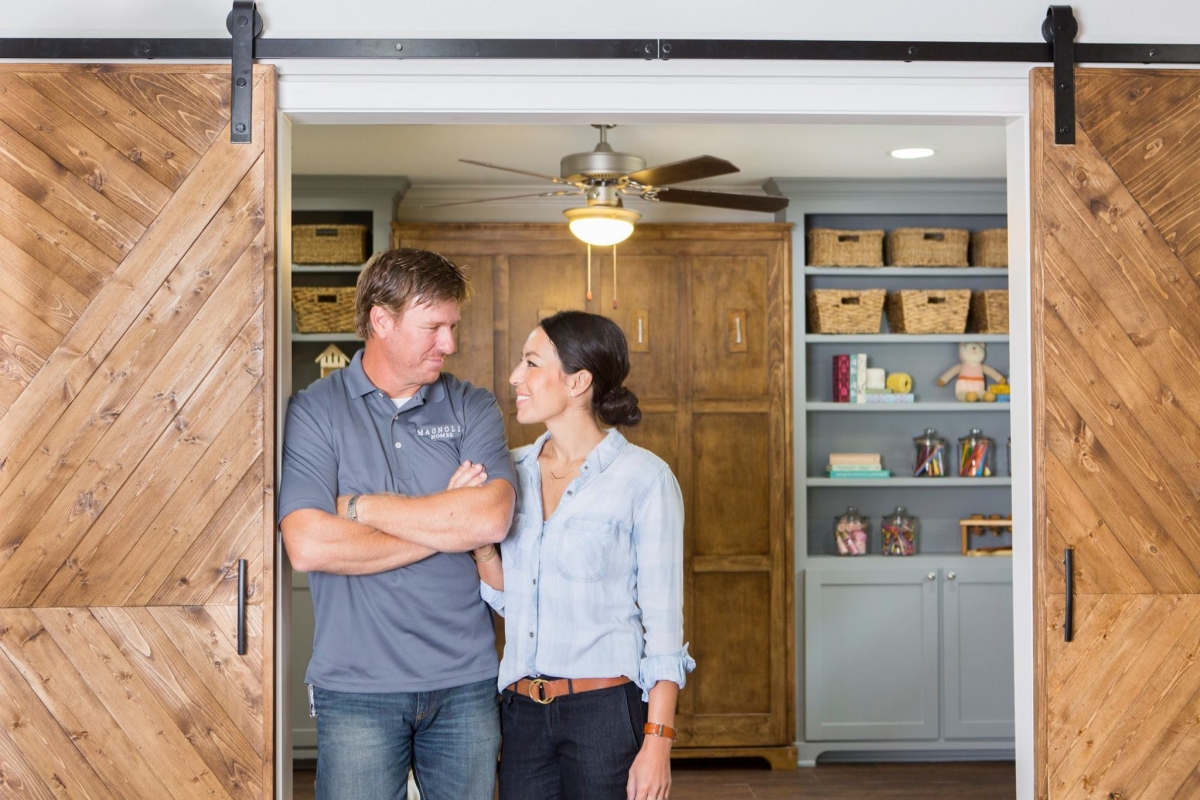
In September 2017, Chip and Joanna Gaines shocked millions of viewers by announcing that the fifth season of Fixer Upper would be its last on HGTV. While rumors of network disputes and personal scandals circulated, the decision was ultimately a strategic move to prioritize their growing family and burgeoning business empire.
The departure of Fixer Upper marked the end of an era for HGTV, where the show had become a flagship program, consistently ranking as one of the highest-rated series in cable television history. As of 2026, looking back at the trajectory of the Magnolia brand, the 2017 "cancellation"—which was actually a voluntary exit—remains a masterclass in brand preservation. By stepping away at the height of their popularity, the Gaineses avoided the inevitable decline of reality TV fatigue and transitioned into media moguls.
Here are the seven primary reasons why Fixer Upper ended its original run in 2017.
1. Prioritizing Family Stability and Privacy
The foremost reason cited by Chip and Joanna Gaines was the need to focus on their children. In 2017, the couple had four children: Drake, Ella, Duke, and Emmie Kay. Shortly after the show ended, they welcomed their fifth child, Crew. The grueling schedule of filming a hit television show—often requiring 11 months of production per year—left very little time for a traditional family life.
As the children grew older, the Gaineses expressed a desire to provide them with a "normal" upbringing outside the constant presence of camera crews. The "fishbowl" effect of reality TV meant that their private residence, a 40-acre farmhouse in Crawford, Texas, became a destination for tourists. This loss of privacy created significant safety concerns. By ending the show, the family could retreat from the spotlight and ensure their children were not defined solely by their parents' television fame.
2. Overwhelming Growth of the Magnolia Empire
By 2017, Magnolia was no longer just a small renovation business in Waco; it was a multi-faceted corporate entity. The success of the show had spawned several spin-offs and business ventures that required the couple's full attention:
- Magnolia Market at the Silos: A massive retail destination that attracts over 30,000 visitors per week.
- Magnolia Table: Their restaurant project, which was in development during the final season.
- Hearth & Hand with Magnolia: A massive product partnership with Target that launched in late 2017.
- Magnolia Journal: A quarterly lifestyle magazine.
- Magnolia Realty: Their expanding real estate brokerage.
Managing these ventures while filming a full season of television became logistically impossible. The couple realized that to maintain the quality of their brand, they had to choose between being television stars and being CEOs. They chose the latter, allowing them to scale their business into the multi-billion dollar enterprise it is today in 2026.
3. Production Fatigue and Creative Burnout
The "HGTV grind" is well-documented among reality TV personalities. Producing 13 to 18 episodes per season involves managing dozens of construction sites simultaneously while performing for the camera. Chip Gaines frequently spoke about the exhaustion that came with the repetitive nature of the show.
In his book Capital Gaines: Smart Things I Learned Doing Stupid Stuff, Chip noted that the "spark" had begun to fade. The pressure to deliver the "perfect reveal" in every episode became a heavy burden. They were concerned that if they continued without the original passion, the quality of the show would suffer, potentially damaging the Fixer Upper legacy. They preferred to "go out on top" rather than wait for ratings to decline or for the format to become stale.
4. Legal Tensions and Litigation
The year 2017 was marked by several legal headaches for the Gaineses. One of the most prominent was a $1 million lawsuit filed by former partners in Magnolia Realty. The plaintiffs, John L. Lewis and Richard L. Clark, alleged that Chip Gaines had pressured them to sell their shares in the company for a low price just days before HGTV announced that Fixer Upper would be picked up for a national audience.
While the Gaineses’ legal team dismissed these claims as meritless, the public nature of the lawsuit added significant stress to their lives. Additionally, there were minor controversies regarding local ordinances in Waco and disputes over the "Magnolia" name. These legal distractions contributed to the feeling that the couple needed to simplify their professional commitments and clean up their corporate structure.
5. Contractual Limitations with Scripps Networks
At the time, HGTV was owned by Scripps Networks Interactive. Reports surfaced suggesting that the Gaineses were dissatisfied with the restrictive nature of their contracts. Standard reality TV contracts often give the network a significant portion of the talent's outside earnings, including book deals, product lines, and appearances.
As the Magnolia brand grew, the couple sought more control over their intellectual property and a larger share of the revenue they were generating. Rumors suggested that negotiations for a sixth season stalled because the Gaineses wanted more creative and financial autonomy than Scripps was willing to provide. This friction likely accelerated their decision to walk away and eventually partner with Discovery Inc. (which later acquired Scripps) to form their own network.
6. The "Waco Effect" and Local Pressure
The astronomical success of Fixer Upper transformed Waco, Texas, from a quiet college town into a global tourism hub. While this was an economic boon for the city, it also brought challenges. The "Fixer Upper" houses—properties renovated on the show—began appearing on short-term rental sites like Airbnb. This led to tension with neighbors and the city council regarding zoning and the "commercialization" of residential neighborhoods.
Chip and Joanna felt a sense of responsibility toward their community. The frenzy surrounding the show made it difficult for them to operate as a local renovation company. By ending the show, they could transition into a business model that was less reliant on individual residential renovations and more focused on large-scale commercial projects and national retail.
7. Strategic Transition to the Magnolia Network
While the 2017 announcement seemed like a permanent "goodbye," it was actually a strategic "see you later." The Gaineses were already envisioning a media platform where they were the owners, not just the employees. By leaving HGTV at peak popularity, they retained immense leverage.
In 2018, just a year after the cancellation announcement, it was revealed that they were in talks with Discovery to launch their own cable network. This eventually became the Magnolia Network, which replaced the DIY Network. By ending the original show, they cleared the way for a more diverse array of programming—including Fixer Upper: Welcome Home and Fixer Upper: The Hotel—which allowed them to film on their own terms and schedules.
Comparing the Original Run and the Brand Evolution
| Feature | Original Fixer Upper (2013-2018) | Magnolia Brand (2019-2026) |
|---|---|---|
| Primary Network | HGTV (Scripps/Discovery) | Magnolia Network / Max |
| Filming Frequency | 11 months per year | Seasonal / Project-based |
| Business Focus | Residential Renovation | Retail, Hospitality, Media |
| Family Involvement | Incidental background | Controlled and limited |
| Creative Control | Network-led production | Full Gaines-owned production |
| Waco Presence | Local Contractor | Major Economic Driver/Landowner |
Addressing the "Scandal" Rumors
When a top-rated show is cancelled, the public often looks for a "smoking gun." In 2017, several stories attempted to fill the vacuum. Some suggested the couple was fleeing because of a controversial article regarding their local church's stance on same-sex marriage. Others speculated that Joanna was leaving to start a skincare line (a common internet scam at the time).
However, none of these rumors held water. The couple addressed these head-on, stating that their decision was purely personal and professional. The "scandals" were largely clickbait fabrications that ignored the very real logistical challenges of running a multi-million dollar business while raising a large family. The subsequent success of their network has proven that the 2017 exit was a calculated business move rather than a forced retreat.
Frequently Asked Questions
Was Fixer Upper cancelled by HGTV because of low ratings?
No. At the time of its conclusion, Fixer Upper was the highest-rated show on HGTV and one of the top-performing shows on all of cable television. The network desperately wanted the show to continue, but Chip and Joanna Gaines chose not to renew their contract.
Did the Gaineses have a falling out with HGTV?
While there were reports of tough contract negotiations regarding their product lines and brand control, there was no public "falling out." The couple maintained a positive relationship with Discovery Inc. (the parent company), which eventually led to their partnership in launching the Magnolia Network.
Is the original Fixer Upper still available to watch?
Yes, as of 2026, the original five seasons of Fixer Upper remain a staple on streaming platforms like Max and Discovery+. They are also frequently aired in syndication on the Magnolia Network and HGTV.
How many children do Chip and Joanna have now?
As of 2026, the couple has five children: Drake, Ella, Duke, Emmie Kay, and Crew. Their eldest children are now young adults, which was a significant factor in their 2017 decision to step back and focus on family milestones.
Did they ever return to TV after the 2017 cancellation?
Yes. After a brief hiatus, they returned with Fixer Upper: Welcome Home in 2021 on the Magnolia Network. They have since produced several limited series, including Fixer Upper: The Castle and Fixer Upper: The Hotel, which focus on specific, large-scale projects rather than the weekly residential format of the original show.
Moving Forward: Lessons from the Magnolia Pivot
The 2017 conclusion of Fixer Upper serves as a vital case study for creators and business owners. It demonstrates the importance of brand equity over short-term television exposure. Had Chip and Joanna continued for another five seasons on HGTV, they might have burned out or seen their brand diluted by overexposure.
For fans and homeowners looking to emulate the Gaineses' success, the primary takeaway is the value of intentionality. They prioritized their core values—family and creative integrity—over a lucrative television contract. If you are a fan of the show in 2026, the best way to experience their work is through their specialized series on the Magnolia Network or by visiting the Silos in Waco, where the "Fixer Upper" spirit has been converted into a tangible, long-term physical experience.