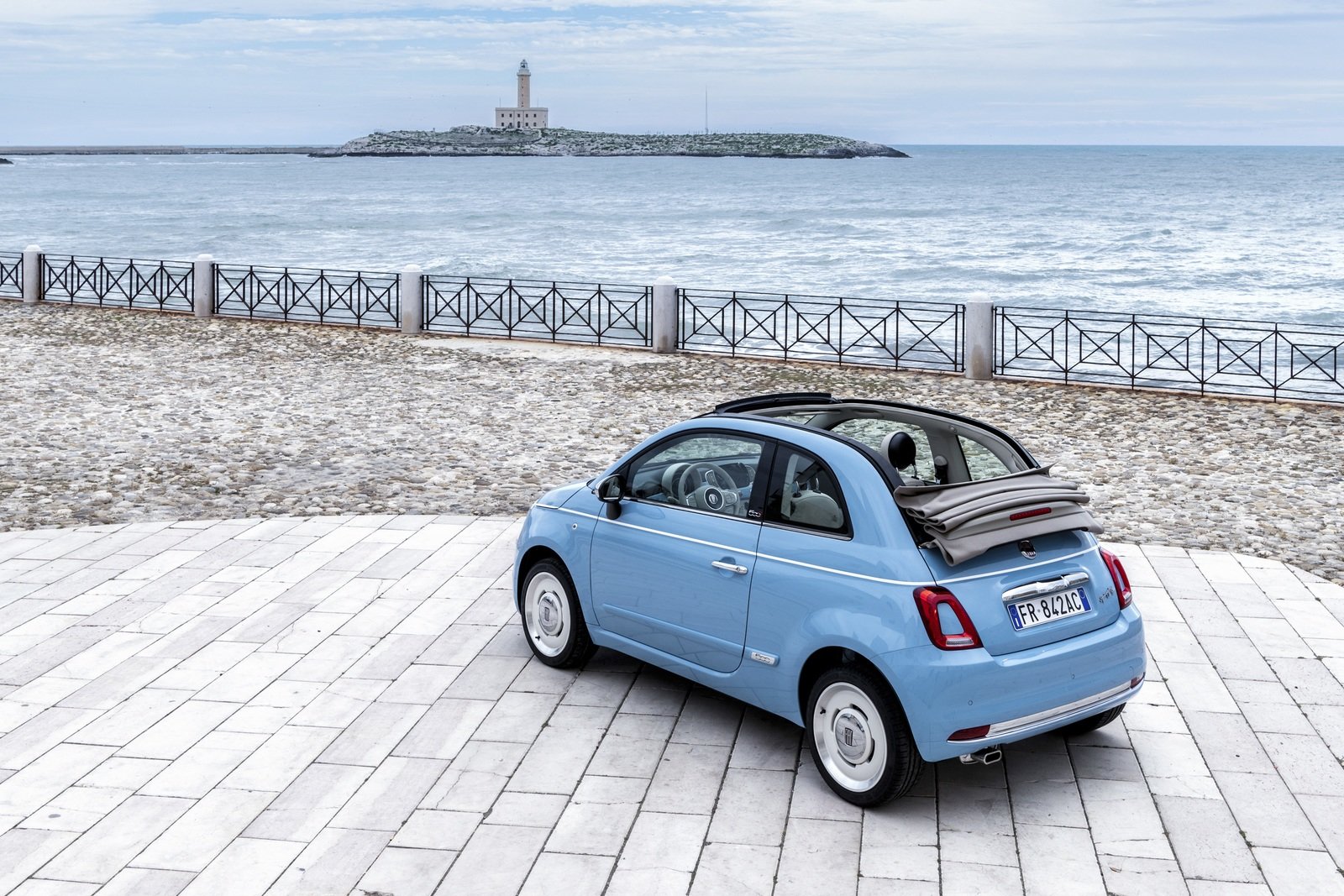
The phrase "500 mile curb weight of the Fiat 500" combines a misunderstanding of a vehicle's mass with a distance measurement, as curb weight describes how heavy a car is in pounds or kilograms rather than how many miles it can travel. A standard gasoline-powered Fiat 500 actually weighs between roughly 2,300 and 2,600 pounds depending on the specific model year, trim, and body style, while the modern battery-electric Fiat 500e weighs closer to 2,900 to 3,100 pounds due to its heavy lithium-ion battery pack.
Automotive enthusiasts and prospective buyers frequently encounter metrics, numbers, and technical terminology that can easily become tangled in casual conversation or search engine queries. When examining compact city cars like the Fiat 500, understanding the exact vehicle specifications—specifically its curb weight—plays a critical role in evaluating fuel efficiency, driving dynamics, safety ratings, and towing or transport requirements. This guide clarifies what curb weight truly means, details the exact weight figures across different generations of the Fiat 500, addresses common points of confusion regarding vehicle range versus mass, and outlines how these physical attributes impact everyday ownership.
Understanding Curb Weight vs. Vehicle Range
To untangle the concept of a "500-mile" weight measurement, it is helpful to establish clear definitions for automotive terms that frequently cross paths in digital searches.
Curb weight refers to the total mass of a vehicle with standard equipment, all necessary operating consumables such as motor oil and coolant, a full tank of fuel (or a fully charged battery in an electric vehicle), and any heavy standard accessories. It explicitly excludes the weight of any passengers, cargo, or removable custom accessories. Conversely, range—often measured in miles—describes the total distance a vehicle can travel on a single tank of gas or a single battery charge before needing replenishment.
Conflating these two distinct metrics creates semantic confusion. A car weighing 2,500 pounds does not magically weigh more or less after driving a certain distance (though fuel burn marginally decreases weight over a long trip, and battery weight remains constant). Therefore, searching for a "500 mile curb weight" is structurally a mismatch of terms, uniting a distance benchmark (such as an ambitious driving range goal for an electric vehicle) with the static mass of the machine.
Evolution of the Fiat 500 and Its Physical Mass
The Fiat 500 nameplate spans multiple distinct eras, from the historic rear-engine Cinquecento produced in post-war Italy to the modern retro-styled hatchbacks and convertibles seen on global roads today. Each iteration carries a vastly different physical footprint and, consequently, a different curb weight.
The Classic Era (1957–1975)
The original Nuova 500 was designed as an ultra-compact, economical city car for post-war Europe. Its minimalist interior, air-cooled two-cylinder engine, and tiny dimensions meant it carried an exceptionally low mass.
- Typical Curb Weight: Approximately 1,100 to 1,300 pounds (500 to 600 kg).
- Significance: This featherlight construction allowed the classic Cinquecento to achieve notable fuel efficiency despite its modest engine output.
The Modern Retro Era (2007–2019)
Revived globally in the late 2000s, the modern front-wheel-drive Fiat 500 grew significantly in size, structural rigidity, and safety equipment to meet modern crash-test standards.
- Typical Curb Weight: Ranging from 2,366 pounds (1,073 kg) for a base manual Pop trim up to roughly 2,550 pounds (1,156 kg) for automatic convertibles or higher-performance Abarth variants with turbocharged engines and reinforced chassis components.
- Significance: Even at its heaviest in this generation, the modern gas-powered Fiat 500 remained one of the lightest passenger vehicles available in North American and European markets.
The Modern Electric Era (2020–Present)
The current generation of the Fiat 500—often designated as the New 500 or Fiat 500e—transitions the iconic city car exclusively to battery-electric propulsion in many global regions.
- Typical Curb Weight: Ranging from 2,900 to 3,150 pounds (1,315 to 1,428 kg).
- Significance: The addition of a heavy high-voltage lithium-ion battery pack adds several hundred pounds of mass compared to the traditional internal combustion engine variants, altering the vehicle's suspension tuning, braking characteristics, and overall weight distribution.
Fiat 500 Weight and Specification Comparison
To provide a clear reference for researchers and automotive enthusiasts, the table below outlines the approximate curb weights across major variations of the modern Fiat 500 lineup.
| Model Generation & Trim | Powertrain Type | Approximate Curb Weight (lbs) | Approximate Curb Weight (kg) |
|---|---|---|---|
| Fiat 500 Pop (2012–2019) | 1.4L Naturally Aspirated Inline-4 (Manual) | 2,366 lbs | 1,073 kg |
| Fiat 500 Lounge (2012–2019) | 1.4L Naturally Aspirated Inline-4 (Automatic) | 2,480 lbs | 1,125 kg |
| Fiat 500 Abarth (2012–2019) | 1.4L Turbocharged Inline-4 | 2,512 lbs | 1,140 kg |
| Fiat 500c Cabrio (2012–2019) | 1.4L Inline-4 with Canvas Soft Top | 2,554 lbs | 1,158 kg |
| Fiat 500e Battery Electric (First Gen) | Electric Motor & 24 kWh Battery | 2,980 lbs | 1,352 kg |
| Fiat 500e Battery Electric (New Gen) | Electric Motor & 42 kWh Battery | 3,115 lbs | 1,413 kg |
Why Curb Weight Matters for a Compact Car
Understanding the exact curb weight of a vehicle is not merely an exercise in trivia; it directly dictates how the car behaves in the real world. For a micro-car or subcompact vehicle like the Fiat 500, mass influences several critical operational parameters:
1. Fuel Economy and Energy Efficiency
Lighter vehicles require less energy to accelerate from a stop and maintain momentum. The gasoline-powered Fiat 500 benefits immensely from its sub-2,600-pound footprint, allowing it to achieve strong fuel economy ratings without requiring complex hybrid systems. For the electric Fiat 500e, keeping the curb weight as low as possible helps maximize the driving range per charge, counteracting the heavy mass of the battery pack.
2. Handling and Agility
A low curb weight contributes to nimble, responsive handling characteristics, making city parking and tight cornering effortless. Because the car's center of gravity is relatively low, its light mass allows it to change direction quickly, delivering a go-kart-like driving dynamic that defines the brand's appeal.
3. Safety and Crash Dynamics
Modern automotive safety relies heavily on energy-absorbing crumple zones, high-strength steel cages, and advanced airbag systems—all of which add physical weight to a vehicle. While heavier vehicles generally hold an advantage in multi-vehicle collisions against lighter cars, engineering a lightweight chassis like the Fiat 500 requires advanced materials science to maintain high safety ratings while keeping mass low.
4. Towing, Transport, and Flat-Towing Limits
For owners looking to tow a Fiat 500 behind a motorhome (often referred to as flat-towing or four-down towing) or transport it on a lightweight trailer, knowing the precise curb weight is essential. Exceeding the payload capacity of a tow dolly or trailer hitch can create severe safety hazards on the highway.
Frequently Asked Questions
Does the Fiat 500 have a 500-mile driving range?
No. Standard gasoline-powered Fiat 500 models typically offer a total driving range of around 300 to 350 miles on a full tank of fuel, depending on highway and city driving conditions. Modern electric Fiat 500e models provide an EPA-estimated or WLTP-rated range of roughly 140 to 199 miles per charge, depending on the battery pack size and testing cycle.
Why do some search queries combine "500 mile" with the Fiat 500?
Search queries often merge the vehicle name ("Fiat 500") with popular automotive milestones, such as a 500-mile road trip benchmark, an idealized electric vehicle range target, or general confusion surrounding the vehicle's model number and distance metrics.
Is the electric Fiat 500 significantly heavier than the gas version?
Yes. The battery-electric Fiat 500e is approximately 600 to 700 pounds heavier than its gasoline-powered counterpart. This additional weight comes directly from the lithium-ion battery modules and thermal management systems required for electric propulsion.
How does the curb weight of a Fiat 500 compare to other compact cars?
At roughly 2,400 pounds for the gas model, the Fiat 500 is notably lighter than traditional compact sedans like the Honda Civic or Toyota Corolla, which often weigh between 2,900 and 3,200 pounds. It sits in a similar weight class to ultra-compact city cars like the MINI Cooper Hardtop.
Can a standard Fiat 500 be flat-towed behind an RV?
Certain manual-transmission gasoline models from earlier production years are approved by the manufacturer for four-down flat-towing, provided specific speed and distance procedures outlined in the owner's manual are followed. Automatic and electric variants generally require a flatbed trailer due to transmission and powertrain lubrication limitations.
Practical Next Steps for Vehicle Owners
If you are researching the Fiat 500 for purchase, transport, or technical evaluation, verify the exact model year and powertrain configuration of the specific vehicle in question. Because curb weights vary significantly between the traditional gasoline models, early electric variants, and newer generation battery-electric models, always consult the official manufacturer placard located on the driver-side door jamb for certified weight ratings before loading cargo, planning a towing setup, or calculating transport logistics.