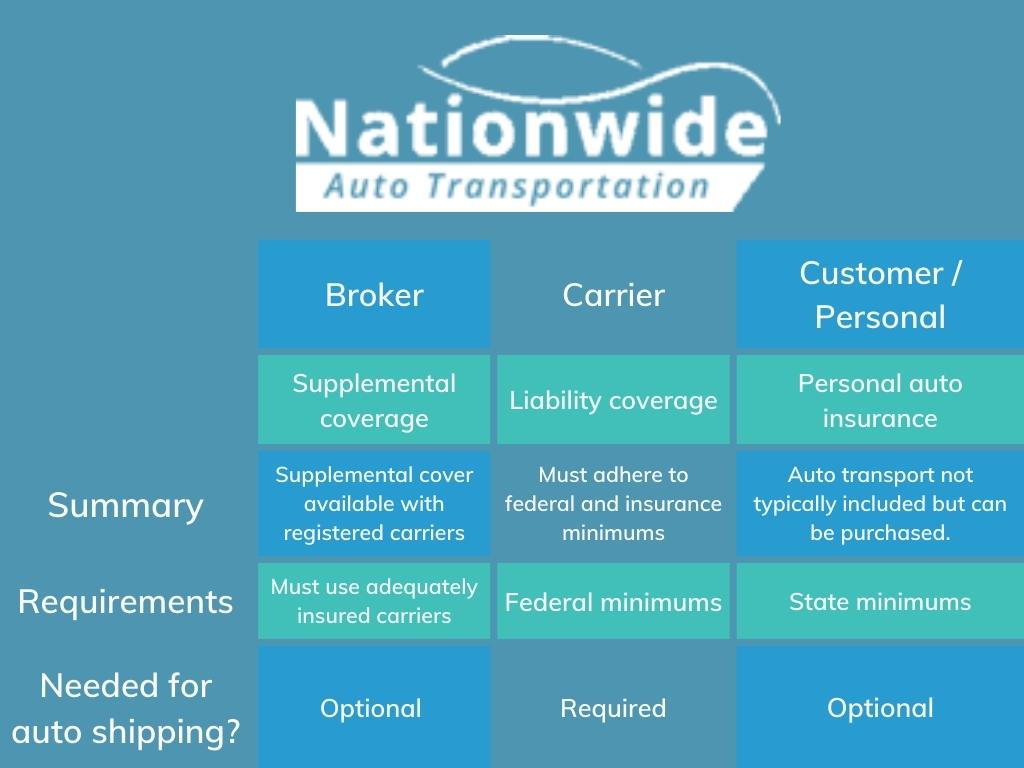
Auto transport insurance provides critical protection for your vehicle during professional shipping, yet misconceptions regarding liability and coverage limits remain common. While carriers are federally required to carry cargo insurance, understanding the distinction between carrier liability, personal insurance, and supplemental protection is essential for avoiding out-of-pocket costs during a claim.
Shipping a vehicle—whether it is a classic restoration, a daily driver, or a high-performance electric vehicle (EV)—requires a clear understanding of the legal and financial safeguards in place. In 2026, the logistics industry has become more digitized, but the fundamental principles of insurance and liability remain a source of confusion for many consumers. Relying on "myths" can lead to devastating financial losses if a vehicle is damaged in transit.
This comprehensive guide breaks down the five most prevalent myths regarding auto transport insurance and contrasts them with the legal and operational facts of the industry.
Myth 1: Your Personal Auto Insurance Covers Everything During Transit
One of the most dangerous assumptions a vehicle owner can make is that their existing personal auto policy provides comprehensive protection while the car is on a trailer.
The Fact: Most personal auto insurance policies offer very limited coverage, if any, when a vehicle is being transported by a commercial carrier. Many policies contain a "commercial use" or "care, custody, and control" exclusion. This means that once you hand your keys to a professional driver and the vehicle is loaded onto a truck, your insurer may consider the vehicle out of your control and outside the scope of your standard policy.
If your personal policy does offer coverage, it is almost always "secondary." This means you would have to file a claim with the transport company’s insurance first. If that fails or is insufficient, you might turn to your own insurer. However, you will still be responsible for your personal deductible, which could range from $500 to $2,500. Furthermore, filing a claim on your personal policy for damage caused by a third party can lead to increased premiums in the future.
In 2026, with the rising costs of vehicle repairs due to advanced driver-assistance systems (ADAS) and expensive EV battery components, the gap between what a personal policy covers and the actual cost of damage is wider than ever. You should always call your insurance agent specifically to ask if "in-transit" coverage is included in your policy for commercial shipping.
Myth 2: The Carrier Is Responsible for All Damage Regardless of Cause
It is a common belief that because a carrier is "fully insured," any scratch, dent, or mechanical failure that occurs between pickup and delivery is their financial responsibility.
The Fact: Carrier cargo insurance is not an "all-perils" policy. It is a liability policy that covers damage caused by the carrier’s negligence or equipment failure. There are several standard exclusions that protect the carrier from liability for events beyond their control:
- Acts of God: This includes damage from hail, floods, earthquakes, or extreme storms. If a tornado flips a car hauler, the carrier’s insurance typically will not cover the vehicles because the driver was not at fault for the weather event.
- Road Debris: On an open-carrier transport, damage from flying rocks or gravel is often considered a "road hazard" rather than carrier negligence. This is why many owners of high-value vehicles opt for enclosed transport.
- Mechanical Malfunctions: If your vehicle’s engine fails to start or a suspension component breaks during loading due to pre-existing wear and tear, the carrier is not liable.
- Personal Belongings: Federal law prohibits auto transporters from carrying household goods inside vehicles unless they are licensed for it. Any personal items left in the car are almost never insured by the carrier’s cargo policy.
Understanding these exclusions is vital. If you are shipping a vehicle through a region prone to severe weather in 2026, you may need to purchase supplemental "gap" insurance that specifically covers Acts of God.
Myth 3: Inspection Reports and Photos are Just Formalities
Many customers believe that if their car is damaged, they can simply point it out at delivery and the insurance company will pay. They view the Bill of Lading (BOL) as just a receipt of delivery.
The Fact: The Bill of Lading is the most important legal document in the auto transport process. It serves as the official record of the vehicle’s condition at the time of pickup and delivery. If a scratch is not noted on the BOL during the delivery inspection, the law assumes it was already there or happened after the carrier left.
In 2026, the industry has shifted almost entirely to digital Bills of Lading (eBOLs) that allow for high-resolution photo attachments. However, the burden of proof still rests on the vehicle owner.
- Pickup Inspection: You must walk around the vehicle with the driver and ensure every existing ding, chip, or scratch is marked on the report.
- Delivery Inspection: Before signing the final document, you must perform a rigorous inspection. If there is damage, it must be noted clearly on the BOL. Signing a "clean" BOL without noting damage effectively waives your right to a successful insurance claim.
Without a documented discrepancy between the pickup and delivery reports, an insurance adjuster will almost certainly deny a claim, regardless of how much "proof" you think you have via personal photos taken days later.
Myth 4: Every Carrier Carries the Same Level of Federal Insurance
There is a misconception that because the Federal Motor Carrier Safety Administration (FMCSA) regulates the industry, every truck on the road has a standard, high-limit insurance policy that protects the customer.
The Fact: While the FMCSA requires carriers to have public liability and cargo insurance, the minimum requirements can be surprisingly low. While many reputable carriers carry between $100,000 and $250,000 in cargo insurance per load, some smaller owner-operators may only carry the bare minimum.
If a carrier is hauling nine vehicles and has a total cargo limit of $250,000, and the entire trailer is involved in a total-loss accident, the insurance may not be enough to cover the full value of all vehicles—especially in 2026, where the average price of a new car has risen significantly.
Verifying Carrier Insurance
Before agreeing to a shipment, you should request the carrier’s Certificate of Insurance (COI). This document lists the insurance company, the policy number, and the coverage limits. You can also verify a carrier’s status using their MC (Motor Carrier) or DOT number on the FMCSA’s SAFER (Safety and Fitness Electronic Records) system.
| Feature | Carrier Cargo Insurance | Personal Auto Insurance | Supplemental/Gap Protection |
|---|---|---|---|
| Primary Payer | Yes (if carrier is at fault) | Usually Secondary | Yes (covers gaps/deductibles) |
| Covers Acts of God | No | Often No (unless Comprehensive) | Usually Yes |
| Covers Road Debris | Rarely (Open Transport) | Depends on policy | Usually Yes |
| Deductible | Paid by Carrier | Paid by You ($500+) | Often $0 |
| Max Limit | Typically $100k - $250k | Up to ACV of vehicle | Varies (adds to carrier limit) |
Myth 5: "Full Coverage" Means You Don't Need to Do Anything Else
When a broker or carrier promises "full coverage," many consumers stop asking questions, assuming they are protected against every possible scenario.
The Fact: "Full coverage" is a marketing term, not a legal one. In the context of auto transport, it usually just means the carrier has the legally required cargo insurance. It does not account for the complexities of "Actual Cash Value" (ACV) versus "Replacement Cost."
Most cargo insurance policies pay out based on the Actual Cash Value of the vehicle at the time of the loss. If you are shipping a rare classic or a highly customized vehicle, the ACV determined by an adjuster might be significantly lower than what it would cost you to replace or repair the vehicle.
Furthermore, "full coverage" does not mean the claim process is easy. You still have to:
- Identify the damage immediately.
- Document it on the BOL.
- Obtain repair estimates.
- Communicate with the carrier's insurance adjuster.
If you are shipping a vehicle with a value exceeding $100,000, "full coverage" from a standard carrier may be insufficient. In these cases, you should look for a carrier that offers "First-Dollar Coverage" (where you don't pay a deductible) or purchase a third-party marine insurance policy specifically for the duration of the trip.
The Importance of the Broker-Carrier Relationship
In the auto transport industry of 2026, most consumers interact with brokers rather than carriers directly. It is a common mistake to think the broker provides the insurance.
Brokers are essentially "logistics agents." They do not own the trucks and their insurance (usually a surety bond or professional liability) does not cover damage to your vehicle. Their role is to vet the carrier and ensure the carrier has valid cargo insurance. A high-quality broker will double-check the carrier's insurance status right before the vehicle is loaded to ensure the policy hasn't lapsed. If a broker tells you "we cover the car," ask for the specific policy details; usually, they are referring to the carrier's policy they have on file.
Common Pitfalls in the Claims Process
Even with the facts in hand, many vehicle owners fail to collect on a claim because of procedural errors. To avoid these, keep the following in mind:
- The 24-48 Hour Window: Most insurance companies require that a claim be initiated within a very short window following delivery. Waiting a week to report a dent found after a car wash will result in an automatic denial.
- Cleanliness Matters: You cannot inspect a car for scratches if it is covered in thick road salt or dirt. In 2026, carriers are encouraged to provide "clean" deliveries, but if the car is dirty, you must note on the BOL: "Vehicle too dirty for a full inspection." This provides a small legal window if damage is found immediately after washing.
- The "Hidden" Damage: Damage can occur to the undercarriage or roof of the vehicle. Drivers often forget to inspect the roof during pickup. Ensure you (or the driver) check these areas, as insurance will not cover roof damage if it wasn't noted as "clear" during the initial inspection.
Frequently Asked Questions
Does auto transport insurance cover the items I leave in my trunk?
No. Standard carrier cargo insurance explicitly excludes personal belongings left inside the vehicle. Furthermore, the Department of Transportation (DOT) can fine carriers for hauling household goods without the proper license. If you leave items in the car, you do so at your own risk, and they will not be covered if stolen or damaged by the weight of other items.
What happens if the carrier’s insurance has expired?
This is a nightmare scenario. If the carrier’s insurance is expired and damage occurs, you may be forced to sue the carrier directly or file a claim with your own personal insurance (if they allow it). To prevent this, always use a reputable broker who verifies insurance via the FMCSA SAFER system in real-time before dispatching the driver.
Is there a deductible I have to pay for a carrier's insurance claim?
Generally, no. The deductible on a cargo insurance policy is the responsibility of the carrier (the policyholder). However, some unscrupulous carriers may try to convince you to pay a "processing fee" or your "portion" of the deductible. You should never pay a deductible for damage caused by a professional carrier.
How do I prove the damage was not pre-existing?
The Bill of Lading (BOL) is your primary proof. If the BOL shows no damage at pickup but shows a dent at delivery, that is legal proof of transit damage. Secondary proof includes high-resolution, time-stamped photos taken at the moment of pickup and the moment of delivery. In 2026, many consumers use mobile apps that automatically time-stamp and geo-tag vehicle photos for this purpose.
Does the insurance cover "Diminished Value"?
Rarely. Most auto transport cargo policies only cover the cost of physical repairs to return the vehicle to its previous condition. They do not compensate you for the fact that the vehicle now has an accident history (such as a Carfax report), which may lower its resale value. Diminished value claims usually require a separate legal action against the carrier.
What is the difference between "Gap Insurance" and "Carrier Insurance"?
Carrier insurance is the primary policy held by the truck driver. Gap insurance (or supplemental protection) is a policy you buy as a consumer to cover things the carrier insurance won't, such as your personal insurance deductible or damage from Acts of God like hail or falling trees.
Practical Recommendation for 2026 Shipments
When shipping a vehicle in 2026, do not rely on verbal promises of "full coverage." Your first action should be to verify the carrier’s MC number and request a current Certificate of Insurance. For vehicles valued over $50,000, strongly consider enclosed transport to mitigate the "Road Debris" exclusion. Most importantly, treat the delivery inspection as a legal proceeding: take 20 minutes to inspect every inch of the car, including the roof and undercarriage, and ensure the driver signs off on any discrepancies on the digital Bill of Lading before he leaves your sight.