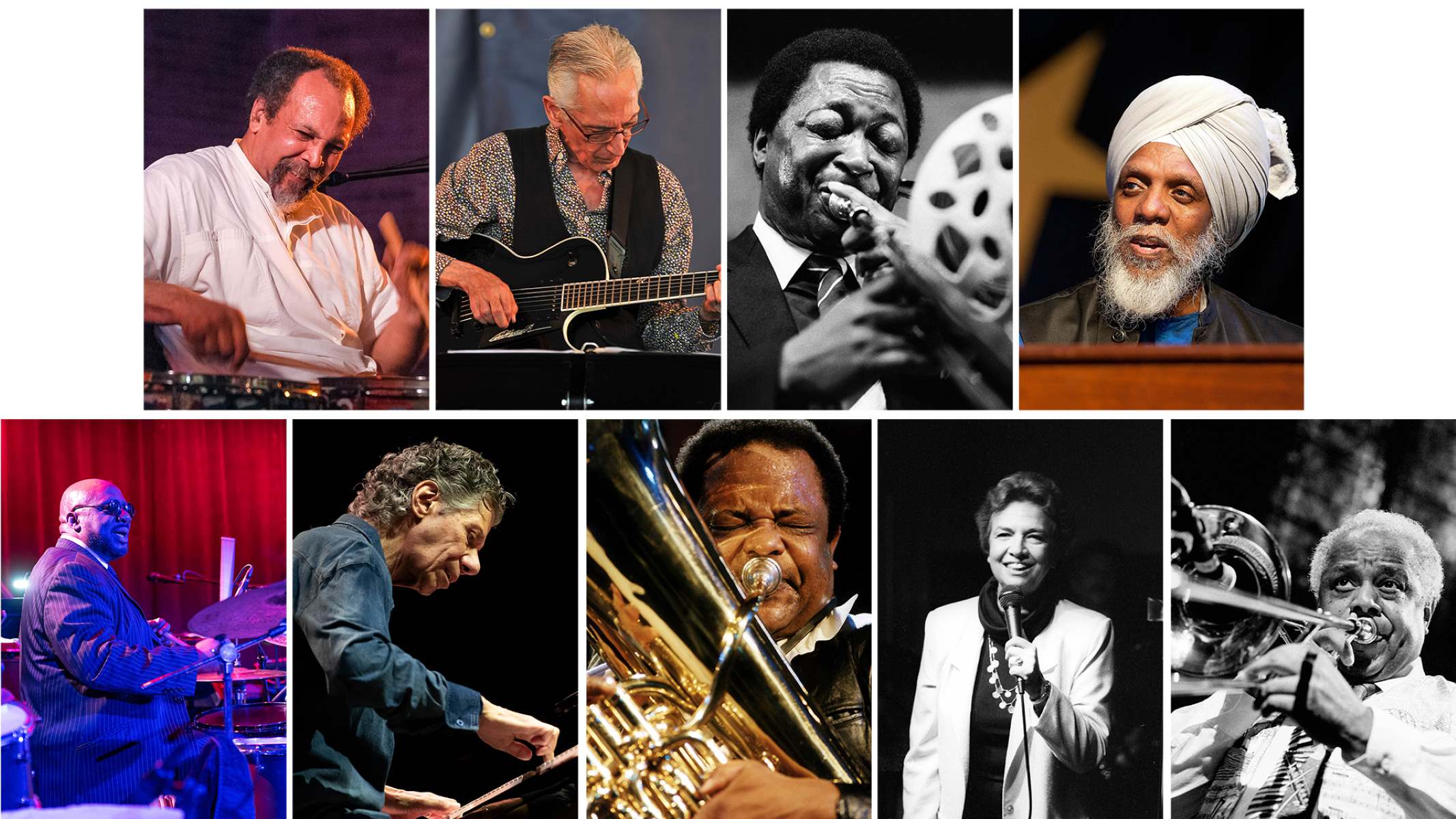
The jazz landscape in 2025 underwent a profound transformation, driven by a new generation of instrumentalists and composers who seamlessly blended traditional acoustic mastery with electronic production, global rhythms, and cross-genre experimentation. These visionary artists did not merely participate in the genre; they actively expanded its boundaries, proving that jazz remains one of the most innovative and culturally responsive art forms of the modern era.
The Evolution of Contemporary Jazz: 2025 and Beyond
The contemporary jazz ecosystem has long moved past the rigid definitions of the bebop, cool jazz, or fusion eras. Today's scene operates as a vast, interconnected network where artists draw equally from classical composition, West African percussion, hip-hop production techniques, and ambient electronic textures. By 2025, this cross-pollination reached a critical mass, catalyzed by a generation of musicians who grew up listening to everything from John Coltrane and Thelonious Monk to J Dilla and Radiohead.
Understanding these contemporary innovators requires looking beyond simple technical proficiency on an instrument. The players who redefined the scene in 2025 demonstrated a unique capacity for conceptual curation. They built immersive sonic worlds, utilized modular synthesizers alongside upright basses, and engaged deeply with social and political narratives through instrumental music. As venues closed, digital streaming platforms evolved, and global touring logistics shifted, these five artists emerged not just as exceptional performers, but as essential cultural architects.
1. Immanuel Wilkins: Elevating Structural Composition and Social Narrative
Alto saxophonist and composer Immanuel Wilkins cemented his status as a titan of modern jazz with a series of high-profile releases and conceptual live performances that challenged how long-form compositions are structured. Rising to prominence with his acclaimed albums on Blue Note Records, Wilkins approaches the saxophone with a crystalline tone reminiscent of Jackie McLean, paired with a harmonic sophistication that belies his age.
Conceptual Depth and Technical Approach
Wilkins’s work stands out due to its heavy reliance on suite-like compositions. Rather than structuring a track around a traditional head-solo-head format, Wilkins constructs interconnected movements that explore historical, spiritual, and communal themes. His tone on the alto saxophone balances raw, biting expression with precise classical intonation.
Impact on the 2025 Scene
In 2025, Wilkins pushed further into multidisciplinary territory, collaborating with visual artists and poets to create immersive concert experiences. His ability to lead a tightly knit acoustic quartet through complex meter shifts while maintaining deep emotional resonance made him a benchmark for contemporary ensemble writing.
2. Nubya Garcia: Bridging London’s Underground Roots with Global Groove
London saxophonist, composer, and bandleader Nubya Garcia continued her global ascent, serving as a primary anchor for the vibrant UK jazz renaissance. Garcia’s music bridges the gap between the gritty, club-oriented sounds of London's underground dance floors and the rich, spiritual lineage of transatlantic jazz.
Genre-Defying Instrumentation and Production
Garcia’s artistry relies on her ability to integrate dub reggae textures, Caribbean rhythmic cadences, and electronic soundscapes without losing the improvisational core of acoustic jazz. Her tenor saxophone playing is characterized by a warm, expansive tone and a fearless approach to space and silence.
Cultural Resonance and Global Reach
By 2025, Garcia’s influence extended well beyond the traditional jazz festival circuit. She headlined major multi-genre music festivals, bringing sophisticated modal jazz and complex syncopated grooves to audiences that typically lean toward electronic and indie rock. Her collaborative spirit and advocacy for independent artist spaces established her as a vital leader for the modern creative community.
3. Domi and JD Beck: Redefining Virtuosity Through Hyper-Syncopation
The duo of French keyboardist Domi Louna and American drummer JD Beck achieved cult-like status among musicians and casual listeners alike, ultimately cementing their role as scene-shifters in 2025. Known for their mind-bending technical prowess, internet-native aesthetic, and hyper-complex arrangements, the duo discarded traditional jazz-pop crossover formulas in favor of something entirely singular.
Technical Breakdown of Their Sound
- Keyboard Mastery: Domi utilizes vintage analog synthesizers and a dual-keyboard setup to execute lightning-fast counterpoint lines, intricate left-hand bass parts, and dense, post-bop harmonic voicings.
- Precision Drumming: JD Beck plays on an intentionally stripped-down, tightly tuned acoustic kit, mimicking the programmed, quantized drum loops of IDM (Intelligent Dance Music) and hip-hop with human hands at astonishing tempos.
Mainstream Integration and Genre Expansion
Domi and JD Beck successfully brought eccentric, odd-meter jazz harmonization into pop and hip-hop consciousness through high-profile collaborations and Grammy recognition. In 2025, they pushed their live shows further into unpredictable territory, treating standard jazz tunes as raw material for high-speed, genre-hopping deconstructions.
4. Brandee Younger: Claiming Center Stage for the Concert Harp
Harpist Brandee Younger accomplished something exceedingly rare in modern music: she completely redefined the role of an orchestral instrument within an improvised jazz context. While figures like Dorothy Ashby and Alice Coltrane laid foundational work for the jazz harp, Younger brought the instrument into the 21st-century spotlight as a commanding lead voice rather than a decorative textural element.
Sonic Palette and Compositional Style
Younger’s music fuses classical European harp techniques with the heavy grooves of 1970s soul-jazz, R&B, and modal improvisation. Her playing features cascading glissandos, sharp percussive slaps on the soundboard, and lush, expansive chord voicings that redefine how harmony is established in a small-group setting.
Reclaiming and Expanding the Canon
In 2025, Younger’s ongoing educational and performance initiatives brought greater visibility to the instrument's rich history. By bridging the gap between smooth, accessible melodies and adventurous modal explorations, she proved that jazz harp could captivate massive audiences without sacrificing artistic depth.
5. Julius Rodriguez: The Omnivorous Pianist and Multi-Instrumentalist
Pianist, organist, and drummer Julius Rodriguez represents the ultimate realization of the genre-agnostic modern musician. Trained rigorously at institutions like Juilliard and steeped in the Black church tradition, Rodriguez moves effortlessly between straight-ahead bop, gospel, hip-hop production, and avant-garde jazz.
Cross-Genre Versatility
Rodriguez refuses to adhere to stylistic boundaries. On any given night, he might command a grand piano with the ferocious swing of a 1960s Blue Note session player, switch to a Hammond B3 organ for deep-pocket funk, or jump behind the drum kit to drive a relentless hip-hop beat.
The Modern Sideman and Bandleader Dynamic
By 2025, Rodriguez had become the quintessential modern collaborator, lending his talents to vocalists, rappers, and avant-garde bandleaders alike. His solo work showcases a deep reverence for jazz history paired with an acute awareness of modern production aesthetics, making him one of the most exciting architects of the current scene.
Comparative Overview of 2025’s Leading Jazz Innovators
The following table outlines the primary instruments, core stylistic influences, and defining contributions of the five artists who shaped the jazz landscape in 2025.
| Artist | Primary Instrument(s) | Key Stylistic Influences | Defining Contribution to the 2025 Scene |
|---|---|---|---|
| Immanuel Wilkins | Alto Saxophone | Post-bop, avant-garde, African American spiritual traditions | Elevating suite-form composition and deep historical narratives. |
| Nubya Garcia | Tenor Saxophone | UK underground, dub, Caribbean rhythms, modal jazz | Bridging club culture and acoustic jazz on global stages. |
| Domi and JD Beck | Keyboards / Drums | IDM, hip-hop, progressive jazz, fusion | Popularizing hyper-syncopated, ultra-complex virtuosity. |
| Brandee Younger | Concert Harp | Soul-jazz, classical, 70s funk, modal jazz | Establishing the harp as a dynamic lead instrument in jazz. |
| Julius Rodriguez | Piano, Organ, Drums | Gospel, bop, hip-hop, R&B, modern production | Demonstrating ultimate omnivorous genre versatility. |
Frequently Asked Questions
What defines the modern jazz scene of 2025?
The contemporary jazz scene is defined by radical cross-pollination. Artists routinely incorporate elements from electronic music, hip-hop, global folk traditions, and classical composition while maintaining a core focus on improvisation and interactive ensemble dynamics.
How has technology influenced these jazz players?
Technology allows artists to integrate modular synthesizers, DAW-based production techniques, and advanced live-looping directly into acoustic settings. This enables soloists and small bands to create massive, textured soundscapes that rival larger ensembles.
Are traditional jazz instruments still relevant in 2025?
Yes, traditional acoustic instruments—such as the saxophone, upright bass, acoustic piano, and drums—remain the foundation of the genre. However, players approach these instruments with expanded techniques, altered tunings, and effects pedals to modernize their sonic output.
How do modern jazz artists sustain their careers outside of traditional venues?
While traditional jazz clubs remain vital, modern artists rely heavily on international music festivals, multidisciplinary arts residencies, direct-to-fan digital streaming platforms, and high-profile cross-genre collaborations to reach broader audiences.
Where should a listener start if they are new to contemporary jazz?
Begin by exploring critically acclaimed releases from artists like Immanuel Wilkins or Nubya Garcia. These records provide an ideal entry point because they balance accessible melodies and grooves with deep, rewarding improvisational structures.
Practical Next Actions for Jazz Enthusiasts
To fully engage with the current state of jazz, listeners and aspiring musicians should move beyond casual streaming playlists. Seek out live performances at local creative music venues, independent jazz clubs, and multidisciplinary arts spaces where these artists frequently debut new material. For musicians, studying the harmonic approaches of players like Immanuel Wilkins and Julius Rodriguez offers a roadmap for integrating disparate musical influences into a cohesive, personal voice.